
My Parents Don’t Know How to Handle Strong Emotions
I was emotionally neglected because my parents don’t know how to handle their own emotions

My parents don’t know how to manage their strong emotions. Dealing with them is like riding a roller coaster; I never knew if they would get suddenly angry or yell. The topic of emotions and emotional needs were never addressed in my parent’s house. Although my parents did their best and provided the basic needs of food, shelter, and financial support for my brother and me, they didn’t know how to be there for me in my most urgent times of need. Their parents were not able to meet their emotional needs either, and my parents were immigrants fighting to survive so they didn’t have the luxury of worrying about emotions. Unfortunately, that meant I didn’t develop the toolset needed to develop safe relationships with others.
Speaking the language of emotions is not a skill my parents have. They don’t ask me if I am happy, sad, disappointed, hurt, or angry. They don’t discuss anything that happened between my friends, at school, or between me and them. Whenever I tried to tell my parents about an experience I had, they would generally cut me off before I was finished. Some questions emotionally intelligent parents would ask are: “You look upset today. How was school? Do you want to talk about it?” According to Jonice Webb, Ph.D., the lack of emotional language in one’s household means the children do not get a chance to realize the importance of emotions, fully experience them, and then process them.
My father had anger management issues, was constantly grouchy, got explosively angry, and continually yelled at his wife, mother, brothers, and sisters, and sometimes his children. He had plenty of stressors — like fear for his family’s safety, stress about potentially being laid off from his job, concern about his children doing well in school and getting good educations, and financial worries about impending college education expenses for my brother and me. I knew he was worried about these things because I remember him expressing them to me repeatedly while I was in high school. Yet, even though I was generally aware of these ongoing issues, it didn’t stop me from being traumatized by the yelling that took place between him and my mother every day, and from the times he occasionally yelled at me.
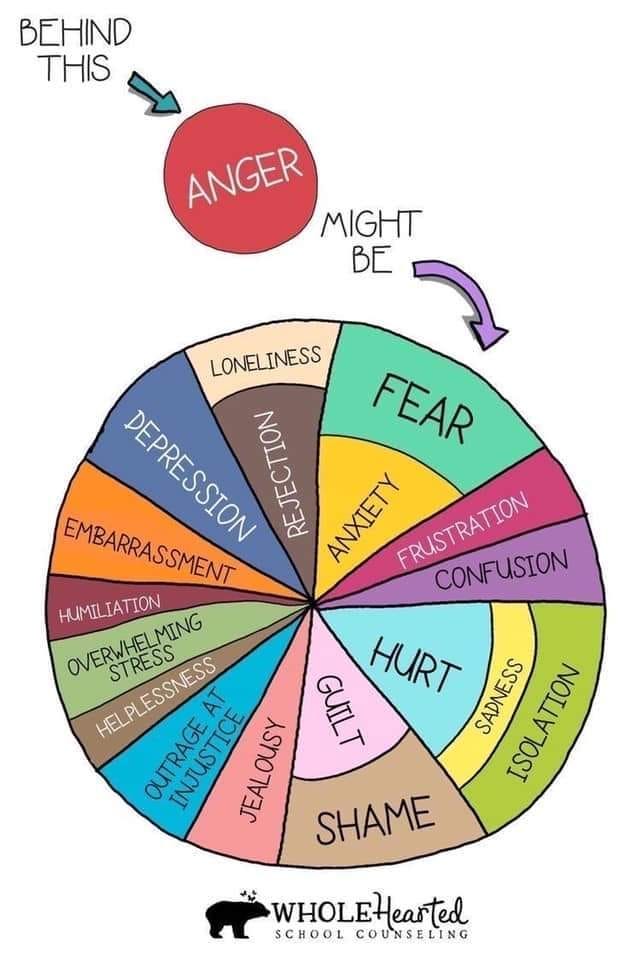
Unfortunately, my father didn’t have the luxury of developing healthy coping mechanisms to deal with his strong emotions and process them in a nontoxic way. Anger is a defense mechanism, according to Laura Markham, Ph.D. When we are unable to fully process or voice feelings such as hurt, shame, guilt, sadness, disappointment, fear, and frustration, we become angry instead. My grandparents didn’t have the skills or resources to teach my father coping mechanisms when he was young. His family in Vietnam was impoverished and they were focused solely on surviving. The only thing he did to alleviate the stresses in his life was smoke. Thus, my father grew up without the skills to cope with his powerful and troubling emotions, and only got angry when he was faced with challenging emotions in adulthood.
Want to read this story later? Save it in Journal.
My mother’s emotional intelligence development is on the same level as a child’s. She has limited ability to moderate her complicated emotions such as anger, fear, and jealousy. She blurts out anything that comes into her head even if it is hurtful. She also makes unfair judgements on others’ character traits, calling them stupid and crazy, while insisting that she is in the know. These unfair statements instantly set off family members with feelings of angry injustice and shut down conversations. It is likely her childish and clumsy way of sharing her opinion which is meant for the family member’s well-being, but the unskilled way she delivered it made the recipient reject her comments. This led to her feeling unheard and frustrated. Unfortunately, she wasn’t particularly skilled at being a good listener to others either.
My parents lack communication skills. They struggle to understand others and be understood. I once observed that my mother had five points to convey to my father, and only managed to get through one of them before an argument started. My parents regularly argued, didn’t have the patience to hear out each other’s point of view, and didn’t know how to approach each other with the right attitude to be successfully heard. My therapist posits that arguments are the only way my parents know how to connect. The provocations are my parents’ clumsy and unskilled attempts to get attention from each other. It was the established dynamic between them, built over many years, and what they learned from their parents.
My parents didn’t know how to comfort me and help me build the confidence to face life’s challenges. There were moments in the past, especially after breakups, when I needed emotional support. Emotionally healthy people would call their parents who would have some comforting words of wisdom. Whenever I told my parents about a breakup, they were silent. My mother once said it was my fault. Their form of help was only financial: “If you want to move back to Los Angeles, we can help you move back or give you money if you need any.” But the words I needed to hear were, “I know it hurts now, but you’ll be fine. You’re beautiful, fun, and loving! That person was not right for you. You’ll find someone right for you in the future.”
I eventually found friends who filled those gaps for me. They were people I could call in moments of crisis and who would spend an afternoon with me while I was feeling down and talk me through my issues. In fact, after my most recent crisis, I called a friend after calling my father. The friend said the words I needed to hear, told me to get back into therapy, and had a book recommendation for me. After that call, I finally felt like I had gotten the emotional support I needed.
Although it may not be defined this way by Eastern standards, by Western standards, I was essentially subject to childhood emotional neglect and verbal abuse. Childhood emotional neglect is the parents’ failure to adequately respond to a child’s emotional needs. My parents emotionally abandoned me; when I was agitated, I had to find ways to soothe myself because my parents weren’t emotionally available to calm me down. They also verbally abuse each other and subject their kids to listening to this verbal abuse for hours every day. Verbal abuse consists of yelling, criticizing, blaming, belittling, swearing, name-calling, and exhibiting controlling and manipulative behavior — all behaviors exhibited by my parents.
My parents were critical and repressive authority figures, like many Chinese parents. I got the message that I would be in trouble if I was caught crying, speaking back against them or getting angry at them, or being disobedient by breaking the rules. From these messages, I started disassociating from my feelings since I was not allowed to express them. My therapist pointed out that I was doing this many years later. In one incident when I must have been five or six years old, I was crying with my mother because I was upset over a sticker I lost. When my father arrived home from work, I cried even harder because my father often yelled in the house and I thought he would yell at me. In my head, it was my fault that I was crying and I’d be punished for causing trouble.
My therapist observed I had trouble naming why certain events triggered powerful emotions in me. I was cut off from my feelings because I was trained for many years not to listen to my feelings but act how my parents wanted me to. Thus, I was in the habit of burying my true feelings. Actually, at the moment before a feeling like guilt washes over us, there is usually an unconscious belief that is triggered. The belief can be “children must obey their parents.” Because we aren’t true to these unconscious beliefs, we feel guilty. With my therapist’s help, I learned to slow down and identify my thoughts immediately after a trigger occurred. By zeroing in on this, we were able to uncover some of my hidden beliefs. Some of the maladaptive beliefs I adopted as a result of being emotionally abandoned and verbally abused by my parents are:
- Pride about not relying on others, preferring to be self-sufficient and “independent.”
- Difficulty asking others for help.
- Judging myself more harshly than how I judge others; undermined confidence in decision-making skills.
- Inhibiting my feelings and desires, such as the desire to buy a whimsical and pleasurable item like a poster of a movie I fancied, because I knew my parents would react negatively to it
As I began to uncover some of the unhelpful beliefs and gained my voice in expressing my emotional needs, I began to communicate them in clear terms to my parents. I especially tried to explain why certain behaviors they had were stressful for me. Even my ex-boyfriends commented that my voice got very stressed when I was talking to my parents or extended family on the phone. However, the reaction I got back from my parents was that I should “just handle it” and “not think too much about it.” I knew that meant nothing was going to change. That response sometimes made me question whether what I was feeling was valid and important. I eventually learned to not seek external validation for my feelings. They are undeniable, just as my body’s psychological “fight or flight” reactions like sweating are undeniable.
It is well-known among Chinese children how critical and overprotective their parents can be and mine was no exception. My mother criticizes everyone in the family — my father, my brother, and me — instantly on anything she saw as a mistake. I was often criticized for not knowing a certain word in Cantonese, spending money on clothing or eating out, and prepping food improperly. One small mistake often spiraled into a lecture from my parents. The lack of properly cutting vegetables turned into a lecture about how I would starve to death because I couldn’t cook. The purchase of a shirt or jeans triggered a lecture on how I wasted money and made poor decisions.
These lectures were at the very least annoying and, at worst, traumatic when my character was attacked. I felt constantly on alert of being criticized in my parent’s house and often hid my shopping bags from my mother to avoid her verbal attacks. The criticism damaged my self-esteem and confidence, making me insecure. To the Western world, I was an overachieving straight-A student, but to my parents, I didn’t know how to manage my money, couldn’t cook well, and was a bad daughter because I wasn’t fluent in Cantonese. I developed some physical symptoms as well such as teeth grinding in my sleep and sensitivity to loud noises at night.
In elementary school, I was caught with candy with a group of friends. It was against the rules, and we were being questioned by the playground supervisors. I remember being so stressed about the incident because in my ten-year-old mind I would die if I got into trouble. That was the impression I got from my mother. I ended up lying to the supervisors because I didn’t want my parents to find out. If they did, they would yell, criticize me, and punish me. It would mean I made a mistake, and I had the belief that I could not make any mistakes. The potential for getting in trouble and being disciplined by my parents made such an impression on me that I felt rising stress whenever I saw strawberry sour belts for the next year.
I realize my parents were trying to impart life lessons, but they went about it in the wrong ways. I confronted my mother before on her constantly critical behavior. Her responses suggested she was not even aware how critical she was being. I told her that she often called people “crazy” and “stupid.” She denied this, but proved me right in the next five minutes by calling me stupid. When I pointed this out, she admitted it was just a habit and she didn’t even think about it. I found this sad because it meant she grew up in the same environment and was replicating it on autopilot.
I realized how damaging it has been for me to be at the receiving end of her constant criticism. Her criticism made me walk on a tightrope, always trying to avoid mistakes, and blow small mistakes out of proportion. I realized it was a problem when I started expecting lectures from my boss about potential mistakes I made. This is when I went to therapy to unlearn this aversion to mistakes because it was making me too timid to creatively experiment in my work when it was required. I learned in therapy to disconnect my self-worth from my setbacks, and instead focus on who I am and the effort I made. Equally important, I learned to be compassionate, patient, and understanding with myself when things do not go right. Not being held to an impossible standard of perfection makes me feel more secure in myself, and makes life a smoother ride.
I can’t change my parents or my childhood, but I decided to fully confront all that went wrong in it and find for myself the nourishment and support I missed from my parents. It took a long time, but I finally admitted to myself that I had a terrible childhood which consisted of childhood emotional neglect and verbal abuse by my parents every day. The past trauma continues to affect my daily life now and even causes me nightmares some nights when I dream of my parents. I developed some maladaptive coping mechanisms as a kid to deal with my hostile and anxious environment while I was growing up. These same coping mechanisms are holding me back now as I try to grow from under my parents’ shadow and have my own independent, emotionally-intelligent, happy, and fulfilled life.
One maladaptive coping mechanism I had as a teenager was to regard emotional issues as unimportant and look down on people who kept bringing up emotional issues with their friends, partners, or parents. I found calm and supportive people a bit boring and gravitated towards the adventurous partiers. I sometimes push others past the point that they are comfortable without realizing it because it happened to me and was considered normal. Now I know much better and see how much I was missing. I realized how important these “annoying and pesky” emotional issues are and I know people who are living at extremes are dealing with their mental struggles internally. I know the emotionally healthy people are the ones who are calm, consistent, and who are feeling emotionally “full.”
In Women Who Run With the Wolves by Clarissa Pinkola Estés, she highlights the importance of moving from being a survivor to thriving in life again. “Instead of making survivorship the centerpiece of one’s life, it is better to use it as one of many badges, not the only one,” Clarissa states. I know that I survived a terrible childhood. I know that I had fantasies of someone saving me when I was little, but no one ever came. I have grieved all that is missing in my life because my parents didn’t have the emotional intelligence to provide it to me. Now, I know the “bad times are behind” and it is time to “put [myself] into the occasions of the lush, the nutritive, the light,” as Clarissa writes. Going forward, that is what I will do.
📝 Save this story in Journal.
🍎 Wake up every Sunday morning to the week’s most noteworthy stories in Wellness waiting in your inbox. Read the Noteworthy in Wellness newsletter.