
Limerence in Adolescence
I escaped into stories and developed magical thinking because my emotional needs were not met as an adolescent
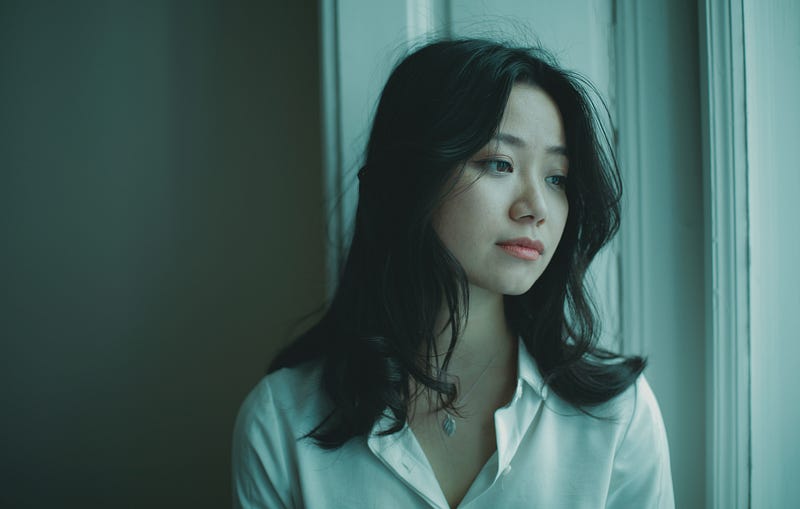
Magical thinking is a coping mechanism that children engage in when they are confronted with extremely painful events such as childhood emotional neglect, according to Anna Runkle. Their minds check out and they are not really present. If they were, they would have to absorb the full impact of their painful situation — whether it is witnessing domestic violence, verbal, physical, or sexual abuse, refugee or war experiences, or neglect — which can be shattering emotionally or psychologically. Instead, the mind makes the brilliant move of mentally separating the child from the situation and shutting down feelings. Checking out allows the child to remain in a quasi-unconsciousness which puts distance between the child and their present circumstances. It partially prevents them from being hurt.
For me, I escaped into stories to get through my tough adolescence. I read books, watched anime, and read fanfiction. I focused on the characters’ love lives because I was not allowed to date in middle and high school. The stories kept me occupied and took me to a relatively safe place that was within my control. The stories I read there had some elements of the romance I was seeking and there was no risk of getting hurt by reading them. I longed for romance and companionship but was not allowed to seek either by my restrictive parents. I didn’t know how to have a romantic relationship either at that time as I had no models for it. Thus, I lived vicariously through these stories which acted as my outlet to express my longing and curiosity regarding romance. My dependence on the stories turned into an obsession over time. I spent all my waking free time diving into these stories and thought about them as I went through my day. Being mentally lost in the stories was better than facing my bleak reality.
I eventually became ashamed of this activity because of the amount of time that I spent lost in these stories. It became a compulsion to escape into these stories and I was ashamed that my behavior became almost uncontrollable. I kept telling myself that it was not healthy to be so obsessed with fictional characters. Even in adolescence, I knew that my behavior was not normal for teenage kids with healthy social lives. I could feel the possibility of real romance slipping away the more time I spent alone and in front of the computer. I could tell that not all the ideas I was absorbing from these stories were examples of healthy relationships. Yet I was getting no emotional nourishment or comfort at home being left to my own devices in my bedroom while my parents constantly argued in the living room. I sought whatever crumbs of emotional comfort I could find in the stories I read.
I grew up in a terrible environment: parents yelling every day from morning till night, their anxiety filling the house and infecting other family members like me. My mother was constantly anxious and internally panicking. She was also a hoarder and my house was a complete mess. I seldom invited a friend over. My father is abrasive, condescending, belligerent, and fearful. I wanted to escape the pain, loneliness, fear, depression, and chaos in my parents’ house. I felt like I was in prison. I couldn’t escape physically so I had to escape mentally. The only way I had to do that without risking my parents’ ire was through my computer. I’d stay up late reading, mentally escaping into a different world where romance was alive and my favorite characters had great adventures and experiences in love.
It is scary how severe my parents’ emotional unavailability was. I think I instinctively understood the level of danger I was in, even as a child. Even if I knew the language to express my emotions when I was a child, my parents would have either given me no response, an ineffective and inadequate response to dire situations (e.g., “Just ignore it. Don’t let it affect you.”), or a violently negative and combative response (e.g., “Why are you so weak?”). Every time I tried to reach out emotionally to my parents, the conversations were very difficult and often went nowhere. The unfortunate consequence of this level of emotional neglect is that I lost the ability to create meaningful relationships and had to find solace in one-dimensional dynamics like stories.
Because everyone in my family was so emotionally dysfunctional, I was used as the therapist and emotional punching bag for other family members. I was forced to help others deal with their emotional problems without being able to address my own emotional needs. I focused on others’ feelings intensely to determine if my environment would suddenly become threatening and if I would need to remove myself from the situation. Doing this well meant ignoring my emotions. Thus, I suffered from childhood emotional neglect. I was not seen or heard and my needs were ignored by myself and my parents. I felt abandoned and rejected and constantly lonely. Even when my heart told me I wanted something and I told my parents (such as wanting a puppy), I was often told it was too much trouble or expensive. I rarely got what I wanted. Thus, I was forced to look inward to fulfill my emotional needs.
My obsession was driven by emotional neglect in my parent’s house. It continued after I moved out of my parents’ house until I was finally able to meet my needs for romantic love through relationships. The whole ordeal lasted for eight years or so. After working through the shame and realizing that I was just surviving on what emotional crumbs I could find, I accepted that I had to turn to stories of fictional characters for many years in my life to cope with perpetual singleness. It was a survival mechanism and I don’t need to be ashamed of anything I did to survive. I was saving myself by finding what emotional nourishment I could. Once I worked through my emotional wounds through intense therapy and healing, I no longer needed the crutch of fiction to meet my emotional needs.
My relationship with my parents is still difficult but an improvement from past dynamics. In recent conversations with my therapist, I came to realize how one dimensional and stunted my relationship with my parents is and how little emotional nourishment I get from them. Over the years, it has been so tiring and emotionally draining to deal with emotionally unavailable parents. I feel like my relationship with them has stayed static for years on end. Once in a while, there are some jokes and laughter. Otherwise, I feel like I’m talking to stony robots who repeat the same thing over and over. Luckily, I have developed new ways of interacting with them. I am firm with my boundaries while also being mindful to show them how I prefer to interact with them. I find my interactions with them are calmer and more productive now.
Fast forward to my adult years and I eventually outgrow this habit of obsessing over fictional characters. However, the shame was buried in my past and left me unhealed. After learning about limerence and magical thinking, I realize it was what I experienced growing up. There was a name for it! Identifying and defining what happened to me kick started my journey of confronting this old shame. Like the limerence incidents I experienced, I never shared with anyone the full extent of this obsession. Perhaps by sharing my story, I can let go of some of the associated shame. Instead of being shameful, I can show myself compassion, understanding, and forgiveness.
Shame resilience is defined by Brené Brown, Ph.D. as the “ability to recognize shame when we experience it, and move through it in a constructive way that allows us to maintain our authenticity and grow from our experiences.” I can demonstrate shame resilience by showing compassion for the young girl (myself) who was raised in a house of traumatized people. Traumatized people tend to live very isolated lives because they cannot trust others. Thus, I was constantly isolated as a child. I had to live by the rules of my parents who were scared of all strangers. I was so lonely living there. I can be grateful that I found some resources to help me get through many tough years. I can stop blaming myself for using this crutch as it ultimately helped me to survive.
When I learned to feel worthy of love and affection, I was able to develop healthy romantic relationships in real life. I was able to attract and meet men who would be able to meet my emotional needs. I was able to engage in a healthy courtship and start a relationship organically within reasonable timeframes. I was able to continue working on myself while engaging in a relationship. Although I experienced insecurity and anxiety, I was able to work to resolve those feelings as well as manage them when they popped up. I learned what came with real relationships; emotional risk, commitment, intimacy, and vulnerability. I fostered respectful relationships and worked on my listening skills. I saw how much effort good relationships took and the continual nature of the work.
Processing the magical thinking, obsessions, and limerence I experienced in adolescence helped me to shed the old identity of always being single. After years of obsession with fictional characters, I developed the notion that I would just always be relegated to singleness and do many things alone. It is not true. I am no longer a helpless adolescent stuck in my parents’ house. I am an adult with the power to make changes. Thus, I can now work to move away from the “single” role. I am ready to shed that old belief and identity now and adopt a new one: “I am capable of healthy relationships.” I have a happy relationship that I’m proud of and that I work on every day. Not only that, I can have many great relationships in all aspects of life including family, friendships, and at work. I can have healthy relationships and a balance of many types of relationships. I can fill my life with many healthy relationships with certain secure family members and friends, unlike the unhealthy relationships I was surrounded with in childhood.
Previously, I believed I was always cursed to be the third wheel and that I would never find “the one” or my “soul mate,” unhelpful notions I picked up from fiction and pop culture. These fanciful notions, along with the ideas of “destiny/things are meant to be” and “true love” contributed to my feeling of singleness because they made love seem so unobtainable. These ideas led me to pine for long periods over exes and pass over men who didn’t stir strong emotions in me but who were likely to be emotionally healthy. I also used to tell myself “I am exactly where I’m supposed to be” and “I am learning what I am supposed to learn from this person” which led me to avoid taking action to leave toxic situations. I am now able to give up the fantastical notions. I know there are multiple life partners people can have based on how much they have grown and their maturity level. I also choose to have a relationship growth model, seeing relationships as being developed and cultivated over time with continual effort.
Given these circumstances that I grew up in, it’s a miracle that I got out and have found my way to emotionally available people. Initially, I was worried that I could somehow slide back into old obsessions and magical thinking. Now that I have taken the time to understand what was happening during those painful and confusing times of obsession, I am also able to overcome my fear of it. I know I was extremely emotionally neglected as a child which led to these dysfunctional patterns. I am no longer the same helpless and neglected child. I am now a powerful person with the agency to determine how I react to challenging situations. I have the emotional awareness to see when I’m reacting in a trauma-driven way and work with my support system to change this pattern. I can move forward from this chapter of my life and focus on building a full life with plenty of emotional nourishment and fulfillment.
An example of limerence in song lyrics:
“My memory is cruel I’m queen of attention to details Defending intentions if he fails Until now, he told me her name It sounded familiar in a way I could have sworn I’d heard him say it ten thousand times Oh, If only I had been listening
Leave unsaid, unspoken Eyes wide shut, unopened You and me Always between the lines Between the lines”
— Between the Lines by Sara Bareilles