
What It’s Like to Be Raised By Parents with PTSD
A refugee’s child shares her experience in the constantly anxious and fearful environment of her parent’s household
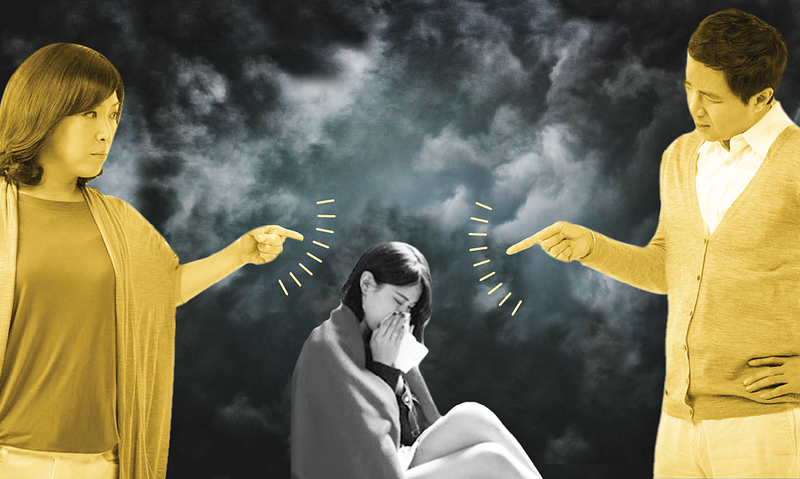
As a child who grew up in the household of two Vietnamese War refugees, it didn’t occur to me until I was an adult that my parents and extended family operated at a heightened state of tension and anxiety at all times. After describing how my father had low stress tolerance and overreacted to surprises as if they were emergencies, it started to dawn on me that my parents were emotionally stunted and may also be suffering from PTSD. It seemed as if they had lost their ability to approach issues with a metered attitude, jumping straight to near-panic whenever something unexpected occurred. I suspect this is a result of what my parents saw and experienced while they escaped from Vietnam on a boat and spent the better part of a year in the Pulau Bidong refugee camp in Malaysia between 1979 and 1980.
My parents have recounted some details of their escapes from Vietnam and the experiences are truly terrifying and dangerous. Accounts from Vietnamese refugees describe watching family members drown, encountering corpses lying on the street, and being raped by pirates. I have distant relatives who lost three sisters when their boat capsized during their journey and the sisters drowned as they didn’t know how to swim. These are the types of ghastly sights that Vietnamese War refugees have burned into their memory. In addition to the traumatic events of war, refugees were forced to leave family members behind because poor families could not afford to make the journey altogether. The separation from family members is another layer of trauma on top of the horrific events experienced by refugees.
The journey from Vietnam to the United States took more than a year for my then-eighteen-year-old mother and included a week of subsisting only on rain water and no food as she traveled from Vietnam to Malaysia by boat. Her family had to make two attempts to escape as their first boat started to leak. In the complete darkness, her family had to jump from the first boat, swim back to shore where there was a jungle, and walk along the shore all the way back to civilization. My mother stepped on a small and hard object which she initially thought was the head of a baby! Luckily, it turned out to simply be a coconut. At the refugee camps, there was only canned food provided. My mother recounted receiving fresh meat only once in that year. Towards the end of her journey, all members of my mother’s family had separated into different family units for ease of sponsorship and the rest of her family had left the camp before her. My mother spent a month without her family with her then-boyfriend at the camp until she was sponsored herself to the United States.
Want to read this story later? Save it in Journal.
The conditions at the Pulau Bidong refugee camp were barely livable, with my mother’s seventeen traveling companions living in the same unit as her. She was traveling with her parents, biological brothers and sisters, nieces and nephew, and my grandfather’s second family. The “restroom” in the house was merely a hole dug into the ground. To relieve their bowels of solids, each person had to expel their excrement into a container and take the container up a hill at the back of the camp to throw away the contents. Everyone in the camp did this so the hill was covered with human excrement. My mother didn’t detail the types of smells she had to deal with in that situation. In addition, she and many others developed red bumps on their hands from their daily consumption of canned food.
Although more than forty years have passed since 1975 and the Vietnamese refugees who settled in the United States have re-established relatively stable livelihoods where these life-threatening situations are no longer present, the echoes of their trauma still cast a shadow over many aspects of their everyday lives. The untreated PTSD of immigrants manifests in their attitudes about the world, affecting all those who live in the same households as them, and how they raise their children. Children can become the “container” for a parent’s “unwanted, troubling experiences [of PTSD],” according to a 2006 study published by the American Psychiatric Association. Indeed, I have begun to identify ways in which growing up in the constantly anxious and stressful household of my parents who have PTSD has left an impact on me. I became a container of PTSD, and this impacted my life in unconscious ways I have only recently begun to discover.
Yelling occurs every day in my parent’s household. One of my parents would provoke the other and arguments would erupt. I got the sense that my parents didn’t have any control over their emotions. My father coped with stress by bottling his emotions up and letting others walk all over him until he would erupt in anger, usually at my mother and his children. My mother suffered from paranoia and was afraid of the dark and ghosts. She has no capability of soothing her emotions, so her anxiety often took her over. She has a hoarding disorder, which is commonly linked to post traumatic stress or experiencing a significant loss that was difficult to cope with, according to Mayo Clinic. My parents are not living and thriving, they are stuck in survival mode.
One day, I broke the news to my parents that I was moving out of a house to an apartment in the city. I made the decision to be closer to friends and improve my social life like any normal young adult in their twenties. I thought about the decision for months, visited many apartments to find the best deal and safest neighborhood, and carefully planned how I would manage the finances of rent and a mortgage. I made my decision and signed the lease, then considered how to share the news with my parents.
Although I had floated this idea with my parents before, I still dreaded telling them because I knew they would react explosively at the news. Emotionally stable parents would listen to the news, and be supportive by asking if their child needed any help moving. When I broke the news to my parents, they immediately panicked and were unable to process anything I said after my first sentence. They then proceeded to have a meltdown where they screamed and berated me for my supposed ungratefulness. Any understanding of my need for a social life and independence was beyond their comprehension. Emotionally stunted people often have a handicap of easily falling apart under stress and becoming incapable of rational thought. That’s what happened to my normally intelligent father when he was confronted with the prospect that I wasn’t going to conform to his wishes.
My parents view the world as an inherently fearful environment and this seeped into every aspect of their daily life. This attitude undermines my mother’s confidence to complete any potentially challenging task like even performing simple functions on her iPhone. Instead, she hides out in her house with only her husband to interact with. If not every family member is home before dark, my parents become worried as they believe it is very likely that anyone out after dark will fall victim to a crime such as robbery or murder. My parent’s actions communicated these life lessons:
- People outside the family are not to be trusted. It is easiest to stay home and not interact with anyone.
- Unpredictability is something to be feared. It is better to not take any risks.
- Everything must be controlled so as not to risk getting hurt.
- A comet is going to fall out of the sky and hit only you.
Every crime that is reported in the news becomes a possible reality for my parents. She cannot go out at night herself. If she does, she will literally start to shake in the car. My mother doesn’t drive on the freeway because she heard news stories (fake ones) of gang activity and believes she might become a victim. She’s also scared of robberies and muggings. She used to remind me of these possible occurrences every time I went out at night. She suffers from paranoia. The fears of my mother have led her to mistrust anyone who was not part of her immediate family. When I was a six year old spending time with my cousins, my mother would fill my head with ideas that my cousins were stealing things from me. As an adult, I’m quite sure my mother was only imagining these events.
In another incident which occurred when I was ten years old, I opened the front door of the house for two Mormon missionaries who stopped by our house. They wanted to solicit us but I declined and they left. Nothing alarming happened. However, when my mother saw two men at the door, she completely overreacted. Her version of the story is we were almost robbed and I didn’t have common sense about opening the door to strangers. For years afterwards, she reminded me to not open the door to strangers like I was still a six year old. Her fear of the world was so strong, it was as if she was traumatized all over again. I was fine and more annoyed that she kept nagging me for years afterwards.
The legacy of untreated trauma is far-reaching; it can be passed on from one generation to the next in a phenomenon called the intergenerational transfer of trauma. “What is overwhelming and unnamable is passed on to those we are closest to,” says Molly S. Castelloe, Ph.D. Because the source of trauma is often not talked about, the second generation may not be aware of receiving these messages of PTSD from their parents. Regardless of whether children are cognizant of it, they absorb their parents’ unconscious beliefs of trauma through stories and actions. It could be as short as a five minute incident which is very mentally challenging for a child. When the child does not process the event properly, they believe what transpired is a judgement on themselves instead of a lesson about the world.
The intergenerational transfer of trauma phenomenon has dark implications for Asian ethnic enclaves; it suggests the mental traumas carried by first generation Vietnamese refugees living in these communities can be passed to their children and continue to persist in future generations if not actively remedied. Limited research has been conducted on the impacts of intergenerational transfer of trauma and its effects on the children and grandchildren of PTSD survivors, but this subject is beginning to receive more attention. One 2017 study conducted by Yael Daneili, PhD on the Holocaust survivors, their children, and the grandchildren found strong associations between the mother’s adaptive response to trauma and the severity of impact on offspring.
Several coping strategies for intergenerational transfer of trauma have been identified by researchers. The proper representation and mourning of the trauma will help sufferers heal, according to psychohistorian Howard Stein. Daneili recommends constructing multigenerational family trees that detail the family’s trauma history and thus uncover some of the family’s unspoken secrets. Elena Cherepanov, PhD of the Cambridge College in Boston recommends combining psychotherapy with a pictorial family tree in a method called “survivor genogram” to draw relations between family history, psychological history, and unconscious beliefs passed down through generations.
Since becoming aware of the presence of my parent’s untreated PTSD, I have begun to self-reflect on how growing up in this environment has affected me. I found that I have my own traumas which manifest as physical symptoms. I am particularly sensitive in my sleep; loud music and voices coming from nearby rooms abruptly wake me up because it reminds me on a primal level of the loud voices of my parents’ shouting. I also grind my teeth at night from the stress of their arguing, a condition called bruxism. Bruxism is caused by chronic stress in a negative environment, according to a 2014 study conducted by Mieszko Wieckiewicz, the Head of the Experimental Dentistry Department at Wroclaw Medical University. The condition is serious enough that I have to wear a mouth splint during sleep to protect my teeth.
I have since sought therapy to make concrete efforts to define this impact, understand how it has informed my reactions to certain situations (often unconsciously), and find ways to transform some of the responses which no longer serve me in my current circumstances. I found my parents mistrust of others outside the family to be particularly damaging for me as it encourages me to isolate myself and prevents me from developing deeper relationships. I found that I also have a deeply ingrained urge to control the circumstances and people around me. I have to actively remind myself that ambiguity of the future is acceptable and that I should allow matters to develop naturally. It is a constant and ongoing effort to change the unconscious beliefs absorbed from my parents.
I had a moment when I realized that I could be free of the anxious and stressful environment of my parents. One day about a year after I moved out of my hometown of Los Angeles, I was alone in my kitchen making dinner when the absence of yelling struck me. I had not heard anyone shouting in a few months. It dawned on me that it was my parents and extended family who brought the loud yelling and fearful warnings into my life. That also meant that I can control my level of exposure to that environment by managing the amount of time I spend with them. Furthermore, it is my responsibility to myself to balance the level of contact with their PTSD while maintaining my relationship with my parents and extended family.
In the course of my journey to resolve the trauma I’m carrying, I have constructed my multigenerational family tree with as many details as possible, especially digging into the fifteen years between my parents’ escape from Vietnam and my childhood. One graphic novel I found particularly useful during this process is Thi Bui’s The Best We Could Do, which details her parents’ escape from Vietnam to the United States. The entire book is hand-drawn, recreating scenes from her parent’s boat trip which are very rare. Seeing the pictures of the boat her parents travelled in helps me to recount my own parents’ journeys. In addition to constructing my family tree, I am identifying the trauma within the family and bringing it into psychotherapy as recommended by researchers in this field. I hope these efforts will help the future generations of my family to discontinue the intergenerational transfer of trauma.
📝 Save this story in Journal.
🍎 Wake up every Sunday morning to the week’s most noteworthy stories in Wellness waiting in your inbox. Read the Noteworthy in Wellness newsletter.