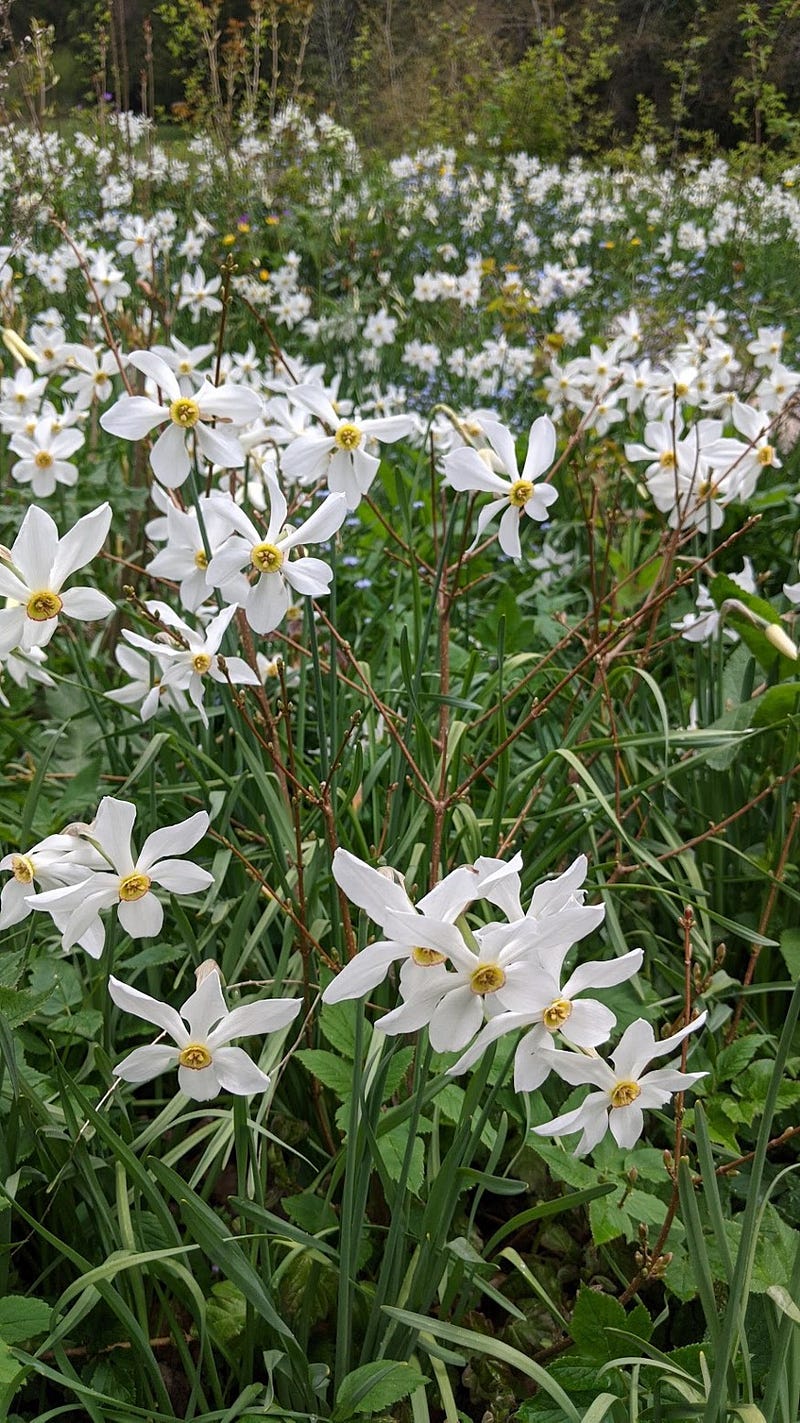
IT IS NOW NARCISSUS O’CLOCK
A story on Switzerland’s wild daffodils
The fragrant flower grows wild in selected spots of the Swiss Canton Vaud. Associations and neighbors that protect them keep track of their flowering in an online calendar, for us to enjoy responsibly. Check out the best of this 2 hs hike through wild daffodils.
I have already shown you so much about the nature of Switzerland’s Canton of Vaud since I started writing on the platform. And there is still more. The region doesn’t stop. Small corners of forest, water jumps, canyons, wildflowers, mountain summits, wild animals, ice formations, local stories, old history, architecture, idiosyncrasies, the effects of seasons. Here’s one story that brings together several of these elements: a wildflower in the mountain, transportation to reach them easily, organized preservation and visits, and history around it.
Poet’s daffodil
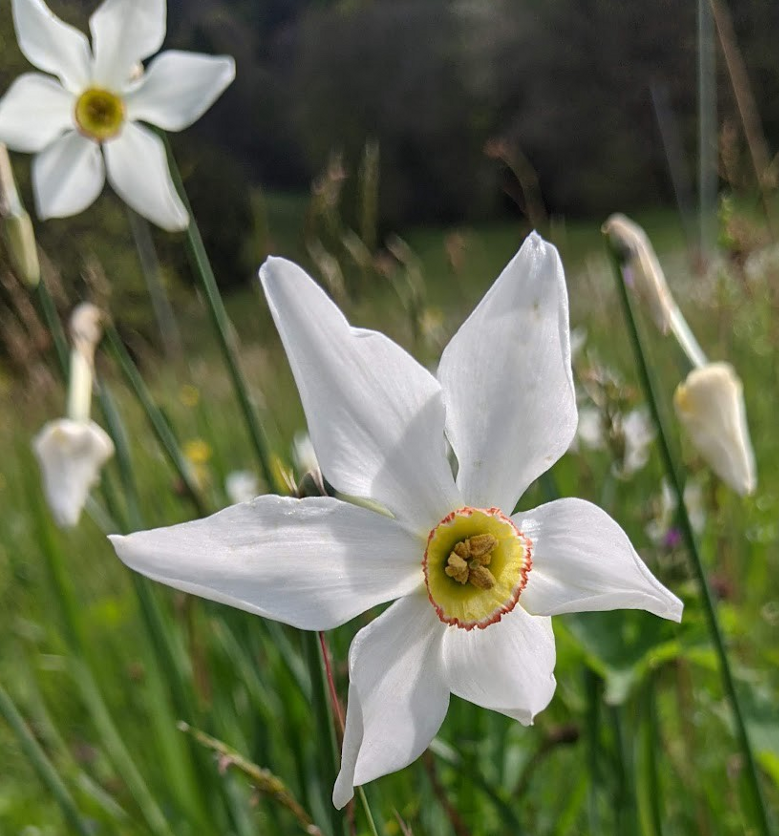
The pivot of this new story is the white “poet’s” daffodils (narcissus) that grow wild in the heights of Montreux, probably the most worldwide famous city of the Swiss canton of Vaud, more so than its capital Lausanne, partly thanks to its holding the famous Jazz Festival and for being the home of illustrious people like Freddie Mercury. But Montreux is much more than that, for many reasons, one of them the wildflower protagonist of this article, which to me is the nicest kind of daffodil: Narcissus poeticus.
Where and how the “snow of May” grows
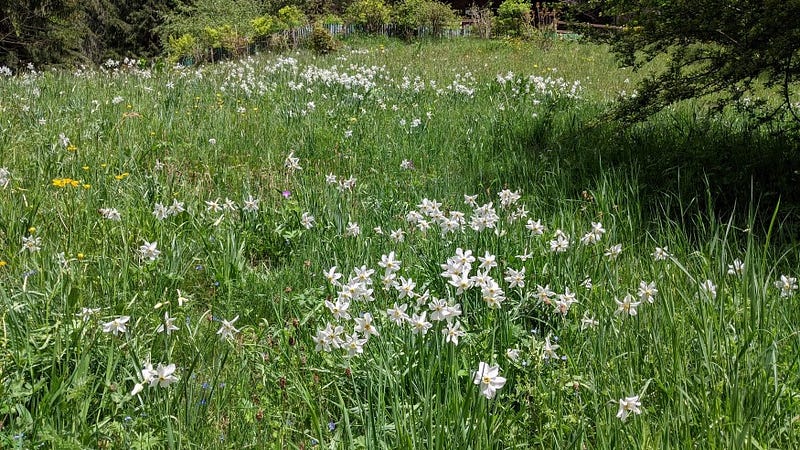
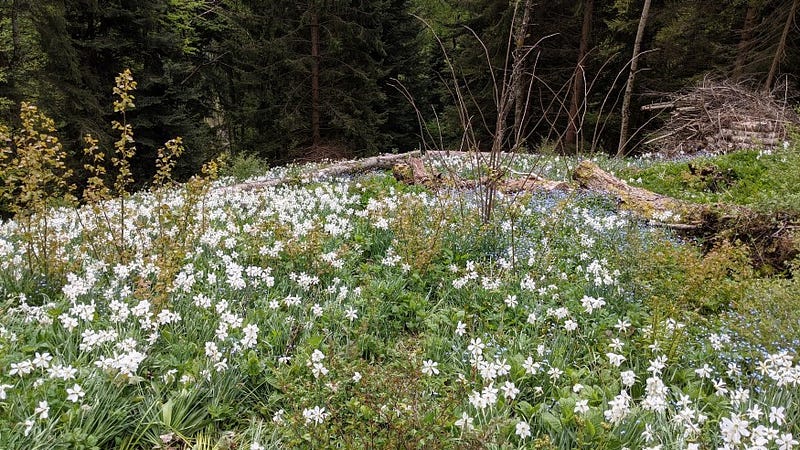
From the heights of Vevey (Les Pleiades) to the heights of Montreux (Caux, Glion, Les Avants), the region has always been rich in white wild daffodils. Their blooming is, or rather used to be, so abundant in May that the fields turned white and people referred to the phenomenon as “the snow of may”. You can still see this phenomenon in some of the last fields left, although they aren’t as extensive as a century ago…
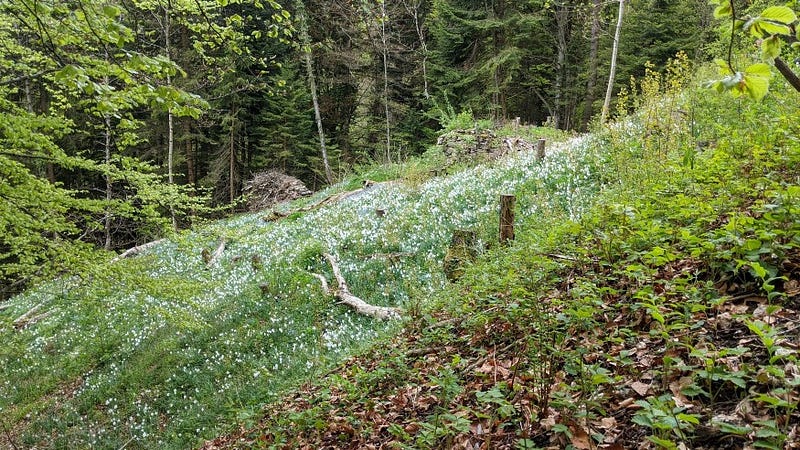
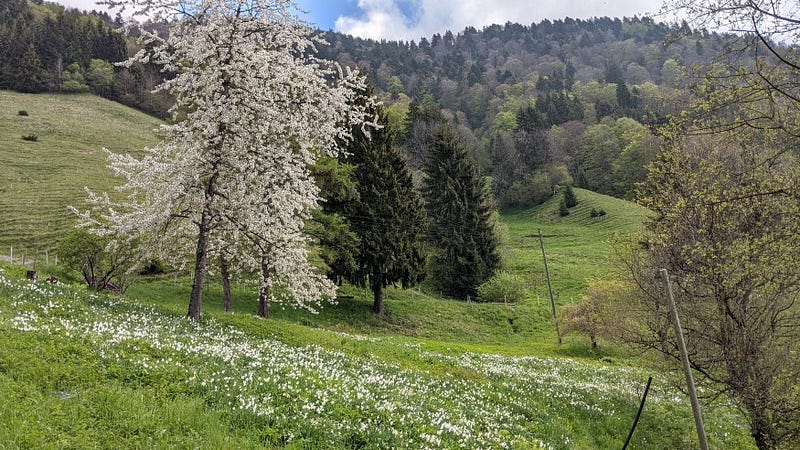
Daffodils like fresh soil, slightly moist and rich in nutrients, such as cow grazing fields -but without cows who will eat them! Daffodils want fresh air but not too cold, so here they grow from around 700 to 1800 m.a.s.l. They want sun, so they thrive in the open spaces of forest facing the South.
Many wild orchids happen to grow in similar conditions, so sometimes you may spot mixtures like these:
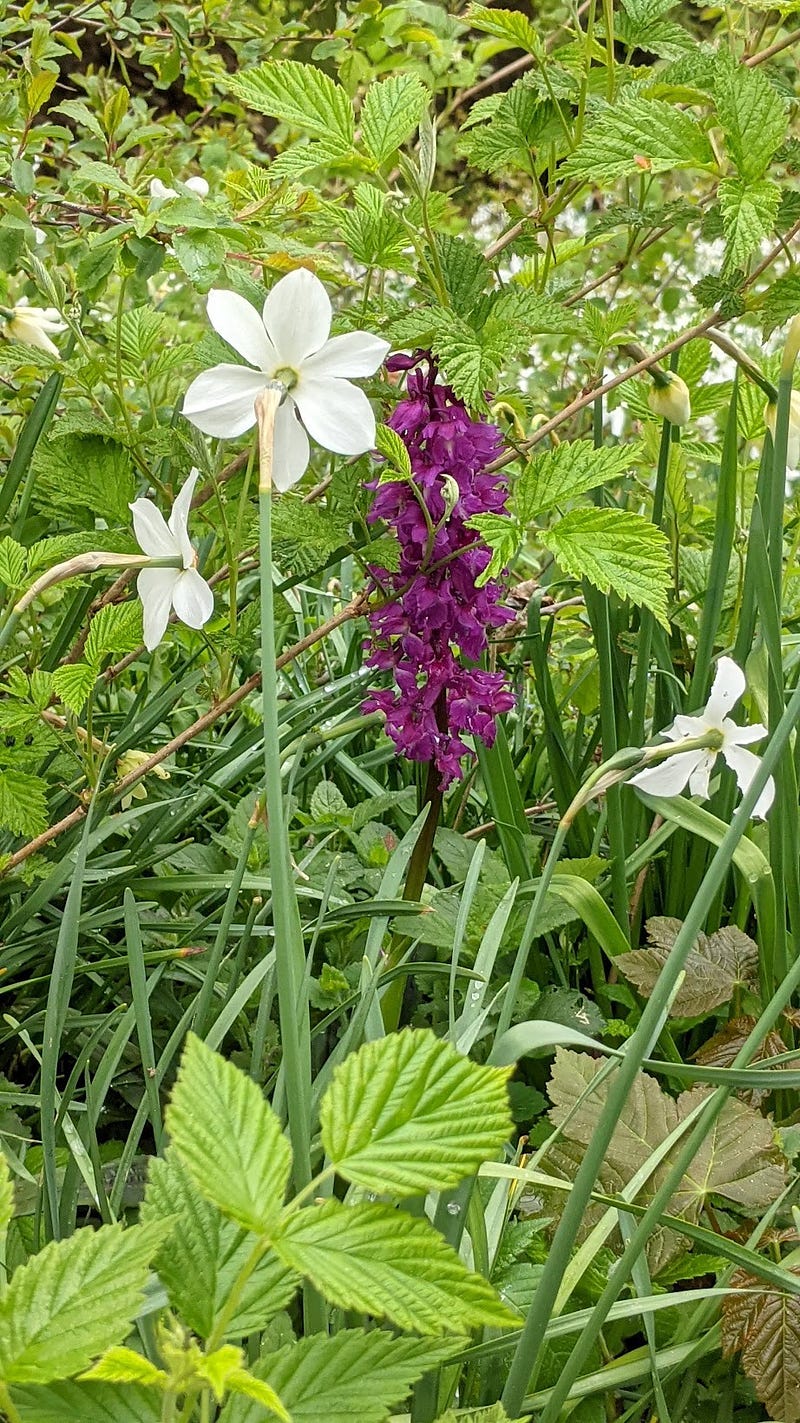
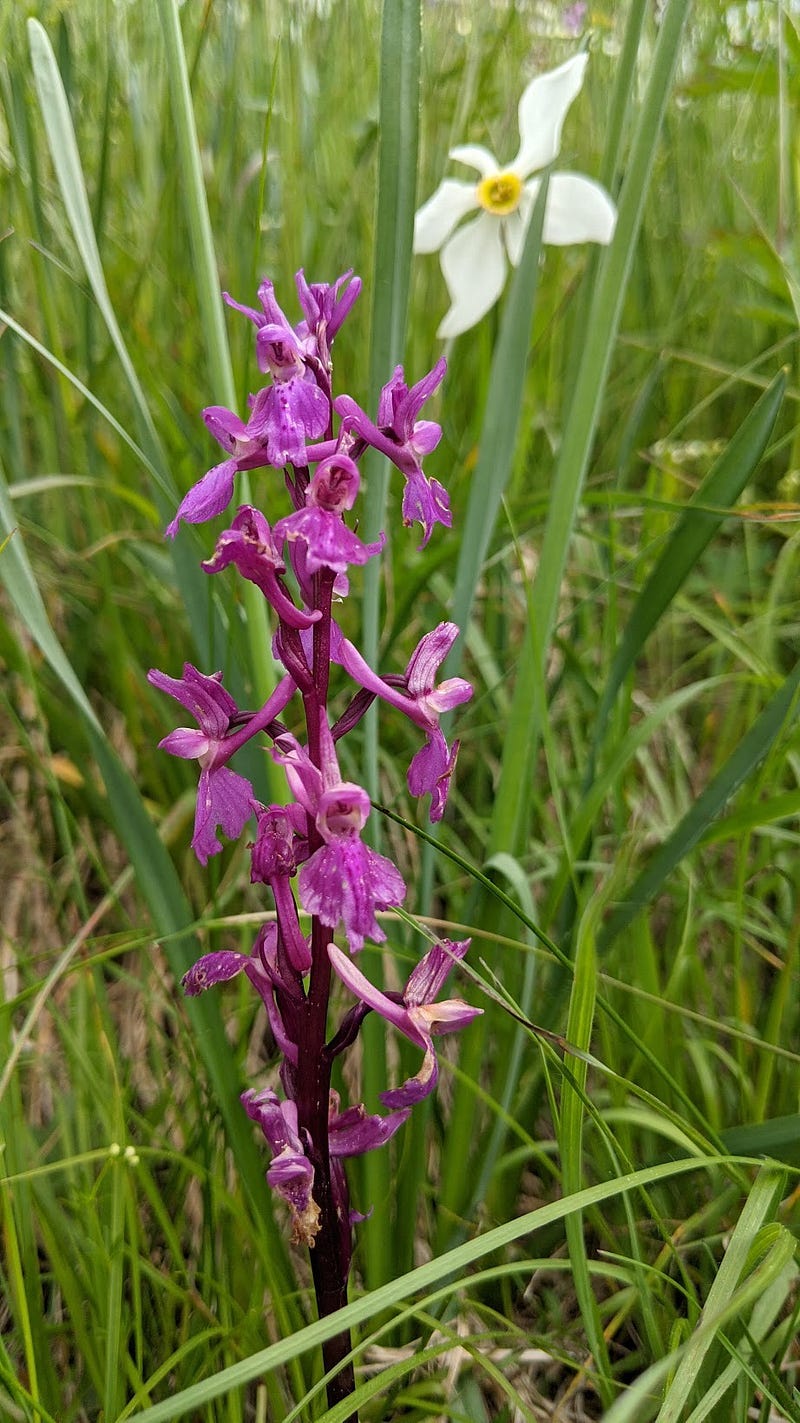
The first wild daffodil leaves appear around March, and flowering takes place from May to July. A local association dedicated to protecting and promoting respectful tourism around the wild daffodils tells you where and when they are flowering:
This is for example how the “daffodil forecast” displays as of May 9, 2022:
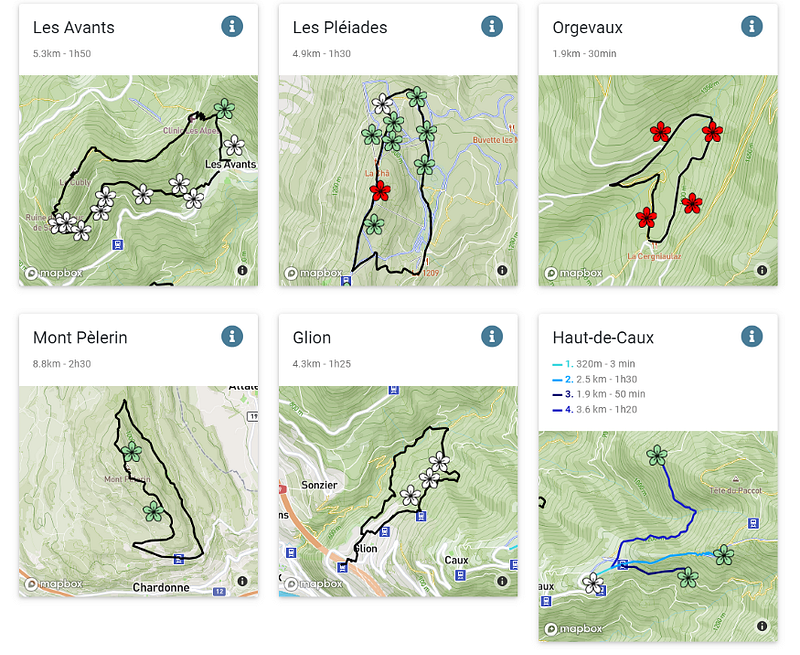
Calendar of wild daffodil blooming in the 6 main fields protected by the Association, as of May 9, 2022. The circuit I like most, and that I just did this weekend when and where I took these photographs, is that of Les Avants on the top left.
Daffodils reproduce by splitting their bulbs after growing through the spring and early summer, and also sexually by producing seeds. Although their reproduction is relatively easy, the number of daffodils decayed sharply last century and is still declining. Yes, you nailed it, this happened thanks to human actions.
For more of my photos in these fields, check this out:
Wild daffodils as a touristic resource
By the end of the 19th century, Montreux began to exploit daffodils flowering as a touristic resource. The city dedicated a days-long celebration to the wild daffodils, dubbed in French “Fête des Narcisses”, which ran from 1897 to 1957.
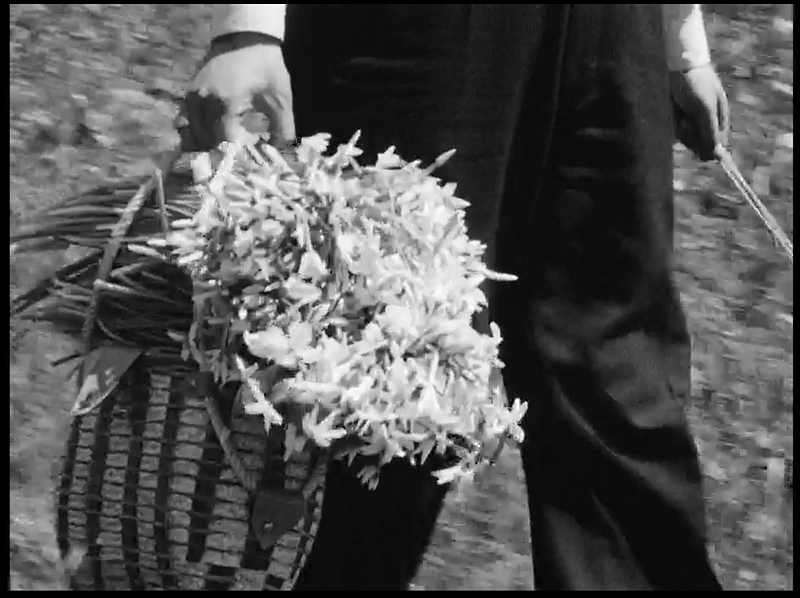
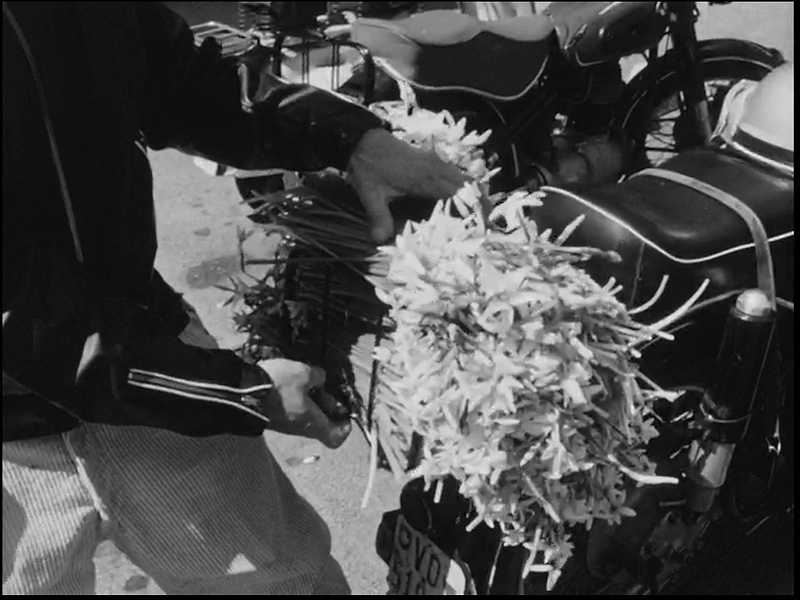
The flowers, and also unfortunately their harvest, became an attraction. There were dedicated train connections linking the farthest cities of the country right to the core forests of daffodils; flowers were sold far away even exported to other countries, constituting an important income for the farmers; and a daffodil celebration was held in Montreux with various shows and parades of thousands of cut flowers. As a result, during the first decades of the 19th century, the population of wild daffodils began to decline quickly.
I am not sure whether the sudden stop of the celebrations in 1957 was intentional to protect the resource or not, but it is a fact that the exploitation of the resource was having a strong impact and the plant began to decrease its population, loomed toward local extinction. Chance or informed decision, stopping the celebration before the species disappeared was critical for us to enjoy the flowers still today. Like in my hike this weekend:
You can see photographs of the daffodil celebrations dating back to the beginning of the 20th century, here:
Tradition almost killed nature, but locals reacted on time
Since 1957, year of the last “Fête des Narcisses”, there was only one more celebration, in 2015. It happened with barely any daffodils being cut, as opposed to the apogee times of the celebration when lots of flowers were cut everywhere. Here’s media coverage of the 2015 celebration, where you can see natural flowers other than daffodils and some artificial daffodil flowers and representations:
Awareness about protecting wild daffodils has been raised, and an association for their preservation fights since 1999 to restore the important position that the flower should have in the landscapes of the region. Today, wild daffodils around the heights of Vevey and Montreux continue to bloom, but they are still declining due to various factors, some controllable and others not much so. For example, cows graze from April when the daffodil leaves are out. This is controllable, and in fact, the organizations trying to protect the resource have agreed with farmers on this issue. On the other hand, reforestation of open green spaces is required to recover some of the original wild forests, but it is exactly in these places where daffodils can today thrive. The progression of building zones poses another risk. And it certainly doesn’t help when tourists walk into the daffodil fields or harvest their flowers.
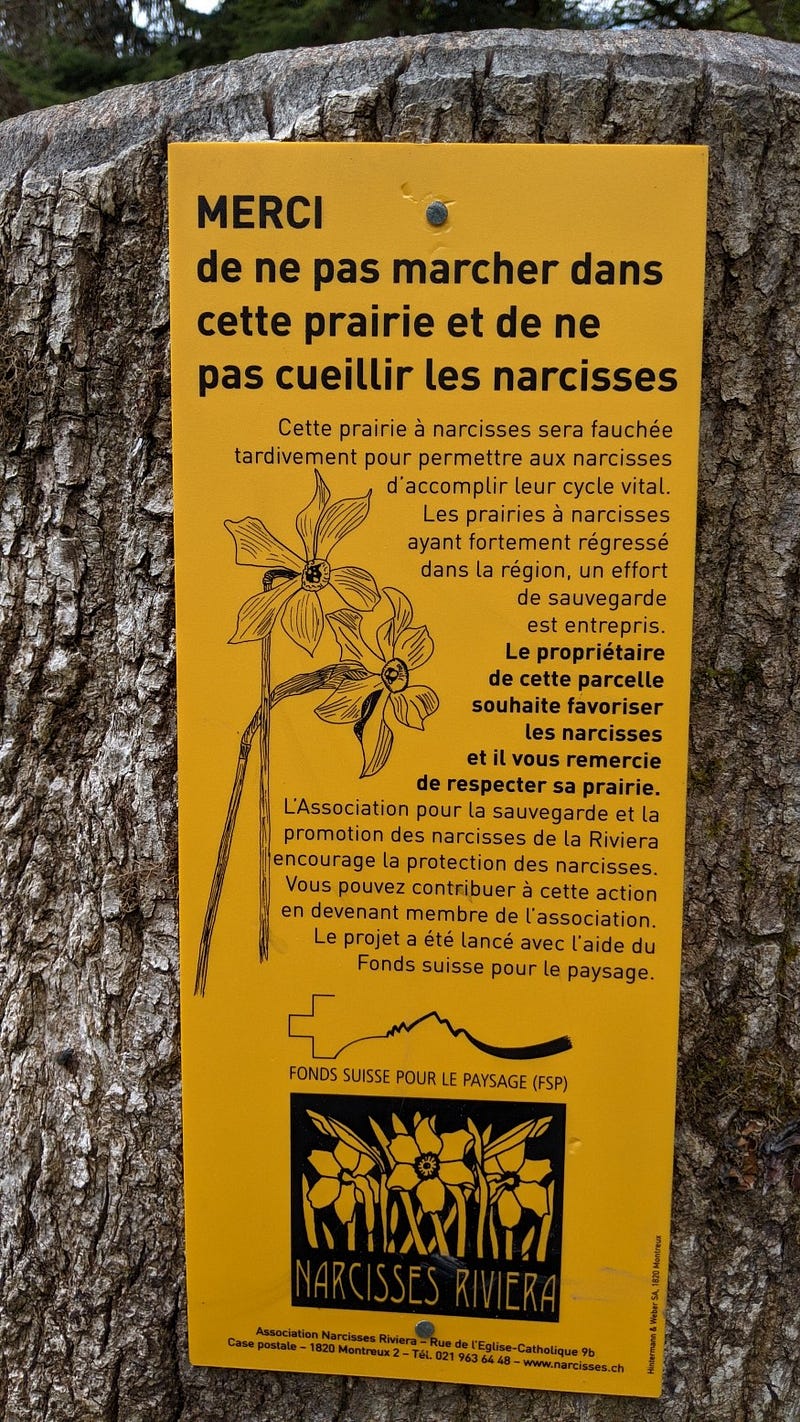
The daffodil fields are an integral part of the regional landscape. I really hope they will survive. Scenes like this will (and should) hopefully never happen again -happily for the wild daffodils:
Further reads and wildflower photography
Website of the association that protects the daffodil fields:
Information at the official website of the Canton de vaud, in French:
Other photostories about flowers around here, wild and planted:
www.lucianoabriata.com I write and photoshoot about everything that lies in my broad sphere of interests: nature, science, technology, programming, etc. Become a Medium member to access all its stories (affiliate links of the platform for which I get small revenues without cost to you) and subscribe to get my new stories by email. To consult about small jobs check my services page here. You can contact me here.