avatarLucianoSphere (Luciano Abriata, PhD)

Free AI web copilot to create summaries, insights and extended knowledge, download it at here

2176

Abstract

s-57705edfa229">alpine garden</a> at the summit).</p><p id="38bd">A close-up photo of this specimen’s flowers:</p><figure id="b3e1"><img src="https://cdn-images-1.readmedium.com/v2/resize:fit:800/1*gDKUFKPMLpFqpOWKQ-Crlw.jpeg"><figcaption></figcaption></figure><p id="a4a4">Apparently this orchid is <a href="https://www.first-nature.com/flowers/dactylorhiza-praetermissa.php"><i>Dactylorhiza praetermissa</i></a><i>. </i>I was very lucky to find in the same hike this other plant which seems to belong to the same family but had a different set of colors:</p><figure id="fc2f"><img src="https://cdn-images-1.readmedium.com/v2/resize:fit:800/1*-aZd8wD6sc9exU5NYiod7w.jpeg"><figcaption>Probably another <a href="https://www.first-nature.com/flowers/dactylorhiza-praetermissa.php">Dactylorhiza praetermissa</a>. Photo by author Luciano Abriata.</figcaption></figure><p id="3442">I was also lucky to spot one case of <a href="https://en.wikipedia.org/wiki/Platanthera_bifolia"><i>Platanthera bifolia</i></a>, the “butterfly orchid” as some call it. Not the nicest colors, but quite nice shapes:</p><figure id="b771"><img src="https://cdn-images-1.readmedium.com/v2/resize:fit:800/1*fyEK5Fh6O82UVPT2a0UKOw.jpeg"><figcaption>Probably <a href="https://en.wikipedia.org/wiki/Platanthera_bifolia"><i>Platanthera bifolia</i></a>. Photo by author Luciano Abriata.</figcaption></figure><p id="4461">I couldn’t identify this next one, but it might belong to the genus <i>Platanthera </i>too (if you can please leave a comment!). I found it in the Jura mountains. Look at the shape of the flowers:</p><figure id="b2e7"><img src="https://cdn-images-1.readmedium.com/v2/resize:fit:800/1*qa9SSQPBztyjn8BHRx4nOA.jpeg"><figcaption></figcaption></figure><figure id="3203"><img src="https://cdn-images-1.readmedium.com/v2/resize:fit:800/1*-TGVAQYbt0Pj7FuwvUlH9w.jpeg"><figcaption>Probably another kind of <a href="https://en.wikipedia.org/wiki/Platanthera_bifolia"><i>Platanthera</i></a>. Photo by author Luciano Abriata.</figcaption></figure><p id="6bbe">I could also find some specimens of bird’s nest orchid, <a href="https://en.wikipedia.org/wiki/Neottia_nidus-avis"><i>Neottia nidus-avis</i>

Options

</a><i>. </i>This species is super interesting because it is non-photosynthetic, as it grows associated to a mycorrhizal fungus from which it gets its nutrition. Interestingly, the fungus itself grows associated to the roots of certain types of trees. Biology is amazing.</p><p id="bb09">As you see this orchid has no green parts, and no leaves at all. In fact it spends most of its cycle under the soil, where it lives associated to its fungus. Only in spring does it emerge, by sprouting a long stem with flowers -which also lack any colors.</p><figure id="4363"><img src="https://cdn-images-1.readmedium.com/v2/resize:fit:800/1*CwICDDw7FH0-cm5aU1qpQw.jpeg"><figcaption>Neottia nidus-avis. Photo by author Luciano Abriata.</figcaption></figure><p id="c2b2">A close up on the flowers, which have interesting shapes but barely no colors -in fact it’s hard to distinguish them from the leaf litter:</p><figure id="4447"><img src="https://cdn-images-1.readmedium.com/v2/resize:fit:800/1*gsjcEkAdlMNjKvIzTAfAvw.jpeg"><figcaption>Close-up on the flowers of a Neottia nidus-avis. Photo by author Luciano Abriata.</figcaption></figure><p id="f690"><b>I will keep my eyes open in the next hikes, as the summer slowly gets to its end. Stay tuned!</b></p><p id="2ebd">UPDATE! I found a new specimen, but haven’t been able to identify with certainty yet. Here it is:</p><figure id="7186"><img src="https://cdn-images-1.readmedium.com/v2/resize:fit:800/1*5PkixpeCuGECe5g29l_tLw.jpeg"><figcaption>Another orchid I just spotted! Photo by author Luciano Abriata.</figcaption></figure><p id="a3f0"><i>I am a nature, science, technology, programming, and DIY enthusiast. Biotechnologist and chemist, in the wet lab and in computers. I write about everything that lies within my broad sphere of interests. Check out my <a href="https://lucianosphere.medium.com/lists">lists</a> for more stories. <a href="https://lucianosphere.medium.com/membership">Become a Medium member</a> to access all stories by me and other writers, and <a href="https://lucianosphere.medium.com/subscribe">subscribe to get my new stories</a> by email (original affiliate links of the platform).</i></p></article></body>

A summer spotting the wild orchids of Switzerland

PART OF MY SERIES Natural wonders of Switzerland’s canton Vaud
Photo by author Luciano Abriata.

I’ve been living in Switzerland for over 9 years, and always knew that several species of wild orchids grow up in the mountains, but I had never spotted any. This year I took some reads and got informed by local botany aficionados, and then went for them. It’s amazing how this training allowed me to quite easily spot several orchids! Here I share with you my best photos, with some identifications and fun facts -don’t miss the non-photosynthetic orchid!

Don’t expect huge Phalaenopsis-like plants. Rather, the wild orchids that grow up around here undergo hibernation in winter, and they have to sprout leaves and flowers each spring. Therefore they are quite small; in fact, all the plants I could identify were not taller than 30–40 cm at most. For example, this photo shows a family of orchids at close to real size (compare for example to the dandelion flower):
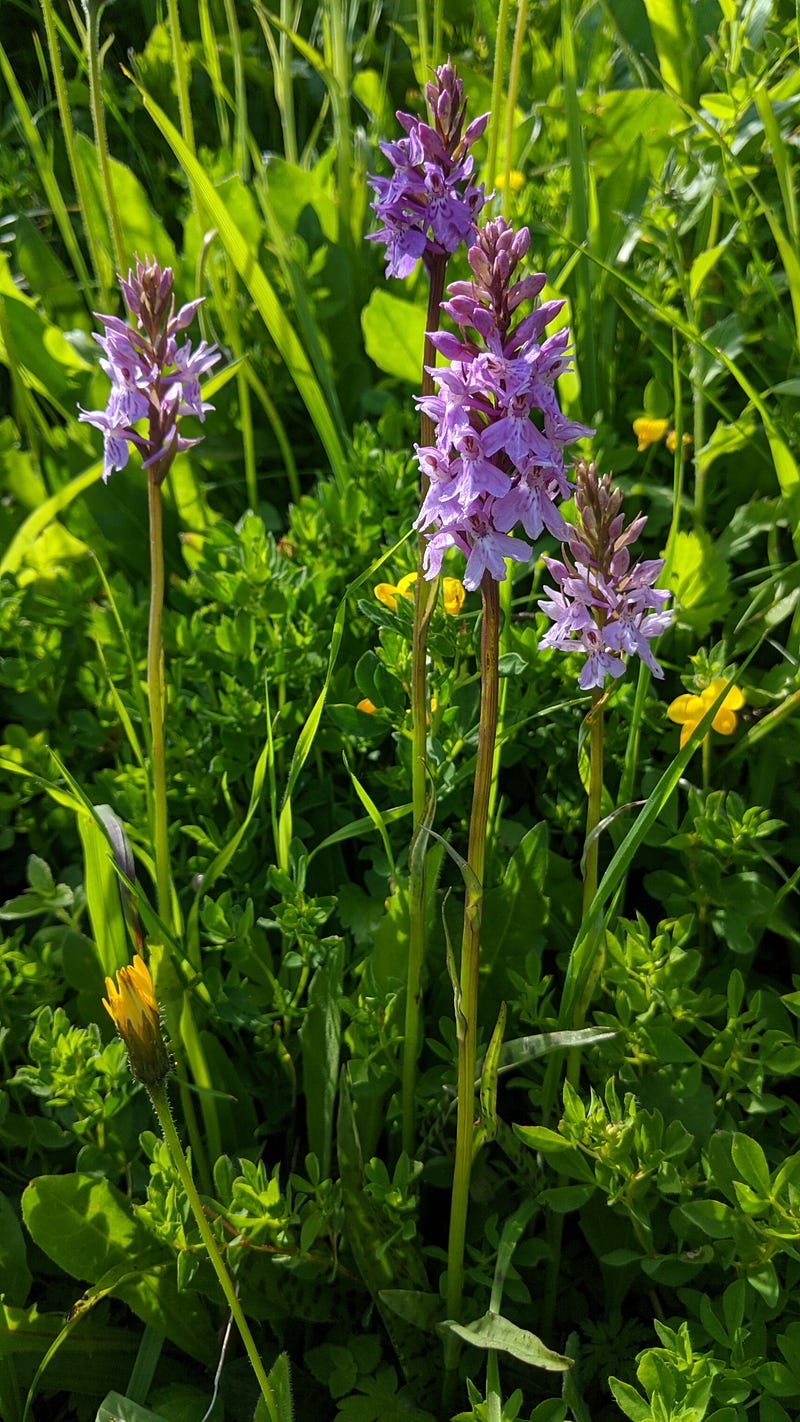
Probably Dactylorhiza praetermissa. Photo by author Luciano Abriata.

By the way, this orchid was the easiest one to find. I saw it many times this summer. This specimen, in particular, I photographed it when I hiked up to Rochers de Naye, above the famous city of Montreux (see this and this stories of that flower-spotting hike, and my story about an alpine garden at the summit).

A close-up photo of this specimen’s flowers:
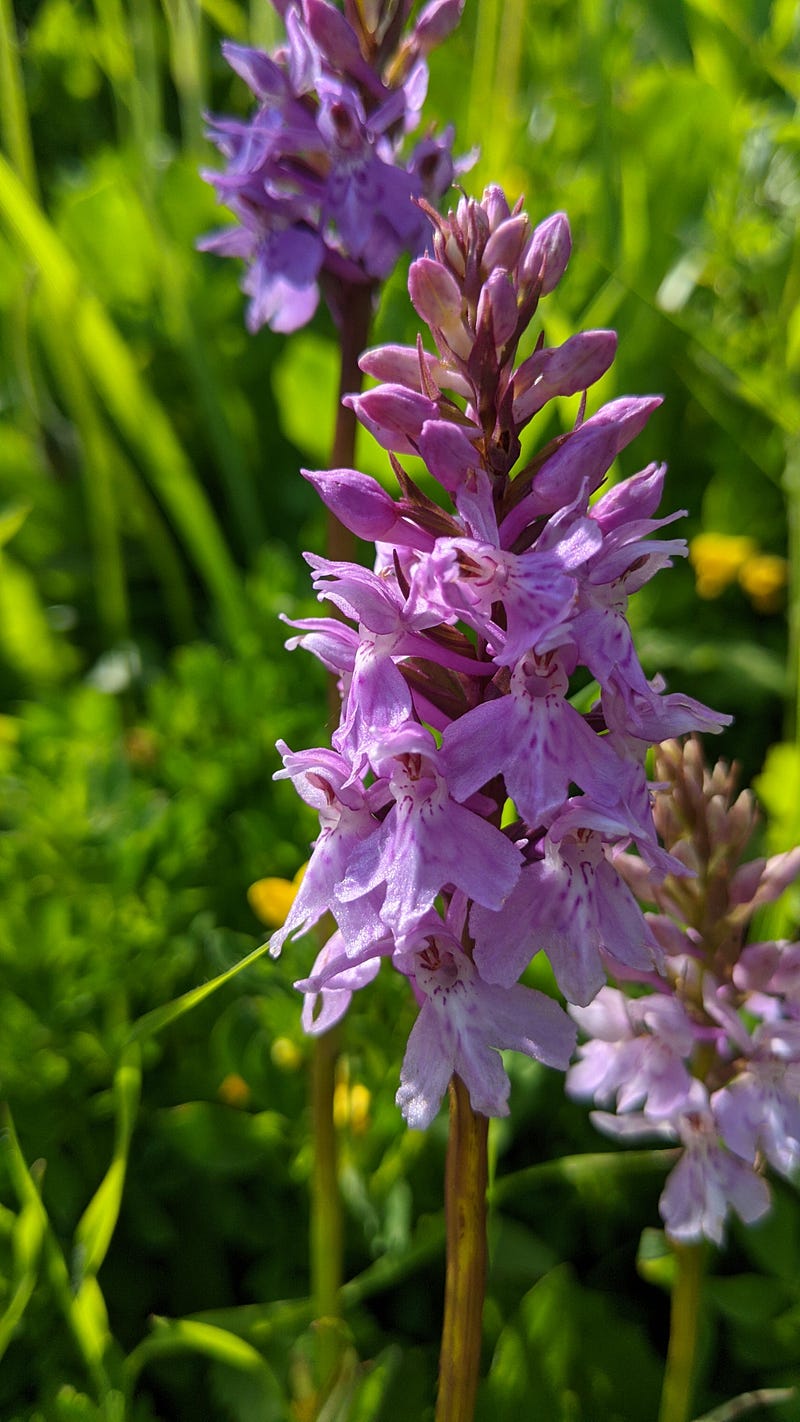
Apparently this orchid is Dactylorhiza praetermissa. I was very lucky to find in the same hike this other plant which seems to belong to the same family but had a different set of colors:
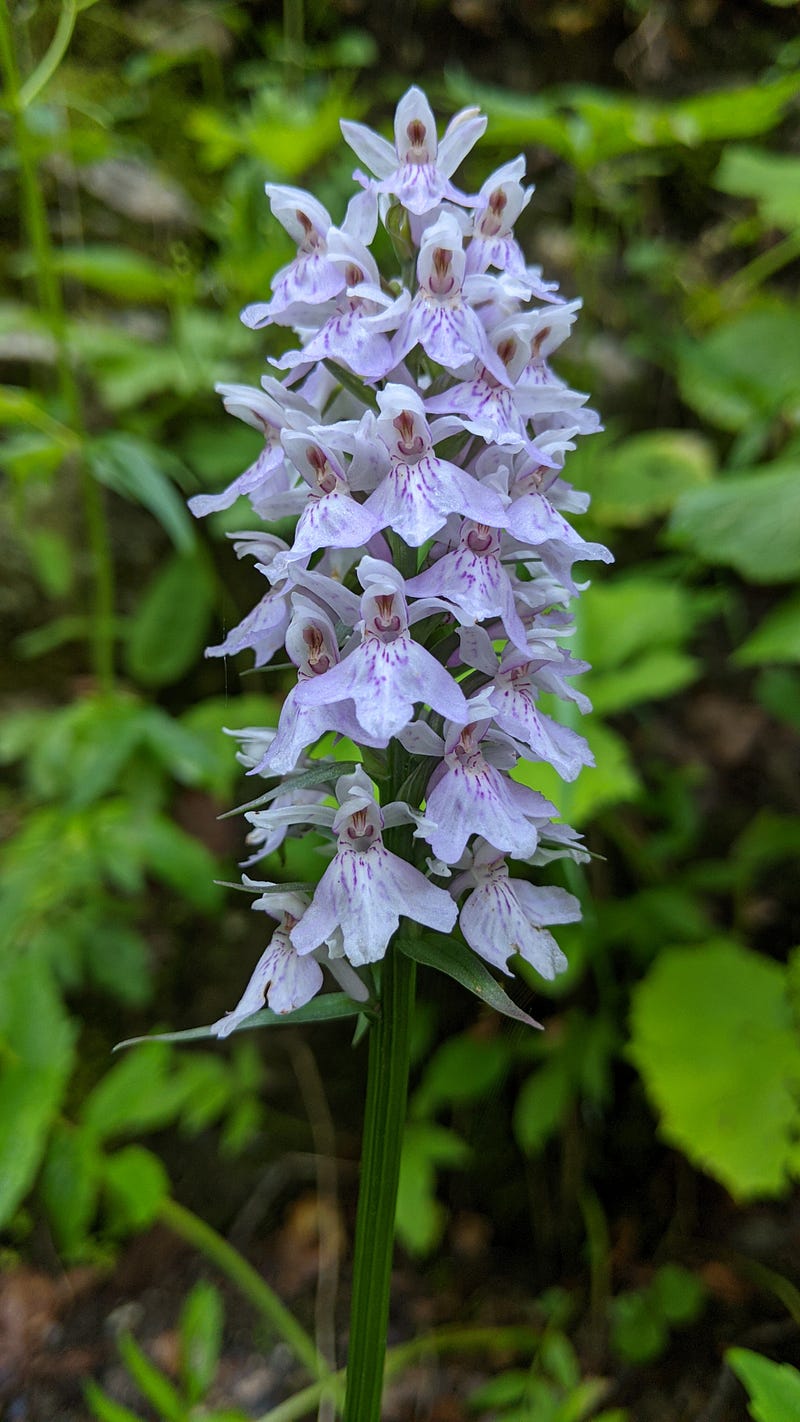
Probably another Dactylorhiza praetermissa. Photo by author Luciano Abriata.

I was also lucky to spot one case of Platanthera bifolia, the “butterfly orchid” as some call it. Not the nicest colors, but quite nice shapes:
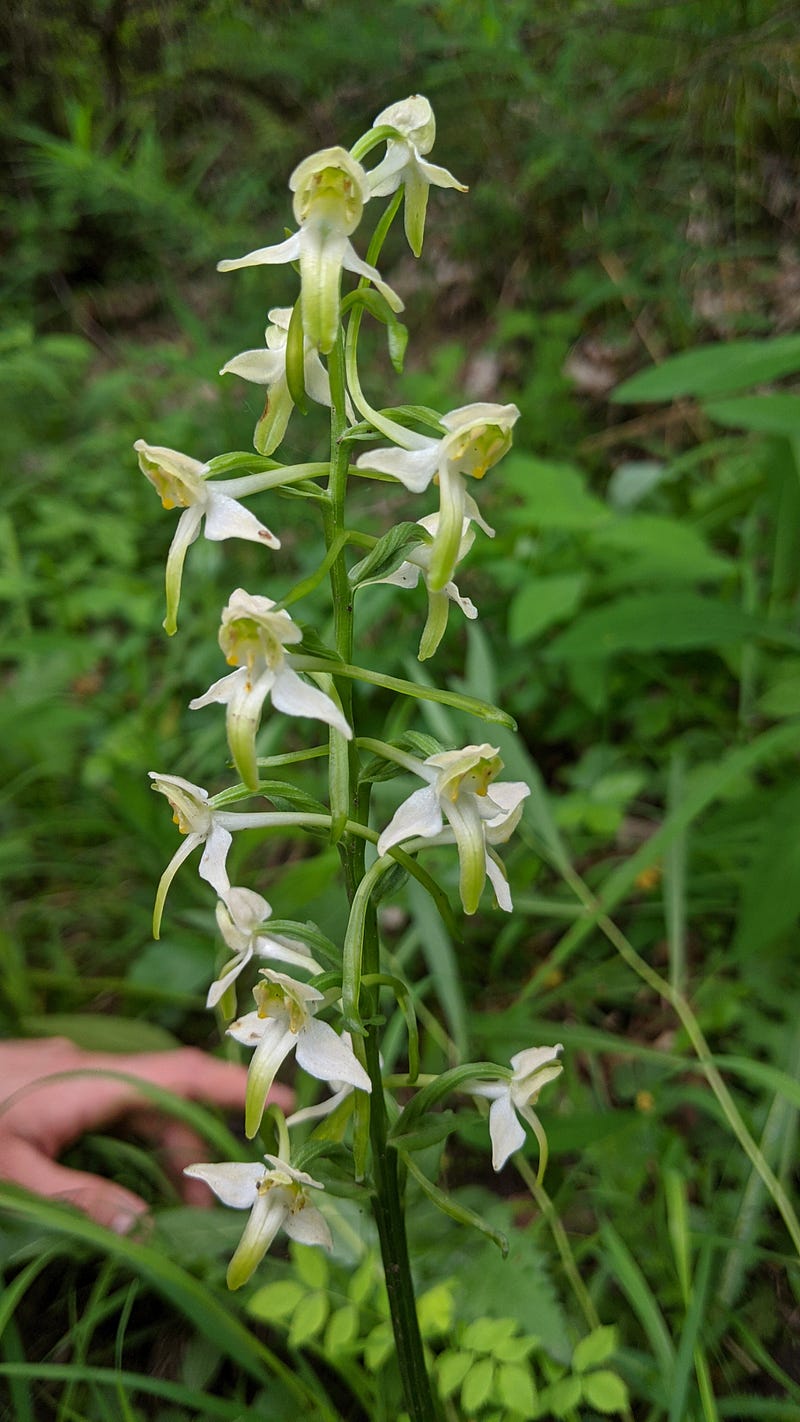
Probably Platanthera bifolia. Photo by author Luciano Abriata.

I couldn’t identify this next one, but it might belong to the genus Platanthera too (if you can please leave a comment!). I found it in the Jura mountains. Look at the shape of the flowers:
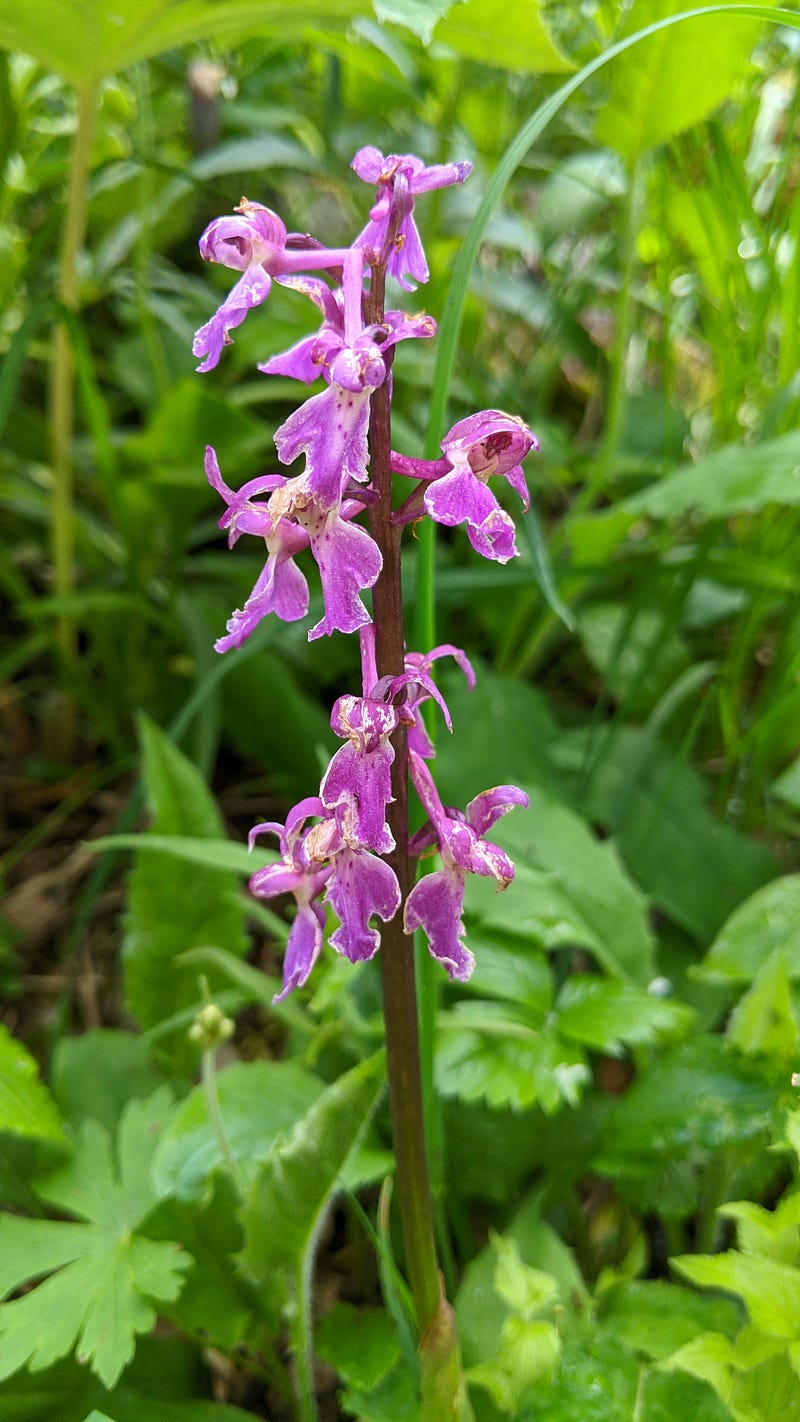
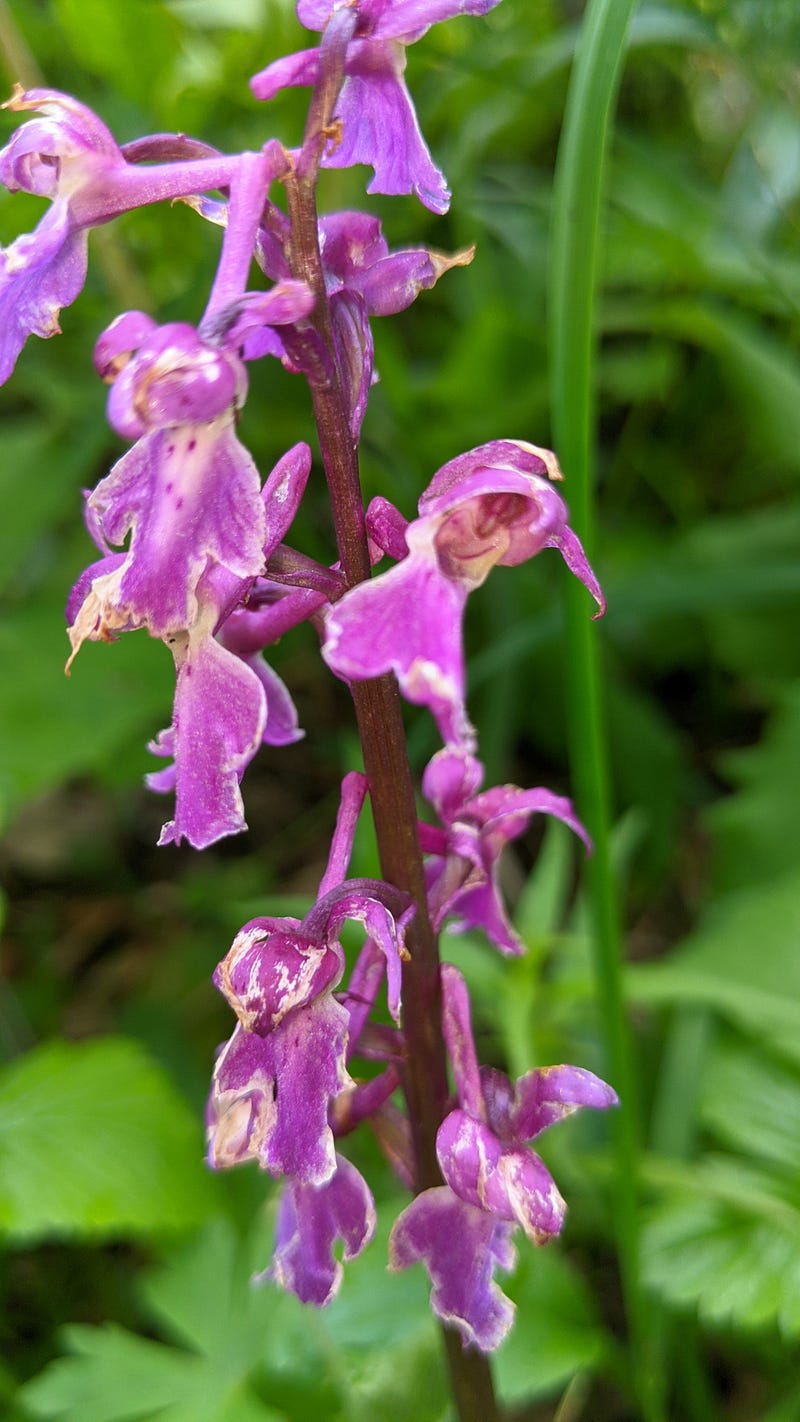
Probably another kind of Platanthera. Photo by author Luciano Abriata.

I could also find some specimens of bird’s nest orchid, Neottia nidus-avis. This species is super interesting because it is non-photosynthetic, as it grows associated to a mycorrhizal fungus from which it gets its nutrition. Interestingly, the fungus itself grows associated to the roots of certain types of trees. Biology is amazing.

As you see this orchid has no green parts, and no leaves at all. In fact it spends most of its cycle under the soil, where it lives associated to its fungus. Only in spring does it emerge, by sprouting a long stem with flowers -which also lack any colors.
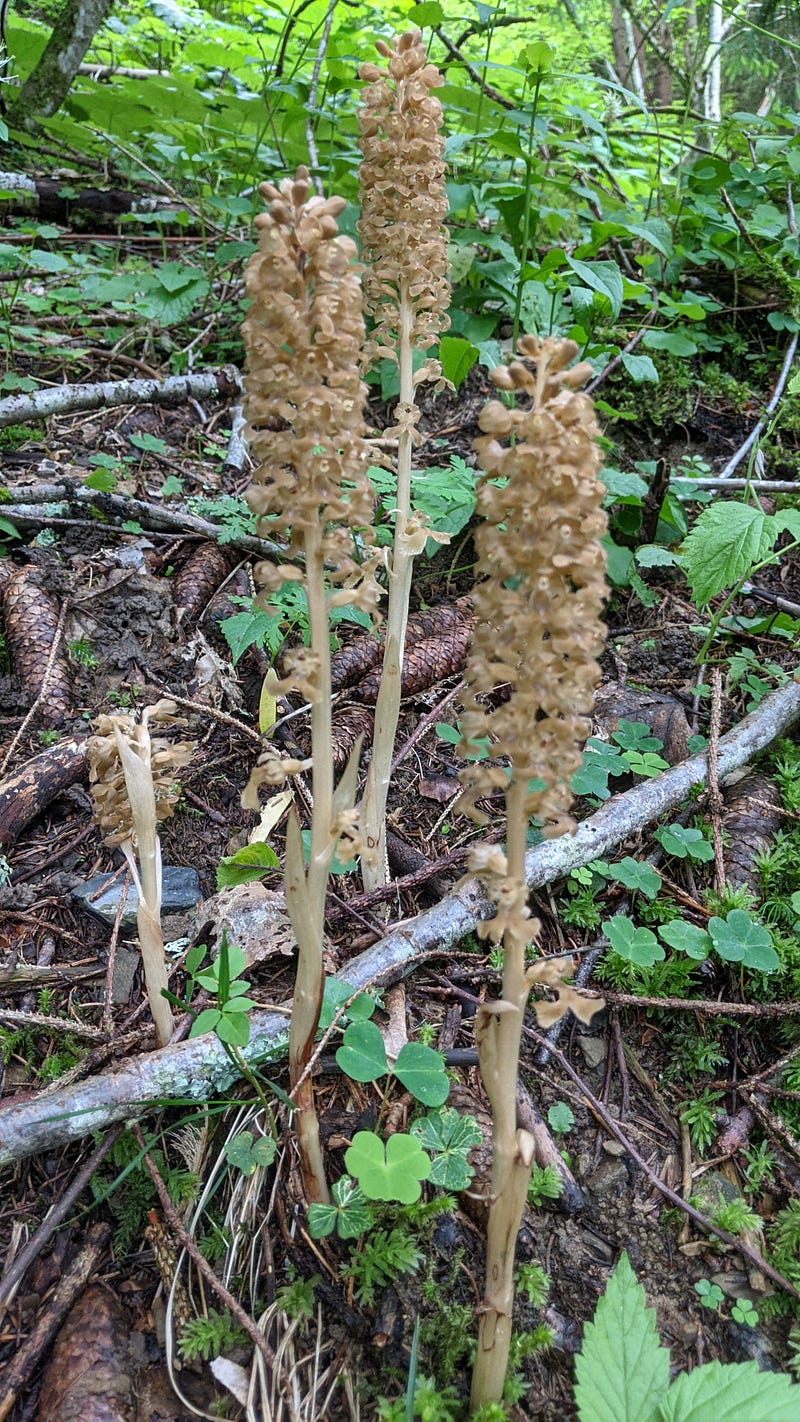
Neottia nidus-avis. Photo by author Luciano Abriata.

A close up on the flowers, which have interesting shapes but barely no colors -in fact it’s hard to distinguish them from the leaf litter:
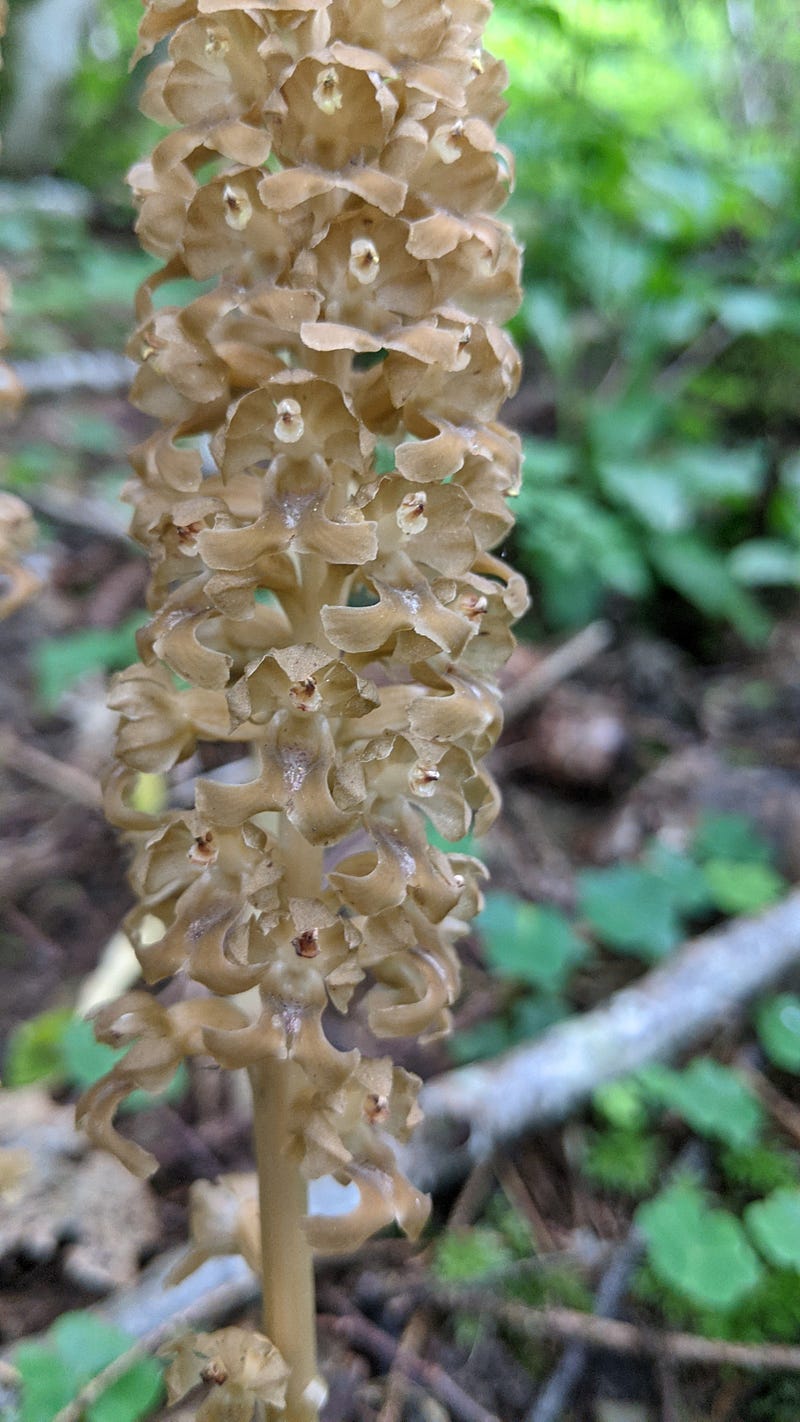
Close-up on the flowers of a Neottia nidus-avis. Photo by author Luciano Abriata.

I will keep my eyes open in the next hikes, as the summer slowly gets to its end. Stay tuned!

UPDATE! I found a new specimen, but haven’t been able to identify with certainty yet. Here it is:
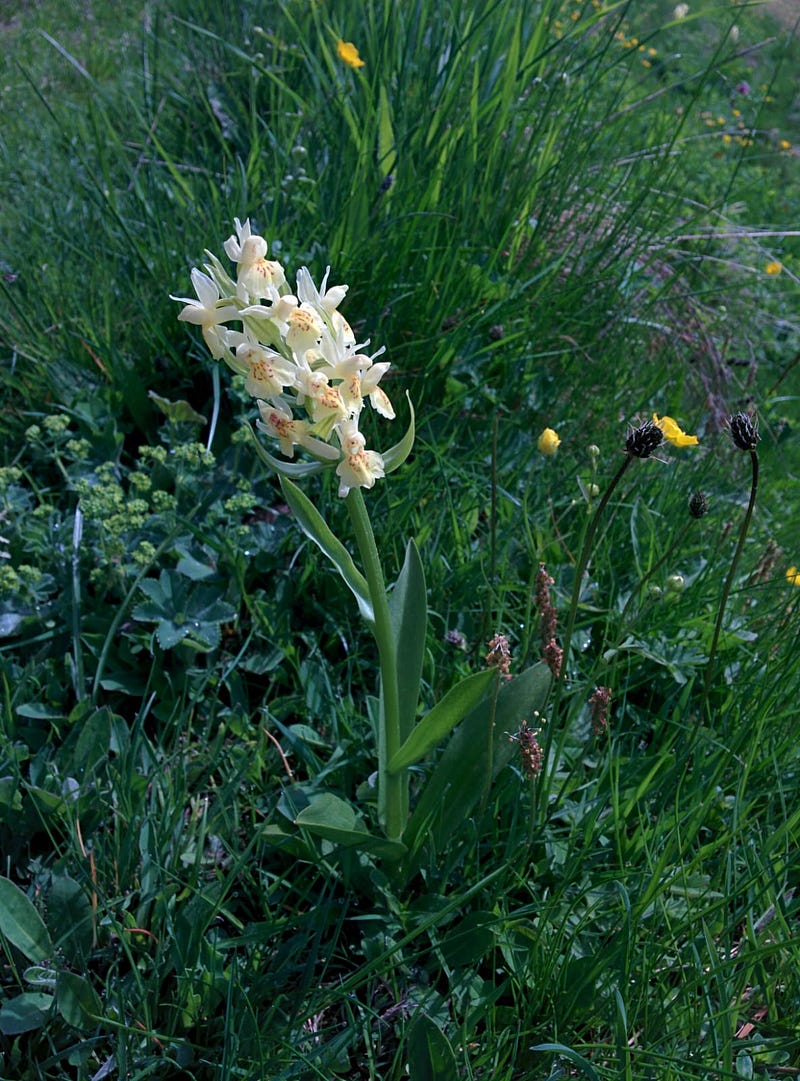
Another orchid I just spotted! Photo by author Luciano Abriata.

I am a nature, science, technology, programming, and DIY enthusiast. Biotechnologist and chemist, in the wet lab and in computers. I write about everything that lies within my broad sphere of interests. Check out my lists for more stories. Become a Medium member to access all stories by me and other writers, and subscribe to get my new stories by email (original affiliate links of the platform).

Orchids
Nature
Photography
Europe
Flowers
Recommended from ReadMedium