
(How) Have LGBTQ Film & Literature Shaped You?
Queer Allegory vs. Explicit Representation
Movies about the Artist’s Journey
I want to interrogate one of my own arguments! It’s a joy to propose a thesis and then argue against it. Read to the end to see which side wins the debate!
I wrote about how queerness as “allegory” is woefully insufficient in an era when queer people are actively under attack, because it allows an apathetic viewer to look away and imply I’m just reading too much into things.
That article was about Pleasantville, the masterful film about two 90s teens magically transported into a 50s tv show, where they ignite a passion in all of the townspeople, who gradually morph into technicolor — a concept that echoes the hateful “social contagion” rhetoric we hear today.
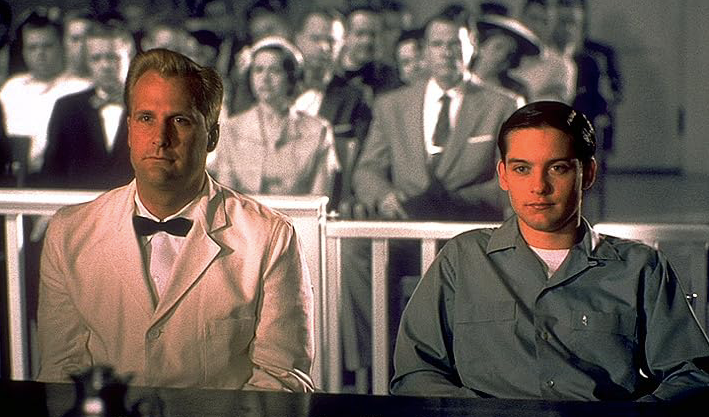
My take was that a film about a conservative society reacting violently to a younger generation’s sexual awakening, to the point of burning books and smashing windows, is impossible for me to watch without a queer lens. So, I wondered why none of the characters were actually portrayed as gay.
But it’s worth considering the upside of allegory.
Aside from the welcome space the Pleasantville allegory makes for many other socio-political comparisons, it’s reasonable to assume an allegory can attract a significant number of viewers whose hearts and minds could be changed, but who might have resisted a more canonically queer film.
When I was a kid, before I understood the queer subtext, I related broadly to the characters shaking free from the rigid conventions of the culture (a feeling I imagine any kid in the suburbs could understand).
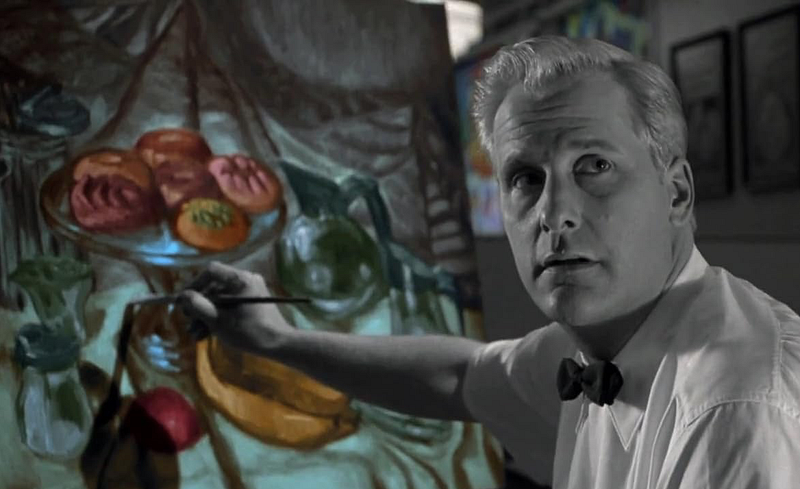
And as a young artist, I related to the Jeff Daniels character, who follows his passion for painting, even as the town council revokes his access to vibrant colors and criminalizes his murals for violating codes of conduct.
Now of course, I see the implicit queerness in that dynamic. Censorship of art, on the grounds that it’s detrimental to society, often overlaps with anti-queer sentiment — like the pervasive drag bans we’re witnessing today.
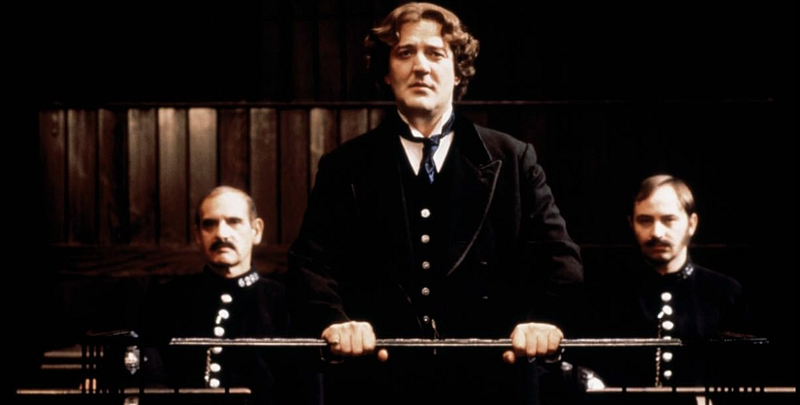
But as much as I craved explicitly queer stories, would an explicitly queer version of Pleasantville have moved me more deeply? Have I been moved by films that more literally portray a queer artist on trial?
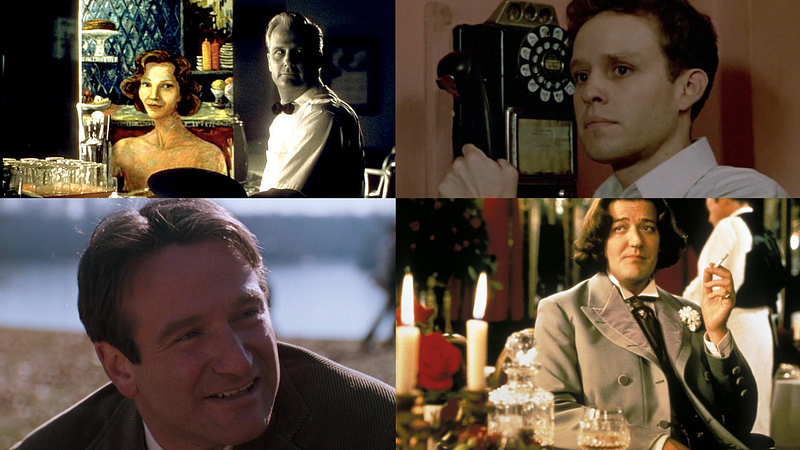
Wilde, the beautiful biopic about the great Oscar Wilde’s life and career, his contentious love affair with Alfred Douglas, and his unjust imprisonment, moved me somewhat less. Howl, the experimental film about gay Beat poet Allen Ginsberg’s obscenity trial, moved me far less.
Is that just about an imbalance in the artistry of these three films? Or does it maybe say something about the potency of allegory?
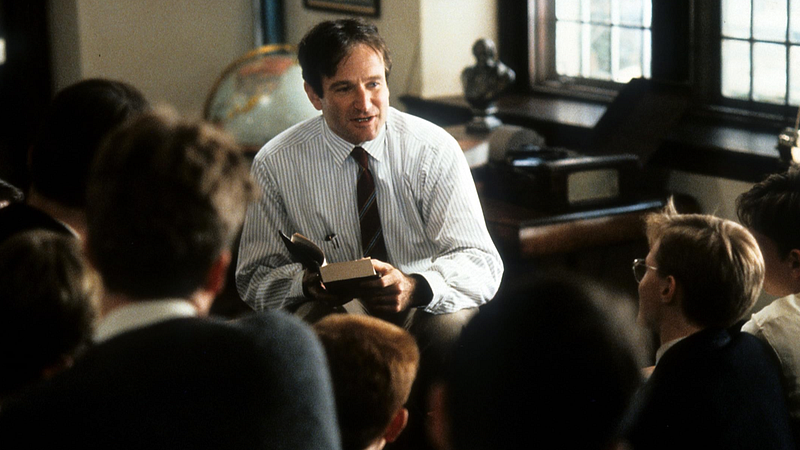
As a young man in love with poetry and theatre, I’ve always held a special place in my heart for Dead Poets Society, the classic film about a group of school boys inspired by a professor teaching them to seize the day.
Much like Pleasantville, I related deeply to the lead character’s passion for his art, and to the general themes about disrupting social conventions and defying authority in pursuit of a more beautiful life.
I was recently reminded of the implicit queerness of those themes…Not to mention the inherent queerness of a bunch of beautiful young men sneaking off at night to read each other Walt Whitman poetry.
But I hesitate to say I wish the boys were confirmed queer. Because again — are the apathetic viewers outweighed by the ones willing to be moved?
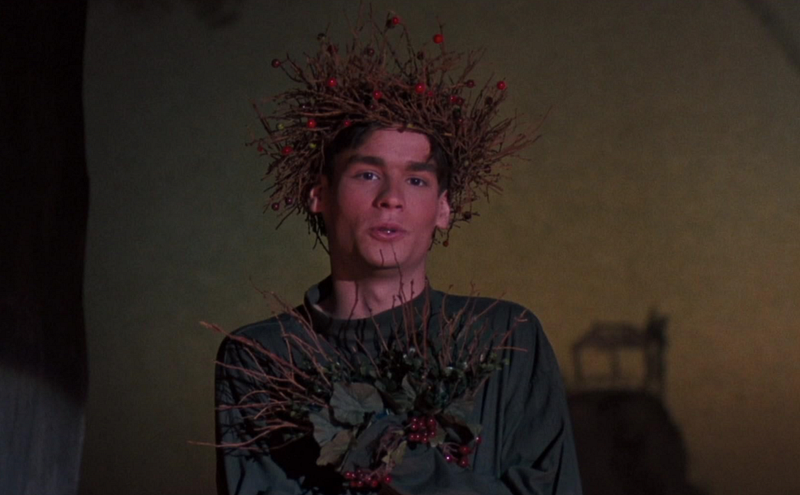
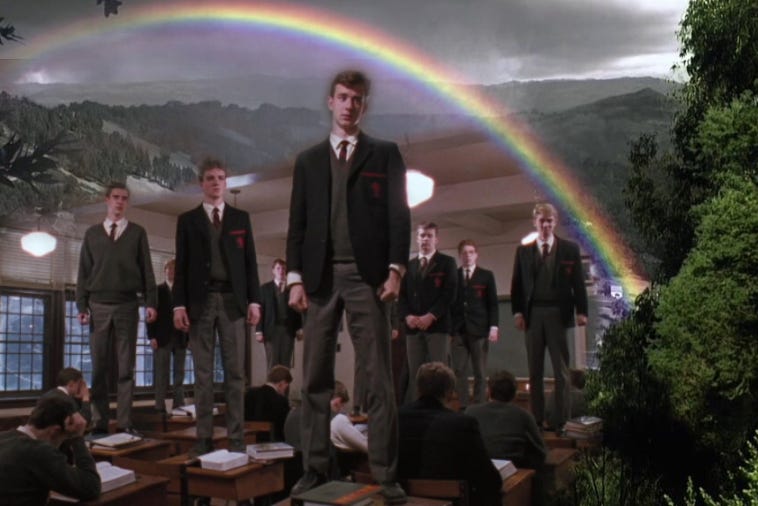
If you have a relative who loves Dead Poets Society, but is still a little on the fence about gay rights, show them the scene where Neil tries to explain to his parents how desperately he wants to be an actor, and then kills himself when they refuse to listen…The metaphor will be painfully clear.
I can’t recall if I put two and two together when I was a kid. But I can say that of all the more recent films about a young gay drag artist defying their family’s expectations and daring to be authentic and pursue their artistic dream…none of them move me quite as much as Dead Poets Society.
So again — is that just about aesthetics, because I relate to Shakespeare and Whitman more than drag? Or, is it about the power of a metaphor?
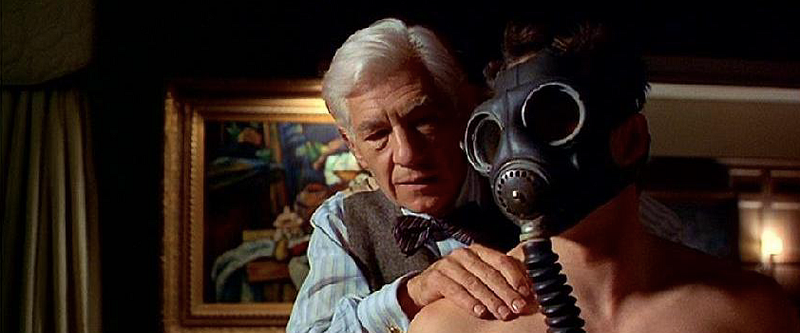
Now, I’ve alluded to stories about an artist’s journey in a censorious culture being read as a queer allegory. A lot of my favorite films with more explicit queer representation are also stories about artists. But does the character’s artistry engage me more than their queerness?
In the article above, I said that The Hours captivated me because of Virginia Woolf’s yearning for the “violent jolt of the capitol,” and Gods and Monsters enchanted me because of James Whales’ exquisite spirit of freedom.
What pulled me in wasn’t just the queer representation, it was the story of these brilliant artists yearning for — as Mr. Keating in Dead Poet’s Society would say — poetry, beauty, romance, love. That’s what I crave most.
While there are many thematic overlaps, it should go without saying that not all artists are queer and not all queer people are artists. As such, I like to think the “artist’s journey,” as a narrative device, resonates deeply with me beyond the extent to which it echoes queer experience.
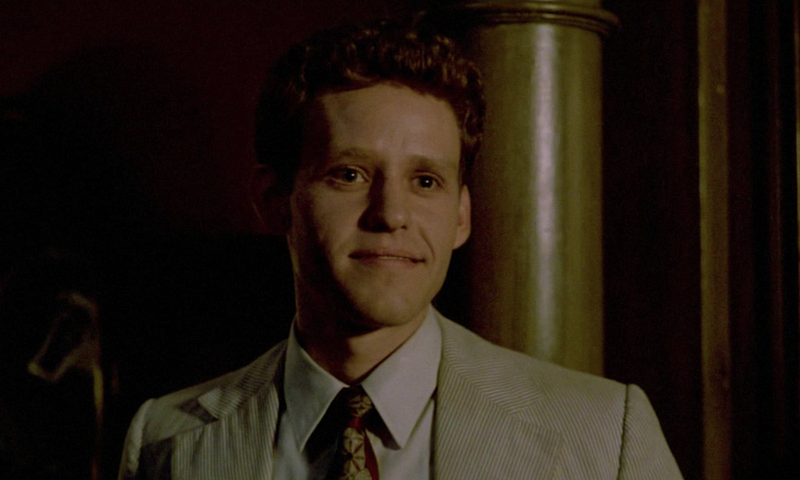
Stingo, the young writer in Sophie’s Choice, briefly says in voice-over that he has a “helpless crush” on his male friend, calling him “life-enlarging” and “utterly, fatally glamorous”. Those lines struck me as a kid, but that’s where the implied queerness ends. There’s no overarching allegory here.
But I relate to him just as much as the actor in Dead Poets and the painter in Pleasantville, if not more so. His romantic notions about writing are tested when he falls in love with someone with an incomprehensibly tragic past.
While I struggle to think of a film with an explicitly queer version of this dynamic, I doubt it could ever move me quite as deeply.
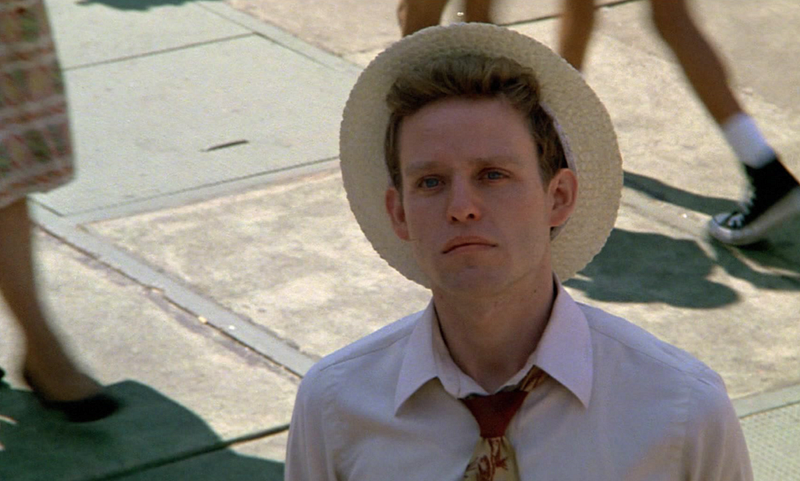
Now, how did this article shift from an attempted defense of allegory to an analysis of the artist’s journey? Because the implicitly queer dynamic in the films that meant the most to me as a child was the story of an artist defying conservative expectations and daring to live joyously and authentically.
But there are other narrative structures to a queer allegory.
When I google the phrase “queer allegory,” all of the top hits are about The Little Mermaid, which clearly speaks to a lot of queer people’s experience of longing to be part of a world where you might not be safe, and dreaming of a love you’re told is forbidden — “where would we walk, where would we run, if we could stay all day in the sun, just you and me…”
I suppose James Finn’s example of The Wizard of Oz could go in a similar category — the story of a young girl escaping a drab black-and-white world (heteronormativity), and making friends (allies) on her way to the land of Oz (queer havens), despite the flying monkeys (homophobes).
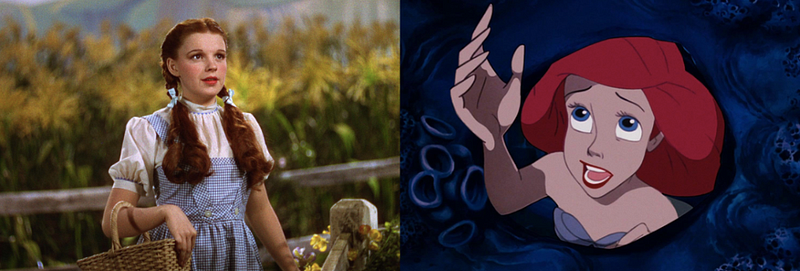
I love these films, but unlike previous examples, I never wished for a more canonically queer version of them. They are fairy tales, full of symbolism. The filmmakers created them with an awareness of metaphor. Sure, Ariel is heterosexual — but she’s also a mermaid. She can stand in for anyone.
Come to think of it, I could say I related to these films as an artist more than as a gay man. “When’s it my turn? Someday I’ll be part of your world” is the inner monologue of most ambitious young artists dreaming of success. And then once we find our way to Emerald City (Hollywood), we discover the man behind the curtain is no more impressive than we are.
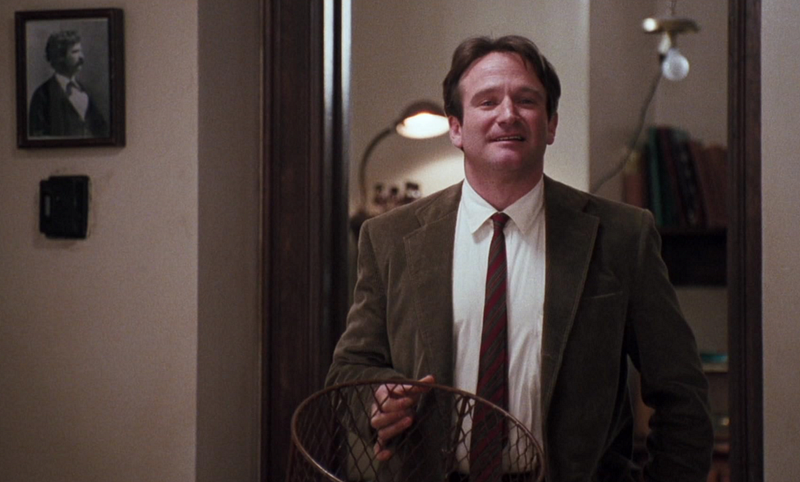
The artist’s journey was my entry point for many of these films, before I had any vocabulary for their implicit queerness. And even now, I relate to an artist’s journey narrative whether or not it’s a queer allegory.
So it’s reasonable to assume a person resistant to queer narratives could also find something to relate to in a film, which unbeknownst to them, is full of gay subtext. And then perhaps their affection for the film could shift their perspective on queerness once the subtext occurs to them.
…But beyond this speculation, it’s impossible for me to prove my defence of allegory, because the degree to which queer subtext has changed hearts and minds is impossible to measure — I can’t poll the homophobes!
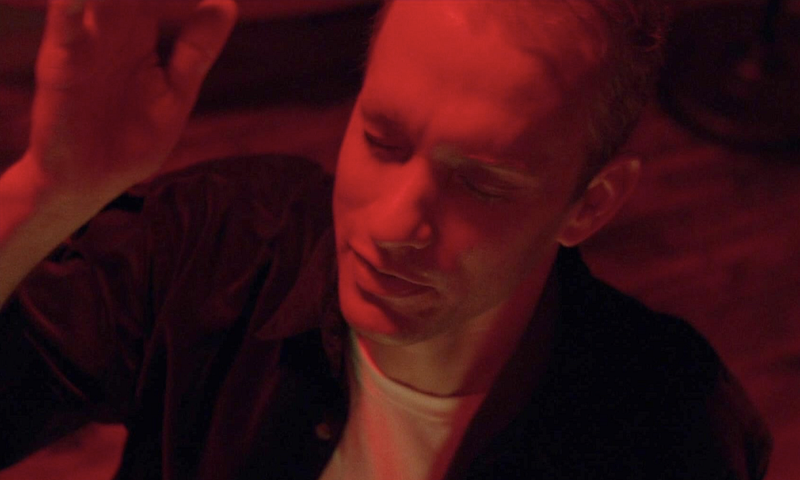
And while there is potency in metaphor, Gods and Monsters and The Hours prove there is as much beauty in an explicitly queer artist’s journey as an implicitly queer artist’s journey…if the queer film is afforded resources.
And while Pleasantville moved me more than some films about explicitly queer characters on trial, we need look no further than Philadelphia for a gay man on trial in a film that moved me as much as any I’ve named.
And what do Gods and Monsters, The Hours, Philadelphia, and a million other explicitly queer films have in common?…The character ends up dead. So it seems that while I set out to refute one of my previous arguments, instead I find myself emphatically reiterating another one.
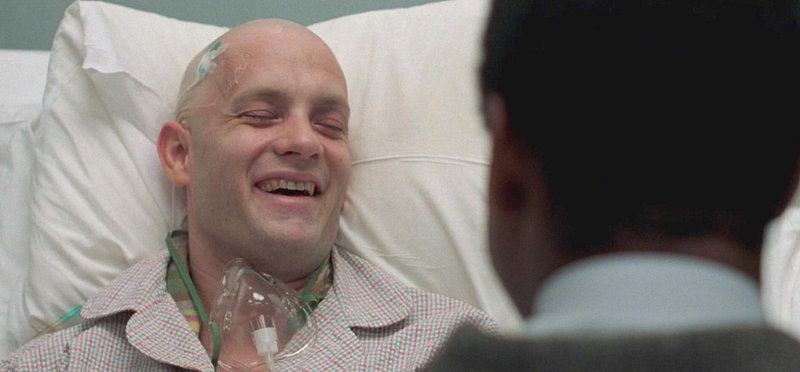
I look forward to a world where a little lesbian mermaid is just as viable a symbol as the little straight one. I reject the idea that a film will only make space for everyone to imprint their experience and find their own meaning and metaphors if the forward-facing explicit story is heteronormative.
I don’t have time to worry about explicitly queer stories alienating viewers who might otherwise be persuadable, if we just spoon-fed them subtext for a little while longer. We’ve done that long enough already.
While I can’t measure the impact of a queer allegory on a straight audience, I don’t need any data to assert that queer audiences would appreciate more explicitly queer stories that don’t end in suffering and death.
Instead of always ending up blue in the face at the bottom of the river, what if just once, at the end of the movie, all of the gays got to stand on top of their desks, in vibrant rainbow technicolor.

This story is a response to the Prism & Pen writing prompt, (How) Have LGBTQ Film & Literature Shaped You?
You’ll find other excellent responses to this prompt here:


