avatarJames Patrick Nelson

Free AI web copilot to create summaries, insights and extended knowledge, download it at here

4908

Abstract

n actor has been nominated/won for a queer role nearly every single year in the past decade alone, and every single time, he was — at least purportedly — cis and straight.</p><figure id="36ee"><img src="https://cdn-images-1.readmedium.com/v2/resize:fit:800/1*KpWcLkQojJIwHYjcrvvRVA.png"><figcaption>Matthew McConaughey in “Dallas Buyers Club,” Benedict Cumberbatch in “The Imitation Game,” Eddie Redmayne in “The Danish Girl,” Timothee Chalamet in “Call Me By Your Name,” Rami Malek in “Bohemian Rhapsody,” Antonio Banderas in “Pain and Glory,” Benedict Cumberbatch in “The Power of the Dog,” and Brendan Fraser in “The Whale” (Photos from IMDb).</figcaption></figure><p id="08ef">These statistics should be central to the debate about casting queer actors in queer roles…But instead the conversation tends to be framed as if there were an army of woke militant queers marching onto sets, telling all your favorite movie stars what they’re not “allowed” to do. It’s perplexing how often debates about equality frame the powerful person as the victim.</p><p id="fe73">There are no organizations powerful enough to mandate what someone is “allowed” to play. And even if there were, the question should not be “Why is a straight actor not allowed to play gay?” — the question is “Why is a gay actor so rarely allowed to play anything at all?”</p><p id="2d3f">I don’t intend to dismiss the considerable talents of the actors pictured above. I greatly admire Benedict Cumberbatch and Olivia Coleman, <a href="https://readmedium.com/call-me-by-your-name-hollywood-romance-age-gap-223c39a31b9f">I’m enchanted by “Call Me By Your Name</a>,” I was deeply moved by Brendan Fraser in “The Whale” and I was so captivated by the scene in “Pain and Glory” when Antonio Banderas’ character rekindles an old romance.</p><p id="7c47">But we have to acknowledge that a star is not offered a role because they’re the most talented actor available — they’re offered a role because they’re the most talented actor available among the small cohort of actors who can sell tickets. So we have to ask — why are there still so few LGBTQ+ actors famous enough to greenlight a film?</p><p id="6da3">After 15 years of steady work as a professional actor in <a href="https://readmedium.com/about-me-james-patrick-nelson-0dafc44526b3">Off-Broadway</a> and <a href="https://readmedium.com/the-love-that-almost-killed-me-and-the-illness-that-saved-my-life-356fa9a9d767">regional theatre</a>, working alongside powerhouse talents from every generation, I can confidently say there is no shortage of versatile, transformative, brilliant gay actors.</p><figure id="4326"><img src="https://cdn-images-1.readmedium.com/v2/resize:fit:800/1*zAqFVk3sDzvSr8VYv_cL0w.png"><figcaption>Tom Cullen and Chris New in “Weekend” (Photo from IMDb)</figcaption></figure><p id="b580">Whenever this casting debate comes up, I’m just counting down the seconds before someone says “You don’t have to be a criminal to play a criminal! You don’t have to be an alcoholic to play an alcoholic!”…But it seems to me, if you start comparing queerness to crime and vice, you’re just underscoring the subliminal biases we all need to work through.</p><p id="5c1e">But again, the point is not whether straight actors are allowed to play gay, it’s whether gay actors are allowed to play anything. No one is denying that acting is about becoming somebody different from yourself. The point is — how do we give that opportunity to a broader community of actors?</p><p id="4113">Among many brilliant performances of queer roles by straight actors, one often thinks of Tom Cullen in “Weekend,” a seminal classic in the canon of modern queer cinema. The question is not whether he should have been “allowed” to give that wonderful performance. The question is — why has he been able to build a remarkable career in the decade since then, while his equally brilliant (gay) co-star Chris New works far less often?</p><figure id="0193"><img src="https://cdn-images-1.readmedium.com/v2/resize:fit:800/1*mkZ67OWql0d-Re4M5apbaA.png"><figcaption>Joe Locke and Kit Connor in “Heartstopper” (Photo from IMDb)</figcaption></figure><p id="424f">Now, there is a lot of reasonable sensitivity around this topic, ever since Kit Connor — the teenage star of Netflix’s “Heartstopper” — was <a href="https://www.vulture.com/article/kit-connor-heartstopper-profile.html">forced to come out as bisexual</a> before he was ready, after constant harassment online.</p><p id="af9c">To be clear, nobody should be forced to come out before they’re ready. And nobody should be barred from playing roles with which they privately identify. And nothing in this article is meant to suggest otherwise.</p><p id="65f8">Indeed, any number of the actors mentioned above may one day come out as LGBTQ+. Many Oscar-winners/nominees have come out years after the awards — Jodie Foster, Joel Grey, Elliot Page, Tom Hu

Options

lce, etc.</p><p id="dd61">I don’t want to speculate about people’s sexuality or dictate when/if they come out. My contention is simply that we need to question the systemic barriers that make coming out so frightening in the first place.</p><p id="28bc">How many incredible actors are out there working in the industry, but can’t break through to the next level because of homophobic bias? How many actors internalized the anti-queer sentiments of the culture they grew up in and were afraid to pursue a career in the first place? Why, in an industry where a queer story is honored almost every year, has a gay man not been nominated for an acting Oscar in over two decades?</p><p id="97c4">These questions are speculative and impossible to answer, but that doesn’t mean they shouldn’t be asked.</p><figure id="85eb"><img src="https://cdn-images-1.readmedium.com/v2/resize:fit:800/1*gDP0Bf54ZACdy77YE2f6tA.png"><figcaption>Promo Stills of Colman Domingo in “Rustin” and Andrew Scott in “All of Us Strangers”</figcaption></figure><p id="241e">Thankfully, the tide is turning. Colman Domingo and Andrew Scott were both nominated for Golden Globes for “<a href="https://youtu.be/EuZ-UONInl4?si=CObgWipUaXbgUmto">Rustin</a>” and “<a href="https://youtu.be/O97iSjvqBlY?si=qFGdnh3TD_84Dk_J">All of Us Strangers</a>,” and Domingo was just nominated for a SAG award. If either of them are nominated for the Oscar, it will be the first nomination of its kind since McKellen in 1998. If either of them wins, it will be a first.</p><p id="121d">But it’s striking how many people don’t seem to notice or care. Last month, I pitched this article to a reputed outlet and the editor said she didn’t think the subject was timely because Domingo and Scott aren’t “front-runners”… <i>But that just proves the point!</i> If remarkable performances from virtuosic queer artists are shut out, will the bias finally be too glaring to ignore?</p><p id="37f6">Andrew Haigh, who directed “All of Us Strangers” (and “Weekend”) agreed, in <a href="https://www.queerty.com/will-an-out-gay-finally-win-an-oscar-for-playing-a-gay-character-20231223">an interview with Queerty</a>: “Gay actors playing gay parts don’t get enough recognition…it’s so frustrating.”</p><p id="e5e7">Andrew Scott added in that same interview that one of his greatest achievements has been “emancipation from [his] feelings of shame.” It is to that end — an emancipation from shame — that we must continue to lift up LGBTQ+ actors, and give them bigger platforms to play nuanced, complicated characters (of any sexuality).</p><figure id="7a33"><img src="https://cdn-images-1.readmedium.com/v2/resize:fit:800/1*ygp2E_e2kIwfTEydM_VWSg.png"><figcaption>Promotional Red Carpet Still of Andrew Scott with “All of Us Strangers” director Andrew Haigh.</figcaption></figure><p id="21a3">Now, the nominees have also been hesitant to make sexuality too central of an issue. Scott <a href="https://www.gaytimes.co.uk/culture/heres-why-all-of-us-strangers-andrew-scott-wants-to-throw-away-the-term-openly-gay/">recently asserted</a> that we should retire the phrase “openly gay,” because he hears it as “shamelessly” gay, and that it’s better to “just say nothing at all”.</p><p id="21f1">I totally understand why an actor would want discussions of their work to be about more than just their sexuality. And it makes sense for anyone living in progressive circles with affirming peers to feel like being an out queer person is wonderfully unremarkable. And indeed, it’s essential for films about queer people to move beyond the struggles of being gay, and focus on all the other nuances of a queer character’s humanity (which incidentally, the Jodie Foster movie “<a href="https://readmedium.com/the-gays-who-lived-modern-queer-martyrs-and-monsters-on-film-a23089c8e7c2">Nyad</a>” does beautifully).</p><figure id="3a43"><img src="https://cdn-images-1.readmedium.com/v2/resize:fit:800/1*qWhmdjrALyOlKyYnEk2qtQ.png"><figcaption>Promo Stills from “Rustin”, “Nyad” and “All of Us Strangers” (IMDb)</figcaption></figure><p id="56a5">But as far as I’m concerned, the phrase “openly gay” is not the problem — the problem is the long-standing, pervasive heterosexism that has made it so difficult for so many gay people (historically and still now) to be open. We have to acknowledge the fact — with as much righteous indignation as we can — that aside from McKellen and this year’s likely nominees, nearly every other gay actor in history who was lucky enough to make it to the Oscars believed they’d only get there if they stayed in the closet.</p><p id="532f">Thank God the times are changing. But let’s make sure they keep changing. The only way to get where we’re going is to acknowledge where we’ve been. Let’s make this an inflection point. Let’s nominate a gay man for Best Actor at the Oscars. And then let’s not wait another 26 years to do it again.</p></article></body>

An Out Gay Man Is Nominated for Best Actor…Once Every 26 Years

A History of Queer Exclusion at the Academy Awards
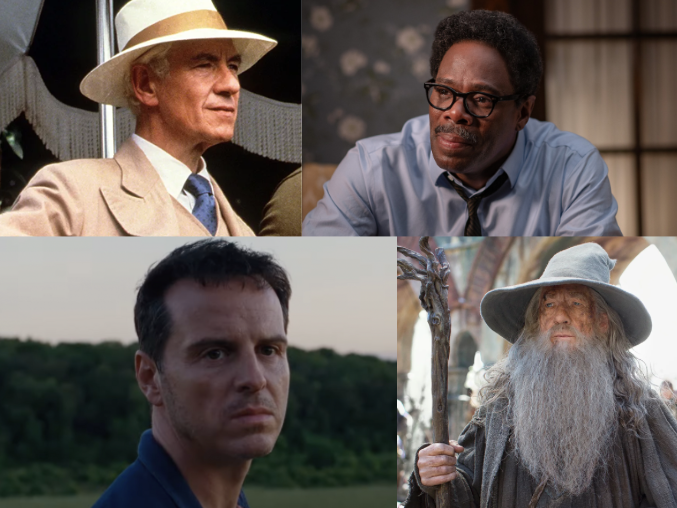
Clockwise from Top-Left: Ian McKellen in “Gods and Monsters,” Colman Domingo in “Rustin,” Ian McKellen in “Lord of the Rings,” and Andrew Scott in “All of Us Strangers” (Photos from IMDb).

Please read to the end for full context.

Two years ago, Ariana DeBose took home the Best Supporting Actress Oscar for “West Side Story,” becoming the first out queer actor to win an Academy Award in the 21st century, and the only out queer actor of color to ever win the award. This was initially a cause for celebration, until we all took a minute to digest that truly staggering statistic.

DeBose is one of only four LGBTQ+ actors in Oscar history who were out when they won. All four of them were in the “supporting” category, and the other three were decades ago: Angelina Jolie for “Girl Interrupted,” Linda Hunt for “The Year of Living Dangerously,” and John Gielgud for “Arthur”.
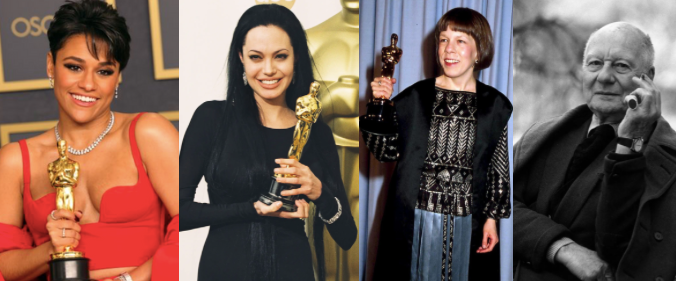
Ariana DeBose, Angelina Jolie, Linda Hunt, and John Gielgud. (Photos from Post-Ceremony Coverage)

Though Gielgud was very dismissive of the Academy Awards and declined to attend the ceremony. So this means an out queer male actor has never once stepped foot on that stage to accept an Oscar.

What’s more, Gielgud didn’t even come out freely — he was outed back in 1953 when he got arrested for cruising. Being gay was a crime until the Sexual Offenses Act of 1967, and then it still took years for the culture to catch up and social stigmas to diminish.

So given the enormous legal risk a queer person faced in those days, it’s not surprising to see a large cohort of Oscar-nominees from the 1950s and 60s who were rumored to be queer, but still in the closet at the time…Marlon Brando, Alan Bates, Monty Clift, Rock Hudson, and many others.

But despite the increased acceptance of LGBTQ+ people in the modern era, queer actors have gone unacknowledged at the Oscars for decades.
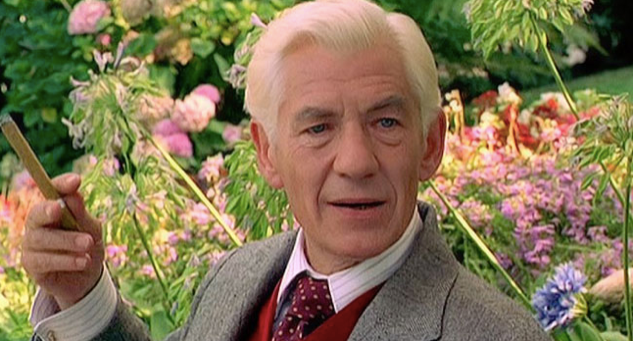
Ian McKellen in 1998’s “Gods and Monsters” (Photo from IMDb)

Ian McKellen’s Best Supporting Actor nomination for “Lord of the Rings” in 2001 (23 years ago) was the last time an out gay male actor was nominated in any category. McKellen’s performance in “Gods and Monsters” was the only time in Oscar history an out gay man was nominated for Best Actor for playing an out gay man — ironically, the character was a director who had to choose between his sexual freedom and a career in Hollywood.

That film came out in 1998…26 years ago. And an out gay man has not been nominated for Best Actor since. Prior to “Gods and Monsters,” the last time a gay man who was out on his own terms got nominated for Best Actor was Paul Winfield for a film called “Sounder” in 1972…again, 26 years earlier. It seems like the Academy can only manage to nominate an out gay man once every quarter century!

Now, if someone wanted to argue that these statistics are no cause for alarm because queer people represent such a small percentage of the population — why then are there so many films being made about queer people?
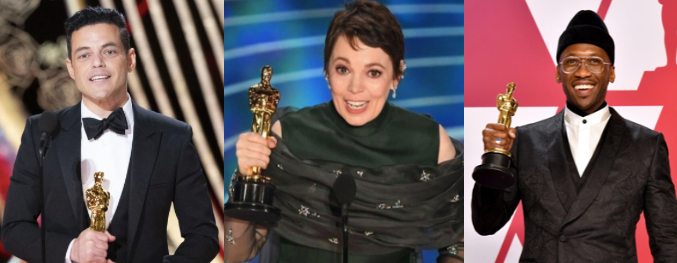
2018 Oscar winners who played LGBTQ+ characters: Rami Malek for “Bohemian Rhapsody,” Olivia Coleman for “The Favourite,” and Mahershala Ali for “The Green Book”. (Screenshots from Oscar Telecast)

Cis-hetero actors are nominated/win for playing queer roles all the time. In 2018 alone, three of the four acting winners played LGBTQ+ roles.

In the Best Actress category, the performance of a queer person has been nominated 19 times this century alone. But aside from Marlene Dietrich — nearly a century ago — every single actor who was ever nominated for Best Actress for playing a queer role was a cis-straight woman.

Similarly, in the Best Actor category, an actor has been nominated/won for a queer role nearly every single year in the past decade alone, and every single time, he was — at least purportedly — cis and straight.
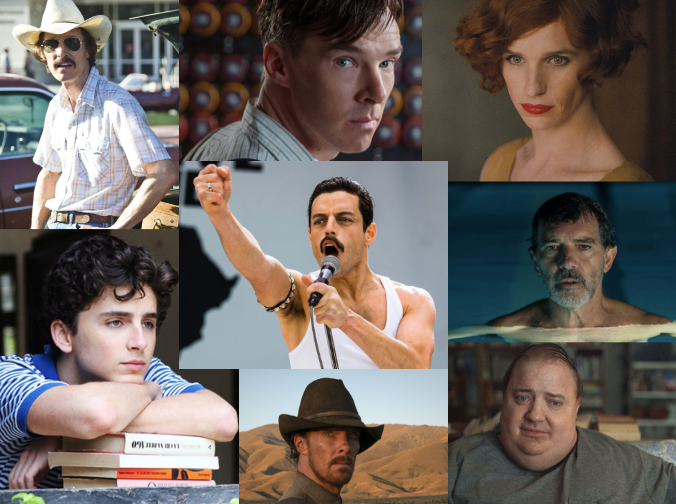
Matthew McConaughey in “Dallas Buyers Club,” Benedict Cumberbatch in “The Imitation Game,” Eddie Redmayne in “The Danish Girl,” Timothee Chalamet in “Call Me By Your Name,” Rami Malek in “Bohemian Rhapsody,” Antonio Banderas in “Pain and Glory,” Benedict Cumberbatch in “The Power of the Dog,” and Brendan Fraser in “The Whale” (Photos from IMDb).

These statistics should be central to the debate about casting queer actors in queer roles…But instead the conversation tends to be framed as if there were an army of woke militant queers marching onto sets, telling all your favorite movie stars what they’re not “allowed” to do. It’s perplexing how often debates about equality frame the powerful person as the victim.

There are no organizations powerful enough to mandate what someone is “allowed” to play. And even if there were, the question should not be “Why is a straight actor not allowed to play gay?” — the question is “Why is a gay actor so rarely allowed to play anything at all?”

I don’t intend to dismiss the considerable talents of the actors pictured above. I greatly admire Benedict Cumberbatch and Olivia Coleman, I’m enchanted by “Call Me By Your Name,” I was deeply moved by Brendan Fraser in “The Whale” and I was so captivated by the scene in “Pain and Glory” when Antonio Banderas’ character rekindles an old romance.

But we have to acknowledge that a star is not offered a role because they’re the most talented actor available — they’re offered a role because they’re the most talented actor available among the small cohort of actors who can sell tickets. So we have to ask — why are there still so few LGBTQ+ actors famous enough to greenlight a film?

After 15 years of steady work as a professional actor in Off-Broadway and regional theatre, working alongside powerhouse talents from every generation, I can confidently say there is no shortage of versatile, transformative, brilliant gay actors.
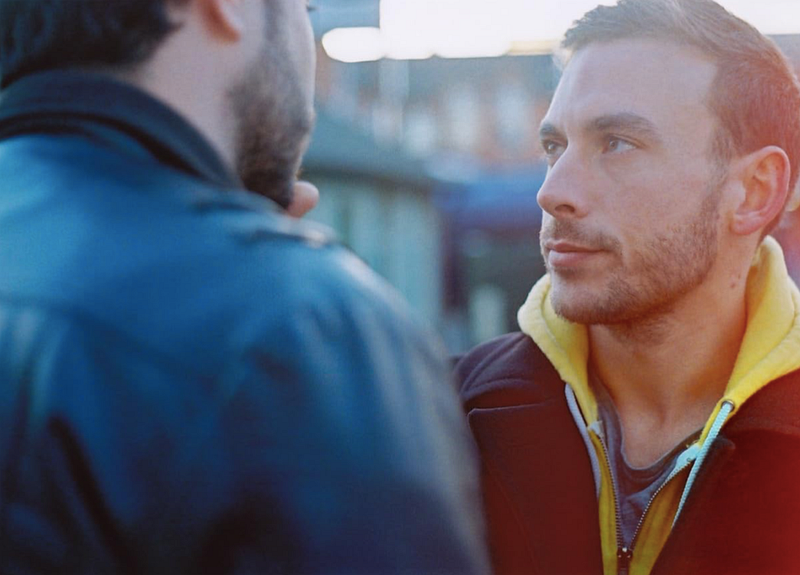
Tom Cullen and Chris New in “Weekend” (Photo from IMDb)

Whenever this casting debate comes up, I’m just counting down the seconds before someone says “You don’t have to be a criminal to play a criminal! You don’t have to be an alcoholic to play an alcoholic!”…But it seems to me, if you start comparing queerness to crime and vice, you’re just underscoring the subliminal biases we all need to work through.

But again, the point is not whether straight actors are allowed to play gay, it’s whether gay actors are allowed to play anything. No one is denying that acting is about becoming somebody different from yourself. The point is — how do we give that opportunity to a broader community of actors?

Among many brilliant performances of queer roles by straight actors, one often thinks of Tom Cullen in “Weekend,” a seminal classic in the canon of modern queer cinema. The question is not whether he should have been “allowed” to give that wonderful performance. The question is — why has he been able to build a remarkable career in the decade since then, while his equally brilliant (gay) co-star Chris New works far less often?
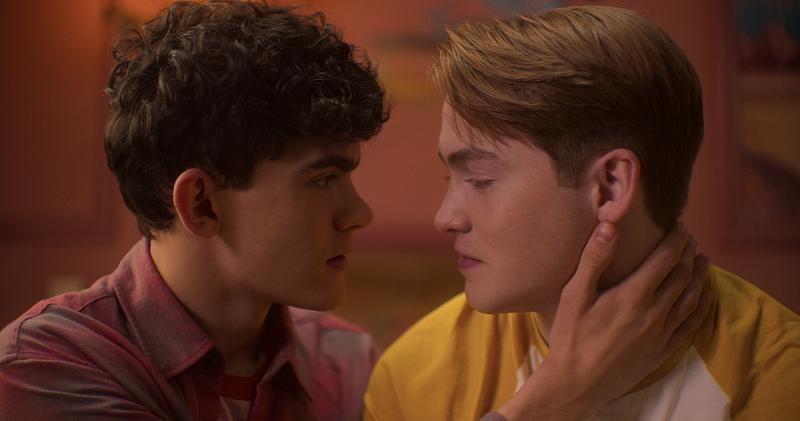
Joe Locke and Kit Connor in “Heartstopper” (Photo from IMDb)

Now, there is a lot of reasonable sensitivity around this topic, ever since Kit Connor — the teenage star of Netflix’s “Heartstopper” — was forced to come out as bisexual before he was ready, after constant harassment online.

To be clear, nobody should be forced to come out before they’re ready. And nobody should be barred from playing roles with which they privately identify. And nothing in this article is meant to suggest otherwise.

Indeed, any number of the actors mentioned above may one day come out as LGBTQ+. Many Oscar-winners/nominees have come out years after the awards — Jodie Foster, Joel Grey, Elliot Page, Tom Hulce, etc.

I don’t want to speculate about people’s sexuality or dictate when/if they come out. My contention is simply that we need to question the systemic barriers that make coming out so frightening in the first place.

How many incredible actors are out there working in the industry, but can’t break through to the next level because of homophobic bias? How many actors internalized the anti-queer sentiments of the culture they grew up in and were afraid to pursue a career in the first place? Why, in an industry where a queer story is honored almost every year, has a gay man not been nominated for an acting Oscar in over two decades?

These questions are speculative and impossible to answer, but that doesn’t mean they shouldn’t be asked.
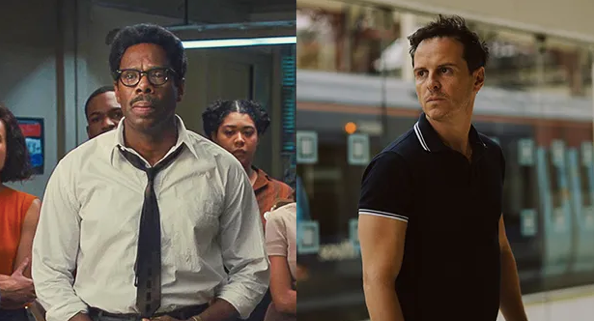
Promo Stills of Colman Domingo in “Rustin” and Andrew Scott in “All of Us Strangers”

Thankfully, the tide is turning. Colman Domingo and Andrew Scott were both nominated for Golden Globes for “Rustin” and “All of Us Strangers,” and Domingo was just nominated for a SAG award. If either of them are nominated for the Oscar, it will be the first nomination of its kind since McKellen in 1998. If either of them wins, it will be a first.

But it’s striking how many people don’t seem to notice or care. Last month, I pitched this article to a reputed outlet and the editor said she didn’t think the subject was timely because Domingo and Scott aren’t “front-runners”… But that just proves the point! If remarkable performances from virtuosic queer artists are shut out, will the bias finally be too glaring to ignore?

Andrew Haigh, who directed “All of Us Strangers” (and “Weekend”) agreed, in an interview with Queerty: “Gay actors playing gay parts don’t get enough recognition…it’s so frustrating.”

Andrew Scott added in that same interview that one of his greatest achievements has been “emancipation from [his] feelings of shame.” It is to that end — an emancipation from shame — that we must continue to lift up LGBTQ+ actors, and give them bigger platforms to play nuanced, complicated characters (of any sexuality).
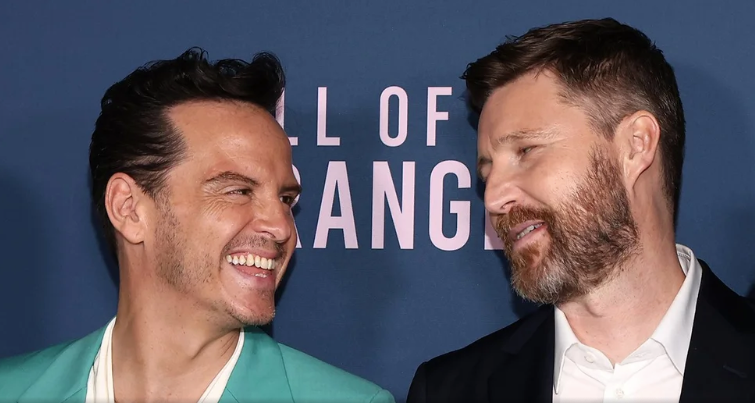
Promotional Red Carpet Still of Andrew Scott with “All of Us Strangers” director Andrew Haigh.

Now, the nominees have also been hesitant to make sexuality too central of an issue. Scott recently asserted that we should retire the phrase “openly gay,” because he hears it as “shamelessly” gay, and that it’s better to “just say nothing at all”.

I totally understand why an actor would want discussions of their work to be about more than just their sexuality. And it makes sense for anyone living in progressive circles with affirming peers to feel like being an out queer person is wonderfully unremarkable. And indeed, it’s essential for films about queer people to move beyond the struggles of being gay, and focus on all the other nuances of a queer character’s humanity (which incidentally, the Jodie Foster movie “Nyad” does beautifully).
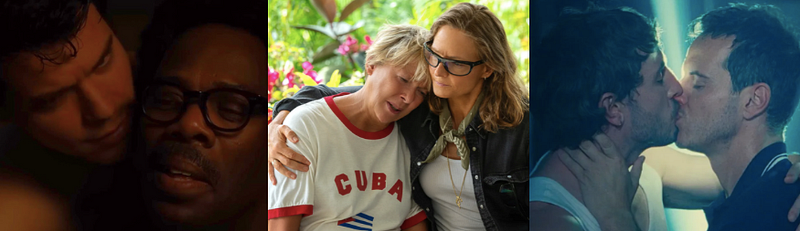
Promo Stills from “Rustin”, “Nyad” and “All of Us Strangers” (IMDb)

But as far as I’m concerned, the phrase “openly gay” is not the problem — the problem is the long-standing, pervasive heterosexism that has made it so difficult for so many gay people (historically and still now) to be open. We have to acknowledge the fact — with as much righteous indignation as we can — that aside from McKellen and this year’s likely nominees, nearly every other gay actor in history who was lucky enough to make it to the Oscars believed they’d only get there if they stayed in the closet.

Thank God the times are changing. But let’s make sure they keep changing. The only way to get where we’re going is to acknowledge where we’ve been. Let’s make this an inflection point. Let’s nominate a gay man for Best Actor at the Oscars. And then let’s not wait another 26 years to do it again.

LGBTQ
Equality
Film
Oscars
Culture
Recommended from ReadMedium