
Defending the ‘Call Me By Your Name’ Age Gap
In Hollywood, nine years is nothing

Call Me By Your Name remains one of the most celebrated queer romances ever made, occupying a seminal place in cinema history. Ask anyone to name an LGBTQ+ film, and it will likely be one of the first they mention.
This is due in part to the fact that queer romantic films are still rarely given significant financing or distribution in America. So, many comparable love stories — End of the Century, And Then We Danced, A Moment in the Reeds, to name a few — are less widely known to American audiences.
Given the scarcity, it’s disheartening for me to hear so many celebrities and influencers — liberal-minded, queer-affirming people, mind you — continue to disparage Call Me By Your Name on account of the characters’ age gap.
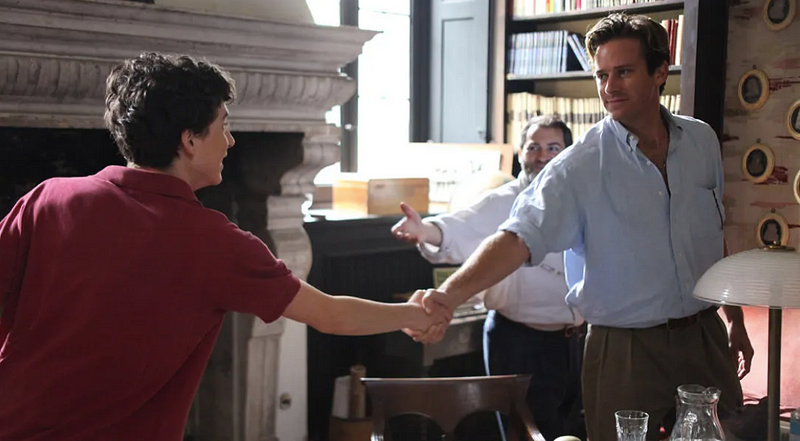
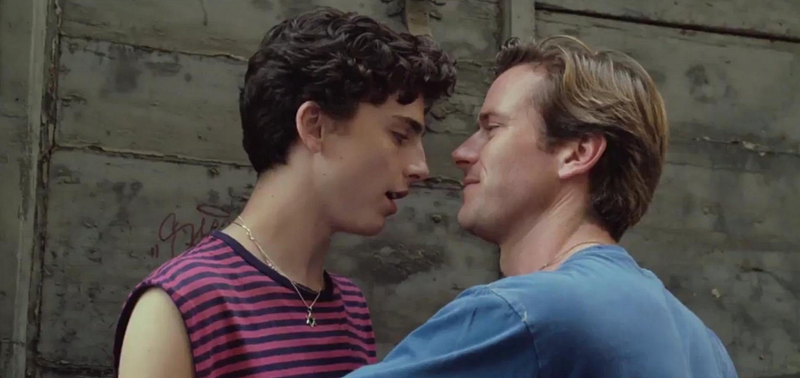
The film depicts an affair between 17-year-old Elio and 24-year-old Oliver, played by 20-year-old Timothée Chalamet and 29-year-old Armie Hammer. Defenders of the film point to the age-of-consent laws in 1983 Italy, while critics insist the film glorifies predatory behavior.
Many arguments have been made throughout this years-long debate, but there’s one bit of relevant context I’ve rarely heard anyone mention while discussing this film: all of the other age-gap romances.
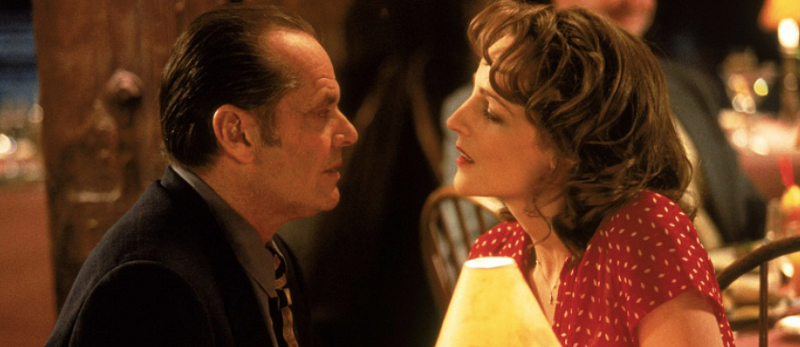
As Good as It Gets is one of my favorite films — a brilliant romantic comedy in which Jack Nicholson plays a reclusive, agoraphobic novelist who falls in love with a single mom, played by Helen Hunt. Both actors won very well-deserved Oscars, and there’s no denying they have incredible chemistry, despite a 26-year age gap. Hunt was 34 and Nicholson was 60.
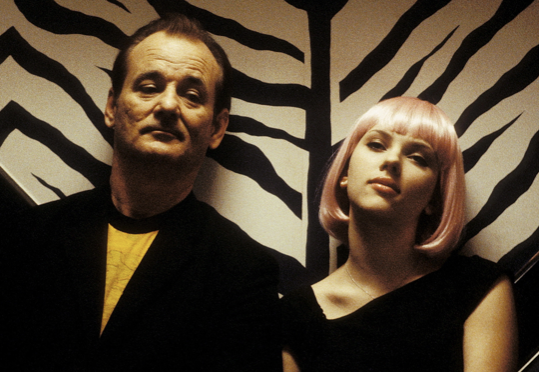
Lost in Translation firmly established Sophia Coppola as one of our finest young directors. In her film, Bill Murray plays a former movie-star visiting Tokyo to film a whiskey commercial. At his hotel, he forms an increasingly intimate connection with an unhappily married philosophy graduate, played by Scarlett Johansson. She was only 19, while he was 53.
Curiously, films about a heterosexual relationship in which the man is the younger of the two — Harold and Maude, The Reader, The Graduate, Y Tu Mama Tambien, last year’s May December, etc. — make the age difference central to the narrative. But in films in which the man is older (of which there are too many to count) the gap is usually just ignored.
And while I may be forgetting, I don’t recall the 20–30+ year age gaps in any of these films sparking nearly as much consternation as the 9-year gap in Call Me By Your Name. In most Hollywood films, 9 years is nothing.
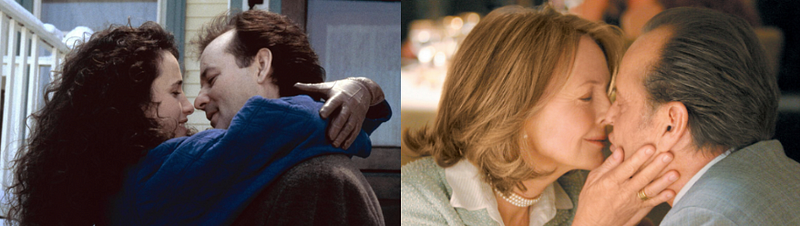
Bill Murray and Andie McDowell had a 9-year gap in Groundhog Day. Jack Nicholson and Diane Keaton had a 9-year gap in Something’s Gotta Give — a film about age-gap romance. The 9-year age gap is immaterial compared to Nicholson’s gap with Amanda Peet and Keaton’s gap with Keanu Reeves.
That’s the strange thing about phases of life. When we’re young, every year makes a big difference, and the older we get, the more time changes.
I’m in my mid-30s, and I’ve had boyfriends in their early-20s. We’ve talked about how the age difference feels insignificant because we’re both adults, whereas if we’d met 10 years earlier it’d clearly be different.
So maybe the the real sticking point for people with Call Me By Your Name is the idea that Hammer looks like an adult and Chalamet looks like a kid.
It’s a fair point. But remember, Armie Hammer was only 29 in Call Me By Your Name… When Jack Nicholson was 29, Helen Hunt was 3. When Bill Murray was 29, Scarlett Johansson wasn’t even born yet.

Now, those couples only go as far as a few romantic kisses, whereas Elio and Oliver sleep together several times. So perhaps the preoccupation with their age gap is really bound up in our culture’s fear of sex.
But I’d argue the sex scenes in Call Me By Your Name are frustratingly tame. Before the lovers can even get undressed, the camera pans out the window to the trees. By contrast, there are countless sex scenes in film history with a lot more nudity, featuring plenty of characters in their teens.
Of course, most memorable love stories on film — and all of the couples I’ve mentioned so far — are heterosexual. So naturally, the conversation about the Elio–Oliver age gap is really a conversation about queerness.
There is a long-standing and hateful narrative in our culture that LGBTQ+ people are groomers — a lie that has been perpetuated to a truly frightening degree in recent years. So it’s understandable for us to push back against any media that could perpetuate that toxic myth.
But do we risk perpetuating it ourselves if we reflexively condemn the film? If opponents of LGBTQ progress conflate queerness and pedophilia, and we want to dismantle that bigotry, we all have to resist conflating that which is criminal and that which just makes us uncomfortable.
But then again, is my instinct to defend this dynamic born out of scarcity? Much like my defense of queer murderers in the piece above, would I feel differently if I had more stories to choose from? When there are still so few well-funded widely-released queer films, it’s natural for us to veer back and forth, from being hyper-defensive to hyper-critical.
On the one hand, I might be more inclined to question the dynamic in Call Me By Your Name if I weren’t predisposed to affirm the film, as it’s pretty much the only one of its kind in recent memory. But on the other hand, I think we impede our own progress if the rarity of beautiful queer films means that every time one appears, it’s saddled with the responsibility of perfectly representing the community, and savaged if it fails to do so.
I hesitate to say that criticism of the film is rooted purely in heterosexism, as many prominent queer folks have taken issue with it. But again, I think it’s striking this 9-year gap has fomented way more vehement debate than any of the larger age gaps among countless heterosexual film couples.
To be clear, there’s nothing inherently wrong with an age gap — straight or gay. I know many incredible couples with decades between them. As long as there is enthusiastic consent, there’s nothing wrong with a relationship looking different than what we’re accustomed to. The idea that partners are supposed to be of a similar age feels rooted in the same hetero-patriarchy that says couples are supposed to be opposite genders and fertile.
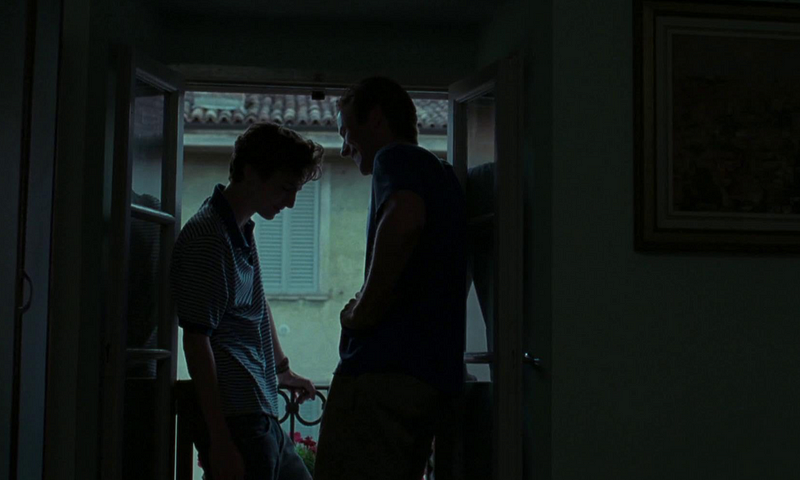
Elio and Oliver are both — by the legal standards of the time — adults. Their romance is consensual, and ultimately the younger man is more often in the driving seat, instigating most of the intimacy. Even if it’s not easy to admit, I think most of us can recall, in the blush of our sexual awakening, a moment when we pined for someone older, as Elio does for Oliver.
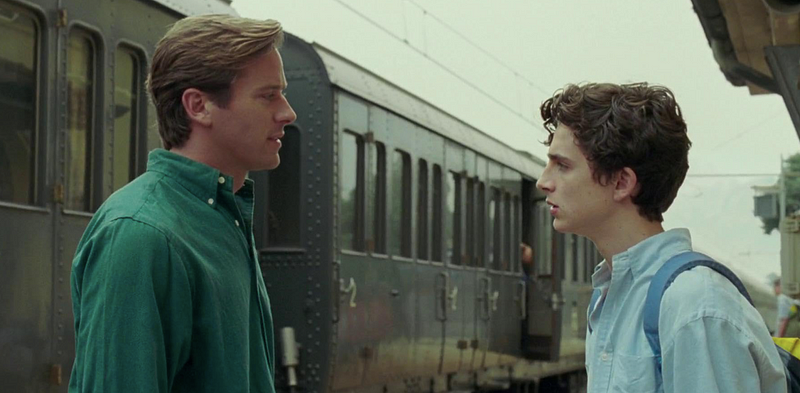
Granted, the film is not immune from criticism. As I’ve said before, I’d love to see more queer actors afforded the opportunity to tell their own stories. And I often watch the film and think, “Wouldn’t that be amazing if a tall handsome blond guy showed up at my house for the summer, and despite being very hetero-presenting, he turned out to be just as into me as I was into him!” Then I bristle at how much that differs from my experience.
But all criticism aside — even if you disagree with anything above — it’s fair to say that Call Me By Your Name deserves its creative accolades. The film is an incomparably hypnotic, intoxicating story of young love and sexual discovery. The world would be a more compassionate place — and debates like these would be far less needed — if we had more films like it.


