
My Anti-Behaviourism Series
My articles explaining the many problems with behaviourism, backed by extensive research
December 2023 update
When I was in grade three, our French teacher had a “Student of the Week” program.
Each Friday at the end of our French lesson, she would award one of my classmates a certificate purportedly acknowledging their positive behaviour throughout the week.
I never earned this designation. Not once in the entire third year.
June 2023 update
The American Medical Association (AMA) has a proposal for the removal of AMA Support for Applied Behavior Analysis (ABA)!
November 2022 update
Listen up! Because I’m only going to say this a thousand times over.
When Autistic Adults try to comunicate our concerns about ABA therapies, we are almost always shouted down by NT parents, and sometimes clinicians too. This has happened to me many times, but usually by Internet Psychologists whose credentials and expertise are questionable.
The debate over whether or not ABA is actually abusive would have ended a long time ago if Neurotypical parents and clinicians were willing to actually listen to Autistics.
May 2022 update
Dear readers,
I have a(nother) confession to make: Once upon a time, I was a behaviourist. I was a professional dog trainer for 12 years. While I was a positive, fear free certified trainer, I was still a behaviourist.
Fast forward to 2019, when my son and I are both diagnosed with ADHD. Then follows the pandemic, giving me free time to do a heck-ton of reading and research on neurodivergence, leading me to realize I’m also autistic.
Having a background first in social work and psychology, then behaviourism, then back to psychology and neurodevelopmental disorders, I am well-versed in a variety of related and relevant fields.
So when I say that behaviourism is reductionist, out-dated, and downright harmful, I speak from extensive research and knowledge on the subject matter. I have a degree in Youth Work, a degree in Psychology, and spend a significant of time studying these subjects.
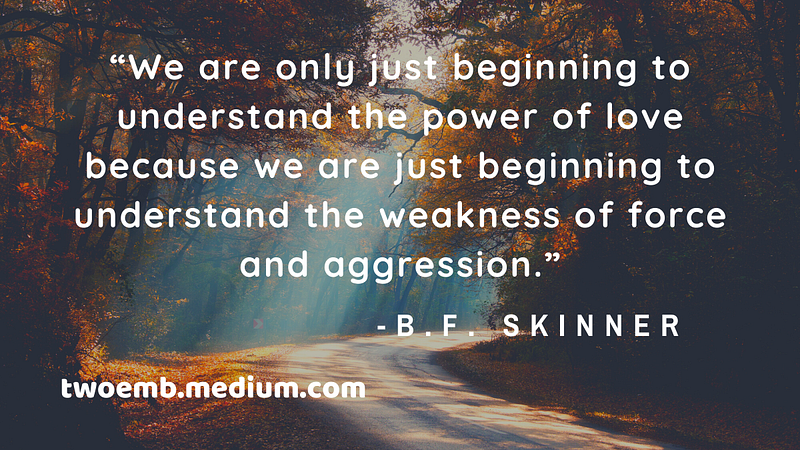
Even B.F. Skinner himself, the “father” of behaviourism himself, actually warned about the fallout of using punishment and force.
To save you the time, I’ve put together my articles that best highlight the research and reasoning supporting my position.
I used to think that I had to “ease into” these conversations: That if I came on too strong, I might scare parents away, right into the office of an ABA practitioner. I didn’t want to take a strong stance because I wanted to develop relationships with families first, and then help them find better ways.
There’s one problem with this approach. If you are wishy-washy, people may not understand what’s at stake if they don’t first educate themselves. If I can’t reach them all, at least I can put as much information out there as possible, and make it accessible to families.
To any parents of autistic children who may come across this: I know you want to do what’s best for your child. I know professionals are pushing you to get your child into therapies as early as possible, so that they can “function”.
Don’t listen to them.
Listen to Actually Autistic People: Read the stories of autistic adults who have experienced the horrors of behaviourism. I’ll add some links for further reading at the end of this article for anyone interested in learning more.
June 2022 update
In May, an opinion article was published in Fortune Magazine discussing the controversy surrounding ABA. Written by a lawyer named Ariana Cernius, the article outlines some of the problematic history associated with ABA, and highlights legal issues with the ABA industry.
Just this week, a similar article was published from my home province of Ontario, Canada. The reporter, Jessica Durling, attempted to include both perspectives in her story. Durling brought together voices from families, proponents of ABA, as well as Autistic self-activists who speak out about its harms.
While I imagine Durling’s inclusion of ABA-apologists was the result of unbiased and thorough reporting, it seems to me those who spoke in support of ABA actually hurt their cause more than they helped it.
I’m cool with that.
Why Your Behaviour Chart Isn’t Working
When a child’s behaviours are challenging or concerning, we often jump to looking for solutions which address the behaviour, but not the underlying cause.
Behaviourism identifies a problem behaviour and seeks to replace it with a preferred behaviour. Then the adult is to reward that preferred behaviour and dole out consequences for the undesired behaviour.
Sounds kind of like dog training, doesn’t it?
Behaviour Plans Are Written For The Adults, Not The Kids
Behaviour plans are useless, unless the adults have developed — and continue to develop — secure relationships with the children in their care
The primary goal of any type of plan should be to meet the child’s needs, first and foremost. However due to bureaucracy, politics, and lack of training, these plans often end up outlining ways the child must behave differently in order to make everyone else’s jobs easier.
I don’t blame the school staff, they aren’t given the proper training and resources to compassionately, skillfully, and effectively support students with complex needs. Full stop, there’s no other way to state this.
In fact, let’s forget creating behaviour plans altogether as they’re generally useless anyway. What we should be doing is getting to know the children, developing positive relationships with them, supporting them, and working to understand and meet their needs.
May 2022 update
At the end of May, the Association for Behaviour Analysis International (ABAI) held their annual convention.
An issue which has garnered a lot of attention recently — or once again, as it’s been an issue for more than a decade — is the use of electric skin shock on disabled and Autistic people at the Judge Rotenberg Centre (JRC) in the U.S.
Applied Behaviour Analysis (ABA) is the approach used at JRC, with electric skin shock being used as an aversive to punish disabled and Autistic people for unwanted behaviours.
It is a barbaric form of torture in all cases, but in this case it is particularly heinous, because electric shock is being used on vulnerable people as a means of controlling their behaviour and forcing compliance.
Advocates for, and self-advocates in, the disabled and Autistic communities have pressured ABAI and related organizations to come out in strong opposition against the use of electric shock on human beings.
Seems like a no-brainer, right?
Apparently not.
Torture Disguised As Treatment
Clinical application of an abusive practice is still abuse
medium.com
Stress And Anxiety Impede Learning
Seems obvious, doesn’t it? Yet people inflict stress and anxiety every day under the guise of “teaching”.
The Lines Between Behaviour Therapy, Abuse, And Torture Are Very Thin And Very Blurry
The Judge Rotenberg “Educational” Centre tortures Autistic and Disabled people
*TW* Trigger warning: This article discusses the use of electric shock on human beings. No graphic details are described, however the content may be upsetting for some — In fact, it should be upsetting for everyone.
Behaviourism Is Not Inclusion
PBS Is Just ABA With Different Letters
PBS, or P.B.I.S., stands for Positive Behaviour Interventions and Supports, and was the foundation for Manitoba Education’s 2011 policy document, Towards Inclusion: Supporting Positive Behaviour in Manitoba Classrooms.
That’s not a typo, the document intended as a guide for creating inclusive schools and classrooms has its roots in behaviourism. The year isn’t a typo either, the document was developed in 2011, eleven years ago. It hasn’t been updated since and it really shows.
Behaviour Management is Harmful
The first piece explanations why those sticker charts only work for a short period of time and then their usefulness runs its course.
More importantly, this article dives into the very serious problems with categorizing children based on their classroom behaviours.
Charts, points, and other behaviour management programs touted as “positive” are actually harmful, and ableist AF.
ABA is Abuse
In case that was a little too subtle, I make my position crystal clear in this next piece. It is sarcastically named “the gold standard” because abusive practices are still ignorantly touted by some as the “gold standard” for autism.
In case it’s still not clear: Applied Behaviour Analysis (ABA) is abuse. Listen to Autistic people, read the research. There is no grey area here: 46% of autistic people who were exposed to ABA therapy as children met the criteria for PTSD as adults.
Even the “new” ABA is abusive and harmful, full stop.
So is PTBM
Behaviour Therapies that are essentially ABA, but with different letters, are still abusive.
The measure of success used for behavioural interventions is compliance.
Do we really want compliance and obedience to be our primary goals when it comes to supporting our children?
That’s gonna be a hard no for me.
Blind obedience is dangerous
Children are vulnerable. Autistic, disabled, and otherwise marginalized children are even more so. Autistic people can have a harder time reading body language, social cues, and inferring intent. As a result, some autistic people are more likely to be taken advantage of.
Disabled children are also at higher risk of being abused. Children with intellectual disabilities are nearly three times as likely to be victims of abuse than those without.
Research has shown that ADHD and Autistic children are also at significantly higher risk of sexual abuse when compared to neurotypical children.
Why am I bringing this up? Because disabled and neurodivergent children are also much more likely to be subjected to “behavioural interventions” and other harmful “therapies” which focus on conformity, compliance, and obedience.
These therapies are not only directly harmful, they are also indirectly harmful as they undermine children’s autonomy and self-determination:
We’re not puppies
Last, but not least: behaviourism is for the dogs. Or… maybe not even. Either way, don’t train people like puppies.
Our Foolish Obsession With Punishment
What is our obsession with punishment and retribution, anyway? It clearly doesn’t work, science has proven that time and again, as have the recidivism rates in our justice system…. so… why do we keep banging our head against that wall?
Children are not puppies, nor are they mini adults
Some try to justify the use of punishment and rewards to gain compliance from children by claiming that we do the same to adults when they go to work. These are not the same thing, and we need to stop comparing apples to oranges.
People have the right to autonomy and freedom of choice. Guess what? Children, teens, neurodivergent, and disabled people are people.
We all deserve the dignity and respect to be as weird, “normal”, magical, boring, freaky, ordinary, or peculiar as we want — whether you like it or not.
© Jillian Enright, Neurodiversity MB
When you join medium, as a member you’ll have access to unlimited reads for only $5 per month. If you use my referral link, I’ll earn a small commission, and you’ll earn my undying gratitude.
Further Reading
References
Brendli, K. R., Broda, M. D., & Brown, R. (2021). Children With Intellectual Disability and Victimization: A Logistic Regression Analysis. Child Maltreatment. https://doi.org/10.1177/1077559521994177
Christoffersen, M. N. (2020). Sexual Crime Against Schoolchildren With Disabilities: A Nationwide Prospective Birth Cohort Study. Journal of Interpersonal Violence. https://doi.org/10.1177/0886260520934442
Kupferstein, H. (2018), “Evidence of increased PTSD symptoms in autistics exposed to applied behavior analysis”. Advances in Autism, 4(1), 19–29. https://doi.org/10.1108/AIA-08-2017-0016
Sandoval-Norton, A. H., Shkedy, G., Rushby, J. A. (2019). How much compliance is too much compliance: Is long-term ABA therapy abuse? Cogent Psychology, 6:1, DOI: 10.1080/23311908.2019.1641258
Seppälä, P., Vornanen, R., & Toikko, T. (2021). Are Children With a Number of Disabilities and Long-Term Illnesses at Increased Risk of Mental Violence, Disciplinary Violence, and Serious Violence? Journal of Interpersonal Violence, 36(23–24), 11409–11434. https://doi.org/10.1177/0886260519898440
Skinner, B. F. (2002). Beyond freedom and dignity. Hackett Publishing.
Skinner, B. F. (1953). Science and human behavior. Macmillan.
Walker, N. (2021). Neuroqueer Heresies: Notes on the neurodiversity paradigm, Autistic empowerment, and postnormal possibilities. Autonomous Press.
Wilkenfeld, D.A., & McCarthy, A.M. (2020). Ethical Concerns with Applied Behavior Analysis for Autism Spectrum “Disorder”. Kennedy Institute of Ethics Journal 30(1), 31–69. doi:10.1353/ken.2020.0000


