avatarEva Rtology

Free AI web copilot to create summaries, insights and extended knowledge, download it at here

5884

Abstract

tube" allowfullscreen="" frameborder="0" height="480" width="640"> </div> </div> </figure></iframe></div></div></figure><p id="efba"><b>19th century</b> Romanticism Romantic painters used light to add energy to a painting. They tried to make paintings exciting by including active, dramatic scenes. They used light to emphasize a subject. In 1820, English painter J. M. W. Turner painted The Slave Ship. He showed light shining on the <a href="https://readmedium.com/darkness-is-the-new-happiness-2df070bc6cf6">dark</a>, gloomy ship. The painting used light to show the cruel and horrific side of the slave trade. Critics loved The Slave Ship. One called it “a sensation,” comparing it to an earthquake.</p><p id="3230"><b>Realism and impressionism</b> During the first decades of the 19th century, artists experimented with new techniques. They wanted to create <a href="https://readmedium.com/is-ai-art-really-art-a363073d62d0">art</a> that looked real. They painted natural life scenes. Two significant movements were the Realists and Impressionists. Both movements focused on light. They tried to paint the way light actually looked. The Realists used solid and transparent colors. They wanted their paintings to look realistic. The Impressionists tried to show the way people see the light. They used light to create blurry shapes.</p><p id="c6d5"><b>20th century</b> Abstract expressionism Abstract expressionism was a new form of <a href="https://readmedium.com/is-ai-art-really-art-a363073d62d0">art</a>. Artists no longer used recognizable subjects. Instead, abstract expressionists used light to create compositions with movement and energy. They tried to show what light does to color. They used light to create form and texture. They used light to create emotion and mood.</p><p id="3837"><b>Constructivism</b> Constructivist artists used light to create movement. Constructivist paintings look like they are in motion. They used lines to create a path for the eye to follow. Constructivist artists believed that all art is geometric. Therefore, they created art with purely vertical and horizontal lines. They made geometric shapes, such as squares, circles, triangles, and rectangles.</p><p id="2a6c"><a href="https://readmedium.com/minimalist-approach-to-using-codex-3a492ccf295a"><b>Minimalism</b></a> In 1960, American sculptor Donald Judd and painter Ellsworth Kelly created their own style of art. They called it minimalism. Their art had no subject. Instead, they used simple geometric shapes and empty spaces. They used light to highlight the emptiness.</p><p id="0924"><b>20st-century <a href="https://readmedium.com/is-ai-art-really-art-a363073d62d0">art</a></b> Light art Light art is a new type of art. Artists used artificial light to create works of art. For example, in 1965, American artist Nam June Paik used a combination of television, film, and slides to create light art. First, he showed art on a large, flat-screen T.V.s. Then, he ran the film through the T.V. to create images.</p><p id="709b">Light art often has a <a href="https://readmedium.com/ai-guernica-ffa3ef20d9bf">political message</a>. For example, in 1986, Australian artist Bill Henson created an installation called In the Night-Time. He projected police photographs of murdered aboriginal Australians onto a wall. He repeated the photos over and over. The images appeared to move. They looked like they were dancing.</p><p id="d325">Installation art Light artists have created art with light, color, and shadow. These artists used a variety of materials. They made sculptures, paintings, drawings, and videos. These artists used a large amount of empty space. They incorporated light, shadow, and geometric patterns. They showed multiple images at the same time.</p><figure id="a480"><img src="https://cdn-images-1.readmedium.com/v2/resize:fit:800/1*5qKUcZJbqs59170DMcgnpA.jpeg"><figcaption>Photo by <a href="https://unsplash.com/@cmrnrd?utm_source=unsplash&amp;utm_medium=referral&amp;utm_content=creditCopyText">Cam</a> on <a href="https://unsplash.com/s/photos/turrell?utm_source=unsplash&amp;utm_medium=referral&amp;utm_content=creditCopyText">Unsplash</a></figcaption></figure><p id="37bb">A leading figure of the Light and Space movement is James Turrell. He creates colored light installations and holographs that produce awe-inspiring optical illusions: Turrell’s pieces can look like cubes, flat planes, pyramids, or tunnels when they’re simply composed of light. Turrell’s work has been shown in institutions worldwide, including the Whitney <a href="https://readmedium.com/how-to-start-a-vr-gallery-6e1cb96da892">Museum</a> of American Art, Guggenheim <a href="https://readmedium.com/how-to-start-a-vr-gallery-6e1cb96da892">Museum</a>, Contemporary Art, Los Angeles, and Museo Jumex. In addition, since the 1970s, Turrell has been working on a celestial light observatory at the Roden Crater in Arizona.</p><p id="1cf5"><a href="https://readmedium.com/is-ai-art-really-art-a363073d62d0"><b>21st-century art</b></a><b><a href="https://readmedium.com/how-to-start-nfts-with-1-or-less-11a5a9079e7e">NFT</a></b> <i>Art that uses light as the only tool</i> <a href="https://readmedium.com/how-to-start-nfts-with-1-or-less-11a5a9079e7e">NFT</a> screens combine multimedia art with light. <a href="https://hicetnunc.art/Evartology">NFT screens</a> show art on large, flat screens. Some <a href="https://hicetnunc.art/Evartology">NFT screens</a> <a href="https://readmedium.com/are-artists-using-ai-to-change-the-concept-of-art-1e92d8ba1ede">change</a> automatically. They offer a series of images that create animation. In the 20s of the XXI century, <a href="https://readmedium.com/how-to-become-rich-and-not-know-b50c6af49bf3">NFT</a> screens were in every pocket. <a href="https://readmedium.com/can-ai-replace-artists-378d466f69b8">Artis

Options

ts</a> used computers and mobile phones to create images. Light art became a popular type of art on <a href="https://hicetnunc.art/Evartology">NFT screens</a>. <a href="https://readmedium.com/how-to-become-rich-and-not-know-b50c6af49bf3">In the 2030s</a>, images of <a href="https://readmedium.com/homo-bulla-1b627e932492">humans</a> were illegal. In 2033, one image on an <a href="https://readmedium.com/how-to-start-nfts-with-1-or-less-11a5a9079e7e">NFT</a> screen showed a <a href="https://readmedium.com/homo-bulla-1b627e932492">human</a> face. It was a painting by <a href="https://datasculptor.medium.com/datasculptors-top-stories-616f2f098959">a famous A.I. artist</a>. The old image had been downloaded from the Art Revival Movement. Soon after, the United Nations of North America banned all pictures of people and animals. <a href="https://hicetnunc.art/Evartology">NFT screens</a> carried images of generative shapes and colors instead. Again light art became popular.</p><figure id="91b3"><img src="https://cdn-images-1.readmedium.com/v2/resize:fit:800/1*GIdB29vMxAvDce22ErCbRA.png"><figcaption><a href="https://hicetnunc.art/Evartology/collection">https://hicetnunc.art/Evartology/collection</a></figcaption></figure><p id="51f8"><b>Light and shadow</b></p><div id="ba94" class="link-block"> <a href="https://readmedium.com/miracle-1d72643c5d66"> <div> <div> <h2>Miracle</h2> <div><h3>The Future of AI-art is Limitless</h3></div> <div><p>medium.com</p></div> </div> <div> <div style="background-image: url(https://miro.readmedium.com/v2/resize:fit:320/1*_8YpJCtAC63IbCNxtqBbQw.jpeg)"></div> </div> </div> </a> </div><p id="fb02"><a href="https://readmedium.com/can-ai-replace-artists-378d466f69b8">Artists </a>discover light and shadow in new ways. Light brings the object to life. It can cast a pleasant glow or a dramatic shadow. <a href="https://readmedium.com/can-ai-replace-artists-378d466f69b8">Artists</a> have been studying the role of light for thousands of years. The middle of the 21st century brought a revival for light as the dominant medium in <a href="https://readmedium.com/is-ai-art-really-art-a363073d62d0">art</a>.</p><blockquote id="fb9d"><p><b>The light is the only tool with the power to go to the end of the universe and beyond. <a href="undefined">Dariusz Gross #DATAsculptor</a></b></p></blockquote><p id="2f6d">If you’re a devotee of art, you’ll know that the modern world has seen a revival for light as the dominant medium in art. As technology moves into new realms, this will continue to be true. So if you haven’t already started incorporating light into your multimedia, installation, or nano-sculpture pieces, now is an excellent time to get started! The possibilities are endless — from holographs to cubes and pyramids made out of light, everything seems possible with a bit of creativity and ingenuity. And as always — never underestimate the power of lighting your work up!</p><div id="3ea1" class="link-block"> <a href="https://readmedium.com/the-ai-game-of-life-5df1e9a04695"> <div> <div> <h2>The AI game of life</h2> <div><h3>A new game to put life in perspective</h3></div> <div><p>medium.com</p></div> </div> <div> <div style="background-image: url(https://miro.readmedium.com/v2/resize:fit:320/1*5uWXRkq3GTUYBiBz2_gf3g.jpeg)"></div> </div> </div> </a> </div><p id="3402"><a href="https://medium.com/data-driven-fiction/data-driven-art/home"><b>Data-Driven Art</b></a> is the future. It’s about time that you jumped into it.</p><p id="82a5">Join us, <a href="https://evartology.medium.com/membership"><b>with my referral link</b></a><b>,</b> to support all talented writers on medium</p><div id="6d30" class="link-block"> <a href="https://evartology.medium.com/membership"> <div> <div> <h2>Join Medium with my referral link - Eva Rtology</h2> <div><h3>As a Medium member, a portion of your membership fee goes to writers you read, and you get full access to every story…</h3></div> <div><p>evartology.medium.com</p></div> </div> <div> <div style="background-image: url(https://miro.readmedium.com/v2/resize:fit:320/0*UZH26G1oeavCByGY)"></div> </div> </div> </a> </div><p id="18ce">I am <a href="https://readmedium.com/how-to-become-a-curator-3c0c75f74637">an <b>Art Curator,</b></a> founder at <a href="https://evartology.com/">EvArtology</a>, and <a href="https://www.linkedin.com/company/mlearning-ai/">ML consultant at MLearning.ai</a>. I advise companies and institutions in the <a href="https://readmedium.com/machine-learning-will-free-creatives-79f005145e4">creative industries</a> on using <a href="https://evartology.medium.com/ai-power-for-digital-art-9b924e985722">AI tools</a> in their daily work. <a href="https://readmedium.com/how-ai-creates-content-that-humans-love-7b3da0194a35">Human collaboration</a> with ML models can be very <a href="https://readmedium.com/machine-learning-will-free-creatives-79f005145e4">creative</a> and bring huge benefits. <a href="https://readmedium.com/is-ai-art-really-art-a363073d62d0">The new era begins now.</a></p><ul><li><a href="https://twitter.com/evARTology"><b>Twitter</b></a><b> * <a href="https://www.instagram.com/evartology/">Instagram</a> * <a href="https://evartology.com/">Tumblr</a> * <a href="https://www.linkedin.com/company/evartologycom">Linkedin</a> * <a href="https://www.facebook.com/evARTologycom">Facebook</a></b></li></ul></article></body>

Data Driven Art

Light as the dominant medium in art

from Ancient times to NFT
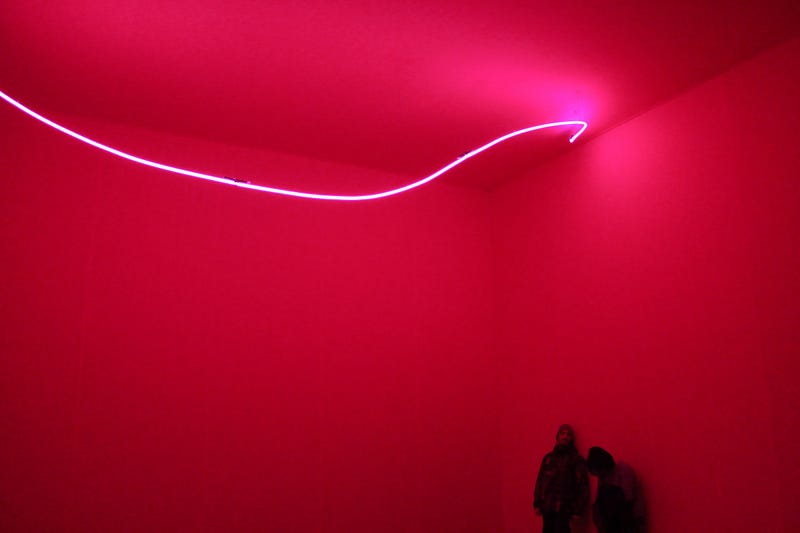
Pirelli HangarBicocca, Via Chiese, Milano, MI, Italia Photo by Enrico Da Prato on Unsplash

Now, I know what you’re thinking: why the hell should I read an article about light art? I hear you. And trust me when I tell you that light art will likely make a massive comeback in the future. It’s easily accessible and doesn’t cost anything to learn. It also bonds people together in a whole new way. The feeling of awe that comes from viewing the artwork created by people with different cultures or beliefs is something designers have been trying to get back for years now. Fortunately, artists have been able to do just that. So stop being stuck on never knowing where your next great muse will come from, and pay attention. The world of visual arts is undergoing a significant change right now!

He whose face gives no light shall never become a star. W. Blake

For centuries, revolutionary artists like Blake have harnessed light to manipulate it as both subject and medium. Light inspires in its many changing forms and provides flexibility to those who wish to use it metaphorically. Through various periods in art, the light remains a common material that is revisited time and again; each time, the artist changes our understanding of what constitutes a work of art. Render machines have taken over the role of a master. Instead, the artist focuses on the message.

Photo by Enrico Da Prato on Unsplash

How artists use light throughout history

Ancient times The subjects of early paintings were religious. The creation of light or “illumination” was one of God’s greatest gifts. The light was considered to be pure and divine. One idea in early Christian art was that God’s light shines through people, especially holy people. Medieval and Renaissance artists used light to show weight, texture, and space. They also used it to convey emotion. In 1,000 A.D., Byzantine artists painted gold backgrounds on icons. They used gold to symbolize God’s presence.

Renaissance Renaissance artists painted primarily on wood, which absorbed oil better than canvas. They used thin layers of paint. These layers helped the oil paint blend together, creating fewer layers of color. The new technique made colors appear more vibrant. Artists used light to show perspective. They made a frame around an object. They used dark lines to mark the edges of the frame. These lines created the illusion of a 3-D object. Renaissance artists also invented a new way to show perspective with shadow. They used diagonal lines to make an object appear flat. Then, they used light to make the thing look 3D.

Baroque and Rococo Baroque and Rococo painters used shadows to create the illusion of depth. They used shadows to create realistic images. They used light to create the illusion of weight. They placed objects of different sizes and different textures in the same frame. They showed that light reflects off an object, creating the shadow.

19th century Romanticism Romantic painters used light to add energy to a painting. They tried to make paintings exciting by including active, dramatic scenes. They used light to emphasize a subject. In 1820, English painter J. M. W. Turner painted The Slave Ship. He showed light shining on the dark, gloomy ship. The painting used light to show the cruel and horrific side of the slave trade. Critics loved The Slave Ship. One called it “a sensation,” comparing it to an earthquake.

Realism and impressionism During the first decades of the 19th century, artists experimented with new techniques. They wanted to create art that looked real. They painted natural life scenes. Two significant movements were the Realists and Impressionists. Both movements focused on light. They tried to paint the way light actually looked. The Realists used solid and transparent colors. They wanted their paintings to look realistic. The Impressionists tried to show the way people see the light. They used light to create blurry shapes.

20th century Abstract expressionism Abstract expressionism was a new form of art. Artists no longer used recognizable subjects. Instead, abstract expressionists used light to create compositions with movement and energy. They tried to show what light does to color. They used light to create form and texture. They used light to create emotion and mood.

Constructivism Constructivist artists used light to create movement. Constructivist paintings look like they are in motion. They used lines to create a path for the eye to follow. Constructivist artists believed that all art is geometric. Therefore, they created art with purely vertical and horizontal lines. They made geometric shapes, such as squares, circles, triangles, and rectangles.

Minimalism In 1960, American sculptor Donald Judd and painter Ellsworth Kelly created their own style of art. They called it minimalism. Their art had no subject. Instead, they used simple geometric shapes and empty spaces. They used light to highlight the emptiness.

20st-century art Light art Light art is a new type of art. Artists used artificial light to create works of art. For example, in 1965, American artist Nam June Paik used a combination of television, film, and slides to create light art. First, he showed art on a large, flat-screen T.V.s. Then, he ran the film through the T.V. to create images.

Light art often has a political message. For example, in 1986, Australian artist Bill Henson created an installation called In the Night-Time. He projected police photographs of murdered aboriginal Australians onto a wall. He repeated the photos over and over. The images appeared to move. They looked like they were dancing.

Installation art Light artists have created art with light, color, and shadow. These artists used a variety of materials. They made sculptures, paintings, drawings, and videos. These artists used a large amount of empty space. They incorporated light, shadow, and geometric patterns. They showed multiple images at the same time.
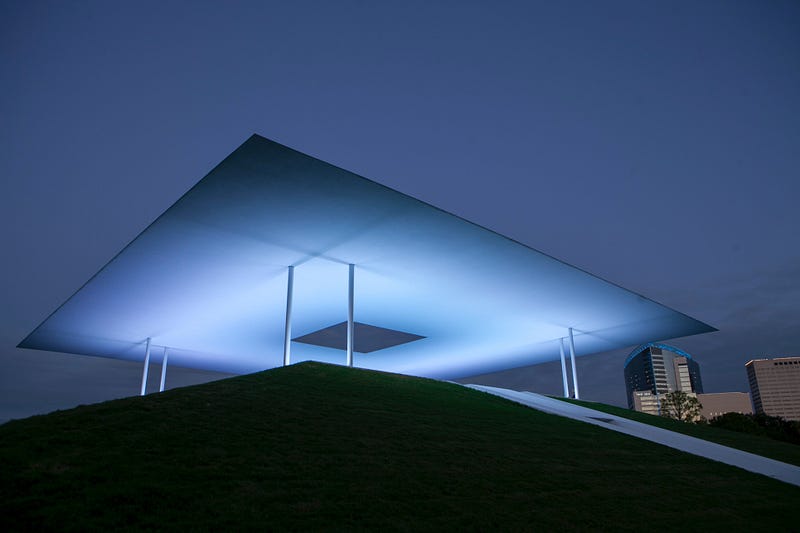
Photo by Cam on Unsplash

A leading figure of the Light and Space movement is James Turrell. He creates colored light installations and holographs that produce awe-inspiring optical illusions: Turrell’s pieces can look like cubes, flat planes, pyramids, or tunnels when they’re simply composed of light. Turrell’s work has been shown in institutions worldwide, including the Whitney Museum of American Art, Guggenheim Museum, Contemporary Art, Los Angeles, and Museo Jumex. In addition, since the 1970s, Turrell has been working on a celestial light observatory at the Roden Crater in Arizona.

21st-century artNFT Art that uses light as the only tool NFT screens combine multimedia art with light. NFT screens show art on large, flat screens. Some NFT screens change automatically. They offer a series of images that create animation. In the 20s of the XXI century, NFT screens were in every pocket. Artists used computers and mobile phones to create images. Light art became a popular type of art on NFT screens. In the 2030s, images of humans were illegal. In 2033, one image on an NFT screen showed a human face. It was a painting by a famous A.I. artist. The old image had been downloaded from the Art Revival Movement. Soon after, the United Nations of North America banned all pictures of people and animals. NFT screens carried images of generative shapes and colors instead. Again light art became popular.
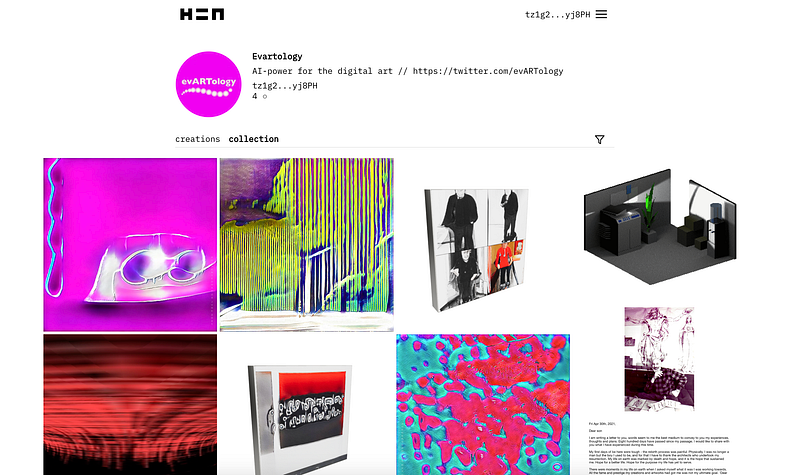
https://hicetnunc.art/Evartology/collection

Light and shadow

Artists discover light and shadow in new ways. Light brings the object to life. It can cast a pleasant glow or a dramatic shadow. Artists have been studying the role of light for thousands of years. The middle of the 21st century brought a revival for light as the dominant medium in art.

The light is the only tool with the power to go to the end of the universe and beyond. Dariusz Gross #DATAsculptor

If you’re a devotee of art, you’ll know that the modern world has seen a revival for light as the dominant medium in art. As technology moves into new realms, this will continue to be true. So if you haven’t already started incorporating light into your multimedia, installation, or nano-sculpture pieces, now is an excellent time to get started! The possibilities are endless — from holographs to cubes and pyramids made out of light, everything seems possible with a bit of creativity and ingenuity. And as always — never underestimate the power of lighting your work up!

Data-Driven Art is the future. It’s about time that you jumped into it.

Join us, with my referral link, to support all talented writers on medium

I am an Art Curator, founder at EvArtology, and ML consultant at MLearning.ai. I advise companies and institutions in the creative industries on using AI tools in their daily work. Human collaboration with ML models can be very creative and bring huge benefits. The new era begins now.

Art
Nft
Ai Art
Light
Artificial Intelligence
Recommended from ReadMedium