
Machine Learning
What Religion can do for AI ?
How I use GPT3 & CODEX [update june 2023]
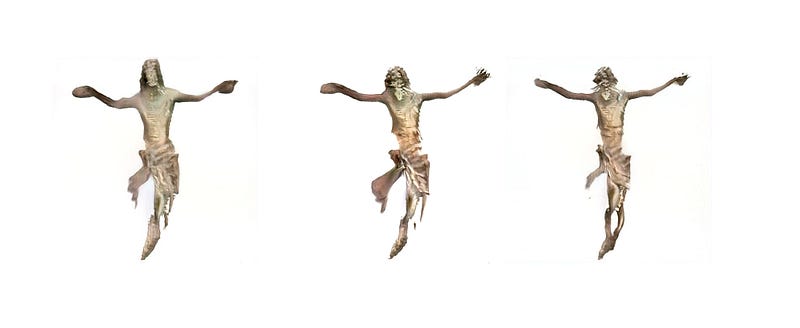
One of the most common beliefs among humans is that people have a soul. Humans tend to believe that their soul makes them human and gives them something special, but this belief has no scientific merit.
The concept of a soul was created by humans to explain why they are special and how their consciousness works. It is an illusion that makes people believe what they do. One need only look at other animals to realize that this belief is false.
Humans need to believe in something that gives them a sense of security, and the soul is one such thing. Without it, they would be just another animal on this planet. Is belief in the soul being replaced by belief in technology?
Machine learning and religion are two topics that have long interested me. In this article, I will discuss the relationship between them.
Machine Learning is a technology that is often thought to have the ability to surpass human intelligence. It may even be better than humans in many aspects such as creativity, comprehension, reasoning, etc. As machine learning develops its algorithms and constantly improves these algorithms through self-learning capabilities, it can provide a completely different understanding of intelligence and its meaning.
In the world of technology, Artificial Intelligence is one of the most influential technologies. Machines are being developed to take over tasks that we thought could only be performed by humans. These machines are being taught how to understand text, perform complex calculations, play games to a level that no human has ever reached, etc. Machine Learning has paved way for AI in terms of becoming useful in many fields including the field of religion itself. There are also fears that once Machine Learning can do everything better than humans, it will not let humans exist anymore.
In religious books it is mentioned that no one should create or bring into existence something whose power can threaten its creator or master and this “rule” is applied to humanity, however, we have ignored this rule by creating Machine Learning.
I have been using GPT3 for a year and CODEX for 2 weeks, the impressions have exceeded the limits of my already strained imagination. Thanks for the OpenAI! I will not be able to express everything in this article, I invite you to read my next stories. I will describe what has changed in my life thanks to GPT3 and CODEX.
I believe that GPT3 and CODEX are likely to make human history. I used “I believe”, not by chance, the use of these tools gives you “religious powers” ; )
which would be an interesting marketing idea!
It seems that the main interest of the people in these projects is in the use of Machine Learning to solve real-world problems. he more intelligent and creative these solutions are, the greater impact they can have on society. It seems that for a while we have been searching for some kind of religion to help us grow. It does not matter whether or not one believes in God, but I believe that it is good to realize at one time what religion means and what its purpose is. I did grow up with religion in my life. It is a common belief that without religion, we would live meaningless lives, but in my opinion, that is a bold claim.
With the rapid development of technology and Machine Learning, the concept of God will gradually blur and fade away over time as humans gradually become bolder and bolder. This means that humans will no longer need to believe in God, we are already looking for “new gods”, technology is becoming one of them. It gives us faith in a better future
So what is the purpose of religion then?
Religion is a way to explain things that cannot be understood in human terms and it provides some kind of “universal truth” or a “universal pattern” for humans to follow. It seems that religion serves many purposes, some of which are shared by other types of belief systems. In general, the more people who believe in something, the greater the influence it has on society. What is more, it seems that a “religious type” of belief often has this effect on people, leading them to believe and do things in the hope of some kind of reward in the future. This expected reward is not necessarily just some eternal happiness. Some religions also promise worldly rewards such as money and property, etc.
A religious type of belief is, therefore, an essential part of society if it can make people work together toward a common goal and elevate their spirit to achieve something greater than themselves. The most refined tools, like Codex or GPT 3, created by human hands, have a divine element. They give pleasure and inspiration to change the perception of the environment. They create new patterns of behavior and require the establishment of new paradigms. I know that sounds very religious, but that’s what the article is about. The unlimited possibilities of creation bring us closer to the absolute
While we may not fully understand why things are the way they are, Machine Learning and religion can help in many ways, from using resources more efficiently to making better use of talent
thanks for reading!
I invite you to participate in this discussion and provide feedback on your thoughts about my arguments.
What Religions Can Do for AI? [update june 2023]
- Check out my instagram with new material every week
- If you enjoyed this, follow me on Medium for more
- Want to collaborate? Let’s connect on LinkedIn
- https://linktr.ee/datasculptor
- 3D Machine Learning generated model on sketchfab


