
Learning Better and Faster
12 Steps to a Great Career in AI
Mastering the industry of tomorrow. 2023 Tech Industry Paycheck Secrets
Today, artificial intelligence is taking over the world. It can do so many things for us that it seems as if we are on a mission from God to save humanity. But what does it take to be part of this exciting industry? Here’s an article detailing how you can get recognized in your field.
How to get recognized in AI?
Step 1: Get a job in AI
If you don’t have prior experience in the industry, there are opportunities for new entrants. You can get jobs as developers, data scientists, or software engineers. These jobs may be non-technical such as sales or customer service. If you have technical knowledge of coding or science, then you can excel. Any experience in the industry is an advantage.
What qualifications do you need? A bachelor’s degree in computer science, computer engineering, or mathematics is a prerequisite for any technical position. If you are looking to excel, then it is likely that you will need a Master’s or PhD (Doctorate) great article worth reading by Shobeir Mazinani . Getting any of these degrees can be an advantage and may even boost your salary. You should research the relevant field based on your interests, such as artificial intelligence (AI), machine learning (ML), natural language processing (NLP), etc. With this experience, you can move up the ranks and start working as a project manager, product manager, or consultant.
Step 2: Work within a large company
Innovative companies with strong software architecture are of great help for employees to enhance their skills in AI. The larger the company, the more opportunities there are to learn and grow. There will be many people to share ideas and help each other out with projects. As your career progresses, you can become the lead developer or hire other developers to help you.
Step 3: Use the freelance economy
AI is an ever-changing field. New research and breakthroughs are happening all the time, and there are many opportunities to get a job. Freelance work will help you to become active in different industries and gain experience in the AI industry. No matter what your level, if you take the time to learn new techniques and skills, you could be in a position to move up a notch in your career.
Step 4: Take a course in AI
Online courses are very good for learning and keeping up to date. Courses help you to learn new programming techniques, computer science, graphical design, machine learning, deep learning, and more. You will be adding more value to yourself as a developer or data scientist. The best part about these courses is that they are free! ( #mustfollow Tracyrenee )
Step 5: Look for alumni from AI companies
Alumni from the biggest tech start-ups in Silicon Valley ( great story by Murtaza Ali) can share their knowledge with you. They have successfully navigated the industry and their experience will be invaluable. Linkedin is a great place to search for people in AI. They have clocked billions of dollars in investment and amassed hundreds of employees. You can find their job posts, birthday celebrations, and team pictures on LinkedIn Job Search.
Look for people with the same career path as you: engineering, software development, or ML/NLP/AI experience. You will find people who are looking to share ideas and hopefully they will help provide advice.
Step 6: Go to conferences
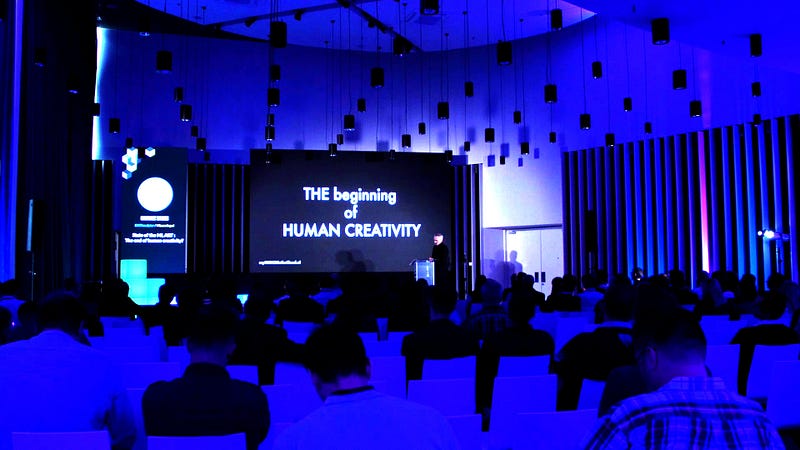
AI conferences are great places to get to know the latest research and the people in the industry. There will be experts from all fields, so you can learn not only from them but also from other students from different backgrounds. You may even start networking with other attendees and find new opportunities to expand your network in the AI industry.
Step 7: Start building your portfolio
Start building your portfolio so that you can start networking with other people who are in the same industry or want to be. The best part? You don’t need a website, just write code and develop projects! Create a GitHub profile, LinkedIn profile, personal website and start blogging on Medium — all these platforms will give you exposure and help you to become recognized in the industry.
Step 8: Meet mentors
Set yourself deadlines to achieve goals or learn something new. You might want to get your work reviewed by a mentor who has more experience than you in the industry. Your mentor might even be able to offer you a job or help you further your career in some way.
Step 9: Start writing code yourself
Open-source ( read story by Jin Cong Ho) projects are great ways to learn and gain experience in the industry. If you build an application that is well-known in the AI industry, it will prove your worth and enhance your resume. Do keep working on your current job but also spend at least 10 percent of your time on open-source projects. When you are ready, it would be a good time to share your application with others. Developers can share their applications and contribute to open-source projects which are great ways to get noticed and learn new skills. The best part? It’s free! There are many different projects, from Raspberry Pi cameras for making the most of your home computer to advanced deep-learning platforms that will help you build AI applications easily.
Step 10: Build your platform
Creating your platform or app will help you to be recognized in the AI industry. If you develop an app that is used by many people, it will be a huge plus for you and will lead to more opportunities.
Step 11: Put yourself out there!
The best way to get recognized in the AI industry is by actually getting work done, so put yourself out there and get involved. Approach companies or projects that are looking for a developer or data scientist.
Step 12: Start publishing in MLearning.ai
MLearning.ai is a great place to publish your research, learn AI from others and build your career. You can share some of your latest findings and get feedback from the community. There are many different topics under Machine Learning, such as Transformers ( great article worth reading by Natasha Klingenbrunn), Computer Vision, and Natural Language Processing (story by Prakhar Mishra). You can also submit your topics to learn about various areas in ML. The best part? It’s free!
The future of AI is bright for those who take the initiative and start working towards their goals today! By learning new skills and techniques, you can help improve the lives of many people. The AI industry is ever-expanding, and it’s only going to get bigger soon.
You can also check out this podcast on how AI will change our lives:
- Check out my instagram with new material every week
- If you enjoyed this, follow me on Medium for more
- Want to collaborate? Let’s connect on LinkedIn
- https://linktr.ee/datasculptor
- 3D Machine Learning generated model on sketchfab


