
“Jurassic World: Dominion” Introduces New Terrifying Dinosaur
Hold on to your butts…
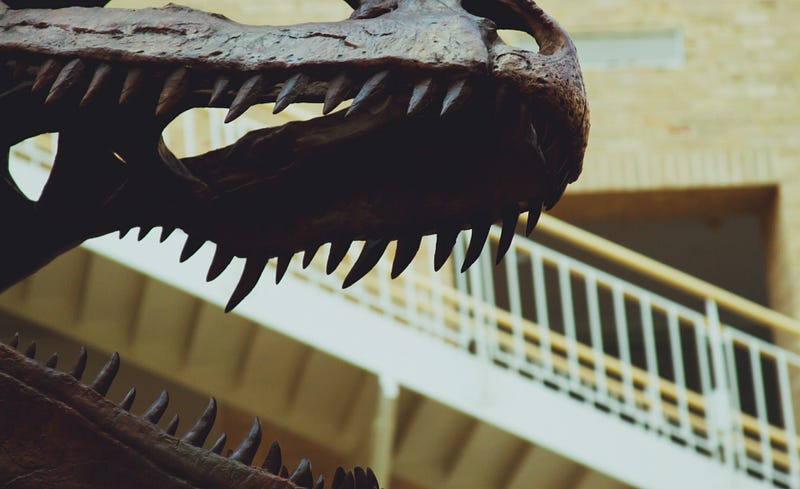
A never-before-seen terrifying carnivorous dinosaur will make an appearance in Jurassic World: Dominion, the upcoming sixth installment in the Jurassic Park franchise.
This exciting piece of information came from no other than Sam Neill, the actor who famously portrayed paleontologist Alan Grant in both the original Jurassic Park and Jurassic Park III.
While on the press tour for his upcoming movie Rams, Sam Neill was asked about his participation in the final film of the Jurassic World trilogy and revealed that a new big, bad dinosaur will make its debut in it.
In the interview, Neill says,
“I’ve just had the last five months working with dinosaurs, and it was really fun to do. We have a dinosaur called Giganotosaurus. Apparently, that’s the biggest dinosaur that’s ever been discovered. And, you know, it could eat you in a second if the guys on the controls didn’t like you.”
So there you have it:
Giganotosaurus is the latest and terrifying addition to the famous dinosaur franchise!
The ‘Giant Southern Lizard’
Giganotosaurus translates to ‘giant southern lizard’ and its fossils were first unearthed in 1993 in the deposits of the Rio Limay Formation of Patagonia.
Although it was not the largest dinosaur ever discovered, it was definitely one of the biggest carnivorous predators ever to exist. Scientists estimate it could grow between 12 and 13 meters (39 to 43 ft) long, which places it in similar ranks with the franchise’s superstar Tyrannosaurus rex.
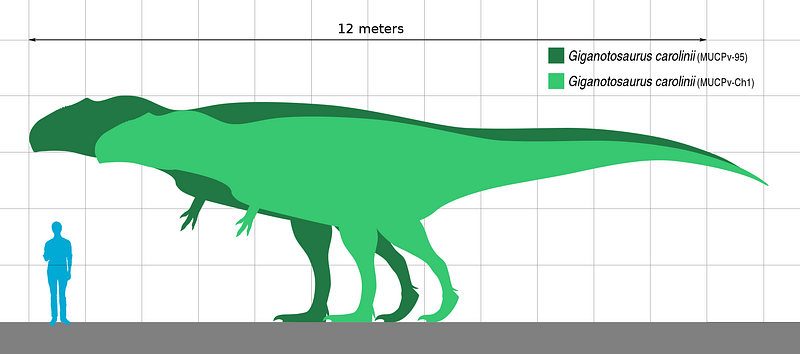
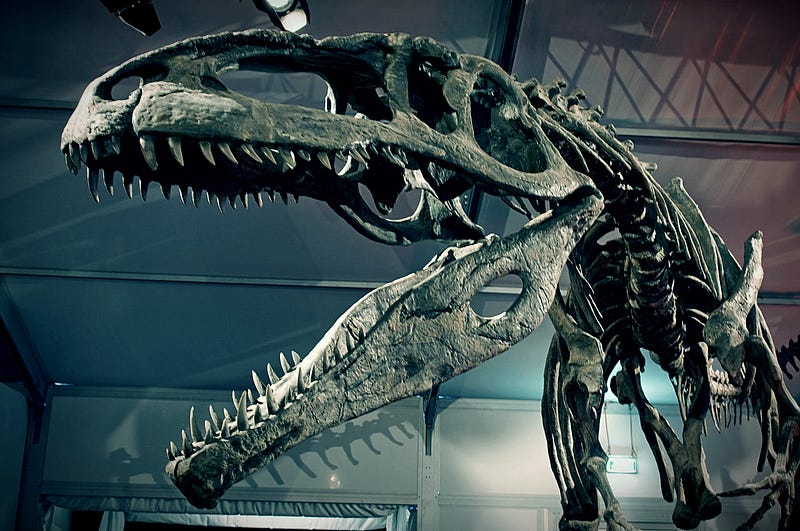
Similar to Tyrannosaurus, this predator had an enormous skull, a long tail, and powerful back legs with three sharp talons on their toes.
Contrary to T.rex, it possessed muscular arms with three clawed fingers. Its skull-while huge- was long and narrow compared to the thicker, more robust one of Tyrannosaurus. Their teeth were different too. Unlike the ‘tyrant lizard king’, whose teeth were relatively thick and abnormally blunt, the teeth of Giganotosaurus were blade-like and could grow over 19 centimeters (60 8-inches) long.
Giganotosaurus was a carcharodontosaurid- a group of successful carnivorous dinosaurs that evolved to be large predators long before tyrannosaurs. It lived in South America between 98 and 97 million years ago and shared its environment with giant long-necked sauropods like Andesaurus, Limaysaurus, and Nopcsaspondylus. Needless to say, it was the apex predator in its ecosystem.
Despite coming from different localities and geological epochs, Giganotosaurus and Tyrannosaurus will most likely cross paths in the upcoming film.
An epic fight between the two titan predators will definitely be something to watch, and fans across the world are already placing bets on which creature will survive this terrifying encounter.
Presence in the Jurassic Universe
While Giganotosaurus has not yet appeared in any previous Jurassic Park/World film, it is not without its heritage within the franchise.
According to the franchise’s canon, the hybrid monster Indominus rex- the principal antagonist in Jurassic World- had some Giganotosaurus DNA in it. Additionally, early Indominus rex designs looked strikingly similar to the ‘the giant southern lizard’.
Based on these, we can expect the new Giganotosaurus to look more like the freaky monster from the 2015’s movie, albeit less creepy.
Epilogue
The ferocious Giganotosaurus is set to be introduced to the upcoming Jurassic World movie. The ‘Giga’ will be the third enormous prehistoric theropod to make an appearance in the franchise, after Tyrannosaurus rex and Spinosaurus.
Jurassic World:Dominion will hit theaters on June 10, 2022, and will be directed by Colin Trevorrow.
Relevant Reads:
References
To watch Sam Neil’s full interview, click here.
Coria, R. A.; Salgado, L. (1995). “A new giant carnivorous dinosaur from the Cretaceous of Patagonia”. Nature. 377 (6546): 224–226. Bibcode:1995Natur.377..224C. doi:10.1038/377224a0. S2CID 30701725.


