
Autistic Communication Differences
Sometimes the established ways of doing things need an upgrade
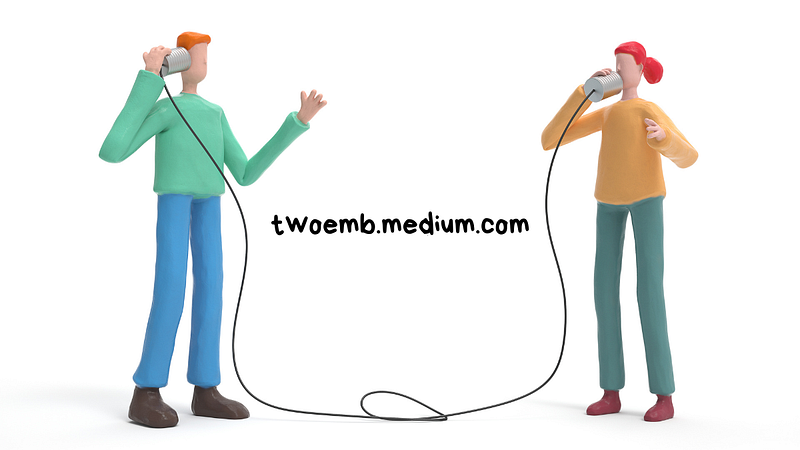
Differences are not deficits
When you meet someone who doesn’t speak your language, do you automatically assume they’re less intelligent, because they’re not able to communicate their ideas in a way that you understand?
It’s important to remember that you don’t understand their language either, and you can’t communicate ideas intelligently in their language, otherwise you’d both be speaking that one.
Autistics are often assumed to have deficits in social and communication skills because we communicate differently from the allistic (non-autistic) majority.
First, this is a highly neuronormative way of looking at it, meaning it presumes the dominant form of communication is superior simply because it’s most common.
This is known as the “bandwagon” fallacy, sometimes called appeal to common belief, or appeal to the masses. As we’ve seen in certain social and political waves of stupidity, bigger doesn’t always mean better.
Humans are social beings. Evolutionarily, it’s important for us to fit in, belong, and cooperate. As such, it’s a natural tendency for people to want to join in with the majority and conform.
Autistics are often (not always) less susceptible to this. Many of us have strong personal beliefs and are less likely to be swayed by popular opinion. We’re proudly nonconformist.
This doesn’t mean we’re not social, it simply means we’re less concerned with fitting in, and may be stronger in our ideologies. Call it quality over quantity — or don’t. Whatever.
Communication differences
This article isn’t about conformity in particular, however, it’s specifically about our differences in communication. Autistics have unique ways of communicating.
As mentioned, these differences are automatically assumed to be deficits, but in a lot of ways, they can be strengths. Sometimes the established ways of doing things are in need of a few upgrades.
That said, the reverse is also true: Our ways of communicating aren’t inherently better either, they’re just better for us (most of the time). I’ll explain some of the ways Autistic communication differs from neurotypical (NT) communication.
Please note
These are some common characteristics of Autistic communication, which does not mean they apply to all Autistics. We’re not a monolith, there are many individual differences.
Direct (sometimes blunt) style
Autistics tend to be more direct in our communication, using less subtlety or coded language.
This may come off as rude or abrasive at times, but often it is simply a cultural difference, and not intended as rude.
Direct communication can also prevent or reduce the occurrence of misunderstandings, as a lot of NT communication seems to require reading between the lines and making inferences, leaving greater opportunities for misinterpreting someone’s intended message.
Literal and specific
Autistics tend to be quite literal thinkers and may struggle with odd turns of phrase or metaphors. In contrast, some Autistics enjoy metaphors and imaginative language so, as always, there are individual differences.
We may also need specificity in order to ensure we’re clearly understanding or communicating effectively, especially when communicating with allistic people (non-autistics).
Many Autistics have experienced a lot of miscommunication, so we may over-explain ourselves in an attempt to avoid misunderstanding. We may need to ask clarifying questions or require specific language to feel confident we have understood and are being understood.
Non-linear
Sometimes Autistic brains are moving very quickly. We are very good at spotting patterns and often make connections where others see none.
Our minds may jump from one seemingly unrelated topic to another, but there is likely a connection in there somewhere!
Processing time
Because our brains can be very busy, sometimes Autistics need more time to process incoming information. It may seem as though we haven’t responded to something, and then out of the blue we respond, perhaps after others have moved on to a different topic.
A lot of Autistics may struggle to know when it’s appropriate/polite to jump into a conversation without interrupting.
Sometimes, especially in a group setting, Autistics feel as though NT/allistic conversations move so quickly, with everyone talking over one another, we don’t know how to join in the conversation and may feel awkward or left out.
It can help to pause and give everyone a chance to participate if they would like to.
Scripting
Scripting is repeating back speech, or using lines that we have heard or read in other places.
Scripting may help with unfamiliar or uncomfortable social situations.
It may be an effort to communicate information when we’re not sure how else to do so. Is sometimes part of masking when we’re trying to fit in (or blend in).
Gestalt learning
Another reason many Autistics use scripting is because Autistic children are more commonly Gestalt language learners, whereas allistic (non-Autistic) children are often analytical language learners.
The basic unit of language is generally a word. Typically, we construct language word by word to reach our meaning. Analytic language learning starts at the single word level which builds to phrases and eventually sentences.
Gestalt learning is a form of language development that moves from whole, memorized phrases to single words. Gestalt language learners process language in chunks rather than one word at a time.
This is related to scripting and echolalia because Autistic kids tend to pick up whole phrases and repeat them back, then later on start breaking them down into individual words. In contrast, allistic children are more likely to pick up individual words first, then gradually piece them together to form whole sentences.
Avoiding eye-contact
Autistics often struggle to make consistent, direct eye-contact. For some people this can be physically painful! For others, focusing on making eye-contact takes up so much mental energy that we aren’t able to focus on what’s being said.
When we speak or listen, we may look over your shoulder, or look around. This does not mean we are uninterested, it may mean we are listening to you and processing, or thinking about how to formulate what we want to say.
Info-dumping
Sometimes, if we’re really excited about a particular subject, we may throw everything we know about our special interest at you. It may seem as though we’re monologuing, and not giving you a chance to speak.
We’re not doing so intentionally, our passions can be quite intense sometimes!
And really, what’s wrong with being excited about something?
It’s okay to gently interject if we are getting carried away. We don’t want people to pretend to be interested in what we’re saying, so please don’t feel the need to humour us, that’s patronizing.
A lot of us, however, do find it fascinating when someone else starts info-dumping to us. Personally I love when someone is passionate about a subject and enjoy learning something new (and they say we lack empathy).
So go ahead and monologue, I may not be making eye-contact, but I’m listening!
© Jillian Enright, Neurodiversity MB
Related Articles
When you join medium, as a member you’ll have access to unlimited reads for only $5 per month. If you use my referral link, I’ll earn a small commission, and you’ll earn my undying gratitude.
If you’d prefer give a one-time tip, you can support my writing on Ko-Fi — also, it’s free to follow me on Facebook and LinkedIn!
Learn more
The Autistic Pragmatic Language Hypothesis
Developed by Autistic researcher Rachel Cullen
medium.com
References
Crompton, C. J., Ropar, D., Evans-Williams, C. V., Flynn, E. G., & Fletcher-Watson, S. (2020). Autistic peer-to-peer information transfer is highly effective. Autism, 24(7), 1704–1712. https://doi.org/10.1177/1362361320919286


