
Most Social Norms Are Arbitrary
Social expectations and making room for people to just be themselves

Differing social and sensory needs
I just spent the long weekend with my husband’s family. The whole family. There were 18 people altogether, across three different cottages — aunts, uncles, nieces, nephews, parents, and grandparents.
It was wonderful.
I am exhausted.
There were times when the adults were adulting (sitting around, chatting) and I was by myself a few metres away, reading a book.
I used to force myself to join those interactions because I felt it was a social obligation, concerned I would appear rude if I didn’t. I would end up feeling anxious both during and afterward, worried I’d say (or had said) the wrong things or my comments would be taken the wrong way.
My husband and I have been married for 14 years, and we’ve done this traditional long-weekend cottage gathering for nearly all of them. I really enjoy time with my husband’s family, they are very nice people, and fun to hang out with.
18 people is a lot.
There were 10 adults and eight children all running around, swimming, playing, doing cottage-y things. It was a lot of fun accompanied by a lot of noise and activity.
I used to push myself to do all of the obligatory adulting and would end up burnt out and irritable.
Now that I understand myself better, I am also much better equipped to advocate for my own needs, and to be honest about who I am and what I enjoy.
My in-laws understand and know me well enough to know that if I go off to read on my own, it’s because that’s what I want and need at that time, not because I don’t enjoy their company.
Earlier in the summer we were camping with a friend whose spouse is even more introverted than I am. Instead of joining us around the campfire in the evenings to have beers and chat, he would go into the kitchen tent and spend time on his phone.
Some might consider this antisocial, even “rude” — luckily we know better. Camping with two families on joined sites means very little alone time or privacy, and a lot of sensory stimulation.
My friend said to us, “I’m so glad you understand, so I don’t feel I need to make excuses for him.”
It’s unfortunate she often feels the need to explain her husband’s behaviour to friends and family, lest they think he’s being rude or doesn’t want to spend time with them.
“I’m so glad you understand, so I don’t feel I need to make excuses for him.”
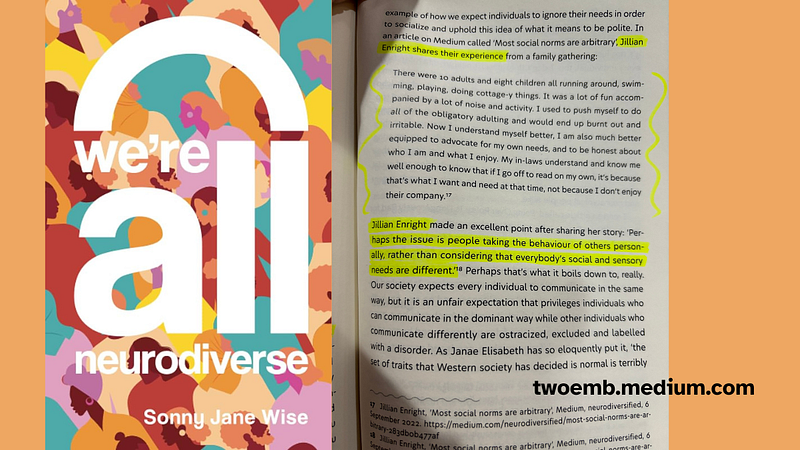
Perhaps the issue is people taking the behaviour of others personally, rather than considering that everybody’s social and sensory needs are different.
Arbitrary Assumptions
Somewhere along the line, people have invented arbitrary ideas about what constitutes polite behaviour, and it seems people largely accept these as standards by which to live (and judge others) without much critical thought.
Being polite means not holding others to your individual ideals, and respecting that everyone’s needs and experiences differ — some may differ significantly from your own, but that does not mean one is superior to the other.
Some social norms are perhaps helpful, but many are entirely arbitrary. Worse, some are borne of classism, ableism, and neuronormativity.
Being polite means not holding others to your individual ideals, and respecting that everyone’s needs and experiences differ.
Consider table manners in pretentious — I mean, fancy restaurants, for example. Do you know which fork to use for your salad, and which to use for dessert? Why does it matter? Simply to show off your class and wordiness, or how well your parents trained you.
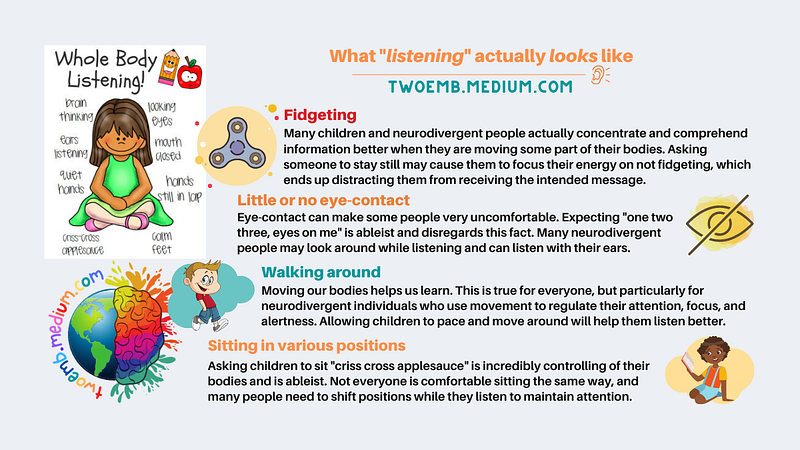
What about remaining in your seat during a meeting, lecture, or classroom? Why can’t people stand up and quietly move around, use fidgets, or do whatever helps them focus and maintain their attention?
Instead of teaching students that each person might need something different in order to do their best, we have created blanket expectations for entire classrooms or meeting rooms of people, insisting — often demanding — they all follow the same rules of behaviour.
We’ve done the same thing for communication styles. There are cultural differences across the world, but in North America there is so much couching of one’s message, an overwhelming amount of doublespeak and cryptic language, all in the name of politeness.
In my perspective and experiences, the majority of neurotypicals seem to value dishonesty as a way of being polite.
Instead of saying what you mean and meaning what you say, the expectation is that you speak in code because it’s impolite to be too blunt. Autistic people are often accused of being “rude” because we speak our minds too freely.
There are such things as tact (or so I’m told) and being considerate of people’s feelings. Sometimes I may be too straightforward to the point of accidentally offending someone, and that is where there can be room for compromise between different neurotypes and different communication styles.
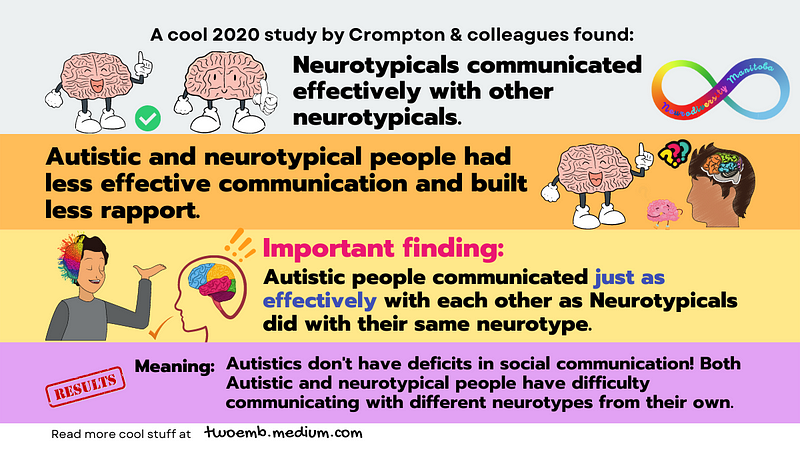
One mode of operating isn’t necessarily better than others, just different. But because Autistics and other neurodivergent folks are in the minority, we are the ones who are consistently expected to adapt and modify ourselves to make others more comfortable.
Many Autistics encounter social difficulties because people assume we are being intentionally rude. When we explain our need for direct communication, we’re often accused of being “difficult”.
Neurology is not a choice
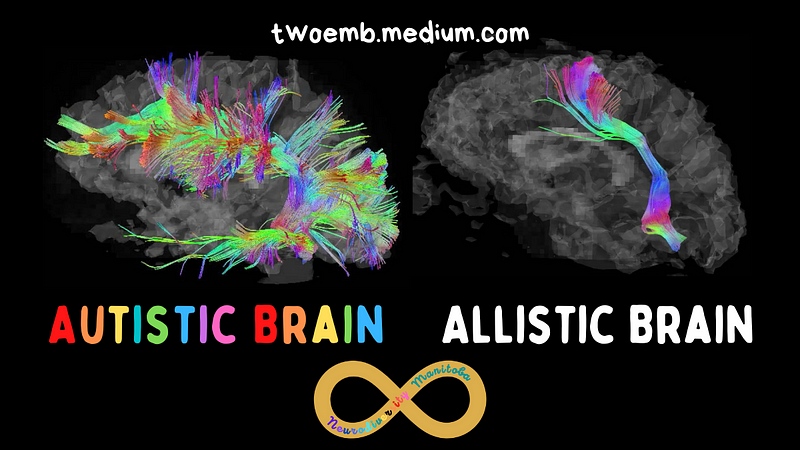
Here’s what a lot of neurotypicals don’t seem to understand: people don’t choose their neurology.
While our brains do enjoy the benefit of neuroplasticity, our brains changing and growing with experience is not the same thing as rewiring our entire brain.
Despite some horrible scams claiming they can “cure” autism or ADHD, an Autistic or ADHD brain will always be so. We can develop skills and strategies to manage some of the traits or symptoms which cause us difficulty, but that is a far cry from magically turning neurotypical.
My point being, if I am clearly telling someone that I benefit from direct communication, and ambiguous messaging is unhelpful and causes misunderstandings, I’m not saying this to be difficult.
I’m saying it to avoid misunderstandings, and to improve communication, not to be pedantic or controlling. It’s genuinely what works best for me.
What I’ve learned the hard way, and many others have shared similar experiences, is trying to adapt to please others is absolutely unsustainable.
When we bend, adjust, and try to change ourselves to meet the needs and expectations of others, we give up parts of ourselves. Masking our true selves long-term causes us distress and is harmful to our mental health.
Take a moment
Next time you find yourself criticizing or judging someone for acting upon their individual sensory or social needs, consider for a moment this might be a result of your own social conditioning.
When we find ourselves taking someone’s behaviour personally, perhaps that is an us problem, not a them problem.
© Jillian Enright, Neurodiversity MB
November 2023 update
This article was cited in a recently published book, We Are All Neurodiverse, by Sonny Jane Wise.
Ways to support my work
You can leave a “tip” on Ko-Fi at https://Ko-Fi.com/NeurodiversityMB
Become a paid subscriber to my Substack publication
Check out my online store at https://NeurodiversityMB.ca/shop
Read and share my articles from twoemb.medium.com
Related Articles
References
Asasumasu, Kassiane. (2021). What your daughter deserves: Love, safety, and the truth. In E. P. Ballou, S. daVanport, & M. G. Onaiwu (Eds.). Sincerely, Your Autistic Child: What people on the autism spectrum wish their parents knew about growing up, acceptance, and identity. Beacon Press.
Crompton, C. J., Ropar, D., Evans-Williams, C. V., Flynn, E. G., & Fletcher-Watson, S. (2020). Autistic peer-to-peer information transfer is highly effective. Autism, 24(7), 1704–1712. https://doi.org/10.1177/1362361320919286
Huang, X., Meng, P., Chen, C. (2020). The Effects of Power and Social Norms on Power Decision Making. Open Journal of Social Sciences 8(4). https://doi.org/10.4236/jss.2020.84009
Pryor, C., Perfors, A. & Howe, P.D.L. (2019). Even arbitrary norms influence moral decision-making. Nature Human Behaviour 3, 57–62. https://doi.org/10.1038/s41562-018-0489-y
Voss, P., Thomas, M.E., Cisneros-Franco, J.M., de Villers-Sidani, É. (2017). Dynamic Brains and the Changing Rules of Neuroplasticity: Implications for Learning and Recovery. Frontiers in Psychology 8, 1657. https://doi.org/10.3389/fpsyg.2017.01657
Weintraub, K. (2013, May 1). Temple Grandin on how the autistic ‘think different’. USA Today. https://usatoday.com/story/news/nation/2013/05/01/autism-temple-grandin-brain/2122455


