
Longevity, Health, Neuroscience
Value and Benefits of Dancing for Longevity
An overview of the longevity aspects of dancing with perspectives from science and the lives of exemplary seniors and centenarians
Introduction
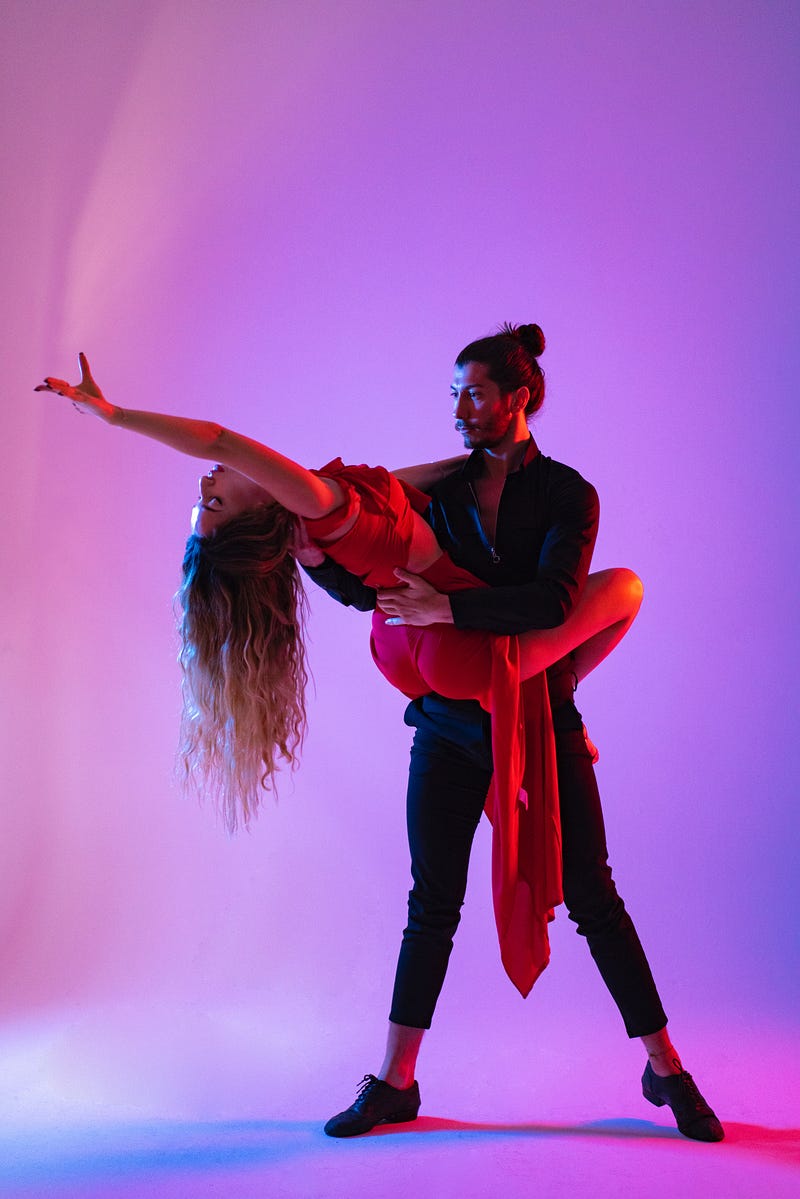
Dance is a unique art form. But dancing is more than art to the brain. It is also a distinctive and natural movement form used to exercise the brain and the body simultaneously, contributing to longevity at many levels, such as physical, mental, emotional, social, and spiritual.
Dancing offers many health benefits contributing to longevity. Muscular tone, strength, flexibility, and agility, coupled with bone strength, reducing the risk of osteoporosis, are at the core of physical health. Aerobic fitness contributes to cardiovascular and lung health.
Spatial awareness, hormonal balance, neurotransmitter boosting, and self-confidence can pose benefits at the mental level. Meaningful interactions with others can be beneficial at social, emotional, and spiritual levels.
It is never late to dance. We can reap many benefits of dancing at any age. There is a strong connection between dancing and high-quality longevity. Dancing allows us to express our emotions in a healthy way.
Dancing has existed throughout history. Many cultures, philosophies, and religions embraced dancing as it has physical, mental, emotional, and spiritual components in daily rituals.
We witness rhythmic dancing in various aboriginal cultures, contemporary art (American Hollywood), spiritual practices such as Sufism (whirling dervishes), Indian Bollywood, European Sacred Dances, and many Asian dances such as Dunhuang, Barong, Rangda, Bharatanatyam, Joget, Tinikling, Khon, Apsara, and many more.
I have been studying, observing, and experimenting with dancing, focusing on self-improvement, health impact, and longevity implications. I am convinced about the remarkable cognitive effects of combined music and rhythmic movement in brain observations.
Moreover, its beneficial impact on physical health is undeniable. Many lifestyle factors contribute to longevity.
However, my focus is on the type of longevity, including high-quality life. Thus, I see dancing as a contributor to this type of favorable longevity.
In this story, I want to provide a theoretical overview of dancing with a few scientific studies. Then, give practical samples from centenarians using dancing as a vibrant lifestyle for various good reasons.
What does Science Say about the Effectiveness of Dancing for Health and Longevity?
There are thousands of scientific studies researching the effects of dancing on health and longevity. It is not possible to cite all. To give you an idea, I introduce a meta-analysis first.
As this systematic review and its meta-analyses point out, “Physical inactivity is one of the key global health challenges as it is associated with adverse effects related to aging, weight control, physical function, longevity, and quality of life. Dancing is a form of physical activity associated with health benefits across the lifespan, even at amateur levels of participation.”
This review of 11,434 scientific studies “identified 28 total sample size 1276 participants who met the inclusion criteria. It covered a variety of dance genres and structured exercise interventions and compared them. Meta-analyses showed dance interventions significantly improved body composition, blood biomarkers, and musculoskeletal function. In addition, the effect of either intervention on cardiovascular function and self-perceived mobility was equivalent.”
The conclusion of the meta-analysis was “undertaking structured dance of any genre is equally and occasionally more effective than other types of structured exercise for improving a range of health outcome measures. Health practitioners can recommend structured dance as a safe and effective exercise alternative.”
This study titled “Dance Training Improves Cytokine Secretion and Viability of Neutrophils in Diabetic Patients” investigated the effects of a dance program on the neutrophil number, function, and death in type 2 diabetes mellitus patients and healthy volunteers.”
The study found “reduced cell death in neutrophils from diabetic patients and improved neutrophil response in neutrophils after four months of dance training. Moreover, even in the absence of a change in body composition, these changes were followed by increased plasma levels of anti-inflammatory IL-1ra and decreased plasma levels of inflammatory TNF-α and CRP. These findings may represent a useful tool to design nonpharmacological strategies to reduce inflammation and improve neutrophil clearance in diabetic patients.”
This study, “Dance as Prevention of Late Life Functional Decline Among Nursing Home Residents”, published in the Journal of Applied Gerontology, conducted a trial to determine whether the dance-based intervention could reverse functional decline among nursing home residents.
The study’s intervention “proved to be effective in preventing this deterioration and improved chair stand test and chair sit-and-reach test. The findings indicate that a relatively simple dance-based exercise can slow down the deterioration of functional status in nursing home residents.”
What does dancing do to the brain and the body?
Many studies are investigating the effects of dancing on the brain and the body. According to a report by Harvard Medical School, “studies using PET imaging have identified regions of the brain that contribute to dance learning and performance. These regions include the motor cortex, somatosensory cortex, basal ganglia, and cerebellum.”
I want to give one great explanation from a neuroscientist’s perspective. In 2008, Professor John Krakauer (neurologist and neuroscientist) wrote an article answering this question in Scientific American. I want to reflect on informing perspectives from Dr Krakauer’s findings on music and dance as the combined effect. Dance includes music and movement.
From the perspective of music, Dr Krakauer pointed out that “music is known to stimulate pleasure and reward areas like the orbitofrontal cortex, located directly behind one’s eyes, as well as a midbrain region called the ventral striatum. In particular, the amount of activation in these areas matches up with how much we enjoy the tunes. In addition, music activates the cerebellum, at the base of the brain, which is involved in the coordination and timing of movement.”
From the movement angle, Dr. Krakauer mentions, “mounting evidence suggests that we are sensitive and attuned to the movements of others’ bodies because similar brain regions are activated when specific movements are both made and observed. For example, the motor regions of professional dancers’ brains show more activation when they watch other dancers than those who don’t dance.
Dr. Krakauer informed that “this kind of finding has led to a great deal of speculation concerning mirror neurons — cells found in the cortex, the brain’s central processing unit, that activate when a person is performing an action and watching someone else do it. Increasing evidence suggests that sensory experiences are also motor experiences. Music and dance may just be particularly pleasurable activators of these sensory and motor circuits.”
Some preliminary scientific studies indicate the possibilities of reversing aging. In this process, both the brain and body play an important role. Dancing is one of the activities contributing to this psychosomatic process.
Outstanding Centenarians Who Danced At Age 100+
I introduced my centenarian friend Algor, who danced 20 minutes daily to maintain his physical and mental health. Here is the story of Algor: What I Learned about Longevity from a 105-Year-Old Centenarian: Moderation, balance, altruism, and a curious mind are Algor’s forte.
Let me start by introducing a centenarian dancer living in Australia. According to BBC News, at 106, Eileen Kramer seems more productive than ever. Eileen is known as the oldest living dancer currently.
Another legendary centenarian was Tao Porchon-Lynch, “born in 1918 and died in 2020 was an American yoga master, dancer, and award-winning author of French and Indian descent.
At age 101, “Tao taught a weekly class in New York and led programs across the globe. She was the author of two books, including her autobiography, Dancing Light: The Spiritual Side of Being Through the Eyes of a Modern Yoga Master, which won a 2016 IPPY Award and three 2016 International Book Awards.”
According to the Guinness Book of Records, “the oldest dance instructor is Ulla Kasics, born in Switzerland on 19 January 1926, who is 95 years and 164 days old, as verified in Zurich, Switzerland on 2 July 2021.”
Here is a short video recorded in 2013, showing centenarians Rene and Keith sharing a dance on Rene’s 100th birthday
Conclusions
Dancing is not only an art but also a physical, mental, social, and spiritual practice. It affects both the brain and the body. Dance and laughter go hand in hand.
Dancing is a remarkable contributor to longevity, bringing many benefits to the brain, heart, lungs, muscles, bones, skin, and other organs. Music and dancing can also be used to heal brain fog and other mental dysfunctions.
We can dance at any age, from early childhood to our senior years, at different intensity levels. While we may go crazy at younger ages, we move subtler in older years with mindfulness.
Dancing is also a cultural, philosophical, religious, and spiritual practice. Music and rhythmic movement are used for rituals.
Including dancing in your health improvement and longevity, the toolbox looks like a viable lifestyle choice. Myriads of dancing styles exist. So, we all can find one that suits our style and make them healthy habits to extend our life span and quality of life.
Here’s How I Got Healthier and Smoother Skin via 5 Lifestyle and Holistic Health Methods.
Thank you for reading my perspectives. I wish you a healthy and happy life.
As a new reader, please check my holistic health and well-being stories reflecting my reviews, observations, and decades of experiments optimizing my hormones and neurotransmitters. I write about health as it matters. I believe health is all about homeostasis.
Petechiae, ALS, Metabolic Syndrome, Type II Diabetes, Fatty Liver Disease, Heart Disease, Strokes, Obesity, Liver Cancer, Autoimmune Disorders, Homocysteine, Lungs Health, Pancreas Health, Kidneys Health, NCDs, Infectious Diseases, Brain Health, Dementia, Depression, Brain Atrophy, Neonatal Disorders, Skin Health, Dental Health, Bone Health, Leaky Gut, Leaky Brain, Brain Fog, Chronic Inflammation, Insulin Resistance, Elevated Cortisol, Leptin Resistance, Anabolic Resistance, Cholesterol, High Triglycerides, Metabolic Disorders, Gastrointestinal Disorders, Thyroid Disorders, Anemia, Dysautonomia, cardiac output, and urinary track disorders.
I also wrote about valuable nutrients. Here are the links for easy access:
Lutein/Zeaxanthin, Phosphatidylserine, Boron, Urolithin, taurine, citrulline malate, biotin, lithium orotate, alpha-lipoic acid, n-acetyl-cysteine, acetyl-l-carnitine, CoQ10, PQQ, NADH, TMG, creatine, choline, digestive enzymes, magnesium, zinc, hydrolyzed collagen, nootropics, pure nicotine, activated charcoal, Vitamin B12, Vitamin B1, Vitamin D, Vitamin K2, Omega-3 Fatty Acids, N-Acetyl L-Tyrosine, and other nutrients.
Disclaimer: My posts do not include professional or health advice. I only document my reviews, observations, experiences, and perspectives to provide information and create awareness.
As part of my creative non-fiction writing goals, I’d like to share a few stories that might warm our hearts with a bit of humor into weighty topics.
Sample Humorous Stories
Finally, After Burning Her House, Georgia Found Enlightenment
Hilarious Tips to Prevent Brain Atrophy and Keep the Gray Matter Giggling
8 Psychological Points I Had to Unlearn and Relearn the Opposite
Based on my writing experience and observations, I documented findings and strategies that might help you amplify your voice, engage your audience, and achieve your desired outcomes in your writing journey.
I publish my lifestyle, health, and well-being stories on EUPHORIA. My focus is on cellular, mitochondrial, metabolic, and mental health. Here is my collection of Insightful Life Lessons from Personal Stories.
You might join my six publications on Medium as a writer by sending a request via this link. 22K writers contribute to my publications. You might find more information about my professional background.
As a writer, blogger, content developer, and reader, you might join Medium, Vocal Media, NewsBreak, Medium Writing Superstars, Writing Paychecks, WordPress, Cliqly, and Thinkers360 with my referral links. These affiliate links will not cost you extra to join the services.


