
Why I Don’t Consider Myself an ‘Ally’
Since everyone seems to have their own definition of what makes someone an “ally,” I won’t attempt to label myself as such
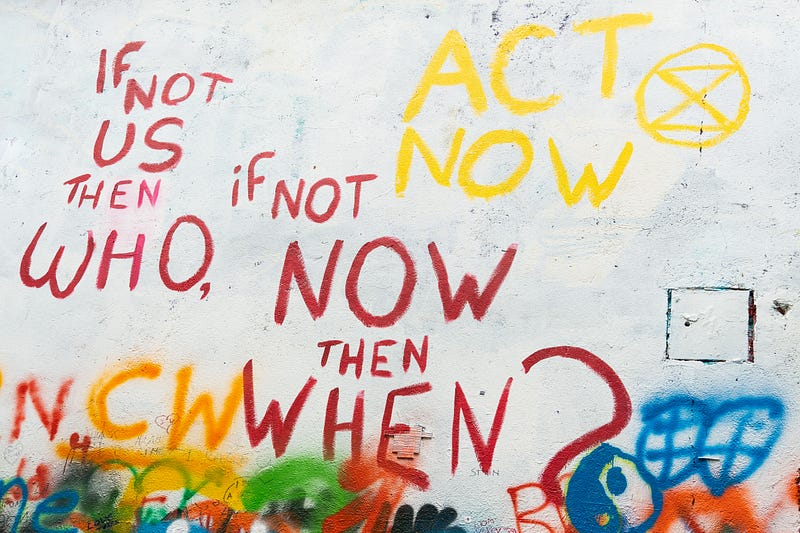
Allyship is never an easy topic to broach. How can each of us intervene or give support when we see oppression unfolding? What is the best way to take action if someone with a lack of privilege confides in us?
There’s no mathematical formula for achieving this.
Additionally, we must assess whether something is indeed a privilege. It’s imperative to be aware of when discrimination and injustice has gone unchecked.
While most people tend to frame these discussions in terms of race or gender, we’d be doing a disservice to people’s lived experiences if we fail to broaden that scope. Are prejudices snowballing into systemic abuses? What about in venues not directly funded by the federal government?
When cultural, interpersonal, and structural hardships collide — there’s no handbook of absolutism for functioning as an “ally” in those scenarios.
What Is an “Ally”?
We often hear about the need for one to “decenter” themselves when considering how to be an ally to a specific group to which they don’t belong. But what is the path to achieving this?
Leadership coach Dominique Jordan Turner has released a YouTube video summarizing several of her thoughts on what can make someone an ally. Although her reference points relate to DEI (Diversity, Equity, & Inclusion) in the workplace when combating systemic racism/sexism — these same concepts would presumably translate to attributes beyond only race and biological sex.
Jordan-Turner proposes many solutions that, on their face, sound compassionate and productive. In her video, she encompasses the core concept of allyship by summarizing:
…an ally is someone who has privilege but chooses to stand for and with marginalized communities by taking tangible and ongoing actions to dismantle systems of oppression.
Some of Jordan-Turner’s advice includes speaking up when people in our lives express ignorant or hateful statements toward a group. Also, we should open ourselves up to attending events when invited by someone to learn about the cultures of groups with which we are unfamiliar.
A bulwark of her guidance is based on listening to members of marginalized communities. She urges folks to read literature others have written so that members of oppressed groups aren’t unduly burdened if they happen to be self-conscious about proactively sharing their experiences.
Jordan-Turner acknowledges how there is a frequent stigma surrounding the word “privilege.” I’m in agreement with her on this point, as well — as I explored in my op-ed piece entitled “White People Shouldn’t Be Afraid of the Term ‘White Privilege’”:
Finally, she makes a valid appeal for us to ask questions when trying to determine what an individual might need in terms of allyship. That way, we can learn about their pointed experiences but also discover essential actions to help incite change.
However, if we don’t temper this with common sense and good judgment, we run the risk of succumbing to cognitive dissonance. I’ll discuss how such oxymoronic conditions might play out, momentarily.
Meanwhile, in a Yahoo! article from August 2020, The Ford Foundation’s Darren Walker offers his opinion of what makes a good ally. He talks about anti-Black racism in the corporate world as a springboard for this discussion.
Some of Walker’s recommendations for corporate responsibility include implementing fixes such as a living wage, sick leave, paid family leave, comprehensive health care, or even cutting the pay of CEOs. He also advocates for progressive tax reform.
Walker encourages companies to examine whether or not they have executives on their leadership teams who are Black or from other BIPOC communities. To this end, employers should have a racially-diverse candidate pool from which to choose, including rehabilitated applicants with criminal backgrounds.
Who Determines if You’re an “Ally”?
Unfortunately, there’s an unresolved question here related to allyship: Who gets to serve as the ultimate arbiter of whether someone is an “appropriate” ally?
The stock answer would seem to be: Members of the marginalized community(ies) who are affected by the example of oppression.
Except…what happens when multiple members from a marginalized community have substantially different opinions on whether something is true allyship — or if it’s merely virtue-signaling?
Some people on the Left, for example, would probably say that the positions I’ve taken on CRT (Critical Race Theory) or “hyperwoke” culture would disqualify me from referring to myself an ally:
So, what right do I have to call myself a “white ally” when various Black, Indigenous, & People of Color may have vastly different perceptions of me — depending on whether they are progressive, liberal, moderate, conservative, or libertarian?
Similarly, what right do I have to call myself a “male ally” when various women and other female-presenting people may have vastly different perceptions of me — again, depending on whether they are progressive, liberal, moderate, conservative, or libertarian?
When Jordan-Turner, amidst her commentary on the importance of listening, says: “It’s not about you, your feelings, or your opinions…”
She harbors a common blind spot, in this regard.
Although, due to being White and male and cisgender, I’ve rarely been the target of white supremacy or misogyny or transmisia in my life…
My experiences being gay, autistic, Millennial, “ugly,” working-class, unathletic, and dermatologically-challenged — amongst other attributes of mine — have shaped my existence and my perspective. They’ve all played a major role in how I interact with people.
That includes situations in which I possess unearned privilege.
So, while Jordan-Turner seems quick to embrace what I refer to as “The ‘Hurt Feelings’ Fallacy” — how does she suggest I navigate members of oppressed groups who try to weaponize my privilege against me out of malice?
When talking about asking questions: She acknowledges how what one person needs in terms of allyship could be entirely different from what another person needs. This, of course, means not treating members of marginalized groups like a monolith.
All of that is true. So, upon accepting that premise: How do we reconcile the presence of systemic, cultural, and social patterns of injustice with the inherent diversity of how someone experiencing oppression wishes for us to intervene?
Jordan-Turner goes on to utter the adage of “Get comfortable with being uncomfortable”…
This canned mantra is usually predicated on the reality of how people enduring microaggressions or discrimination will often be subjected to those experiences on a daily basis. But what happens when intersectionality…well, intersects in unpredictable ways?
It happened to me, when I was sexually assaulted by a male classmate of color.
It happened to me, when an older woman of color who was my coworker engaged in ableism and ageism against me amidst what was conceivably her desire to protect herself from white supremacy and misogyny.
Lastly, Jordan-Turner tells us to acknowledge we’ll make mistakes when pursuing allyship. She advises any person to apologize and gain awareness when they say or do something they hadn’t realized would dredge up traumatic baggage within a coworker or peer.
Don’t dismiss it. Yes, I agree with that concept.
But a lot of the accompanying rhetoric can be problematic. When someone is told to “resist the urge to get defensive” — isn’t that an example of gaslighting if a marginalized person decides to weaponize their experience to inflict oppression of their own onto others?
“Sit with it.” Yes, I agree that it’s valuable to engage in introspection when realizing we have inadvertently caused harm to someone else.
If taken too far, on the other hand, we run the risk of “throwing ourselves under the bus” unnecessarily. That isn’t beneficial. It’s just performative activism.
It’s tokenism arising from the fear of being told to “Get woke!”
As far as Walker’s roadmap: Many of those policies would undoubtedly elevate a workplace’s productivity and morale.
But if someone has legitimate ideological qualms with a specific model for progressive tax reform…does that mean they must alter their partisan beliefs in order to have any hope of becoming an ally?
Which iterations of political reform are negotiable? Which elements are non-negotiable? And who gets to decide that?
Allyship Without Sanctimony
Last year, Matthew Arnold Stern wrote a Medium piece delving into the struggle over whether it’s preferable for people to be “allies” or “supporters.” Amidst his ponderings, Mr. Stern makes a straightforward point:
People know who’s really in their corner and who isn’t. And I don’t think they would consider most people who proclaim themselves as allies to be truly on their side…What they really want us to do is use our privilege to fight against legislation, bigotry, and other actions that prevent them from living their lives.
Yet, he also invokes the misnomer of embracing “discomfort.”
I believe we need to completely overhaul this idea.
The fallacies of “antiracism,” “antisexism,” or “anti-whatever” too often fail to look at privilege with context or nuance.
Everybody has some type of privilege…but privilege itself has limits.
I’ll ask again…
What happens when one member of a marginalized group thinks someone is an ally — but another member of that same marginalized group disagrees, viewing the supposed “ally” as a threat or a hindrance?
Platitudes don’t get the job done.
Genuine dialogue does.
I may be a cisgender White dude. But that — in and of itself — shouldn’t disqualify me from offering multidirectional techniques for effective communication.
My blueprint for how to negotiate demands amidst both the “pro” and “con” sides of the CRT debate is just one such example:
Click here to subscribe to my stories.


