
On The Oppressed End of Dermatological Privilege
Everyone gets acne, right? Not exactly. Not like mine…
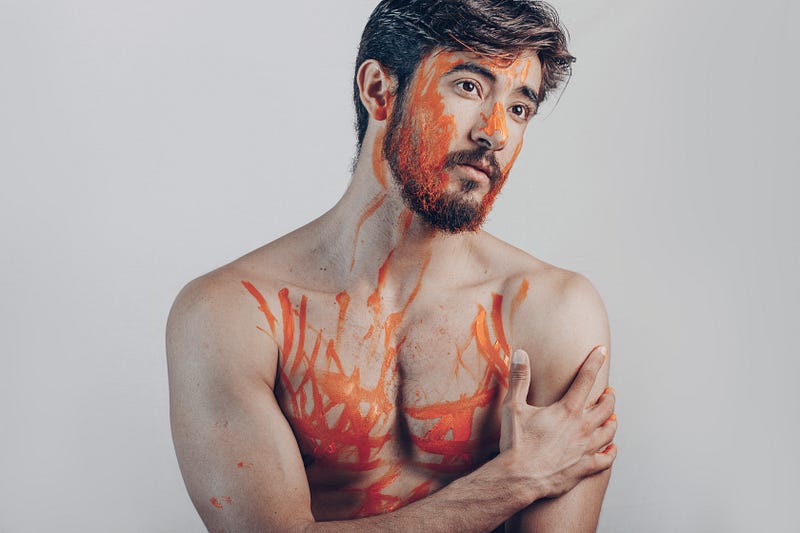
Most people don’t think acne is a big deal. And, by “most people,” I’m referring to people who haven’t sprouted many significant pimples at any given point in time. Such a privilege can be conditional and fluid.
Except when it isn’t.
It’s what I refer to as “cellulism.” In other words: dermatological privilege.
Cellulism is discrimination based on adverse skin conditions. What are the systemic, cultural, and social barriers faced by people who have abnormally-severe forms of acne and/or stretch marks? How are parallel hardships faced by those with burns, rosacea, eczema, hives, carcinoma, melanoma, keratosis, warts, vitiligo, and the lesions or rashes that can result from allergies?
But, today, I’m going to use acne as a benchmark for how cellulism works. I can speak from personal experience, as someone who began developing extreme cystic acne around the age of 12.
For me — and for millions of other boys — this creates a lifelong stretch of trauma.
The Basis For “Cellulism”
First, let’s be clear about the role of cellulism amidst intersectionality. Like any attribute, neither privilege nor oppression alone tells the full story. Obviously, there are plenty of people who are Black, Indigenous, & People of Color, female, LGBT+ folx, working-class, and from nonmainstream religions with perfectly clear skin. Or, at least, skin that’s relatively free of many embarrassing blemishes.
This is not to excuse the favoritism our society so frequently shows toward people who are White, male, heterosexual, cisgender, wealthy, Christian, and/or politically connected. Rather, it’s an additional layer piled onto the intersectional heap of conflict.
Cellulism would fall under the broader umbrella term of “beauty privilege.” Some people call it “lookism” — but I find that word to be phonetically awkward and overly simplistic. So, when glancing beyond the specific problem of cellulism, I would use “beautyism” as a more generic buzzword.
Midway through my Sixth Grade year, I noticed the increasing presence of fresh pimples surfacing across my back and my chest. Unlike whiteheads, blackheads, or run-of-the-mill temporary pimples — these were large, often hard, sometimes physically painful, and close to the circumference of a dime.
And I couldn’t get rid of them.
They very slowly began to recede after several years. But, because of the body shame I’d felt during the interim, I abandoned any semblance of a balanced diet. I unconsciously gained a lot of weight. I tried to lift free weights in the privacy of my bedroom, hoping to build muscle.
Instead, deep stretch marks formed as grooves in my armpits and on my shoulders. The body fat from my unhealthy diet led to shallower (but still extremely visible) stretch marks around my waist and on my butt cheeks.
While my acne was, in theory, treatable — there is currently no treatment available through dermatological science to make one’s cellulite (stretch marks) disappear. Women who’ve gone through pregnancy know this, all too well!
Biologists estimate that at least 40% of American male persons get stretch marks. Percentages are less clear when it comes to severe cystic acne (including in adolescent boys), but it’s evidently a minuscule percentage juxtaposed with cases of mild-to-moderate temporary acne.
I have both.
I’m disgusted by my own body.
Science Proves Cellulism
My cystic pimples are a form of “hormonal acne.” Erika Luceri-Johnson, PA-C, MPH, a dermatological physician assistant at Southeast Florida’s ClearlyDerm practice, defines hormonal acne in the following way:
When a man’s testosterone levels fluctuate, his skin will begin to secrete more sebum, clogging pores and resulting in chronic breakouts. Because hormonal acne is fairly severe, it’s also fairly easy to spot. Generally speaking, it falls under a category of acne known as “inflammatory acne,” which is characterized by large red pimples and cystic breakouts (rather than relatively-inconspicuous blackheads and whiteheads). It often covers the lower[-]third of the face, including the jawline and neck, and can also be spotted on the shoulders and back.
According to Dr. Zenovia H. Gabriel, acne is triggered by testosterone, which men produce more of than women do. It can arise from stress, natural aging, sexual activity, or intense exercise.
For those of us with sensitive skin, Dr. Gabriel recommends the use of an electric razor. For men who prefer hand-razors, she encourages aftershave — once one has shaved his facial hair in the direction of the hair growth rather than against it. Genetics (family history), she says, can also generate acne regardless of individual testosterone level.
As Dr. Gabriel explains:
Men and women can both experience acne from puberty into adulthood. Men, however, tend to have acne for longer periods of time. Male [person]s have a longer phase of acne in their lifetime lasting from puberty to early-mid adulthood. In addition, severe forms of inflammatory acne like acne conglobate or PAPA syndrome (a combination of acne, arthritis, and pyoderma gangrenosum) mainly occur in men because high testosterone is the culprit. These are devastating forms of acne scarring and need immediate medical attention. Severe scarring often occurs[,] and men can experience depression and mental illness from the shame of these disorders. Anabolic steroids and other drugs can also worsen acne. Any medication you believe is worsening your acne should be stopped…Hormonal body acne is also common because men have a higher density of sebaceous glands per hair follicle on their chest, shoulders, and back.
It should be noted that Dr. Gabriel markets her own “Dr. Zenovia” Benzoyl Peroxide cream plus other skincare products; I know from firsthand experience how Benzoyl Peroxide permanently stains clothing, which is another economic and sartorial burden for which those of us who are at risk.
Dr. Crystal Vera of the Miami Children’s Skin Center reaffirms this science. She outlines how excess bodily oils will join with dead skin to clog the pores. These glands are most active when hormonal changes occur. In addition to genetics and (male) androgen hormones, perspiration can be a contributor.
Writing for Medical News Today, Markus MacGill defines cystic acne as being uncommon, as it isn’t influenced by diet, hygiene, or masturbation. This condition, which may cause physical pain on the surface of one’s skin, generally requires a specialist.
Perhaps the most well-known “big gun” treatment for hormonal acne is isotretinoin (aka Accutane). This oral medication can dry out the body but may cause side effects including depression and liver damage. For women — who are likelier to develop cystic acne as adults rather than as teenagers — taking isotretinoin can lead to infertility issues or birth defects.
Lancing and draining the cystic acne is recommended, under the supervision of a doctor so it doesn’t cause permanent skin damage — with “ice-pick scars” and shallow skin depressions being amongst the least reversible consequences.
Since my family was working-class, we had trouble affording my dermatological treatment. Insurance usually doesn’t cover it. For the first couple of years, before I was actually able to see a dermatologist, my mom would tell me…
“You’ve got to SCRUB!”
…in order to get rid of this cystic acne.
Well, I did. I SCRUBBED! Vigorously! Not only did it fail to make the cystic acne go away — it resulted in deep, ugly grooves on my skin with which I still live, to this day.
I don’t blame my mom. She just wanted to help me by giving me proactive “advice.” But, if we’d had better medical resources at our family’s disposal, she never would have encouraged that self-mutilation.
Intersection With Ableism and Classism
Acne of this intensity is rarely any individual’s fault. It’s due to scientific and genetic factors largely beyond our control. The trauma resulting from it persists due to a lack of structural and social support.
As someone diagnosed on the autism spectrum, this condition is compounded by the high anxiety, worrisome tendencies, and irrational phobias that I already live with, on a daily basis. And *THAT* is compounded by my lack of economic wealth (as well as the lack of available financial aid for those of us who experience cellulism while simultaneously falling within lower income brackets).
According to Vice’s Colleen de Bellefonds, some nutritionists have theories about flareups being triggered by consumption of skim milk, gluten, and sugar; but the science on that is inconclusive. Women may get it for the first time in their thirties and forties, as a result of the major hormonal changes that accompany pregnancy and menopause.
If a patient is taking oral antibiotics to treat severe acne, some consequences may include diarrhea, nausea, sunburn sensitivity, abdominal pain, imbalance of good bacteria, and antibiotic resistance. The acne itself can also reoccur, despite antibiotic intervention; in this scenario, cream or gel such as Retin A can be useful.
As far as hope on the horizon, de Bellefonds reports:
Research last year found that people who suffer from acne have more of one of two versions of a type of bacteria, Propionibacterium acnes (P. acnes), on their skin that’s more likely to cause breakouts. Although the research is preliminary, it could eventually lead to treatments like bacteriophages and probiotics that only target that particular strain of bacteria that causes acne or boost good-for-your-skin strains.
Cheaper short-term treatments include high-quality facewash, moisturizer, and salicylic acid. De Bellefonds points out how “there’s no male equivalent of androgen-absorbing birth control.”
To get rid of scarring, once hormonal acne subsides: procedures such as micro needling, subcision, chemical peels, microdermabrasion, and laser resurfacing are options. Similar techniques can be used against stretch marks as experimental remedies (albeit with much less success or reliability than when using them to treat acne scars).
But these surgeries are imperfect, highly expensive, and not readily available everywhere (especially not for people such as myself who live in rural areas).
Speaking The Unspoken
Statistically, boys have more problems with severe forms of acne than girls do. As human beings age, that dichotomy flips — with adult women developing it, when they are older, more frequently than older adult men will.
For me, I face cellulism simply by existing.
I want to be “normal.” I want to have the clearer (if imperfect) skin that a majority of other dudes have.
My autism compels me to obsess over this. People don’t understand why I can’t just be happy with the body I have.
That is ableism on their part because my brain chemistry isn’t the same as theirs.
It can be classism on their part, because many of them possess more wealth than I do, to potentially access the available (albeit limited) treatments. I probably inherited this condition from my dad; he underwent radiation treatment for his hormonal acne, as a kid. My parents didn’t want to put me through that…not that they could even afford to, financially.
It’s binarism (prejudice and discrimination against nonconforming people), because, in their eyes, I don’t fit neatly into the stoic male prototype who is supposed to just “work through” my pain and jealousy like a robot. That’s a nice dose of misandry there, as well.
It’s regionalism because I was raised against my will in a rural area. Had my family lived in a big city, we may have been able to research the possible treatments with more accuracy. We would have been a short vehicle drive away from that medical care.
It’s cellulism when people lacking these skin problems judge me…when they verbalize their judgments of me…when they gaslight me because they haven’t experienced this same lifelong trauma that I have.
If I’d been a gregariously-neurotypical rich kid, my skin probably would have emerged from my adolescence at least somewhat less damaged.
This doesn’t mean all of you with decent skin are “oppressors” just by existing.
It means you have advantages in multiple areas of your life that are linked to beauty privilege (“beautyism”). Maybe you were blessed with better genetics than me. My skin is probably much oilier than yours is. Your neural pathways manage stress better than mine allow me to. You might have had superior dietary guidance — at least, compared to what I had, as a kid.
So…what *can* I do, at this point?
I can try to love my body, more often, incrementally.
I can attempt to empower my bros — who are (or have been) in the same boat as me — to do the same.
If I’m jealous of any guy (and his clear skin), I can give him a compliment. Or, if not that, then just share my story (if he’s someone who is willing to listen).
If I ever somehow become a billionaire, I want to set up a clinic offering dermatological assistance to patients. One that helps preteens and teenagers from poor households in treating their severe skin conditions…whether it requires prescriptions or actual surgeries. Boys, girls, and nonbinary kids alike would be welcome. But, quantitatively, I suspect most of the patients would end up being adolescent boys.
Until then, you will NOT deny the existence of cellulism. Don’t gaslight us by telling us we could manage it better if we just “pulled ourselves up by our bootstraps.”
Socioeconomic welfare programs are virtually nonexistent for Americans with severe skin conditions. And, in the meantime, we’re stuck in a beautyist culture that radiates indifference, scorn, ridicule, or “respectability politics” against those of us cursed with these very large bumps, craters, and blisters to which most of you cannot relate.


