
The ‘Bootstraps’ Fallacy
Not everybody has “boots”…but even people who *do* have boots might still grapple with delicate “straps”

Growing up as a centrist kid in a staunchly-Republican family, one of the most common refrains I heard was the one-liner of how “People shouldn’t be punished for their success.” This inevitably became their go-to phrase whenever defending fiscal conservatism.
I’ve never been a fan of reductionist thought processes. From the earliest days cultivating my identity as a political Independent, my goal has been to fuse together the best elements of all worlds. Can our legislative policies be “pro-business” while also being “pro-humanity” and incentivizing good corporate citizenship? Are there ways in which capitalism can thrive without cronyism?
Therein arrives the stigma against people who are viewed as lazy or entitled because they allegedly haven’t learned how to “pull themselves up by their bootstraps.” This has become a folksy, backhanded way of lecturing others on how they are responsible for their own oppression.
Following the Trump tax cuts passed through congressional Reconciliation in 2017, John McDermott of MEL Magazine anticipated that the imagery of so-called “bootstraps” would be used by GOP heavyweights as a pretense to pay for those tax cuts by reducing the social safety net. McDermott traced such phrasing back to the Western American frontier of the Nineteenth Century.
Cowboys, he recalled, wore boots with leather side-straps that allowed them to pull up those shoes while in a standing position. They lacked the fancy buttons found on boots worn by Americans inhabiting the urban Eastern Seaboard. But, reasoned McDermott, such a seemingly-benign use of words can be harmful when taken too literally. Short of having supernatural powers, it’s impossible for a person to pull at their bootstraps and levitate themselves above everyone else.
Here, that levitation would be a metaphor for the futility of anyone trying to overcome monumental adversity all by themselves.

Back in my earliest undergraduate years of college, there was a Residence Hall Director who advised a student organization on multiculturalism in which I sometimes participated. Jodi, who would later become an Associate Dean and a DEI director, was extremely hyperwoke when it came to giving deference to people who identify as women, members of BIPOC communities, or LGBT+ folks (the lattermost group being one to which I myself belong).
However, she would constantly gaslight students who fell on lower end of the socioeconomic spectrum. She minimized the effect that class status can have when looking at intersectionality (according to her, race and gender are the biggest factors).
Not everybody HAS bootstraps.
One example stands out in my memory. At a university-sponsored symposium on community involvement, a student spoke up and expressed how he was learning to see beyond the myth his parents had taught him about how everyone could just “pull themselves up by their bootstraps.” He had come to realize that, in his words, “not everybody HAS bootstraps.”
To which Jodi responded: “Some people don’t even have BOOTS.”
Her standalone point was completely valid, there. Yet, earlier during that same symposium, Jodi had addressed these students about the notion of charitable giving. She slyly slipped in her opinion about how she suspected this room full of broke college students actually had more cash than they realized for donating to philanthropic causes. But she went on to elaborate how her greater emphasis for that day was encouraging students to give their TIME and ENERGY (rather than monetary resources) to organizations that needed innovative participation.
Jodi’s sleight-of-hand, here, was profound. She may or may not have realized the classist microaggression she was committing — essentially telling a large group of predominantly-White students how they “weren’t as financially-poor as they assumed they were.” Simultaneously, her core worldview (which I’d witnessed from her, on many previous occasions) held that being Black, Indigenous, Asian, Latino, and biologically-female were the most severe markers of oppression in our society.
(Jodi, incidentally, is a White woman herself; I suspect she regularly recommends the toxic writings of Robin DiAngelo as “education” for her White students…)
Contrast that with a classmate who lived in the same residence hall as me, during the 2004–05 academic year. Larisa was unapologetically conservative. She displayed Republican political signage outside of her dorm room. She wrote for our student-run alternative campus publication, The Flip Side. Since most of the university-funded zine’s writers were generally progressive in their politics, Larisa tended to be one of the lone conservative voices there.
During this time period, theocrats within the Republican Party were stoking public outrage toward LGBT people for daring to demand things like same-sex marriage, employment protection, or public safety. In an editorial piece defending the GOP-sponsored Federal Marriage Amendment (which would have banned gay marriage, coast-to-coast), Larisa rationalized her belief by saying that no one state should have more power than the federal government.
Here, she was using “selective federalism” to favor a policy toward which she was biased. But most Republican legislators and activists generally push for smaller federal government on a majority of issues.
Larisa topped off her word salad of cognitive dissonance with a declaration of how her political party (Republicans) believes in the old-fashioned concept of “pulling yourself by your bootstraps.”
Convenient. And utterly meaningless, when used to cloak a more nefarious intent.
As displayed by both Jodi and Larisa (in ideologically-dissimilar ways), “bootstraps” has become a dog-whistle when attempting to manipulate those who don’t belong to one’s favored in-group.
None of this is an attempt from me to dismiss resourcefulness or work ethic from individuals who hustle and thrive. In fact, I admire those who harness commitment, intelligence, mindfulness, perseverance, and self-awareness to craft successful careers for themselves. They deserve to bask in the positive impact generated through their accomplishments.
When they enjoy success as a result of their efforts, I feel proud of them.
That doesn’t mean they should be given a free pass when they inflict abuse upon those who serve under them.

But, by the mid-Twentieth Century, an aspirational reframing of the term had occurred.
Education writer Jeff Young traces the origin of “bootstrapping” to inventor Nimrod Murphree. In 1834, a Tennessee newspaper ran a claim by Murphree of discovering perpetual motion. Newspaper writers mocked him for projecting a myth that would allow Murphree to traverse the countryside “by the straps of his boots.”
But, by the mid-Twentieth Century, an aspirational reframing of the term had occurred. Young quantifies this through data provided by business author Seth Godin. Statistically, a higher burden of “bootstrapping” falls upon entrepreneurs who are female or people of color. Meanwhile, access to startup resources is also disproportionately linked to one’s class status (or their proximity to venture capital).
Young maintains that sensations ushered in by “bootstrappers” such as GoPro founder Nick Woodman are the exception, rather than the norm. Without familial wealth, biological attributes will only get you so far.
Are all of these people just supposed to “pull themselves up by their bootstraps” despite the structural, financial, neurological, bureaucratic, and sociological barriers they face?
It’s easy for us to accuse someone of neglecting or ignoring their “bootstraps” when we know nothing else about their lives.
People are tempted to draw conclusions about others due to what’s on the outside. Dark skin pigment? Feminine physical presence? Blatant body disfigurement? Awkward posture? Short stature? Huge body mass? Limited sartorial options?
But can you assess the entirety of somebody’s life based solely on what you see with your own eyes?
What happens to the high school student who is only beginning to unlock his untapped innovative brain, but he has an undiagnosed learning disability that gets him branded as a “thug” and he drops out of school once his antisocial tendencies have made him a pariah amongst the student body?
What happens to the aspiring economist who can’t complete her graduate dissertation fast enough because she is constantly nauseous from the cancer treatment she’s undergoing and it’s rapidly eating up her savings?
What happens to the fledgling television writer who can’t get an agent because no one wants to sign them due to their lack of transportation?
What happens to the mid-level phlebotomist who repeatedly endures sexual harassment from his clinic’s administrator but he is too afraid to report it?
What happens to the pregnant marketing director too intimidated to confront bullying from her ad agency’s top executive, given how racial tokenism and nepotism could enable that exec to deny a promotion which the marketing director needs for supporting her unborn twin babies?
What happens to the single parent about to lose their home after being targeted by predatory lending tactics, when they can’t increase their hours at their law firm due to an inability to afford summer child care for their three young children?
Are all of these people just supposed to “pull themselves up by their bootstraps” despite the structural, financial, neurological, bureaucratic, and sociological barriers they face?
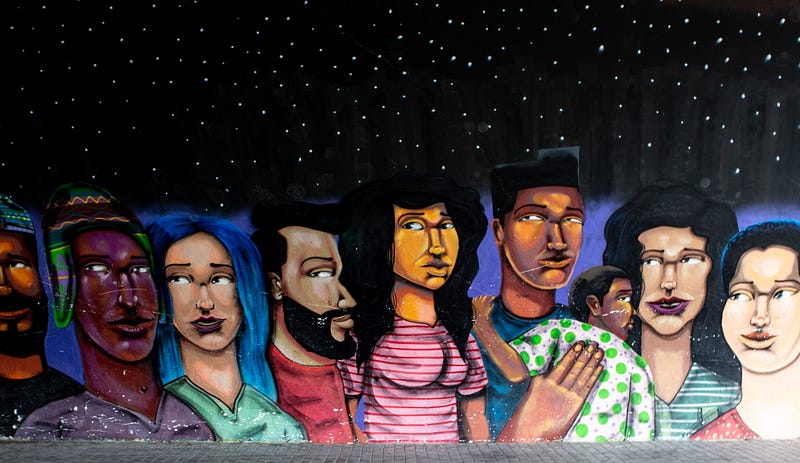
We need to place under a microscope this notion that most people have bootstraps with the same magnitudes of length and durability. The fallacy created by this presumption should serve as a stark reminder about how multiple things can be true at the same time.
As chronicled by Huffington Post reporter Carolyn Bologna, the earliest years of the Great Depression seemed to have signaled a turning-point for how the term “bootstraps” was reappropriated. Some people continue to view it as a ludicrous metaphor. But others weaponize it shamelessly, in order to guilt the masses into embracing “pure self-reliance as a universally[-]attainable goal.”
The past two decades have seen unprecedented social and economic upheaval in America. If we can learn to embrace individualism, acknowledge extenuating circumstances, and continue placing value on hard work and innovation — perhaps we can pave a much brighter collective future than the Hemingrebels and the GI-Gens could have ever imagined?


