
Summarizing America’s Eight Generations
Hemingrebels, GI-Gens, Safe-Builders, Boomers, Xers, Millennials, Centennials, Alphas…they all have a story to tell!
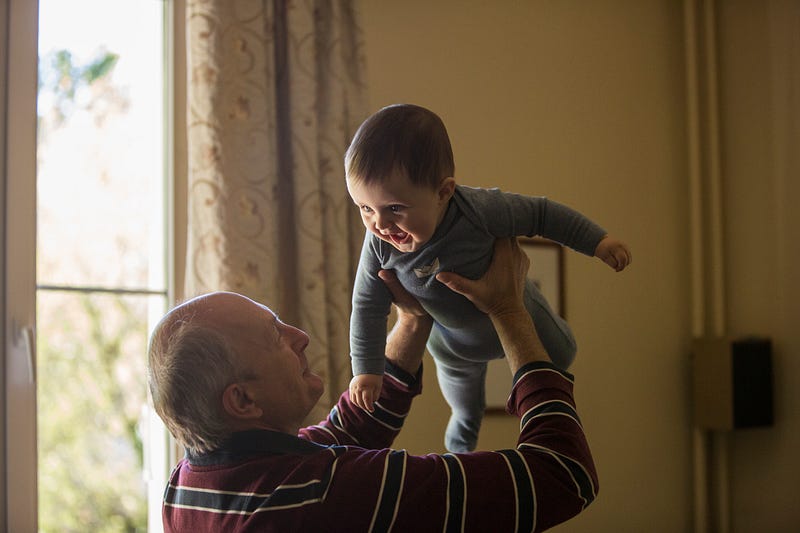
Most people who know me can attest to how much I value intergenerational solidarity. Whether you’re older or younger or middle-aged, I believe that forward-thinking people from every single historical era have something to teach us. By that same token, every generation has its members who’ve made glaring mistakes…and the rest of us are stuck cleaning up those messes.
But there will be plenty of time to explore the conflicts and dynamics amongst generational cohorts in future articles of mine. Today, I want to break down for everyone the eight major American generations who have been profiled and examined by historians and sociologists. Being mindful of where they came from and what they dealt with can give us better insight as to where we’re headed in the modern day.
We should also keep in mind how generational boundaries aren’t rigidly fixed. Each generation spans approximately fifteen years, but many people are born on the “cusp” of two adjacent generations — also referred to as “microgenerations.”
I encourage you, dear readers, to embrace some of the alternative nicknames that can be used to describe these generational cohorts. Many of the generational terms (or even punctuation) commonly used by the mainstream media can spawn glorification or stigmas. This guide shall hopefully expand our vernacular to see beyond those stereotypes and prejudices.
The Lost Generation
None of its members are alive today, but people who belonged to the so-called “Lost Generation” were born between the early-1880s up through the turn of the Twentieth Century. They were born and raised amidst the economic downturn that marked the end of “the Gilded Age,” spurred by the Panic of 1893. When they came-of-age during and after World War I, members of this generation (as so many generations tend to) eschewed the conservatism of their parents. Since authors and poets who were contemporaries of Ernest Hemingway (and his mentor, Gertrude Stein) would center these folks as protagonists of their literature, I’ve coined the term “Hemingrebels” to describe them.
Recovering from trauma of the first of our two World Wars, members of the Lost Generation were often haunted by such a national shockwave that President Warren Harding infamously tried to minimize. They resorted to decadence, including commercial overconsumption and failure to either manage debt or establish financial credit. Because of their distorted moral compass embracing hedonism and a lack of direction, they could also be informally dubbed “Distorters.”
F. Scott Fitzgerald’s The Great Gatsby provides a template for the archetypical disarray of this era. Fitzgerald’s millionaire bootlegger protagonist engages in misguided ambition and romantic compulsions that ultimately lead to his downfall. Peers affected by the travails upon which Fitzgerald, Hemingway, and Stein shed light could easily be called “Gatsbians,” as their spiritual void gave rise to the recklessness of the Roaring Twenties and the resulting Great Depression.
The Greatest Generation
They are the oldest still-living generation of today, although their remaining numbers are sparse. “The Greatest Generation” is the moniker assigned to people born within the first quarter of the Twentieth Century. These were the frontline soldiers and civilian workers who endured World War II as its youngest adult fighters. Since they are alternately referred to as “the GI Generation,” I’ve shortened it to “GI-Gens” as a catchier and more rhythmic appellation for them.
GI-Gens had an affinity for jazz music (sometimes called “the Swing Generation”). They came-of-age during World War I, survived the Spanish Flu pandemic of 1918, witnessed the dawn of women’s suffrage, and endured the Great Depression. Those who weren’t killed in war drew hope and inspiration from the Golden Age of Hollywood, which is why I informally refer to them as “Great Goldens.” All four of my now-deceased grandparents belonged to this generation.
Many critics view it as self-aggrandizing for their generation to absorb the title of “greatest,” since they reproduced at an astounding (some would say irresponsible) level while enshrining racism in U.S. laws when America had an opportunity to reset its scales of justice following World War II. Since GI-Gens were known for their frugality (out of necessity from wartime and economic collapse), “FrugalJewels” would be another name I’d give to them, as the new era of hope they provided to the United States came about through a combination of lifestyle sacrifices and overreliance on bigotry.
The Silent Generation
Currently, members of “the Silent Generation” are in their late-seventies to mid-nineties; they were born in the late-1920s up through the mid-1940s. My dad is amongst the youngest of this generation. They grew up amidst the nationalistic fervor of World War II and the Korean War, which is why so many of their members embraced conformity and obedience as values. The reference to “silence” within their moniker harkens back to the belief engrained in them as children that they should be seen and not heard. They are frequently known as “Traditionalists.”
From a very young age, these Traditionalists adopted behaviors that were typically associated with middle-aged and older adults. Their Australian counterparts often called themselves “Builders,” based on their leadership in reconstructing institutions following World War II. For an American take on this, I would christen them as the “Safe-Builders” due to their role in building up Social Security, the Interstate Highway System, financial credit, and the military industrial complex. These components provided a metaphorical “lockbox” for the fiscal and structural solvency of our nation, but those emphases often came at the expense of social progress.
Traditionalists are also known as the “Lucky Few,” having lived through oppressive periods of McCarthyism and tensions with the former Soviet Union. Although they got through it, these offspring of Hemingrebels left behind a host of international tensions and domestic inequities. With each passing year, there will be fewer and fewer of them still living.
Baby Boomers
The progeny of GI-Gens, this generation (of which my mom is an older member) was born in the late-1940s up through the mid-1960s — presently aged in their late-fifties to mid-seventies. The name “Baby Boomers” arose from the exceptionally high rate of offspring they themselves produced, which lent itself to the shortened nickname of “Boomers.”
Having survived the Cold War era and becoming civil rights pioneers, Boomers are often applauded for being rational, hard-working, and resourceful. Their youngest members are dubbed “the Jones Generation” — a reference to their habits of conspicuous consumption. For short, “JonesGens” could be a good plural reference for those who are embarrassed by the Boomer title…wanting, instead, to be known as today’s elders who are in favor of social progress.
Boomers are excessively criticized for being hardheaded and set in their ways. I’d additionally refer to them as “GrowthPivots,” considering how many of their members veered from being freedom-loving hippies to welcoming the traditionalism of Ronald Reagan, George W. Bush, and Donald Trump. Still, the more liberal Boomers “pivoted” from conservative peers, taking up enough progressive causes to move the needle away from the stodginess that had been stamped upon our society by their own parents.
Generation X
The children of Safe-Builders and older Boomers, members of Gen X were born in the late-1960s up through the very early-1980s. Now in their early-forties to mid-fifties, “Xers” (for short) were derived from the phrase “Generation X” — popularized by British musician Billy Idol and Canadian novelist Douglas Coupland — as a generation that didn’t wish to be defined.
GenXers were the first “latchkey generation,” having grown up during the eras of Watergate and the 1970s energy crisis — forced to look after themselves if their overworked parents weren’t there to greet them when they arrived home from school. For this reason, “Latchkeys” would be an analogous descriptor of members of this generation that receives praise for its tenacity, independence, and self-sufficiency.
Xers contributed a lot to pop culture: punk, grunge, and hip hop in music; flannel, combat boots, hair clips, and tank tops in fashion; and John Hughes films, along with television phenomena that included Friends, Ricki Lake, and My So-Called Life. In fact, Jared Leto’s memorable role as bad boy Jordan Catalano in the latter TV series has elicited the nickname “Generation Catalano” (and I’d propose the plural descriptive synonym of “Catalanos,” for short). GenXers get branded as skeptical and pessimistic; but any truth to that is understandable, since they’ve found themselves saddled down with more debt than perhaps any other generation. The distinction of being known by the first generational letter-designation should be reserved primarily for them, which is why subsequent generations should be given their own descriptors, rather than the inappropriate (and phonetically-sloppy) shortcuts of “GenYers” or “GenZers.”
Generation Y
Largely the children of Boomers, members of Gen Y were born in the early-1980s up through the mid-1990s. This is my generation. The oldest of us are in our late-thirties; our youngest members are in their mid-twenties. We received the nickname “Millennials” because we came-of-age at the dawn of the new millennium (as the Twentieth Century was closing out).
Millennials transitioned from our adolescence to young adulthood while Bill Clinton’s presidency ended and George W. Bush’s proceeded. As kids and teenagers, we witnessed the ridiculousness of Monicagate — and watched as our older Xer siblings (familial or surrogate) were flagrantly demeaned by Safe-Builders and older Boomers. Our own creativity, free-spiritedness, and feisty tendencies fuel a proud rebellious streak, which often results in us being compared to any of our Boomer parents who were forward-thinking themselves. That has created the additional nickname for us of “Echo Boomers,” which I would reimagine as simply “EchoGens” to refer to my generation.
Generation Y gets demonized as lazy and immature due to our comparative lack of life experience vis-à-vis older generations. However, Millennials have been institutionally powerless throughout the post-9/11 fearmongering and economic fallout from the Great Recession. We’re accused of demanding participation trophies, when, in fact, those symbols were foisted upon us by many of our Boomer helicopter parents. The rise of the Internet and the digital age converged during our adolescence, although we fondly have memories of playing some of the earliest computer games or video games back when we were kids. That experience leads observers to sometimes call us — alongside of younger Xers — “the Oregon Trail Generation” (or, as I’d abbreviate it, “OTGs”).
Generation Z
Primarily the children of GenXers, members of Gen Z were born in the late-1990s up through the early-2010s. Their oldest members are in their early-twenties, whereas their youngest members are, as of the date of this writing (August 2021), enrolled in the Fourth and Fifth Grades. They are routinely known as “Zoomers” — not just as a pun on the “Z” from their generational designation, but also because they were born into a highly-digital world dominated by cyberspace. They essentially “zoomed” into technological proficiency almost from birth — not to mention how, during the Covid-19 pandemic, they’ve been forced to attend virtual school literally on Zoom.
Throughout several European and Latin American countries, Zoomers are alternately referred to as “Centennials” — stemming from the reality that they were the first generation to be born at the dawn of this current century…and they’ll be society’s elders once the Twenty-First Century closes out, seven decades from now.
Members of Generation Z are regularly viewed by older generations as too dependent on technology, while lacking self-control. This has also earned them the nickname of the “iGens” — referring to their penchant for always seeming to have a mobile device in hand. However, as kids during the Great Recession and its recovery, Zoomers have navigated their youth by multitasking, bargaining, and connecting with the global community. When adding to that how so many of their K-12 and college years will have been marred by coronavirus isolation, Centennials have become perhaps the most progressive generation, to date, in terms of extrapolating social change.
Generation AA (aka “Gen Alpha”)
Also known as Generation Alpha (or “Gen Double-A,” for short — yep, just like a “Double-A” battery!), “Alphas” are the youngest generation of our world. Their oldest members were born around 2011 or 2012. Obviously, many of them haven’t even been born yet. They will continue entering this world up through approximately the year 2026.
Because so many members of this “Double-A” generation have yet to come-of-age, there’s still a lot that we don’t know about the characteristics of their generation. The current crop of Alphas, who are in early grade school and younger, will endure their childhoods, teenaged years, and early-adulthoods grappling with the aftereffects of coronavirus — whatever those global ramifications might end up being.
For this reason, Gen AA could end up becoming known as “Coronials” — due to being the first generation literally born into the chaos of the Covid-19 pandemic. They won’t be young adults until the 2030s, at the earliest. In the coming years, we’ll probably even develop new nicknames for them!
Going Forward…
We may think we know all there is to know about most of these generational cohorts. We’d be wrong.
We assume we’ve permanently labeled all of them, in every way possible…and that’s just the way it’s going to be for the rest of eternity. We’d be wrong there, too.
Intergenerational solidarity is the key. By practicing respect, compassion, and appreciation for people who were born across numerous decades, we can harness the lessons of the past to create a much better future for all of those who emerge into this world after all of us are gone.


