
The ‘Hurt Feelings’ Fallacy
If you take pleasure in hurting people for sport, there might be something wrong with you
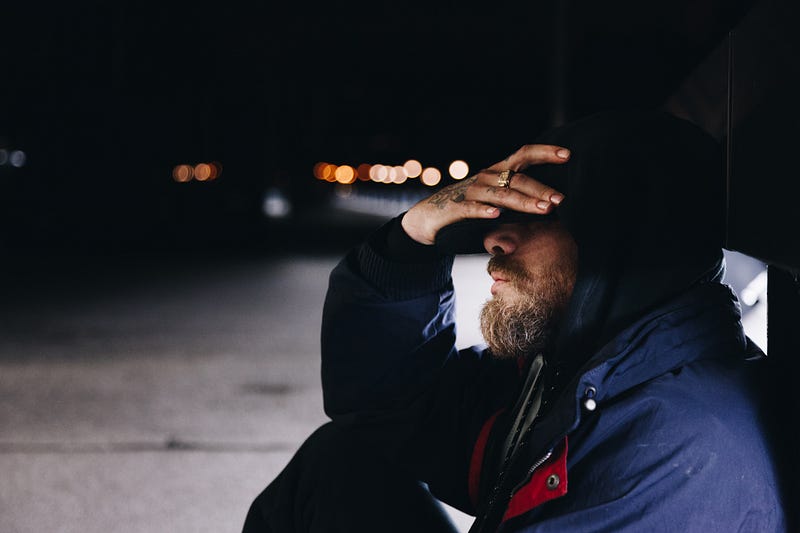
For those of you who haven’t heard of the word “fallacy”: it is a faulty argument made based on deceptive or dishonest manipulations of logic. Fallacies often misrepresent the beliefs or motives of one’s rivals, and they are commonplace in politics and academic philosophy.
Today, I want to discuss what I refer to as “The Hurt Feelings Fallacy.” It’s a common exercise in mental and intellectual gymnastics predicated on the belief that members of a majority group should put themselves last in all (or most) scenarios. Another part of the premise is an underlying belief that some types of oppression or microaggressions are, morally speaking, “worse” or “less acceptable” than others.
“The Hurt Feelings Fallacy” is essentially an offshoot of political correctness. It usually involves some variation of a virtue-signaler or a performative ally telling someone else:
“I’m sorry your feelings got hurt, but at least you don’t have to worry about X, Y, or Z happening to you.”
At its core, this is a false choice. They are demanding that we juxtapose someone experiencing extreme hardship alongside of our own grievances — relegating the latter to an afterthought. In other words, it’s a typical “count-your-blessings” deflection.
Here’s an analogy: Person A has a heart murmur. Person B has a heart defect.
Obviously, Person B will require a larger surgical team and greater hospital resources to perform their open-heart surgery. But if you leave Person A’s seemingly minor heart murmur untreated or unmonitored, it can lead to worse things down the road.
Therefore, it wouldn’t make much sense for us to say to Person A:
“You have no right to get treated for your heart murmur, because the person next to you is scheduled to have open-heart surgery soon.”
Do we refuse to sell someone batteries for their broken smoke detector just because there’s a house across the street that’s surrounded by a fiery inferno?
Do we decline to fill someone’s dental cavity just because the patient two exam rooms down the hallway needs a root canal?
Do we neglect to calm down someone who is sitting in the lobby suffering from a panic attack just because there’s somebody else standing on a ledge, multiple stories above them, threatening to jump?
So, of course some crises will need to receive a much larger scope of emphasis, comparatively, in order to solve the macroscopic problem. That doesn’t mean the problem which requires, quantitatively, less urgency and less collaboration should just continue to be ignored. It doesn’t mean those transgressions should be excused or rationalized.
You might claim that Person A harbored “hurt feelings” because of how the problems of Person B needed to receive preferential triage, in that moment. But were their feelings actually hurt? Or is it just a straw man caricature being deployed in order to make your rival appear irrational?
Let’s deconstruct the literal state of one’s feelings being hurt.
I believe that, if my feelings get hurt, it’s still incumbent upon me to explain WHY. It’s up to me to communicate with someone the reason why their words and actions may have had such a negative impact.
But, if I indicate that something you’ve said has hurt me, it’s also incumbent upon you to engage me. This doesn’t mean you have to apologize…in fact, if I’m giving you the benefit-of-the-doubt, that implies there’s no apology necessary from you. And I certainly don’t want to receive a “non-apology” (e.g., “I’m sorry you feel that way, Eichy”) from anyone.
Before you ask…yes, I would prefer NOT to have to do any of this. I imagine most people would feel similarly in respect to their own relationships with others. The last thing I want is to create more emotional labor for myself or for others.
However, if you’re unwilling to have these good-faith conversations, then it says more about you than it does about me. If you attempt to weaponize your identity to bring down others or to gain the upper hand in your daily life, then I don’t want to see you wielding newfound power in a leadership position or preying upon people sexually.
If you forcibly center somebody’s role in your life primarily based on their biological or cultural identity per se, then don’t be surprised when we call you out on your shit.
What we need is a new culture of cerebral synergy and corrective evolution to push back against the hyperwoke dogma that is being peddled by the likes of Robin DiAngelo, Tim Wise, Joy Behar, and Bill Maher (despite the latter selectively criticizing the Left for the very transgressions of which he himself is guilty).
Here are some examples of groups who have their identities leveraged against them under the false example of “hurt feelings”:
- Men (or boys)
- White people
- Heterosexual people
- White LGBT+ people (according to Dave Chappelle)
- BIPOC LGBT+ people (according to Umar Johnson)
- Cisgender people
- Non-celebrities
- Christians
- Millennials (or Zoomers, and probably, in the coming years, Alphas)
- Short people
- Overweight or Obese people
- Virgins
- People with mental illnesses
- People with mobility/transportation issues
- People with cognitive disabilities
- People with learning disabilities
- People with anxiety disorders
- People who identify as political Independents
- Survivors of assault/rape/abuse who aren’t cisgender women
- Rural Americans
- Individualists
- People who aren’t conventionally-“beautiful”
If you belong to any of the above groups, certain people often won’t allow you to object to those attributes being leveraged against you…regardless of the accusation’s context or potential misappropriation.
According to them: some of these attributes are raisons d’être for a person’s inadequacy, via The Association Fallacy. Other attributes can be viewed as legitimate markers of oppression — but those aspects of their lives will get hierarchically “trumped” (yes, I’m using that term!) or superseded by the same person’s attributes that fall into the former category.
They want to infantilize someone based on that person’s identity per se.
It’s what I call “selective intersectionality.” When some leftists create, essentially, tiered hierarchies of recognized oppression, they will gaslight people who push back against those ladders. They proceed to popularize empty platitudes such as:
“I’m sorry you feel that way…”
“You’re just getting a tiny little taste of what I have to put up with!”
“This is just me being my authentic self.”
So who gets to be authentic? If you have a problem with what I say, aren’t you denying *my* lived experience? Everyone has lived experiences. Most people encounter obstacles in various areas of their lives. In his 2007 interview with photojournalist/filmmaker Marc Speir, the late actor Powers Boothe summarized the concept of humane centrism beautifully when talking about how he drew the line at people “stepping on toes” in order to push an agenda.
Here’s another way in which this psychological warfare can escalate: a rigid binary may get created between so-called “hurt feelings” and the very factual realities of systemic discrimination. As in, apparently, there can never be any overlap or gray areas.
I have a few thoughts on this type of misguided illiberal worldview.
First, systemic discrimination exists far beyond only race and sex/gender. If you’re basing the level of deference someone should automatically receive on a high content of melanin and/or the visibility of female-presenting genitalia on their body, you are missing the point.
Secondly, if you are consciously trying to hurt someone’s feelings as a form of “reparations” due to the existence of systemic power imbalances…then you need to seriously re-examine your own level of sanity (I say this as a person with a mental disability) and morality.
Finally, you may insist it’s exhausting having to individualize how you present yourself to the world. Yes, of course it’s exhausting! Life is exhausting. But we all need to put more honesty and nuance into these conversations and policy-making. Barring that, we’re never going to emerge from these harmful power structures or societal “cliques.”

Much of the time, people who invoke the fallacy of so-called “hurt feelings” are engaging in projection. They are trying to erect bravado while masking their own hurt feelings. They want to turn their target into a pariah while proceeding to engage in domineering tactics as de facto “retribution” for what they’ve endured in their lives.
Some of these rhetorical devices will include statements such as:
“Why are you being so defensive?”
“You’re displaying your fragility.”
“When you describe my criticism of you as inflammatory, you’re denying me my identity and lived experiences.”
But, sometimes — GASP! — someone might sound “defensive” when they have good reason to defend themselves against a character-assassination directed at them. If they’re standing up for themselves, someone else might be misappropriating their convictions as “fragility.” And they could be calling out somebody whose behavior is genuinely inflammatory (and, thereby, counterproductive).
Finally, if American voters’ feelings are ultimately what matter in elections (as journalist David Muir stated on Jan. 19’s episode of The View) — then why do we bash people for having those feelings?
You can’t have it both ways.
Elitists seem to want us as voters…but not as humans.
If you still don’t believe me, check out my piece entitled “The Presumptuousness of ‘You’ll Be Fine.’”


