
Yes, I Will Keep Using ‘Hyperwoke’ as a Pejorative
And I won’t stop until you “hyperwoke” folks finally stop your own nonsense!
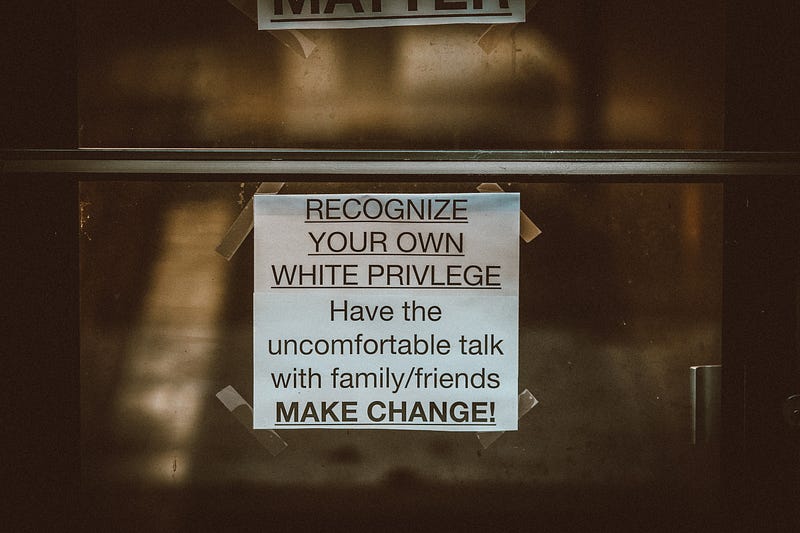
The term “woke” has become highly politicized in recent years. The Right misuses it to portray members of marginalized groups as wanting special attention. In response, the Left reacts defensively by claiming that “wokeness” is no different from “common courtesy” and protecting minority rights.
Both of these “sides” are operating in bad faith.
Let’s trace back the origins of the term “woke.” According to Vox’s Aja Romano, the word arose out of Black-led civil rights movements that picked up steam during the early- to mid-Twentieth Century. Initially, “woke” was intended refer to the “awakening” of people’s minds in regard to racial justice issues.
Somewhere along the line, certain leftists began to misappropriate the term. They routinely demand that people “get woke” as a tactic to apply peer pressure to those who rail against the concept of “political correctness.”
Although broad and amorphous, political correctness — or, at least, some warped iterations of it — is indeed a problem, as I’ve outlined in this article:
So, by that same token, here’s a list of concepts that I wouldn’t place under the “wokeness” umbrella:
- Appreciation of diversity
- Multicultural academic curriculums
- Accurate and inclusive portrayals of history
- Legal protections to end systemic oppression
- Cultural sensitivity when somebody shares their lived experiences
Many conservatives might disagree with me on these points. But they’re not the ones writing this article that you’re currently reading.
Where I have a problem with the misappropriation of “woke” is when its advocates try to wield it as a way of justifying double standards, asymmetry, or selective bigotry.
For this reason, I use the term “hyperwoke” rather than just “woke” by itself.
“Woke,” as a standalone term, is inaccurate if it’s being dispatched to highlight someone’s character flaws.
By adding the prefix of “hyper-” to the term, this pejorative centers a miserable reality — there’s been blatant corruption of the term (“woke”) by leftists that has mutated the term’s actual meaning beyond its original intent.
In this context, I’m going to embrace usage of “hyperwoke” as a label to criticize those bullshit artists on the Left who rely upon performative rhetoric, gaslighting, thought-policing, and straw man fallacies.
What is “Woke”?
Earlier this month, Medium’s Derron Wrought penned this op-ed piece exposing the lack of independent thought from some factions on both the Left and the Right:
Speaking as a leftist himself, Mr. Wrought points out that disingenuous people from extremes of the political spectrum end up mirroring one another as two sides of the same coin. Pertaining to the Left, he observes how various issues such as immigration, misogyny, gender identity, racial equity, heterosexism, and poverty can be framed inconsistently and disproportionately.
His premise states that these issues each get prioritized differently based on the timeliness of our current events and/or the personal biases of political actors involved. Many leftists will claim to be intersectional, he says; yet, they may still sneakily attempt to “rank oppressions.” Mr. Wrought characterizes the “woke Left” archetype as:
…a chameleon who says the right things and changes with the times, even if you harbor internal disagreements with where left-wing group dynamics take you.
I could write an entirely separate article about the dangers of ranking oppressions (and, in due time, I probably will!). It’s essentially what Dave Chappelle was backhandedly attempting to do, in The Closer — pitting Black heterosexual people against White LGBT+ people.
But this flavor of “wokeness” goes beyond mere oppression-ranking. In the eyes of many hyperwoke academic elitists, you’re racist if you don’t agree with Robin DiAngelo and Tim Wise.
You’re sexist if you fail to emulate the self-deprecation of Justin Baldoni.
You’re homophobic if you take issue with toxicity from Dan Savage or Kara Swisher.
Please note how the aforementioned individuals all happen to be White. But hyperwokesters will apply the same principle if someone from a majority group fails to completely defer to a given member of a marginalized group (as long as that designated “expert” espouses a specific political ideology, of course!).
I vividly remember one time on Medium when one particular well-known writer called me out for supposedly being “racist” because I’d referred to Maxine Waters as “an idiot.”
This writer, who has a long record of flouting her hyperwoke sentiments, wouldn’t accept the premise that my criticism of Congresswoman Waters was due to the congresswoman’s specific choice of rhetoric. She wanted to assume I was berating Waters because I, as a White man, allegedly have a problem with seeing Black women in positions of power.
Never mind that I voted for Kamala Harris four times.
That Train Has Left the Station
“Wokeness” has, unfortunately, gone down the same path as the term “Social Justice Warrior” when used to disparage ideas and personalities.
At its core, “social justice” is supposed to be a positive thing. It’s intended to embody a collection of movements and efforts to end disparities while empowering all people to optimize their humane value.
Sadly, the pejorative acronym of “SJW” (Social Justice Warrior) is now used to conflate freedom fighters and purposeful activists with the disingenuous Jane Elliotts and Michael Eric Dysons of the world.
I define “hyperwoke” as a mentality that insists everyone adhere to an archetypical leftist diatribe. Medium’s Gioia Dalosso describes it as a “culture of fear” where elitists wish to indoctrinate the masses with a threat of being “canceled” in order to achieve groupthink:
Ms. Dalosso recommends that we should embrace the following values: inquisition, perseverance, intuition, respect, intelligence, nurture, and education. She emphasizes these concepts as being integral to the process of expanding one’s worldliness.
This was the balance I tried to strike when constructing a blueprint that could rebut the proposed CRT (Critical Race Theory) ban in my homestate. I combined the positive goals of pro-CRT folks with the valid concerns of the anti-CRT camp — and proceeded to thread them together into a cohesive layout:
And, if you’re still confused as to what I consider to be “hyperwoke,” check out my December 2021 appearance on Paul LeCrone’s Penguin Latte podcast:
(You can jump ahead to the 10:04, 54:20, and/or 1:11:30 marks to hear more of me and Paul discussing CRT, wokeness/wokeism, and their roles in pop culture.)
So-Called “Wokeness” Seeps Into Pop Culture
Just like we shouldn’t view sex and gender along a rigid male/female binary…
Or we shouldn’t view human sexuality along a rigid straight/gay binary…
It’s dangerous to stick to a rigid White/Black binary when discussing race.
Hyperwoke thought involves a one-sided narrative enforced by gatekeepers of academia and social commentary. Even outside of classrooms and workplaces, it gets shoehorned into pop culture dialogue.
I’ve seen hyperwoke dogma invade some of my (formerly) favorite TV shows. Just a handful of examples:
On an episode of Supergirl: Kara Danvers (Melissa Benoist) guiltily grovels to her Black future sister-in-law, Kelly Olsen (Azie Tesfai), using canned platitudes after realizing that she needed to take Kelly’s passion for racial justice more seriously; the episode ends with a product placement shot of Robin DiAngelo’s White Fragility.
On an episode of Grownish: Zoey Johnson (Yara Shahidi) and Jazz Forster (Chloe Bailey) double-team their White friend, Nomi Segal (Emily Arlook), when Nomi criticizes looters during a BLM protest; this badly-written episode is also a blatant plug for the book White Fragility.
On an episode of The Goldbergs: Adam Goldberg (Sean Giambrone) gets chewed out for racial insensitivity by his Black guidance counselor, Mr. Glascott (Tim Meadows) — despite Mr. Glascott’s lack of clean hands when nerd-shaming and neglecting his own students at William Penn Academy.
On an episode of Station 19: grief counselor Diane Lewis (Tracie Thoms) spends a bulk of the episode gaslighting White (or “White-passing”) firefighters for their sentiments in the aftermath of George Floyd’s murder, while appointing herself the sole arbiter over whose emotions regarding racial strife are valid and whose aren’t.
On an episode of Good Trouble: racial justice activist Malika Williams (Zuri Adele) manipulates her White friend, Davia Moss (Emma Hunton), by using passive-aggressive projection; the episode ends with Davia weeping melodramatically while she reads a copy of — you guessed it! — White Fragility, which Malika had so generously gifted to her.
My problem with these TV episodes wasn’t that racial justice and systemic racism were addressed. Other shows have explored these topics brilliantly and realistically. But the aforementioned examples were intentionally force-feeding a skewed message to the viewing audience where the Black characters were always “right” — regardless of their questionable words and actions — and the White characters were inevitably “wrong”…and forced to repent for the error of their ways.
This, folks, is being hyperwoke-on-steroids.
And, before you accuse me of wanting to avoid “uncomfortable conversations” or suffering from “hurt feelings” — take a look at the first installment of my informal series on fallacies, where I confront this exact charge:
I’m willing to have uncomfortable conversations. I’ve spent my entire life in a perpetually uncomfortable state.
But if you want to have that dialogue, you need to be intellectually honest about your intentions.
Don’t squawk at people like some hyperwoke parrot…and then just expect them to reward you with a saltine cracker.
Click here to subscribe to my stories.


