
Book Review — Man Enough by Justin Baldoni
Filmmaker/actor Justin Baldoni opens up new discussions on masculinity, evoking both harmony and dissent from all sides
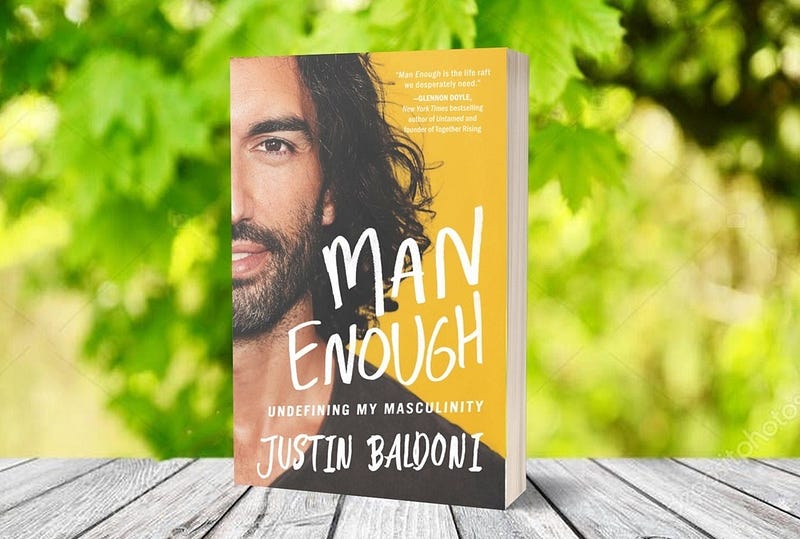
Previously, I wrote an expanded review of Man Enough, which was authored by Justin Baldoni early last year. I first saw the actor, filmmaker, and activist speak as a regular guest cohost on The Talk last spring, following the departures of regular cohosts Sharon Osbourne and Carrie Ann Inaba. I’d previously been unfamiliar with Baldoni’s onscreen work.
Man Enough follows 334 pages of Baldoni’s quest to redefine (or, as he puts it, “undefine”) his masculinity. In the process, he reflects upon many of his assorted life experiences — both positive and negative — while also absorbing the data and philosophies provided by many outside authors or researchers.
WHY YOU SHOULD READ THIS BOOK
In my expanded review of Man Enough, I’ve been very candid about how the book was alternately maddening and liberating for me to read. Baldoni trumpets many sterile talking-points that he is clearly regurgitating from other people in an attempt to be deferential. On the flip side, he speaks some powerful truths when using his commentary to shape ways in which collectivism and individualism could be blended to cultivate a much richer, kinder, more inclusive society.
Baldoni sandwiches ten chapters between an Introduction and an Acknowledgments section. He intentionally selects a different area of human life to serve as the focal point for each chapter. Going in, I’d advise anybody — regardless of your political ideology or gendered experiences — to keep a notebook where you can jot down (or write out, at length) your reactions to what Baldoni says. Those reactions might evoke anger or trauma in you; but, conversely, they might also give you newfound hope and clarity.
STYLE / FORMAT
Justin Baldoni’s Intro provides the reader with a rundown of his personal attributes, his intentions behind writing the book, and how Man Enough (along with his podcast of the same title) stemmed from a much-buzzed-about TED Talk he’d given.
Chapter One — entitled “Brave Enough,” Baldoni shares a collection of memories from his childhood and adolescence. He narrates, with pained honesty, how his younger self struggled to uphold our society’s ideals of what masculinity should mean. He ties that to some of his family life growing up, his extracurricular interests in school, and his path that led him to establish a lucrative Hollywood acting career.
Even though Baldoni and I had very different lives as students — not to mention vastly dissimilar relationships with our respective fathers — I found myself wishing that he and I (as generational peers, since he is only two years younger than me) could have been friends during those formative K-12 years.
Chapter Two — entitled “Big Enough,” the author navigates the rocky waters of male body image. He rejects the tendency of people to normalize “male alpha” behavior as scientific, and he recounts times during his life where he has struggled with feeling as though he wasn’t as ripped, muscular, or empathetic as he’d wished he was.
Baldoni makes a lot of astute observations here about the unrealistic pressures society creates that lead to self-loathing of our own bodies. However, a lot of his social commentary falls flat in that it operates under the (unlikely) assumption that male body shame is somehow a new phenomenon. It would have been more accurate for him to observe how OUR UNDERSTANDING OF the role that body image plays in the male psyche is what has begun to evolve, as the research into it ramped up throughout the past four decades.
Chapter Three — entitled “Smart Enough,” he continues to exhibit vulnerability over his fear of falling short when it comes to perceived intelligence. Baldoni recollects many more instances from both his coming-of-age during youth and his adult career when he struggled to appear brilliant in the hopes of impressing the people around him. He reiterates how men and boys should stop pushing ourselves to live up to fictional portrayals of idealized masculinity (with Angus MacGyver and James Bond being two of the most prominent examples).
His underlying message is good. Unfortunately, Baldoni begins to bog down his commentary with political correctness and virtue-signaling throughout this chapter. It was quite a trek for me, sifting through which of his points were pit stops for sound introspection…versus which of them were coy attempts at parroting indoctrination.
Chapter Four — entitled “Confident Enough,” Baldoni peels away the blurred layers that separate confidence from arrogance in healthy men. He contrasts his internal confusion as a child and teenager with the inaccurate projections of himself that his peers and authority figures had perceived before he reached adulthood.
Baldoni offers men (and boys) some wise pointers for how to make sure we aren’t unduly taking up too much space. He reminds us of the value in respecting a wider range of personality types when we interact with others — as well as how we should strive to express and reciprocate consensual affection. On the downside, he continues to intersperse this positive advice with subtle attempts at gaslighting men/boys.
Chapter Five — entitled “Privileged Enough,” the author orates his personal reckoning with white privilege in the aftermath George Floyd’s murder. He details some very powerful experiences whereupon he’d failed to listen to friends of color when they’d tried to confide in him about their exposure to racism.
Unfortunately, those very compelling accounts get diluted by more iterations of the same canned rhetoric Baldoni had embraced throughout the previous two chapters. It was clear to me that much of the language he employs were talking-points he was repeating from so-called ”experts” (e.g., Robin DiAngelo, Layla Saad). His fifth chapter in Man Enough, regrettably, paints a very reductionist portrait of relations between Black people and White people.
Chapter Six — entitled “Successful Enough,” Baldoni wades through the watery nuances of materialism. He reflects upon the image of wealth and prestige that his own father had carefully cultivated for the Baldoni family throughout the 1980s and 1990s. Then, he admits to the misguided ways in which he himself modeled those behaviors once his acting career commenced.
This was a deeply-profound and wonderfully-perceptive chapter. Baldoni isn’t afraid to own his mistakes and identify the flaws exhibited by authority figures who’d raised and influenced him. At the same time, he makes thoughtful suggestions on how we — as a society — can transcend these patriarchal caricatures. Baldoni expresses what has come to bring him value and self-worth in the present day…and encourages readers to do the same!
Chapter Seven — entitled “Sexy Enough,” the author explores how men and boys are pilloried for failing to showcase a virile sex drive. Additionally, he covers the shame and secrecy surrounding trauma that arises from sexual abuse and molestation of male persons. Baldoni recalls going through puberty and emerging into adolescence — how sexual talk transpired between guys, often accompanied by hazing and humiliation. This can lead to “locker room syndrome” later in life, where men are hesitant to engage in various levels of communal nudity for fear of being judged by other men.
Finally, Baldoni chronicles his sex life once he reached adulthood. Many of his experiences were highly negative — he finally began to enjoy sexual fulfillment when he and his now-wife Emily found one another. As someone who has struggled with achieving sexual liberation throughout my own life, I identified with much of Baldoni’s vulnerability in this chapter. I found solidarity with him in his progressive outlook on sex-positivity.
Chapter Eight — entitled “Loved Enough,” Baldoni opens up about what the transition into marriage was like for him. He argues against upholding traditional “gendered” roles in married life; instead, he and Emily have learned to customize their marriage in accordance with one another’s needs and genuine desires.
As someone who remains unmarried after four decades of my life, this chapter gave me immense hope for my own domestic future.
Chapter Nine — entitled “Dad Enough,” the author shepherds us through the ups-and-downs of fatherhood. He harkens back to when he and Emily found out they were pregnant with their first child. It brought Baldoni closer to his own father, impelled him to research more of his own family’s history, and helped him to serve Emily during her pregnancy so she could bring their daughter to term in a safe and healthy manner.
Baldoni’s commentary here is extremely informative when educating fathers-to-be on the benefits of home birthing and/or doula options. But, once again, he gets sidetracked with rhetorical “group blame” of men via unnecessary collectivism. Baldoni also exhibits a little bit of unconscious ableism by assuming that most fathers-to-be are neurotypical.
Chapter Ten — simply entitled “Enough,” Baldoni recaps this autobiographical journey. He gets more specific in terms of what “undefining masculinity” actually means through creating transformative synonyms for the adjectives describing the characteristics society has traditionally associated with virility. Drawing upon inspiration from Robert Fisher’s The Knight in Rusty Armor, he came to realize how internal honesty and confronting one’s fears is a true reward in life.
Baldoni advocates learning from cross-generational mistakes. He emphasizes independence, self-awareness, and proactive mindfulness in discovering what will truly bring happiness to each of us, as individuals.
Following several pages of his Acknowledgements, I offered my final thoughts on Man Enough HERE.
Man Enough will probably challenge most everyone’s worldview in some way, shape, or form — regardless of whether you are a paleoconservative traditionalist or a progressive reformist…or anything in-between!
I encourage you to take this journey with Justin Baldoni. Be prepared to feel triggered. But also get ready to laugh with joy and camaraderie. Keep a journal, as you read through this entire book — and don’t feel shy about taking notes on your own gut reactions to what he has written.


