
Twistin’ the summer away with Sam Cooke and Rick Nelson
‘If their meeting had taken place today we’d have dozens of pictures and possibly some video of these two icons deep in conversation. But for each of them it was just another night in the studio making music,’ corroborates ‘Adam-12’ TV policeman Kent McCord in a revelatory dialogue hailing the country rock founding father and the ‘Man Who Invented Soul.’
The Kent McCord Interview, Part Two
Did any famous celebrities pop into Rick Nelson’s recording sessions?
For anyone who grew up in the ‘50s and ’60s a handful of recording artists really provided the soundtrack to our lives. When rock and roll began to dominate the airwaves, Bill Haley’s “Rock Around the Clock” playing over the opening titles for Glenn Ford’s Blackboard Jungle kind of kickstarted the genre. Junior and high school sock hops were where kids learned to interact on the dance floor. A mix of up-tempo songs and ballads were standards of the playlist. At our school we had a deejay named Mr. Smith who had a vast collection of all the top 45’s. With his portable record player and a mic set up in front of its speaker, the songs were played over the gym’s simple sound system. A lot of those 45’s were ballads by Rick, Elvis Presley, Johnny Mathis, and Sam Cooke.
When I first met Rick while prepping for the football game against Elvis and his Memphis Mafia friends in early 1961 at De Neve Square Park in Holmby Hills, I had no idea what was to follow and what a life-altering moment that would be for me. I began appearing on The Adventures of Ozzie and Harriet and traveling on the road with Rick during his concert appearances.
One of my best memories is attending Rick’s recording sessions. When we were shooting Ozzie and Harriet, it was a five-day-a-week shooting schedule. If Rick had a recording session booked, the pattern was to finish the day’s work on the show, usually go to Rick’s house on Multiview Drive to unwind a bit [Nelson moved to Zorada Drive in 1962], and then head down to the recording studio. Many sessions lasted until early morning. Then it would be back to General Service Studios and another day’s work on the show.
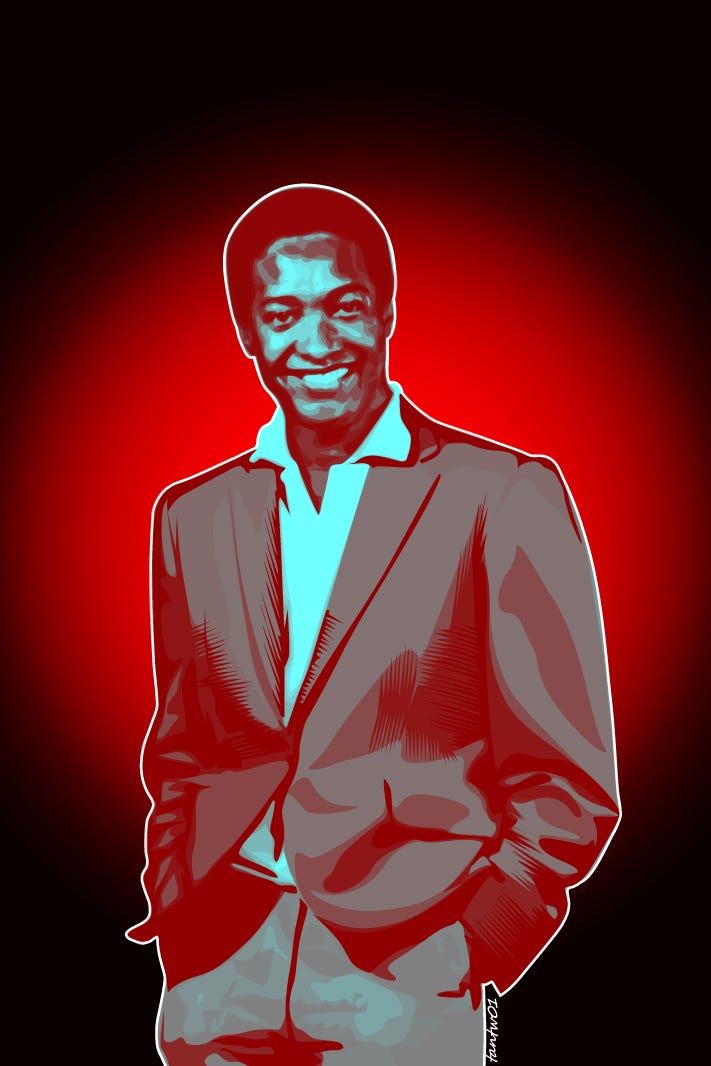
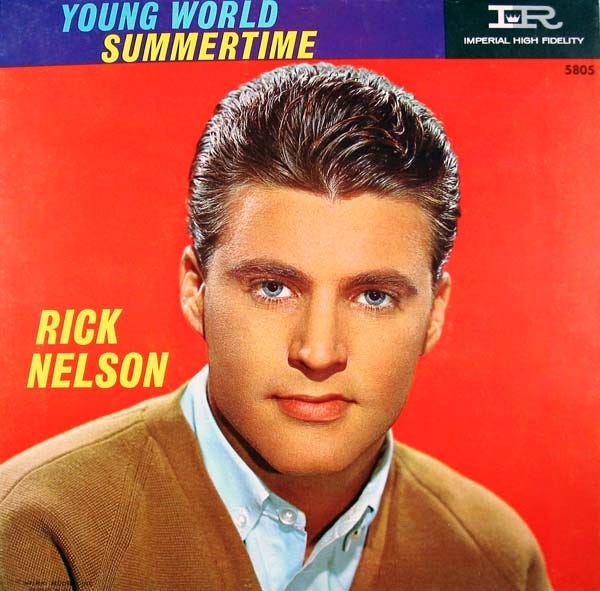
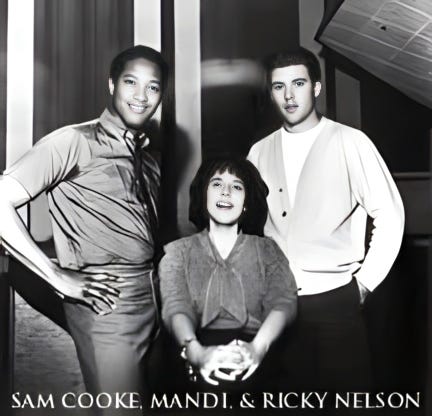
One night Rick had a session booked at Bill Putnam’s United Recording Studios on Sunset Boulevard. When we arrived we found Sam in the studio Rick usually recorded in. Sam had cut tracks at RCA Victor since 1960, but for some reason he was at United. I am not certain if Rick already knew Sam or not [the summit possibly occurred on Jan. 18, 1962, while Nelson was on hand to wax his Top 5 hit “Young World;” photographic evidence, unfortunately only available in poor quality, exists from the collection of the late Mandi Martin, who eventually managed Ray Charles’ Tangerine Music Publishing and Nelson’s guitarist-Flying Burrito Brother John Beland; she confirmed her encounter with the duo at this session to Ian Cooke, the music supervisor behind the Easy to Be Free: The Songs of Rick Nelson various artists tribute; Cooke may also have been visiting Nelson’s producer-arranger Jimmie Haskell, who substituted for Rene Hall and conducted the orchestra on Cooke’s “Sugar Dumpling” and “I’m Just a Country Boy” alongside co-producer Al Schmitt at RCA on Sept. 11, 1963].
There’s a great story that Jerry Fuller tells about writing “Travelin’ Man.” He specifically wrote it for Sam and even recorded the demo emulating Sam’s singing style. The song was rejected by Sam’s producer J.W. Alexander but not until after he played it. Rick’s bass player Joe Osborn had been in the Imperial Records office and heard the song through the wall. He went to Alexander’s office and asked if he could hear the “Travelin’” song. Alexander said, “Sure, you can have it,” and fished it out of a trash can and gave it to Joe. Rick and his band turned “Travelin’ Man” into a No. 1 smash.
A few months before Rick had recorded “Summertime.” I was at that session and remember James Burton played some real choppy, wonderful guitar licks on it [cut on Nov. 6, 1961, at Master Recorders on North Fairfax Avenue; the smoldering George Gershwin, Ira Gershwin, and DuBose Heyward jazz standard was issued as the B-side of “Young World” and earned minor chart action itself at No. 89 POP; “Summertime” was prudently slotted as the lead cut on Album Seven by Rick in March 1962].
Sam had history with “Summertime” so they talked about that [an up-tempo reading, opening with Cooke’s soothing advice “don’t cry,” was the flip side of the career-establishing “You Send Me” in September 1957 and charted at No. 81 POP; a moodier take, waxed a year later, was deemed worthy of A-side status by Keen Records and bubbled under the Hot 100 at No. 106].
We also met Sam’s wife Barbara and Lou Rawls [moving in the same gospel music circles for over a decade, Cooke mentored the slightly younger, silky-voiced baritone singer; on April 26, 1962, Rawls supplied backing vocals to Cooke’s setlist closer “Having a Party” and duetted on its accompanying B-side, the sublime soul stirrer “Bring It on Home to Me,” at RCA Hollywood before finally striking pay dirt himself with “Love Is a Hurtin’ Thing” four years later].
I know that Rick and Sam had a great deal of respect for each other. Each of them had songs charting regularly since the late ‘50s. If that meeting had taken place today we’d have dozens of pictures and possibly some video of these two icons deep in conversation. But for each of them it was just another night in the studio making music. After what happened to Sam a few years later, that night became a memory Rick and I never forgot.
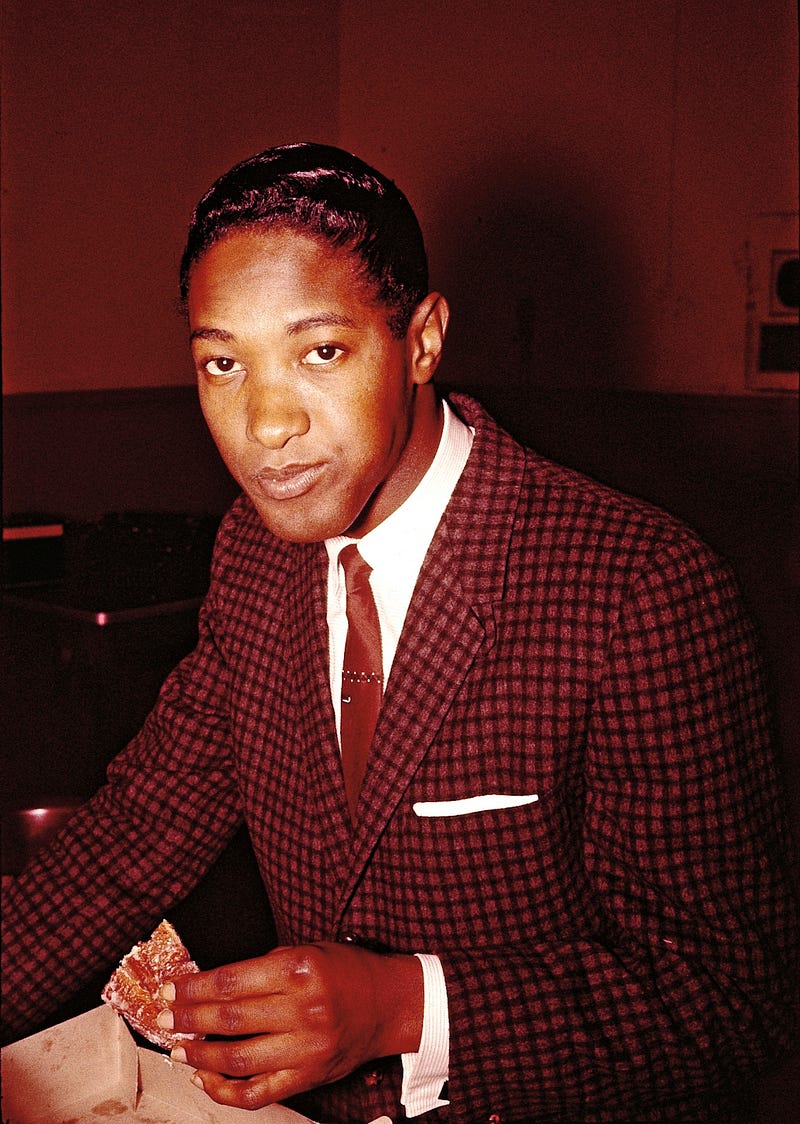
The world lost an incredible talent when Sam was killed. He was a singer-songwriter who charted 29 Top 40 songs, most of which he wrote. From pop songs like “You Send Me,” “Cupid”, “Twistin’ the Night Away,” to social anthems such as the evergreen and still significant “A Change Is Gonna Come,” he was the real deal [a former madam-motel manager beat and shot the rising 33-year-old record mogul on Dec. 11, 1964, following a tryst gone wrong with a prostitute; an inebriated Cooke, realizing his clothes and $5,000 hunk of cash were missing, threw on his remaining sport jacket and marched into the Hacienda Motel proprietor’s office to angrily inquire as to his date’s whereabouts; the circumstances of the fateful evening remain shrouded in controversy].
During the time I was doing Adam-12 [1968–1975], I remember being at the Beverly Center shopping mall during a Christmas rush. I saw Lou Rawls, and we nodded hello to each other. It had slipped my mind that we had stumbled into each other at United Studios years earlier. And we were out in public, so I didn’t wanna cause any unnecessary attention. Lou may have recognized me or was just being polite. Looking back I wish I had walked up to Lou and said, “You know where we first met?” But sadly I didn’t.
Hold your horses! Have you read parts one and three of the Kent McCord interview?
© Jeremy Roberts, 2023. All rights reserved. The Kent McCord interview was edited for clarity, brevity, and sequenced cohesively. To touch base, email [email protected] and mention which story led you my way. I appreciate it sincerely.