
Soul deep with natural-born singer Ruth Pointer

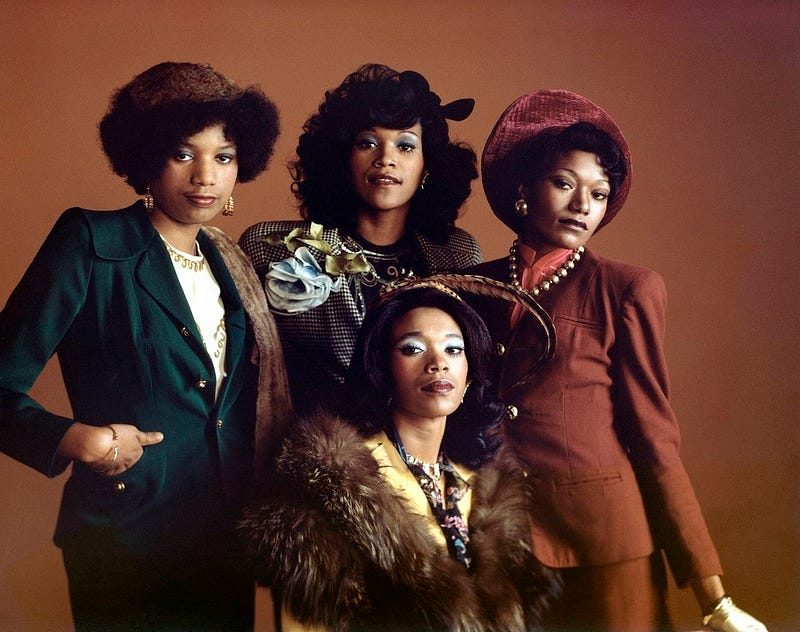
The gorgeous, harmony-laden Pointer Sisters were adept at covering virtually any genre, whether ’40s era swing, Big Band, pop, soul, rock, or even country. Originally consisting of Ruth, Anita, Bonnie and June Pointer, the quartet isn’t as well remembered in modern times as they truly deserve to be, charting an impressive 16 Top 40 Pop and 21 Top 40 R&B hits on Billboard between 1973 and 1990.
In a sign of the group’s crossover appeal, Elvis Presley sank his teeth into a fiery country rendition of Anita and Bonnie’s “Fairytale” on his Today album.
After aligning with commercially savvy pop producer Richard Perry, the Pointer Sisters found their greatest fame in the late ‘70s/early ’80s with such classics as Bruce Springsteen’s “Fire”, “Slow Hand”, “He’s So Shy”, “I’m So Excited” and “Jump (For My Love)”.
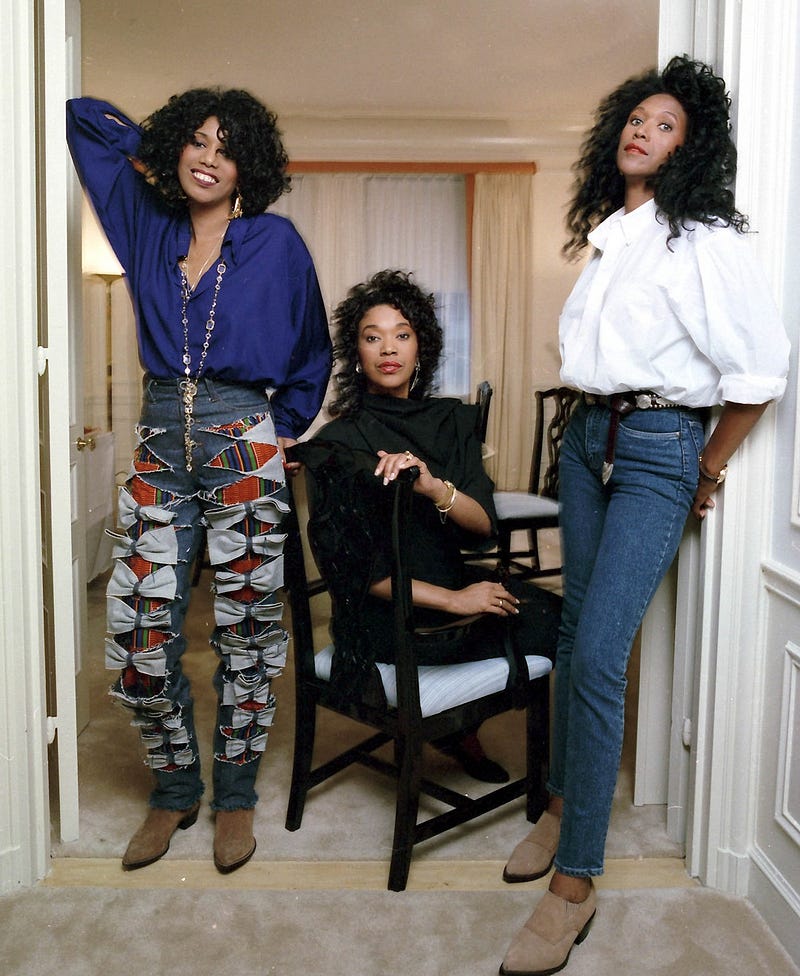
While the group lineup changed significantly with the departure of Bonnie supposedly for greener pastures only five years into their trajectory and the sobering demise of June in 2006, Ruth has always been a constant force, driving the band’s onstage antics and singing the low parts in the group’s harmony blend. A vivacious, beautiful, thoughtful and smart woman, Ruth preserves the band’s integrity in fine fashion [vocalist and chief songwriter Anita Pointer succumbed to cancer at age 74 on Dec. 31, 2022].
The Pointer Sisters still perform a handful of live shows. Visit their official website to see when they will be in your neck of the woods. In the meantime, stick around as the eldest and perhaps wisest Pointer sister loses the gloves for the third installment of a warts and all music scoop exploring her star-studded career. Conducted while she was en route to Wild Adventures Theme Park in Valdosta, Georgia, for yet another roof-raising concert, at one point Ruth gleefully relives a funny anecdote regarding her parents and grandmother seeing the group live at the San Francisco Opera House in 1974.
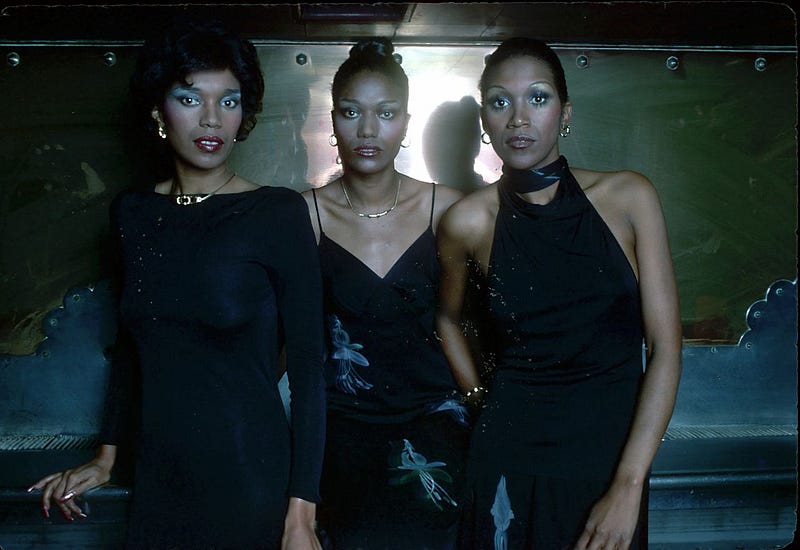
The Ruth Pointer Interview, Part Three
What caused you to officially join your sisters in December 1972?
My sisters had been singing backup for different bands for at least a year or longer. I was the oldest sister. I had two children and was trying to support my kids and trying to hang on to the crazy marriage that I was in. I wasn’t even living at home at the time, so I wasn’t really there with them. I eventually came back home and was just trying to make ends meet.
I ended up filling in for June a couple of times at some recording sessions for other artists, making more money in one night than I was making in a week on my regular job. I thought, ‘I might as well just do something that I love doing for more money than just something that I am really not happy doing for less money.’
My sisters were getting ready to sign a recording contract with Blue Thumb Records. I remember them collectively meeting with me and saying, “Look, we’ve got a record deal. If you want to come in and join us, this would be the right time.” I loved singing with them, and it made financial sense. I mulled it over a little and replied, “Okay.”
[Author’s Note: Anita, Bonnie, and June were briefly signed in 1971 by Atlantic Records Vice President Jerry Wexler after the executive heard them backing Elvin Bishop at the Whisky A-Go-Go club in Los Angeles. Two singles were released on Atlantic — ”Don’t Try to Take the Fifth” and “Destination No More Heartaches” — but inexplicably sank without a trace. Ruth’s first studio session as a full-fledged member occurred during the recording of the group’s self-titled debut album].
Can you remember the very first recording session that you contributed to?
My sisters called me in to do some background harmonies on a session for Dr. Hook & the Medicine Show — a top vocal singer in the ’70s [e.g. “Sylvia’s Mother,” “The Cover of the Rolling Stone,” and “Sharing the Night Together”]. We don’t read music, but we have incredible memory when it comes to people wanting us to sing parts.
I was paid $100 for a song(s) that I can’t recall the name of. I thought, ‘Wow…$100 in one night for only a few hours? I’m in’ [laughs]. Going in the studio and singing just came naturally for me.
Do you have fond memories of those first couple of years where you were trying to establish the group’s identity?
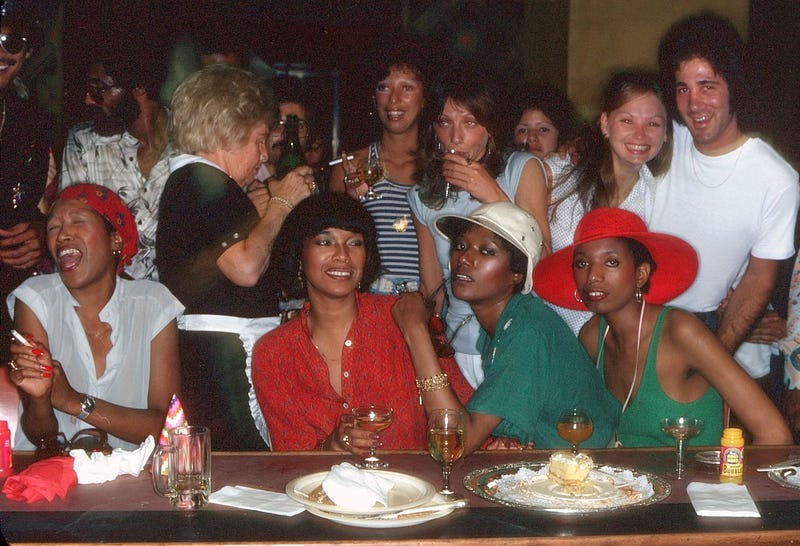
Oh yeah. We were in and out of San Francisco, and it was bare bones. It was four sisters together living in one house. Together we shared one car. We shared one set of luggage when we traveled. You would figure we would have experienced a lot of fights in such close quarters but that wasn’t really the case. We have very fond memories of those days that we laugh a lot about now.
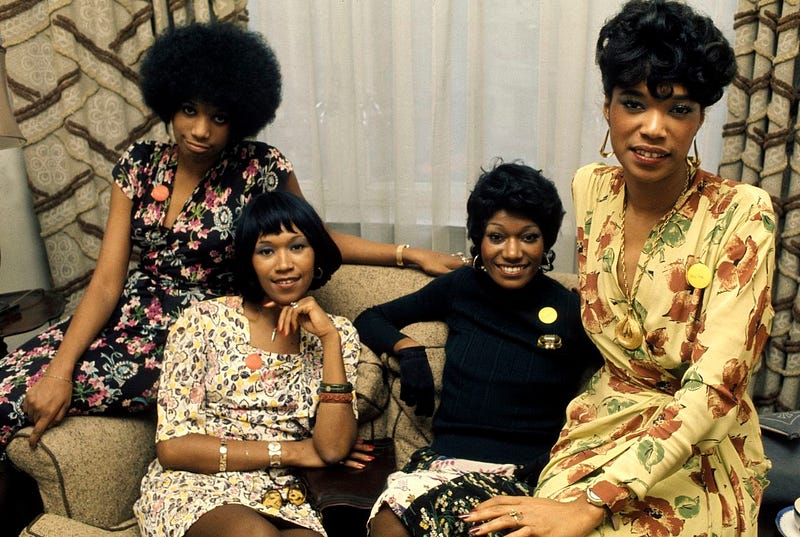
Who came up with the idea to wear the vintage 1940s-era floral dresses, feather boas, wide-brimmed hats, knotted pearls, and platform shoes?
I think all of us collectively because we grew up wearing second-hand clothes and hand-me downs from the members of my dad’s church. We couldn’t afford to buy retail. The only time we had retail clothing was for a special Sunday, probably Easter or Christmas.
The rest of the year my mom would take us to second-hand stores to buy clothing for school, or the church would give us what they’d call the pastor’s aid — boxes of used clothing from the church members — and we would pick through them and keep what we could wear.
As we got older, we continued to visit thrift shops. We became experts at picking out things that were very stylish, endearing, top quality, and name brands. We just slowly began to appreciate clothes that are today referred to as vintage.
We mixed them in because we grew up during the hippie era, a rebellious time where jeans were worn with a vintage top, vintage hat, etc. So, we were caught up in the middle of all that, and it was very trendy at that time. It was the thing.
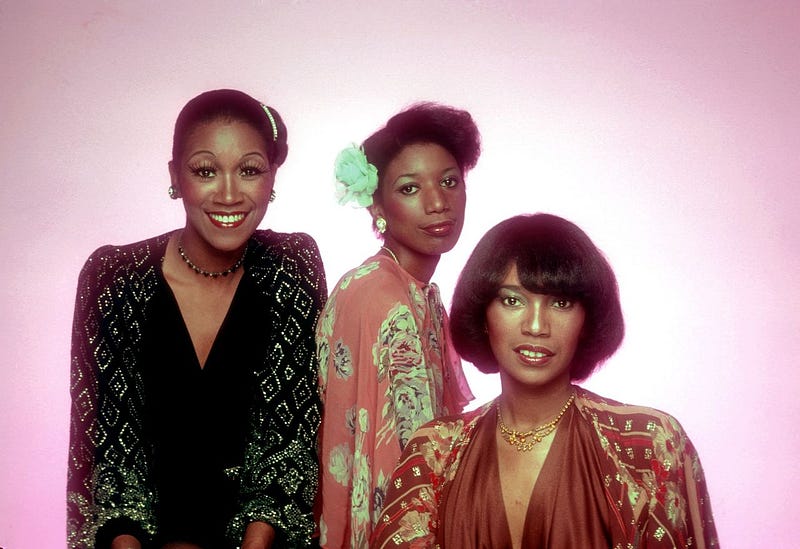
We were wearing vintage clothes before we debuted our show at the Troubadour Club in Los Angeles [May 1973] — my sisters preferred that style even as backup singers. That’s just what we wore — onstage or elsewhere. Period. The hippies loved our style, too [laughs].
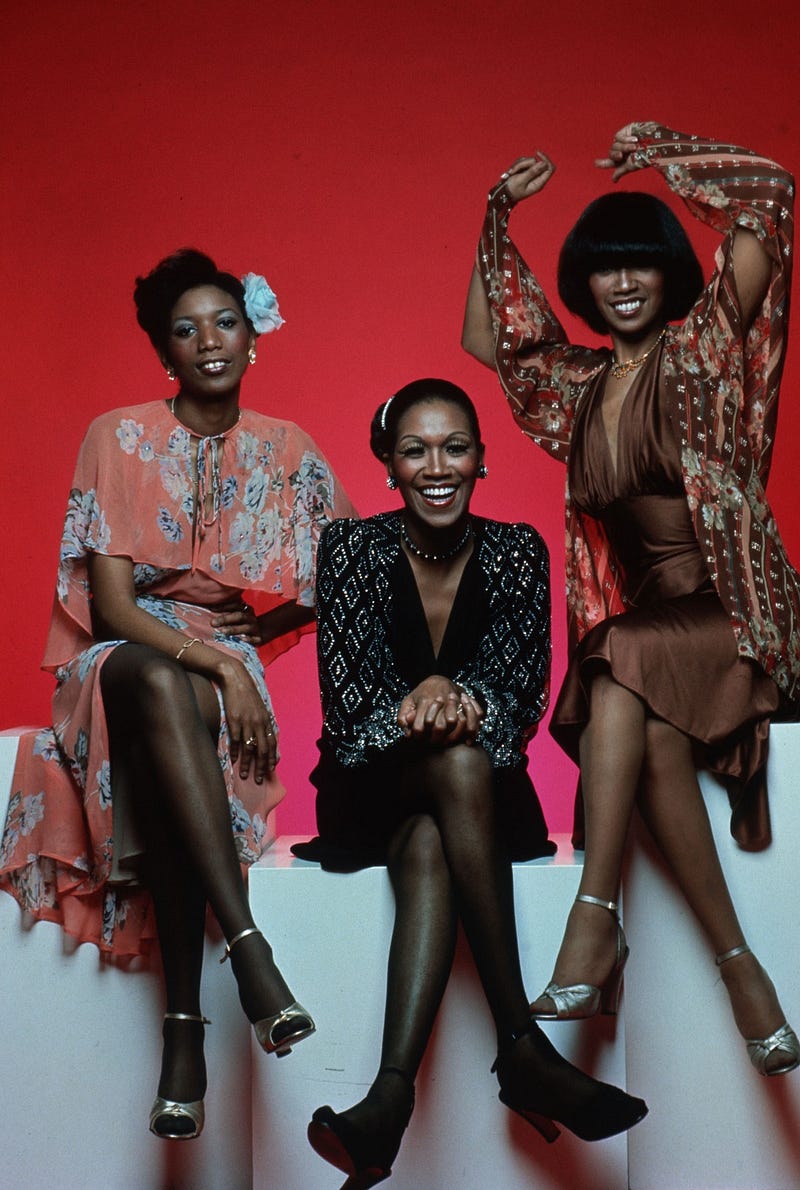
Whose decision was it to stop wearing the elegant, throwback ’40s era clothing?
It was our decision collectively. For one thing, as the vintage clothing became more popular, they became more expensive at thrift stores. We decided we couldn’t afford the vintage clothing.
As our visibility increased, we were being invited to do television shows like The Carol Burnett Show, The Flip Wilson Show, The Helen Reddy Show, The Mike Douglas Show, The Merv Griffin Show, and The Tonight Show Starring Johnny Carson.
We were being offered custom costumes by well-known designers like Bob Mackie, Rhett Turner, and Ola Hudson, our first designer. We absolutely loved them. At the beginning of our career, they would make the costumes in the vintage style for us.
Another thing…the vintage clothing didn’t really hold up a lot once we started traveling and sweating on stage. We would come off stage and clothes would literally be torn off of us sometimes because they were so fragile. The vintage clothing wasn’t fake silk or blends of different fabrics. You know what I mean? It was real silk, nylon, and cotton. And, they wore out.
We may still have a few pieces of our vintage clothes. Anita has kept a lot of things at our house where most of our costumes are stored. But, the hot stage lights were the things that really heated up the fabric along with the sweat from the body. You ended up with holes everywhere. I’m sure some of the guys seeing us perform probably didn’t mind [laughs].
Recently, have you experienced any promoters asking you to don the retro ’40s dresses and perform a special show?
Not really.
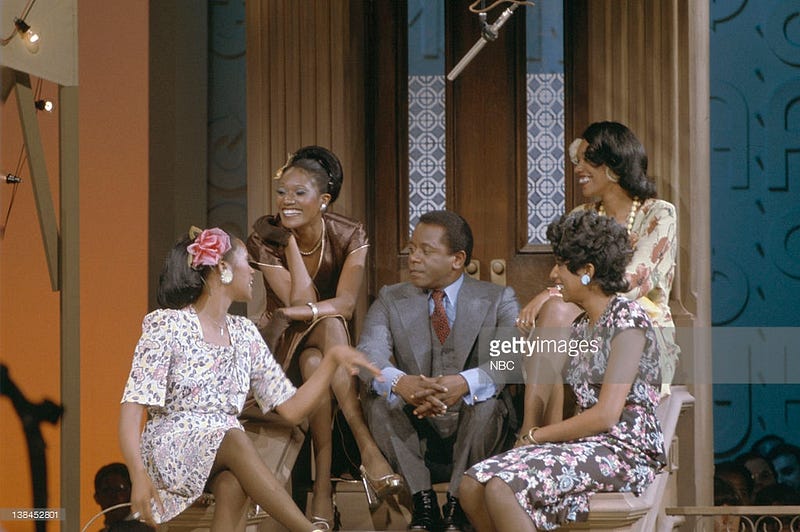
The first time I became aware of the Pointer Sisters was probably when TV Land aired your two appearances on The Flip Wilson Show, a top rated, acclaimed variety series that ran for four seasons on NBC [1970–1974].
Flip loved us, and we loved him. He loved our entire family. He would have our whole family, including my brothers Aaron and Fritz, come down and stay at his house in Malibu. Yeah, we were very good friends.
Dick Clark and Johnny Carson were very big fans of ours [Author’s Note: The Pointer Sisters appeared eight times on The Tonight Show Starring Johnny Carson between 1973 and 1990. Furthermore, on March 30, 1984, in a peculiar pairing Ruth appeared as a guest vocalist with actor George Segal’s short-lived side band called the Panama Hats. With Segal on banjo, they delivered two Dixieland jazz ditties: “The Glory of Love” and “Glory,” aka “Walkin’ Talkin’ Jesus,” a gospel standard popularized by Brownie McGhee and Sonny Terry. Anita notched an additional appearance in 1987 to plug her solo single, “Overnight Success”].
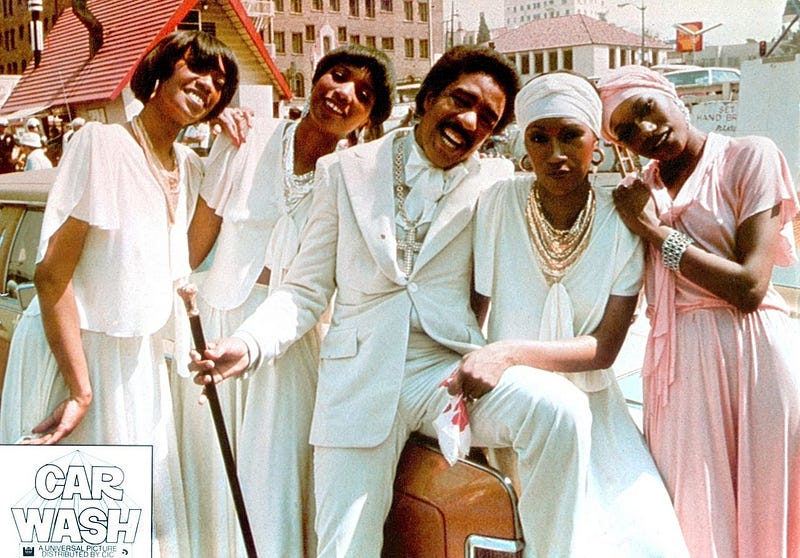
Did you get to spend any quality time with Richard Pryor when you appeared in a cameo as glamorous entourage members of scheming evangelist “Daddy Rich” in Car Wash [1976]?
Richard was another one that we were very close with. Not only did we do Car Wash with him, we did shows on the road with Richard in New Jersey. He was always funny and very kind when we were around him [Author’s Note: The Pointer Sisters perform illustrious Motown songwriter Norman Whitfield’s spirited, downright funky “You Gotta Believe” in the film].
How would you characterize producer David Rubinson’s contributions to the Pointer Sisters?
David was an entrepreneur as far as being our producer and manager. He took us on like we were his kids. He purchased my mom’s first color TV for her and gave us allowances when we were on the road before we started making any money. He put his house up so that he could have money to support us. He invested a lot just to get us going.
He was kinda like the dad that we had lost. Every now and then we see him in our travels. My sister, Anita, and my brother, Fritz, still stay in touch with him. David lives in the South of France, and they have gone to visit him. It’s a beautiful history that we have with David.
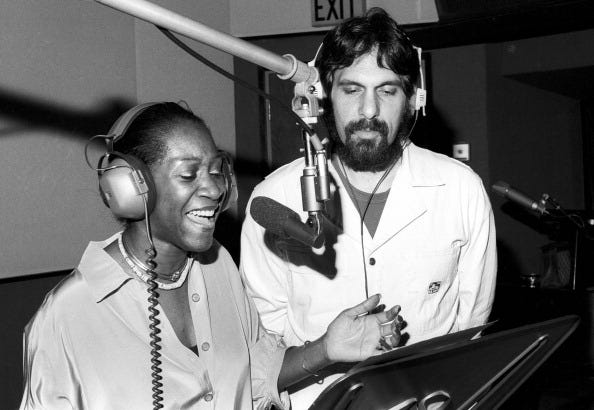
Was Rubinson a hands on producer in the studio?
Absolutely! David had his hands on all the way with what he wanted. But he wanted us to remain who we were. When it came time for us to shoot our first album cover [i.e. The Pointer Sisters, released in May 1973 via Blue Thumb Records] we asked David, “What are we going to wear on our album cover?”
He replied, “Wear what you always wear. You guys look great all the time. Just be who you are. You don’t need anything special. Put on a vintage dress, your shoes, and take a picture.” That’s why that first album cover looks the way it looks.
Would David Rubinson let you bring songs to a session?
Yeah, we would bring what we wanted to sing to the session, and he would bring what he thought we should sing, too. It was a collective decision.
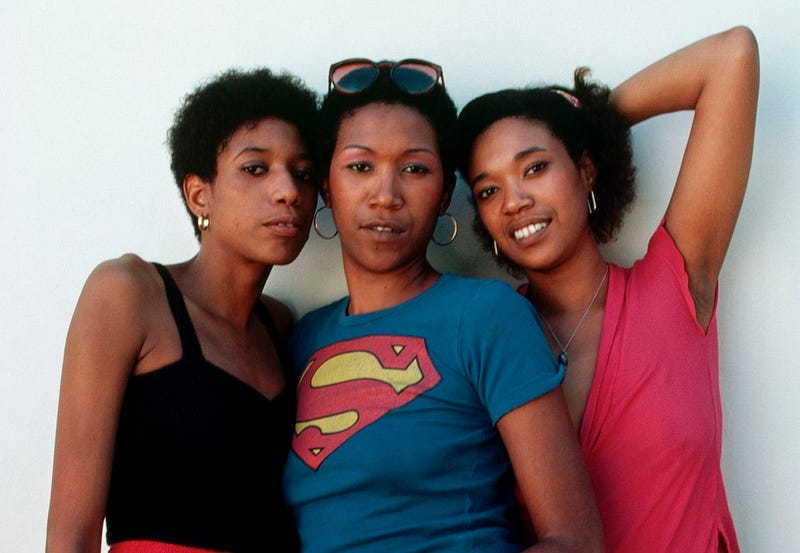
Was Blue Note simply not capable of handling the Pointer Sisters as your fame increased exponentially?
The thing is that we were very naïve when it came to business, and we got caught up in a lot of business transactions that had nothing to do with us — record companies being merged with one another or this record company buying out another. We were like sitting ducks, victims of where we had to go.
Did you have a good manager at the time [i.e. David Rubinson]?
We thought we did. But we didn’t know any better because we weren’t on the ins and outs of the conversations that were going on between these record companies. We were just singing and doing our road dates. The next thing you know, someone would say we’ve got to go to this other record company. It just kind of happened that way because we were naïve and didn’t know.
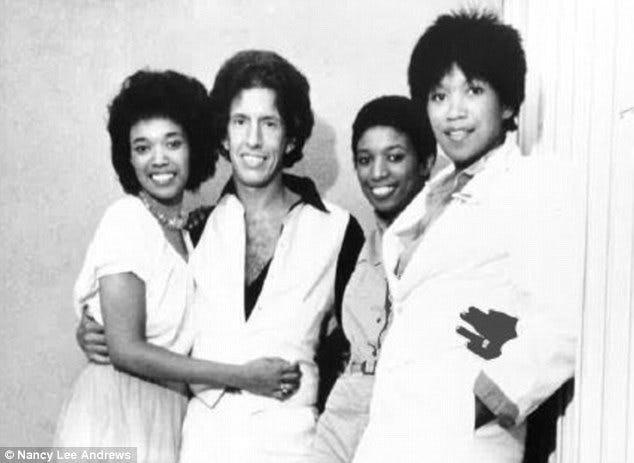
Did Bonnie ever explain exactly why she jumped ship for a blink and you’ll miss it solo career with Motown Records after the release of Having a Party [November 1977]?
We knew why she left at that time. She wanted to be a solo artist. At that time especially, most of the female groups were becoming more and more like Diana Ross and the Supremes.
That’s kind of where Bonnie was going with it. We were not gonna have it. We told her, “This is gonna be the Pointer Sisters group. This is not gonna be Bonnie Pointer and the Pointer Sisters. So, if that’s what you’re hoping for, that ain’t gonna happen” [Author’s Note: Bonnie married Motown producer Jeffrey Bowen yet only managed to score two hits: a richly orchestrated disco cover of the Elgin’s “Heaven Must Have Sent You” and the mid-tempo “Free Me From My Freedom” / “Tie Me to a Tree (Handcuff Me),” where she really gets to cut loose].
Perhaps Bonnie thought she deserved top billing since she planted the seeds for the group when she enlisted June to sing in a duo called Pointers — A Pair at local San Francisco Bay Area haunts.
Probably she did.
Has she sang with you guys in recent years or does she still do her own thing?
She still does her own thing.
Looking back, do you prefer the material that you recorded with David Rubinson [i.e. 1973–1977] or Richard Perry [1978–1988 on Planet/RCA Records]?
I have to say I have mixed feelings about both. I like a lot of the stuff we did with David. Some of the stuff with David I didn’t like, and the same with Richard.
With David a lot of it was just the way the songs were recorded. I wish we’d had less jazz. I liked it, but I wanted to sing more contemporary. So, when we got with Richard that gave us the opportunity to sing more contemporary.
I also wish that Richard had turned us loose because David always gave us complete creative freedom. Richard was stricter on that end. Each producer had their pluses and minuses.
How did you deal with Richard Perry limiting the group’s creative freedom in the recording studio? Commercially speaking, his approach netted obviously positive results.
Yeah, it worked for the time. We had big fights with Richard in the studio sometimes, but he almost always stood his ground. There was one song in particular that Richard had not chosen which was “Automatic” [No. 5 Pop, No. 2 R&B, November 1983].
Anita, June, and I just happened to be taking a break in the studio and stumbled upon the song among some tapes that we were listening to in a small office. We took it to him and said, “Why is this not one of the songs we’re recording?” He replied, “Well, it sounds like a guy should be doing it. Who is going to sing that part?”
Of course, my sisters looked at me immediately and said, “She can do that!” [laughs]. And so he said, “Okay.” Richard wasn’t always that rigid. There were times when we wished that we could have had more creative freedom with our songs.
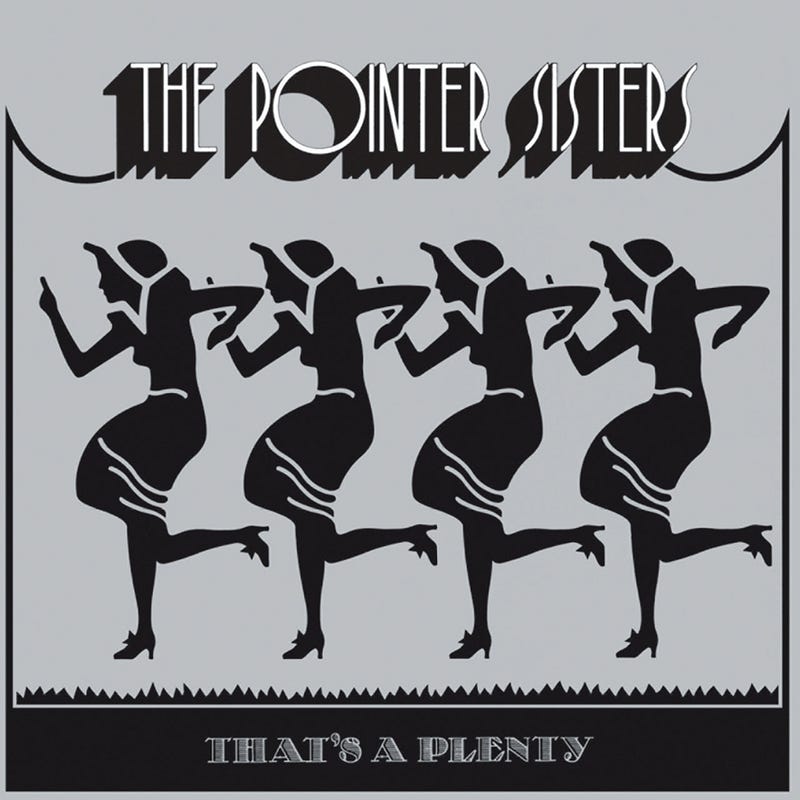
Shortly before calling you, I heard a tour de force ragtime / show tune medley of “Bangin’ on the Pipes” / “Steam Heat” from your second album, That’s a Plenty [February 1974]. Could that be an example of a David Rubinson jazz suggestion that you didn’t like?
Yeah. I guess. It was like it didn’t really move me as much…I’ve always had my first love in gospel music.
It begs the question…why have the Pointer Sisters never tackled a gospel album?
We’ve been asked about that a lot of times, and the idea has just kind of slipped by. It’s still not out of the question. Our fans might get a kick out of hearing us go back to our roots.
Did you ever sing any gospel material in concert?
I used to sing a gospel song in a concert, yeah.
Why did you stop doing the gospel song in concert?
If the production doesn’t allow for that then it’s very hard to keep it in the show. We were hired by the promoters that want us to do a certain show. Depending on what they’re paying you, there’s only a certain show that you can bring to them.
We do a show to make a living. If we’re not gonna make any profit at all, it is just not worth it for us to bring in certain material where it’s gonna cost us an arm and a leg to do the song.
These days the musicians aren’t aware of our entire 40-odd year musical history. They come and go depending on what you’re going to be able to pay them. A lot of times we’d get into confrontations with a musician depending on what the venue is, where we’re going, what we’re able to pay them because of the expenses of whether or not we have to pick up the tab for the hotels, we’ve got to feed them, how much it costs for production, to have the equipment brought in, who’s going to handle the equipment, and so forth.
It’s a lot more than people understand. On top of that, to bring in rehearsal time you’ve got to pay for the rehearsal hall and the equipment to be used. The musicians want to get paid for their time. It’s a lot! The artist ends up being left with nothing.
Today artists are smarter than we are, and I’m sure they learned from what we went through. They use a lot of computers. You don’t have to get a hotel room for the computer. You don’t have to feed the computer. They make a lot more money than we ever did.
How much of the Blue Note material do you perform in concert today?
Just “Yes We Can Can” and maybe “Fairytale.”
Would you like to add more of your early material to the setlist?
We have gotten very comfortable in our show that we have. The audience responds to it and so it’s like the old saying, ‘Don’t fix it if it ain’t broken’ [laughs].
We would like to add some songs but that would entail the band members being paid to learn them. Trust me, musicians want to be paid for every minute they have to do something.
You’ve gotta write the sheet music because they’re gonna learn it that way. You’ve gotta pay to use a rehearsal hall so that all the members will get together and figure out the format of how you’re going to sing the song because most of the time you’re not going to sing it exactly like the record is. You’re going to make some breaks or some stops here and there.
You have to figure out how much it’s going to cost you to add that song. It’s complicated.
Is there a lot of rehearsal involved before you go out on tour?
We don’t rehearse at all. Anita and I basically know what we’re going to sing. That’s one reason why we don’t change a lot. I live in Boston and my sister is in Los Angeles.
If we want to add anything, that means I’ve got to buy a plane ticket, gotta get a plane ticket for my 39-year-old daughter Issa — a product of my marriage to former Temptations lead singer Dennis Edwards — got to figure out where we’re going to stay in L.A. to get with Anita, gotta pay the musicians to come in, and got to give them money to eat depending on how long it’s going to take us to learn this new song to add to the show. That’s why we keep the show like it is.
How did you become an international spokesperson for the USO?
We were invited to do a USO Tour during Operation Desert Storm with Bob Hope. This Christmas 1990 trip was the last USO Tour that he did. Shortly after that we were invited again. My sisters didn’t want to go, so my husband suggested that I go on my own. I said, “Fine, I’ll do it,” and I took our band with me.
What’s one of the most dangerous places where you have performed for our troops?
Kosovo was a dangerous place when I visited just prior to Christmas in 1999 at the suggestion of then-Defense Secretary William S. Cohen. As a matter of fact they had to shorten my solo performance at the Army base and quickly escort me out of town in convoy at night because they felt like some danger was imminent. Those soldiers know how to get you out of places, believe me. They didn’t waste any time and they made me feel very secure.
I haven’t performed for the troops recently but I would like to. It’s a real humbling experience to go over there and mingle with those soldiers that are so young and so willing to do what they do. It’s quite an experience. I think about it every time I see soldiers in the airport. My heart is just like…‘Wow!’
After marrying the love of your life, fifth husband Mike Sayles, in 1990, you decided to have kids again. When you found out you were pregnant at age 46 via in-vitro fertilization after several years of soul-crushing defeats, were you totally caught off guard?
Yeah, are you kidding me! It was quite a shock. I didn’t think that was going to happen [laughs]. But there you go. You have them, you raise them, you do what you can.
Born six weeks premature and delivered by Caesarean section in July 1993, do you think Conor and Ali might want to be singers one day?
No. They have no aspirations for that at all.
What is your perfect day?
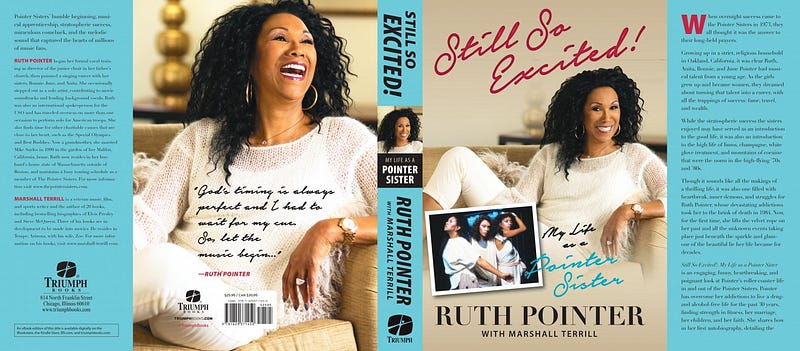
Ooh, my perfect day is probably just waking up in the morning and doing my prayers. I have a book about the study of the Bible that I read out of every day called Sparkling Gems from the Greek by Rick Renner. I love it.
I watch certain TV shows. I eat three meals a day. I prepare them personally for myself. I have a specific eating regimen. I love to shop.
The winter is not my favorite time of the year living back in Boston. It could be real brutal. But, I love when the sun is shining. That’s just perfect enough for me and knowing that all my kids are safe. Nothing major. Basically I’m a pretty simple person.


******************DON’T GO ANYWHERE YET!********************
Further Reading: Based on a true story about Anita Pointer’s illicit affair with a married KSAN radio deejay in San Francisco, the jilted country vibe of “Fairytale” vaulted it all the way into the Top 20 on Billboard’s Hot 100, notably becoming the Pointer Sisters’ second hit. To acquire further insight on how it opened doors for the harmonically gifted quartet, consider investigating a newly written article exploring the matter entitled “Inside ‘Fairytale,’ the Pointer Sisters’ Defiant Country Kiss-Off Covered by Elvis Presley.”
© Jeremy Roberts, 2015, 2016. All rights reserved. To touch base, email [email protected] and mention which story led you my way. I appreciate it sincerely.