
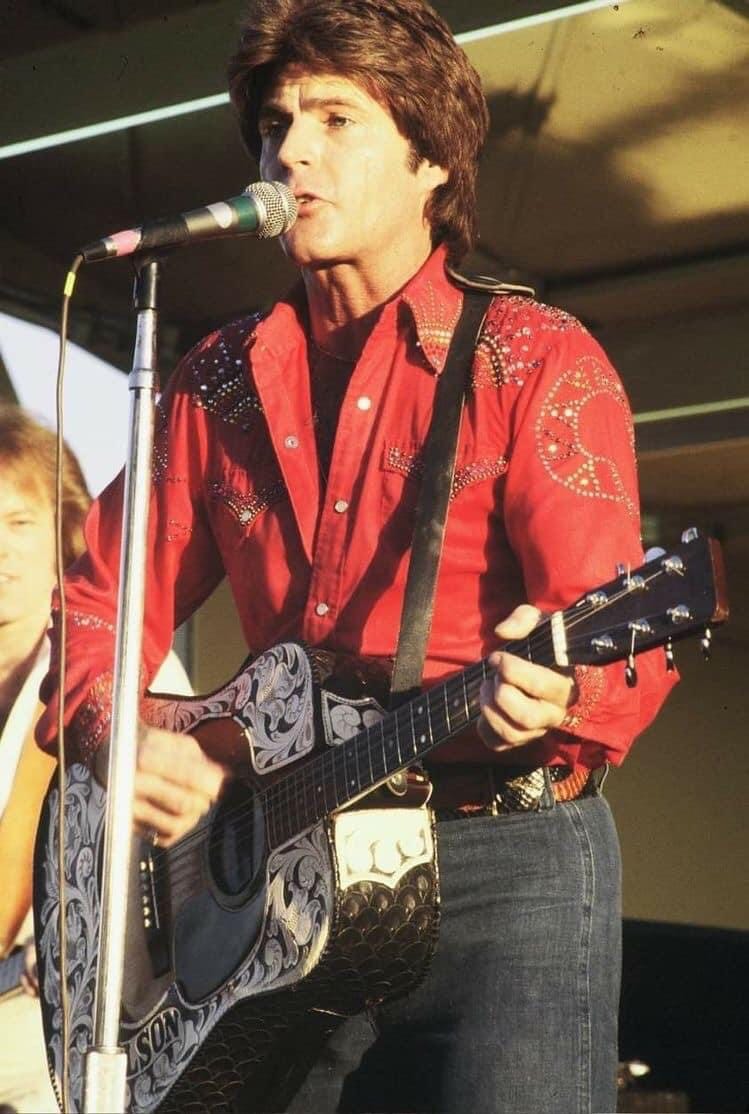
Kent McCord’s tribute to best friend Rick Nelson
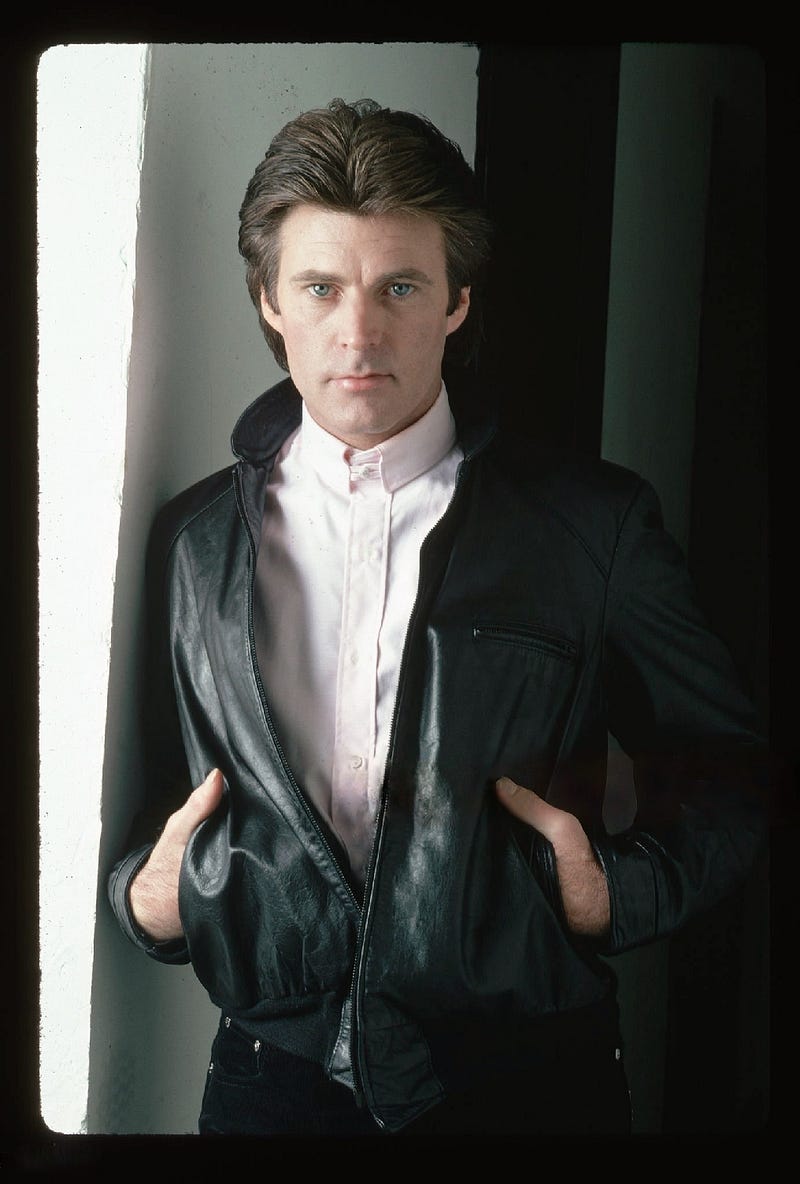
“I was asleep when I heard my wife Rocky scream at the news on TV.” Kent McCord, rookie LAPD officer Jim Reed on NBC’s enduring Adam-12 series, takes a deep dive into the life of gentle soul Rick Nelson. The Rock and Roll Hall of Fame alum died suddenly on Dec. 31, 1985, at age 45 while traveling by private plane to a sold out New Year’s concert at the Park Suite luxury hotel in Dallas. For McCord the loss nearly four decades ago still cuts to the quick. In early 1961 he was a freshman football major at Citrus Junior College when he and a handful of pals were recruited to join Nelson’s team for the celebrity touch football match of the century in De Neve Square Park. Their rivals were none other than Elvis Presley and the Memphis Mafia, who had scraped together a streak of wins that had Nelson plotting payback. Nelson’s ringers handily bruised and trounced the hip-swiveling hillbilly cat’s squad that mid-winter afternoon in Bel Air.
A friendship blossomed, and McCord switched gears and stood in and acted on Nelson’s trendsetting family sitcom that took cues from real life, The Adventures of Ozzie and Harriet. Accompanying Nelson as a bodyguard, McCord also demonstrated his trustworthiness, carrying a briefcase to collect cash from venue promoters on the road. David Nelson declared that McCord attended more recording sessions with his little brother than anyone except the band and arranger Jimmie Haskell. McCord, who went on to argue vehemently in support of fair salaries, working hours, and health and pension benefits for actors as the first national vice president of the Screen Actors Guild, is now content to avoid COVID with his loving flame of over 60 years by his side. Tapping his laugh and tear-coated souvenirs in such extensive form has been a sheer privilege.
The Kent McCord Interview, Part One
Who was Rick Nelson off-camera and how did he handle stardom?
Rick was possibly the gentlest soul that you’d ever wanna meet. He wasn’t built for conflict — neither was Ozzie — so he came by it honestly. To face Rick head on with an issue would create an evasiveness if he wasn’t ready to deal with it. You had to use tact when approaching Rick.
Rick had been dealing with fame all his life because he grew up in a show business family. He was only eight years old when he and David began portraying themselves on the radio version of The Adventures of Ozzie and Harriet. That’s a totally different thing than what I dealt with when I was 25 years old and people first began recognizing me for Adam-12. David once said the strangest part of growing up in the public eye was walking into a roomful of people. They’d all know who you were but you didn’t know any of them.
Rick and I were driving in Hollywood and I actually wondered aloud, “Aren’t you a little afraid to be out in public all the time? What if something bad happened?” He gave his answer careful thought before declaring, “I don’t wanna become like Elvis where I can’t go outside. This is my hometown.”
When we’d get a break from shooting Ozzie and Harriet, we’d head to Wallich’s Music City at Sunset Boulevard and Vine to listen to all the latest records. You’d sit in one of the glassed-in listening booths that lined the Sunset side of the store. We could look out, and people on the street could look in. Depending on how much free time we had, fans would inevitably start to congregate. We obviously didn’t have cell phones, so the store manager would get a call from General Service Studios [since renamed Sunset Las Palmas] to let Rick know they needed him back on set. I always had to break the bad news, “I’m so sorry. Rick would love to keep signing autographs but we have to go.” I’d kinda grab him by the arm and out the door we’d fly.
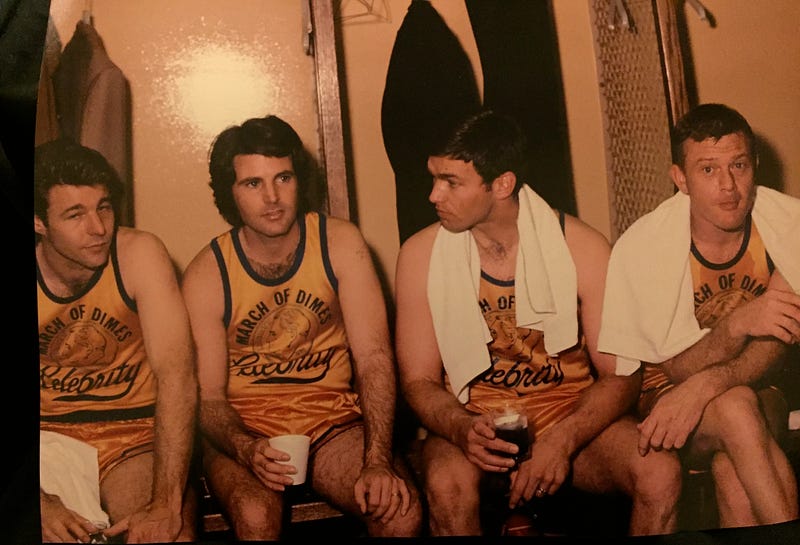
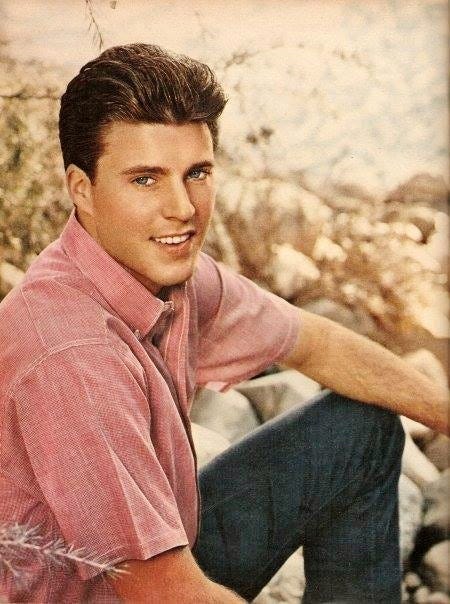
What’s a zany fan encounter that sticks out in your memory?
Howard was a basset hound owned by Rick in the early ’60s. Over time he became a little neurotic. When people were at Rick’s Zorada Drive house Howard would go sit on their feet and break wind. Rick would scold the dog to no lasting effect. He would bring Howard to General Service and then transport him back to Zorada in his 1958 Cadillac Eldorado Brougham.
When we shot Ozzie and Harriet the General Service production crew was a well-oiled machine. At the end of the day the cast would be released, and Ozzie would use the stand-ins to set up the shot for the beginning of the next day’s work. This was the pattern for the five years I worked on the show.
On this particular evening Rick had been released, and I stayed to get the setup for the next morning’s first shot. Charley Britt and I were living at Rick’s [Britt was a defensive back for the L.A. Rams football team who moonlighted as a cast member on Ozzie and Harriet]. When I was released I headed to the house, which was about a 10–15 minute drive. When I pulled into the driveway Rick was waiting for me. He was ashen-faced because someone was on the property. We went inside and he said, “I first saw her out on the patio.”
I went into my bodyguard mode [McCord was still beefy from his USC football days] and pulled a sliding door back. There she was, standing in front of me. I yelled, “What are you doing? You can’t be here! You need to leave!” She looked kinda sheepish. Charley arrived during the commotion. When we told her we were going to drive her away, she said, “I have to get my stuff first.” “Where is it?” She walked over to Rick’s Cadillac Eldorado, opened the back door, and there her bag sat in the back seat floor. I drove her to Hollywood Boulevard and dropped her off somewhere.
When I returned from my destination Rick revealed how she found his house. He told us, “When I left the studio I had Howard in the backseat, and he was going nuts. I hollered at him, “Don’t you shit on my seat! Howard, settle down! I couldn’t figure out why he was so agitated. The girl had stowed away on the floorboard and covered herself up. Oh God, did she get an earful when I lost my cool with Howard.”
The next day we’re at the lot. It’s lunchtime, and we’re walking towards a little food establishment just out of the lot’s back gate that we nicknamed the Greasy Spoon. Three girls were walking in front of us. Charley whistled at them. One turned around, and it was her [laughs]. We’re like, “Jesus, how did this girl get on the lot, let alone stow away in the back of Rick’s car and be taken up to his house?”
Howard was eventually given to Nancy Kulp, Mr. Drysdale the banker’s refined secretary on The Beverly Hillbillies. Nancy loved Bassett hound dogs. [laughs].
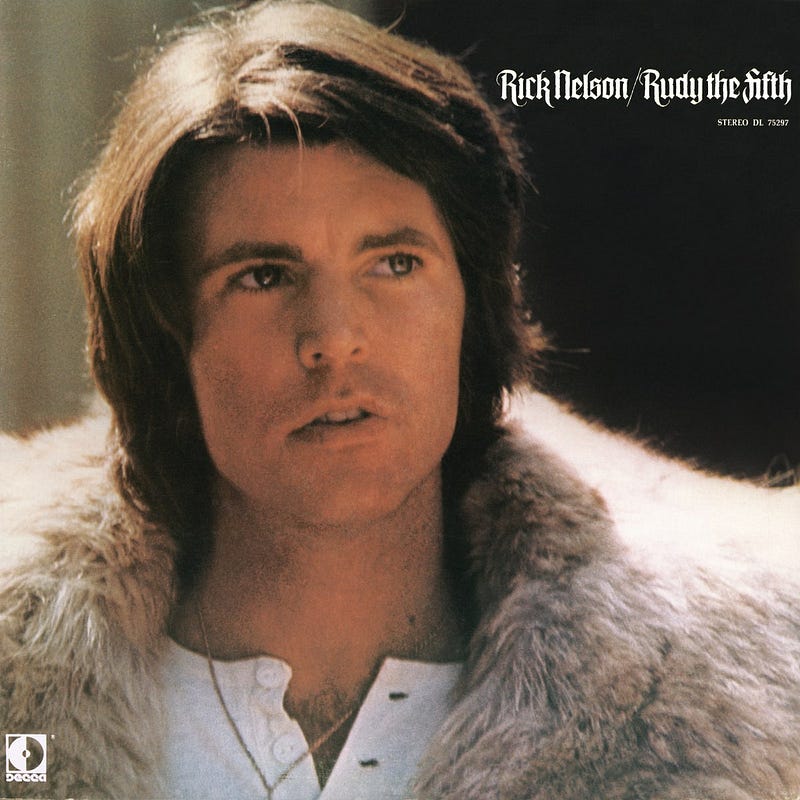
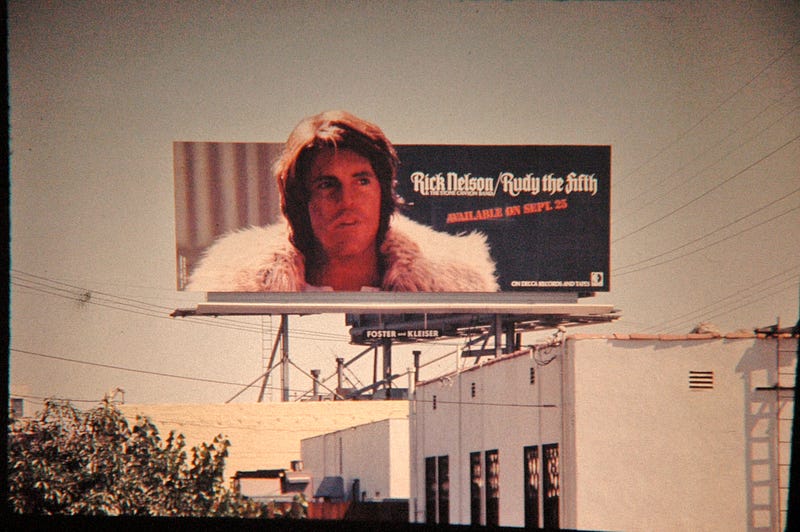
What were the circumstances behind you photographing the cover of Rick and the Stone Canyon Band’s fantastic Rudy the Fifth LP in 1971?
About six months before Rudy the Fifth was distributed by Decca, Rick guested on the syndicated Mike Douglas Show from the grounds of the old California U.S. International University in San Diego. Linda Ronstadt, Chuck Berry, and George Carlin were also part of the lineup for the unusual location show since Douglas typically broadcast daily from Philadelphia. On April 14, 1971, I drove to San Diego with Rick. I was on hiatus from Adam-12. I brought my camera, a Nikon FTn, and photographed Rick and the band during rehearsals and their performance.
When Rick was searching through pictures for the album cover he wasn’t happy with the choices he had. We were at the Zorada house in the den [founding Stone Canyon Band bassist and future Eagle Randy Meisner later bought it]. Rick’s manager-cousin Willy Nelson was there and I’m almost positive Rick’s uncle Don Nelson was, too. Not only was Ozzie’s younger brother a musician who played in a jazz group until he was too old to play anymore, he was also a writer on the series, the songwriter behind “So Long” on Songs by Ricky, and a hell of a photographer who had shot the covers for Bright Lights & Country Music, Perspective, and possibly others. Rick had some pictures laid out on his pool table and said, “I can’t find one I like.” I answered, “Let me show you what I shot when we were on Mike Douglas.” I went home and got them.
Rick examined each one thoroughly until something caught his eye. He exclaimed, “Oh man, this is the one I’ll use!” Everyone agreed. I was like, “Great. Just give me credit” [laughs], which I have on the album. Probably my proudest credit. All the stills I shot that day are cherished images from a terrific period for Rick.
Why was that the only time one of your photos graced Rick’s albums?
Rudy the Fifth was a thing of necessity. Totally spontaneous. It would have turned into a professional situation if I had started suggesting my photos for subsequent album covers.
When the album was released I was driving down Sunset Boulevard on my way home from Beverly Hills. Staring at me was Rick from a giant billboard advertising Rudy the Fifth atop the Whiskey a Go Go. Today with a digital camera or smartphone you can go “click” and have your image instantly. Back then I had to drive home, get my camera, drive back, and try to navigate the busy intersection. From a photography vantage point, the billboard was placed in the wrong direction. It was impossible to get the corner view of the Whiskey and the billboard above. I found a side street and captured the best angle I could.
I believe it was a one-time deal regarding Decca buying a billboard. Decca put forth more effort than usual in promoting Rudy the Fifth. For good reason — it was a great album. I will sound prejudiced but Rudy the Fifth, from Rick’s selection of covers [e.g. Bob Dylan’s “Just Like a Woman” and “Love Minus Zero / No Limit”] to the seven songs that he wrote [e.g. “This Train,” “Sing Me a Song,” “The Last Time Around,” “Life,” and “Gypsy Pilot”], is one of the best examples of how he grew as an artist and as a human being.
I probably have a hundred thousand pictures. Many are still in the form of slides or contact sheets. I’d typically pull one photo out of a roll of 36 and deem it the best. Eventually I must sit down and dedicate the time necessary to properly organize and digitize my photo archives.
Rick was known to take photos, too. On the set of Ozzie and Harriet he shot a whole bunch of stuff of me and had them printed and compiled into a photo album. One Christmas Rick surprised me with this special gift, which was very nice of him.
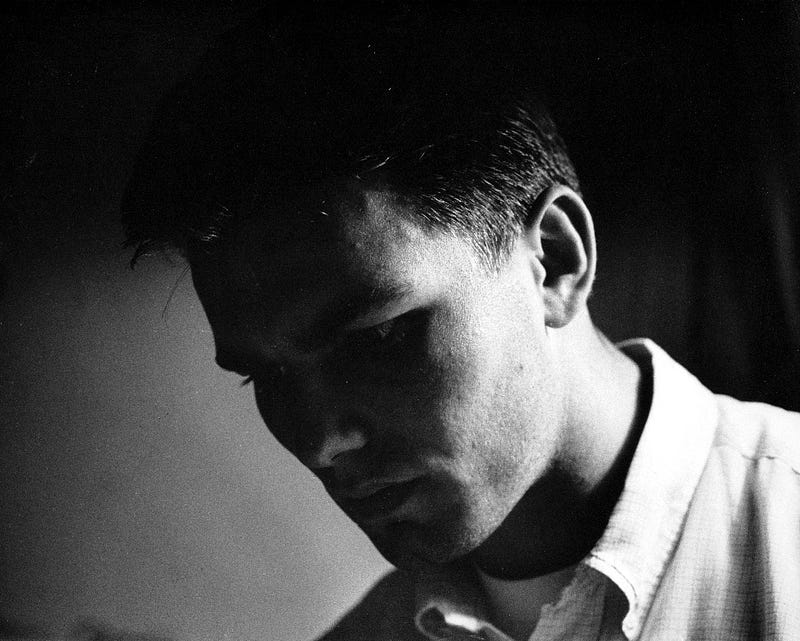
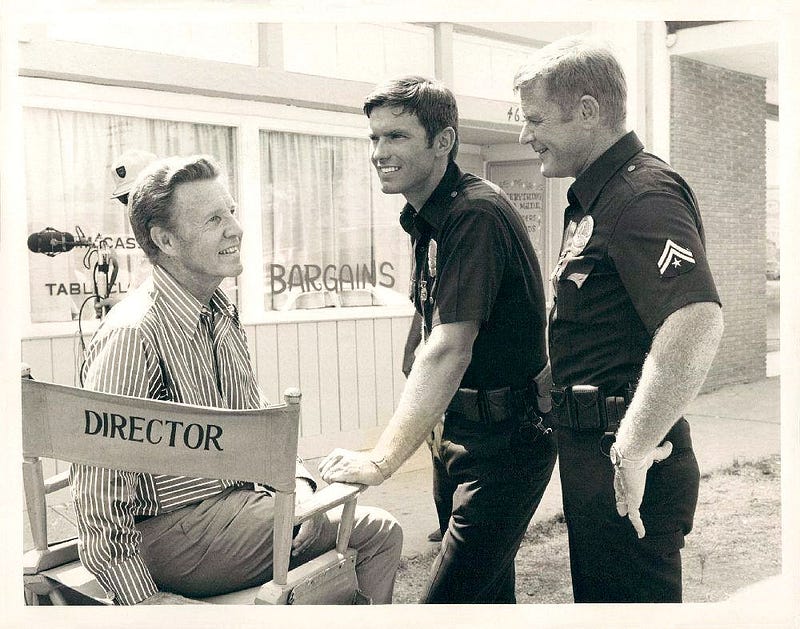
Is it true that Rick’s father saved your life?
When Cynthia “Rocky” Doty and I got married in Las Vegas in 1962, Ozzie and Harriet offered us their beach house in Laguna for our honeymoon [Rocky got her nickname as a baby rocking back and forth]. When we moved into Hollywood we lived in Harriet’s mother Hazel’s house. We celebrated our 60th wedding anniversary on July 14, 2022. Rocky loves “Never Be Anyone Else but You” [No. 6 POP, February 1959], “Sweeter Than You” [No. 9 POP, B-side of “Just a Little Too Much,” June 1959], and “Fire Breathin’ Dragon” [A-side, January 1966].
Laguna Beach has been a special place for both the Nelsons and us for decades. Ozzie and Harriet’s shooting schedule was designed to give everyone the summers off so essentially the family spent the entire summer in Laguna. Later it also allowed for Rick to tour with his band. However, the main goal was to give David and Rick as normal a life as they could have given all the attention that came with being on a television show.
At one point in the ’70s our community was home to not only Ozzie and Harriet but to Rick and Kris, Ozzie’s brother Don and his wife Connie, Joe and Camille Byrne [Joe joined the series in the mid-’50s as a stand-in before becoming script supervisor and went on to produce The Johnny Cash Show], Kris’ mom and dad — Tom and Elyse Harmon — and Rocky and me. We were all Ozzie and Harriet refugees.
In Laguna Ozzie slept into the afternoon and was nocturnal. I don’t think he ever got over his sleep pattern from the days when he was a Big Band leader. He’d play into the early morning hours, pack his gear, head to the next town, and sleep whenever he could. Ozzie would emerge around 3 p.m. His routine was to go to the farthest northern point of the beach, swim out a hundred yards or so, and swim the length of the beach south. If a volleyball game was underway, he’d participate. Keep in mind most of the players were half Ozzie’s age.
I was working on Adam-12 in 1972 [Ozzie directed two episodes the previous year]. We were renting a house near where Rick and Kris’ house was in Laguna. A good friend of ours, race driver Bruce Walkup, was visiting. He intended to compete in the Indy Car California 500 race at the Ontario Motor Speedway on Labor Day Weekend. Bruce competed in two Indianapolis 500’s and drove everything from midgets to sprinters and dirt champ cars. We were standing on the beach in front of Rick and Kris’ house. Rocky was holding our one-year-old daughter Megan. Her nine-year-old sister Kristen was also present. We were talking to David.
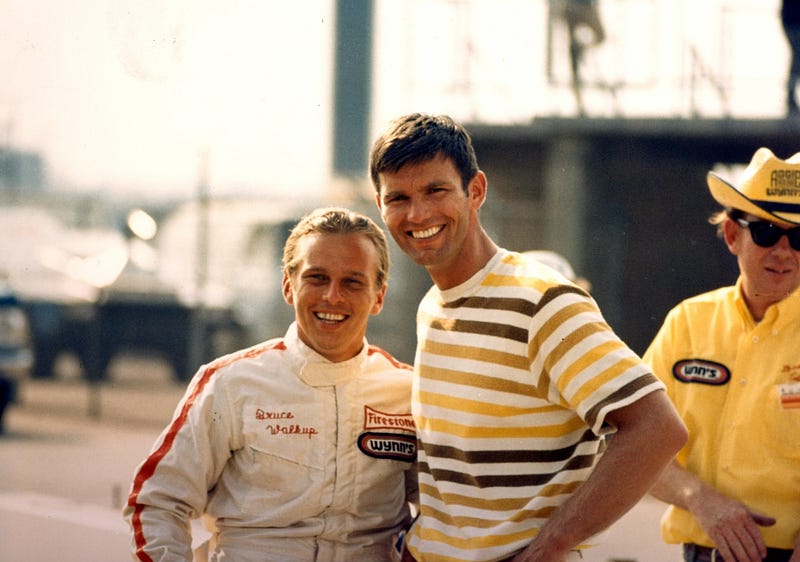
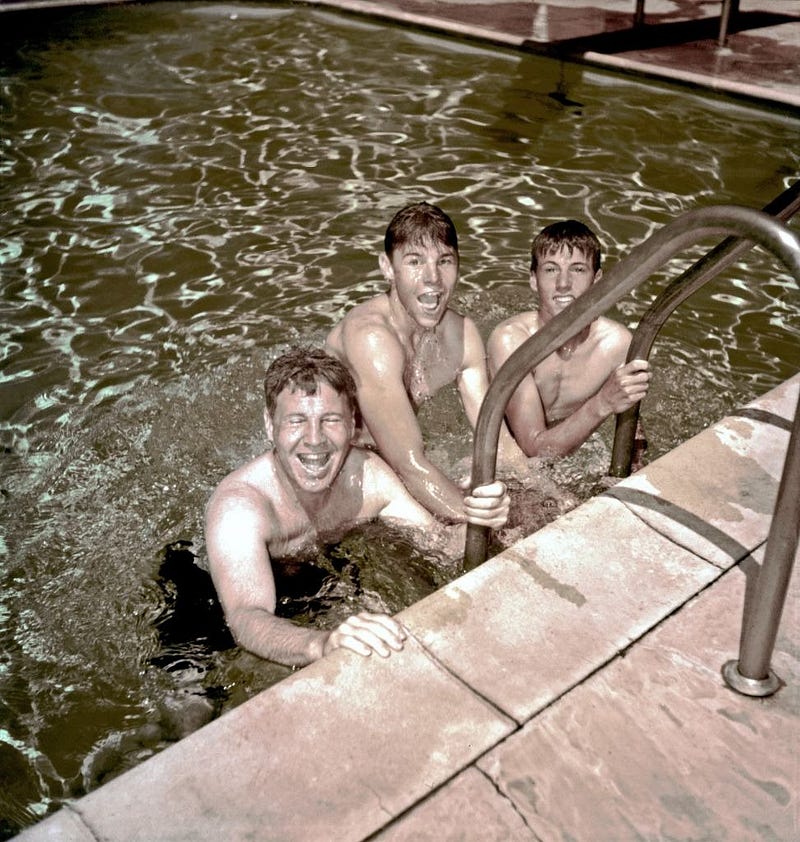
Bruce decided to go for a swim and was in the water when a riptide started pulling him out without warning. I looked in his direction. Bruce’s eyes were like saucers. He held his hand up and yelled, “Help!” I jumped in the water without thinking, swam out to him, and said, “Just relax.” I reached my arm out to him. Bruce grabbed it and pulled us both underwater. What we should have done was to float with the riptide. The current would have pulled us out. If we had swam parallel to the shoreline we would have gotten out of its way safely.
I came up, gasping for air. I could see Rocky, Megan, Kristen, and David. This is the God’s honest truth. What flashed through my mind was, ‘God, I don’t wanna die this way.’ I kept fighting to come up and was yelling at Bruce. All of a sudden outta nowhere Ozzie appeared. He swam out to us and kicked Bruce away from me into some rocks. He asked, “Are you okay?” I pulled over onto my back, still gasping for air, and could only utter, “Yeah.”
We managed to get Bruce on shore and placed him down on his belly like a beached whale to get all the water out. Had Ozzie not shown up, I dread to think of the result because Bruce was in pure panic mode. I’d seen Bruce upside down in burning race cars and never panicking like he was that day. He had grown up in Downey, California, too. In 2021 somebody got washed off the rocks and drowned at the very place where we were. Ozzie saved our lives.
Ozzie died only a few years later. At first, he didn’t tell anybody about his liver cancer diagnosis. Ozzie had had one cancer operation. Nobody knew about it. He was so active mentally and physically that it was a complete enigma why he got cancer and passed away at age 69 [June 3, 1975]. He didn’t smoke or drink. I envied his health regimen. During the Ozzie and Harriet days Ozzie would prepare for the new season by putting his sweats on and jogging two miles to General Service. The routine helped him combat the grueling stress he faced shooting anywhere from 25 to 39 episodes per season.
I worked with two of the pioneers of television, Ozzie and Jack Webb. They were auteurs in the truest sense and the arbiters of everything that was acceptable on Ozzie and Harriet and Dragnet, respectively. Nobody, including the networks, stepped in. They produced, directed, wrote, and rewrote in most cases.
Ozzie personally signed his self-titled 1973 memoir to us. It reads, “For Kent, Cynthia, Kristen, and Megan [all of whom we have adopted], love from Ozzie.” The first biography devoted to Ozzie, John R. Holmes’ The Adventures of Ozzie Nelson: The Life and Career of America’s Favorite Pop [2021], is another great read.
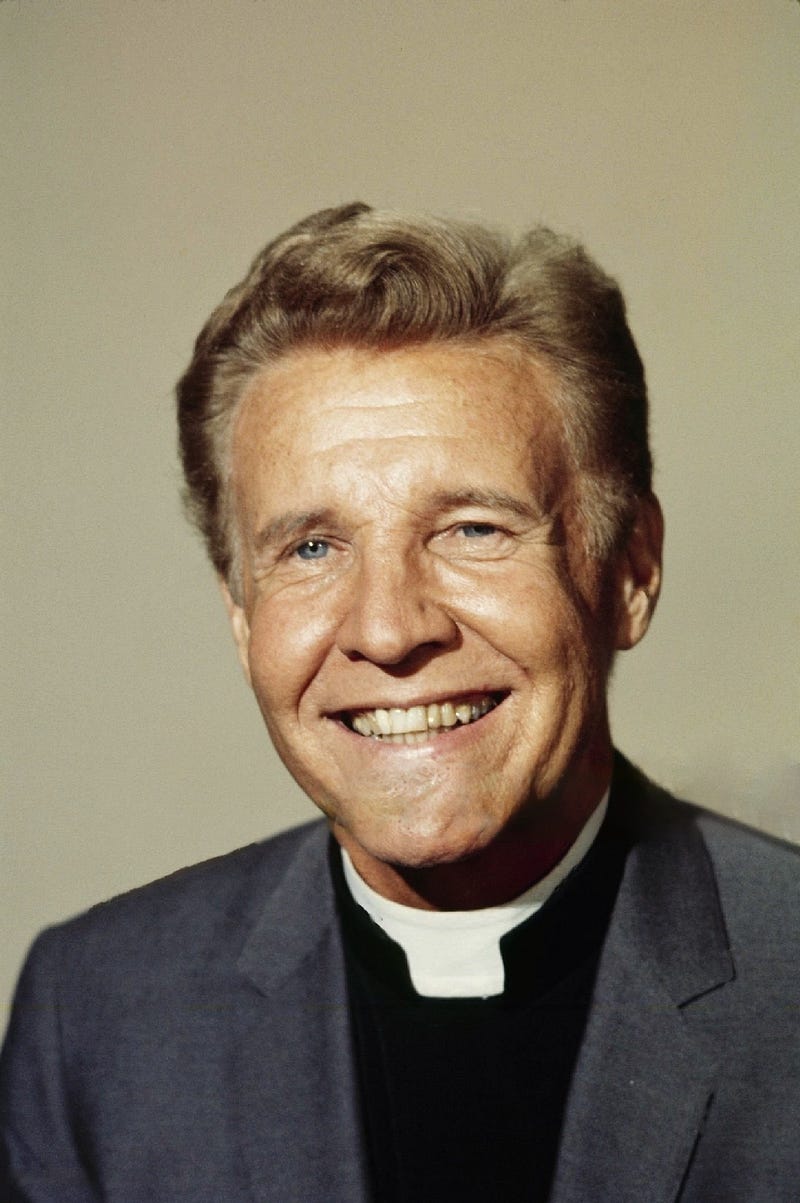
How did you learn that Rick had passed away?
It still hurts all these years later to even talk about it. On New Year’s Eve 1985 my 10-year-old son Michael and I had gone down to Fairfax High School to shoot some hoops on their outdoor basketball court. Coincidentally, it was directly across from the former Master Recorders where Rick recorded the vast majority of his early Imperial hits [535 North Fairfax]. He tried to buy Masters at one point because he loved the studio so much. That’s where I first met Glen Campbell, “Travelin’ Man” songwriter Jerry Fuller, and Champs rhythm guitarist-songwriter Dave Burgess. They began doing background vocals along with Rick because the Jordanaires were too busy doing sessions in Nashville.
When Michael and I were driving home, my son turned around, looked at a car behind us, and said, “Is that Rick?” In the rearview mirror I could see a red DeTomaso Pantera similar to Rick’s cherished 1973 model. I glanced back to get a good look at the driver and deadpanned, “Not unless Rick’s grown a mustache.” It definitely wasn’t Rick and we continued on home. I went upstairs to lie down since we were going to be picked up at 5:30 the next morning. A television station had invited my family to be guests in Pasadena for the Rose Parade.
I was asleep when I heard Rocky scream. I raced downstairs and saw the news on TV. Rick had been killed on the way to a New Years Eve concert in Dallas in his vintage Douglas DC-3 airplane [Lead guitarist Bobby Neal, drummer Ricky Intveld, bassist Pat Woodward, pianist Andy Chapin, road manager-soundman Clark Russell, and Nelson’s girlfriend Helen Blair also perished. Pilot Brad Rank and co-pilot Ken Ferguson miraculously escaped the inferno, directly caused by repeated attempts to switch on a malfunctioning heater in the cabin, with severe burns].
None of Rick’s family had been notified prior to the media breaking the story. Tracy, Gunnar, Matt, Sam, Harriet, and David heard it the same way we did. Matt was driving in his car and tuned to a radio station that was playing “Garden Party.” When the song finished the deejay announced, “That was a tribute to the late Rick Nelson who died earlier this evening.” It’s all a disturbing blur. After a night of not sleeping we somehow went ahead and kept the Rose Parade commitment, hoping it would be a distraction from the reality of what had happened. What can you do? My best friend was gone. We were all in a fog for days.
I remember a couple of disc jockeys interviewed me in the aftermath, and they kept repeating the story of Rick and the Stone Canyon Band being booed off the stage during Richard Nader’s Rock ’n’ Roll Revival concert at Madison Square Garden [On Oct. 15, 1971, a longer-haired Nelson performed a sampling of his self-composed country rock material while Chuck Berry, Bo Diddley, the Coasters, the Shirelles, Bobby Rydell, and Gary U.S. Bonds delivered oldies-packed setlists. When Nelson removed his guitar and sat down at a piano to barrel through his next-to-last song, a cover of the Rolling Stones’ “Honky Tonk Women,” trouble started].
Rick was never booed off any stage — ever. But what’s followed is kinda like the reporter [Carleton Young] who admonishes Sen. Ranse Stoddard [Jimmy Stewart] at the end of John Ford’s classic western The Man Who Shot Liberty Valance, “When the legend becomes fact, print the legend.” The fact is police were removing some people who were being rowdy up in the nosebleed section. People started booing, and New York crowds are known for expressing their displeasure. Willy Nelson, Rick’s manager at the time, was present at the Garden and personally told me what really happened. Rick was obviously shaken at the thought he was being booed. He turned that incident into action and wrote his great comeback song, “Garden Party.”
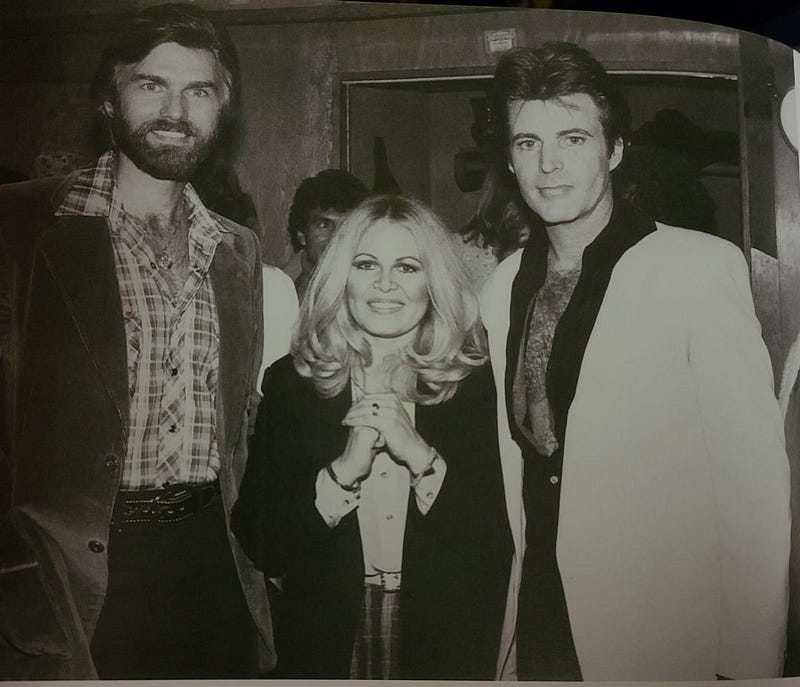
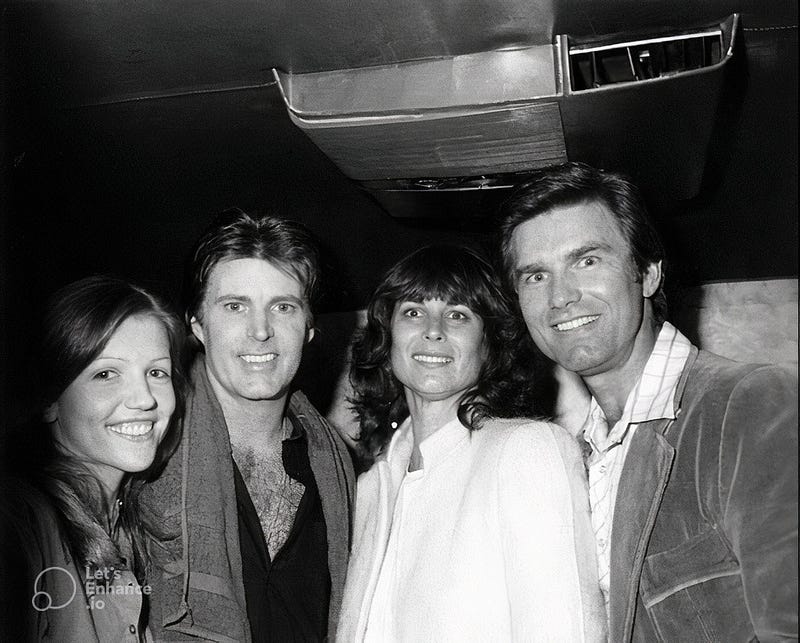
Where was Rick’s musical career headed post-1985?
The personal strife Rick had been dealing with for the previous few years was finally coming to an end. I think with all that behind him he would have been able to concentrate on his songwriting again. Making appearances not out of necessity but because he wanted to do so. The Universal Amphitheatre rockabilly performance in August 1985 with co-headliner Fats Domino was not the bottom but an ascending arc that was beginning to happen with Rick. I know because it was the last time I saw Rick onstage.
Rick was only 45 years old. A lot of great stuff lay ahead. The evolution of his songwriting ability can be heard on Rick Sings Nelson, Rudy the Fifth, and Garden Party. You don’t have to take my word for it, you can listen for yourself. Or read what Bob Dylan has to say. For Christmas my kids got me Dylan’s The Philosophy of Modern Song [Chapter 11 is entitled “Poor Little Fool,” pages 48–51]. The fact that Dylan has included Rick in two books [Chronicles: Volume One hit book shelves in 2004] that he’s written speaks volumes for the respect he has for Rick. Dylan gets it. Mentioning the musical DNA shows he understood why Rick became a singer, musician, and songwriter.
Putting together Rick’s compositions into an updated Rick Sings Nelson-type anthology would be a good idea [a total of 43, originating with the 1958 B-side “Don’t Leave Me This Way,” igniting again with the 1965 outtake “Freedom and Liberty,” and running until 1981’s “The Loser Babe Is You” have been officially released]. Gunnar and Matt are committed caretakers of their pop’s legacy. If their dad committed any other self-written material to tape or left behind notebooks of unpublished lyrics, I know the world would wholeheartedly welcome a project where Rick’s kids completed songs that he never finished writing or recording.
Have you visited the De Kalb, Texas, pasture where the plane actually landed?
A friend of mine, Robert Fuller of Laramie, Wagon Train, and Emergency! fame, lives about two and a half hours west of De Kalb in Gainesville. Before the pandemic, Rocky and I were driving to Indianapolis for the 500 race and made a point to visit him and his wife Jennifer Savidge. Gainesville is as close as I’ve been to De Kalb, and I’m not compelled to go any further. Enough of what happened has been online. It would bring me no comfort to see it in person.
Here’s what I do know after 37 years. For a number of those years I couldn’t bear to watch Ozzie and Harriet. I’ve fortunately gotten to the place where if I see an episode, the good times come flooding back. It’s like a visit with your family. Rocky and Kristen can actually be seen in the “Rick Is Late for Dinner” season 12 episode [March 25, 1964]. We had so much fun filming at General Service. And Rick’s music is always within arm’s reach.
Wait just a minute! Two more chapters of the Kent McCord interview await you below…
© Jeremy Roberts, 2022. All rights reserved. The Kent McCord interview was edited for clarity, brevity, and sequenced cohesively. To touch base, email [email protected] and mention which story led you my way. I appreciate it sincerely.