
Chewin’ the fat with iron-willed ‘Laramie’ cowboy star Robert Fuller
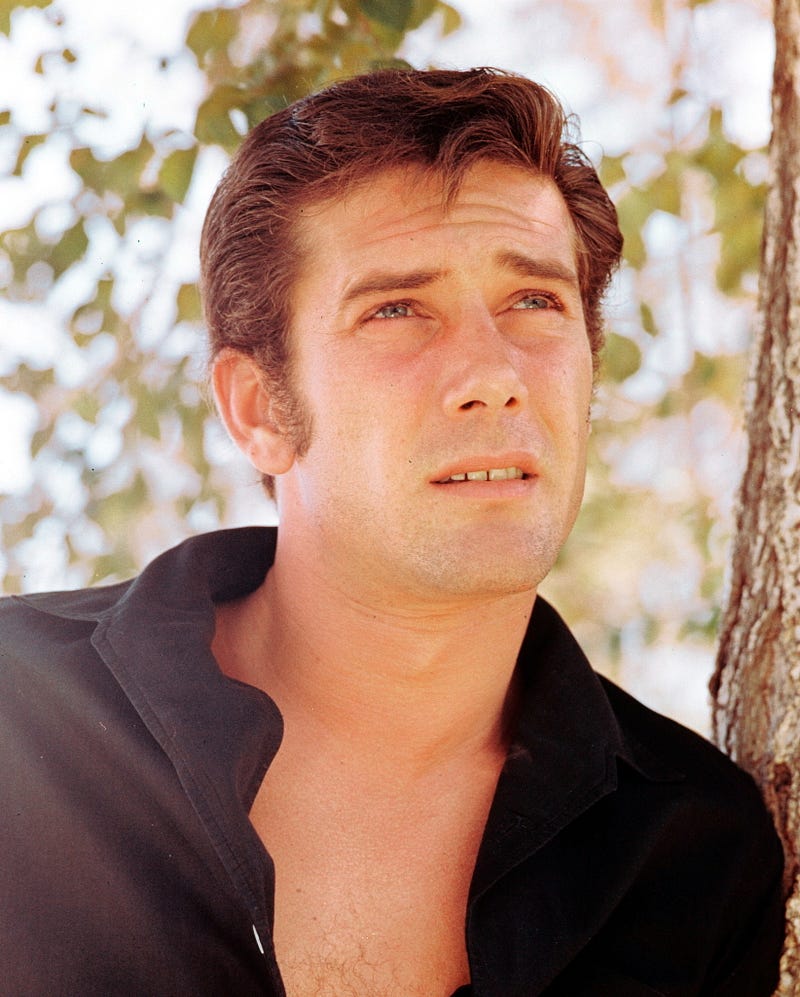
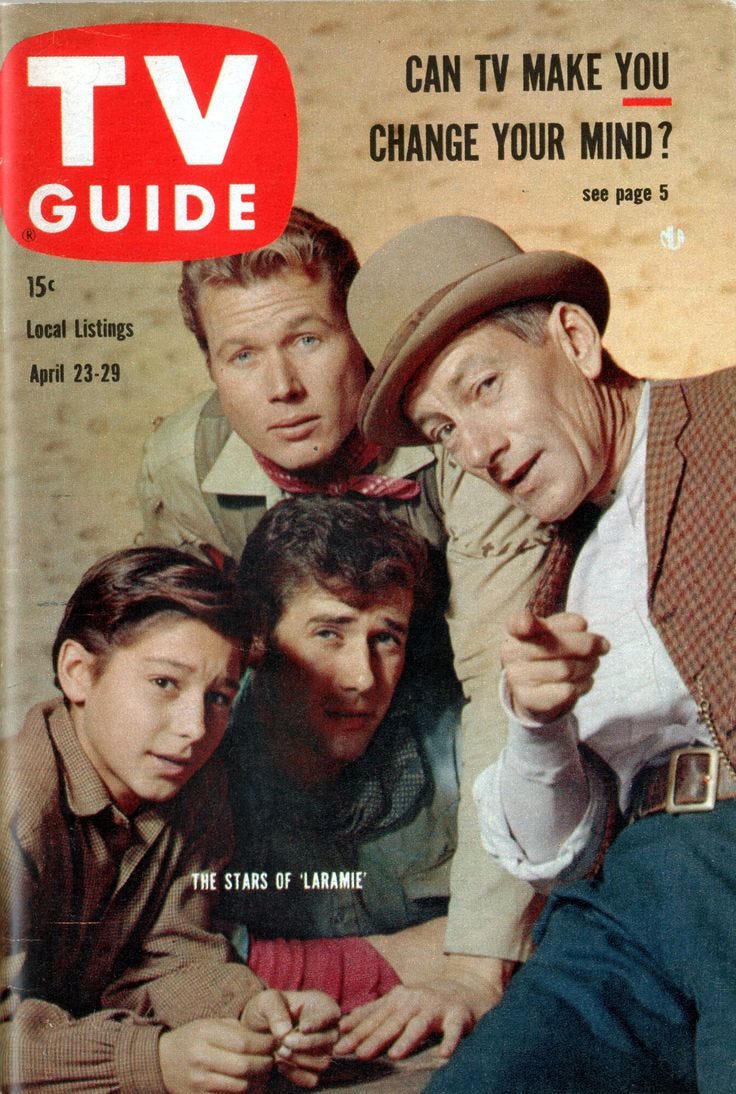
While eating some scrumptious lunch inside Universal Studios’ renowned green room commissary, illustrious scene stealing character actor Dan Duryea pointedly remarked to 25-year-old protégé Robert Fuller, “I know Laramie is your first series, and I’m gonna tell you something about money. I want you to save your money. Don’t be like all these actors and run right out and buy a new car, okay?”
Duryea’s shrewdly delivered advice was shockingly not heeded by the wet-behind-the-ears Fuller during that portending early summer of 1959, as the latter proudly drove into the Universal backlot a mere three days later sporting a brand new white Thunderbird with a blue interior.
For the past seven years, the veteran of the Korean War’s 19th Infantry Regiment had diligently taken acting classes with master thespian Richard Boone of future Have Gun — Will Travel fame, danced alongside Marilyn Monroe in the legendary “Diamonds Are a Girl’s Best Friend” production number from Gentlemen Prefer Blondes, racked up uncredited bit parts in first-rate films like Gary Cooper’s Friendly Persuasion, Charlton Heston’s The Ten Commandments, and Gregory Peck’s The Man in the Gray Flannel Suit, stunt doubled Jerry Lewis in The Delicate Delinquent, and toiled in two dozen grueling guest star turns during the Golden Age of Television [e.g. Death Valley Days].
Serendipitously nabbing the plumb co-starring part of rugged fast-draw drifter Jess Harper on the one hour NBC Western series became Fuller’s big break and guaranteed that he didn’t have to scrounge for any monthly Thunderbird payments.
He soon crafted a comfortable groove on the small screen, toplining two further venerable series that kept him highly visible throughout the 1970s: Wagon Train and Emergency!, a trailblazing Chicago Fire precursor where Fuller gamely traded his dusty spurs for a distinguished white coat and matching stethoscope. Over the course of a freewheeling interview debuting exclusively below, Fuller waxes nostalgic about an estimable 50-year celluloid career.
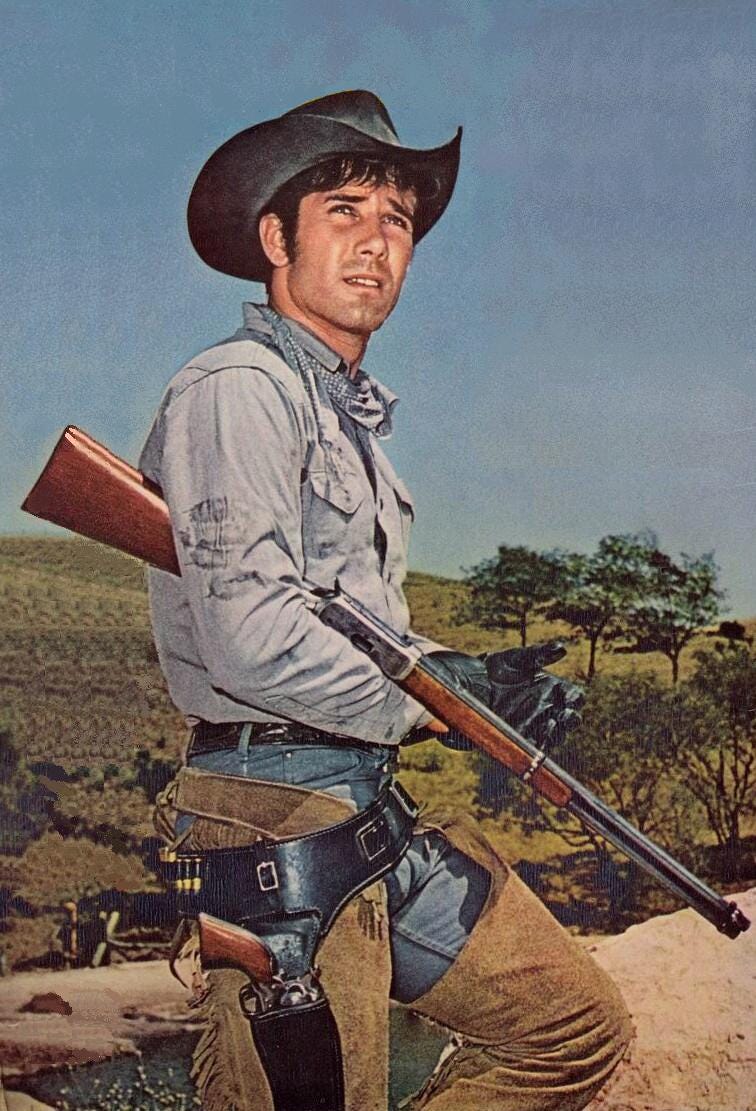
The Robert Fuller Interview
Do you have any ties to the state of Georgia?
I lived in Camilla for awhile when I was doing Laramie on NBC [1959–1963]. I helped start the Georgia Sheriffs’ Boys Ranch in Hahira and that was along with the high sheriff who was in Valdosta at that time and then Sheriff John Maples from Camilla. I lived with he and his wife for awhile. I think I did seven 4th of July parades in Atlanta as grand marshal. I love Georgia — it’s one of my favorite states.
I’m so glad Encore Westerns has brought Laramie back to television after all these years.
Oh I know. Everybody’s going crazy about that. I’ve received so much interest on my official website and Facebook. People all over the country are seeing it. I just love it that people are so thrilled to finally see something decent now on television.
To be honest Laramie had a good message and was a good, good western with good characters, direction, and camera work.
Our director of photography was Ray Rennahan who invented Technicolor and was the Technicolor consultant on Gone with the Wind, where he nabbed an Oscar. We had the best. All of our old directors — Lesley Selander, Joseph Kane — directed Gene Autry and Roy Rogers in various B-westerns of the ’30s and ’40s. They knew the business.
Has Encore Westerns reached out to you regarding any on-camera promotion for Laramie?
No, not at all. They advertised the series really well at least two months in advance of its premiere, so everybody was aware that it was coming on. If I was asked, of course I would for that show. I don’t see any reason for them to contact me. I granted an extensive on-camera interview when Laramie came out on DVD that was available as a special extra.
Since Laramie was out of syndication for so many years, I look forward to finally seeing it. I believe Ernest Borgnine, who won an Academy Award for Best Actor only four years earlier for Marty, was in one of the very first episodes.
Ernie was in the third episode [i.e. “Circle of Fire,” aired on Sept. 29, 1959] to be exact. That was the first time I ever met Ernie, and he became a great friend. I just loved that man. Dan Duryea was the guest star on the very first one [“Stage Stop,” Sept. 15, 1959], and then Nanette Fabray and Eddie Albert did the second one [“Glory Road,” Sept. 22, 1959].
Dan and I were very good friends. Dan did three episodes of Laramie [“Stage Stop,” “The Long Riders,” and “The Mountain Men”]. I knew him socially. When I first met Dan, it was in the wardrobe department on the debut Laramie episode.
I went there at Universal to get some wardrobe, and Dan Duryea was in there. Of course, I’d worked at Universal quite a bit, and I knew everybody in wardrobe. The wardrobe man said, “Bob, have you met Dan Duryea?” I said, “No, but I’m dying to.” So he introduced me to Dan. He asked me, “Would you like to have lunch with me?” I jumped at that chance [laughs].
I loved Dan and all of his work throughout the years in both television and major motion pictures [e.g. Winchester ’73 and Flight of the Phoenix, both co-starring James Stewart]. With probably over 200 movies under his belt, Dan tended to play the heavy.
Don’t forget he did a television series himself that was a very good series that went for awhile — China Smith [syndicated for 52 episodes between 1952 and 1955, Duryea played the titular Irish American adventurer who called a Singapore bar home].
Anyway, we went to lunch at Universal Studios in the green room. That was the first time I’d been in there — the green room was where all the big actors gathered. I hadn’t really started the series yet so I hadn’t been in there.
As we walked in, the green room had about seven waitresses that had been there for years. Dan knew every one of them by name. They all just went crazy when he walked in. I thought, ‘My God, what a gentleman. He remembers all of these waitresses by first name. This is a great man that I’m about to have lunch with.’
As we sat there, he said, “Now listen, Bob. I know this is your first series, and I’m gonna tell you something about money. I want you to save your money. Don’t be like all these actors and run right out and buy a new car, okay?” I replied, “Yes sir, sure I understand.”
When I drove on the Universal lot three days later I drove on in a brand new 1959 Thunderbird — a gorgeous two-door four seater that was white with a blue interior [laughs]. It was my first brand new car. I could afford the payments on it anyway. I’d been driving an old 1950 Ford that I’d bought when I came back from Korea with my mustering-out pay.
Dan really laughed about it. He said, “Boy you just don’t listen, do you?” “I couldn’t help it, Dan.” Dan admitted, “I know, I know — it’s a beautiful car.”
I’ve always said Dan died of a broken heart [June 7, 1968; the official cause of death was cancer]. When his wife passed away [January 21, 1967 of a heart ailment], he just became a different man. He didn’t even wanna live anymore. He was not the same Dan Duryea.
Were you still working when you began attending Western festivals?
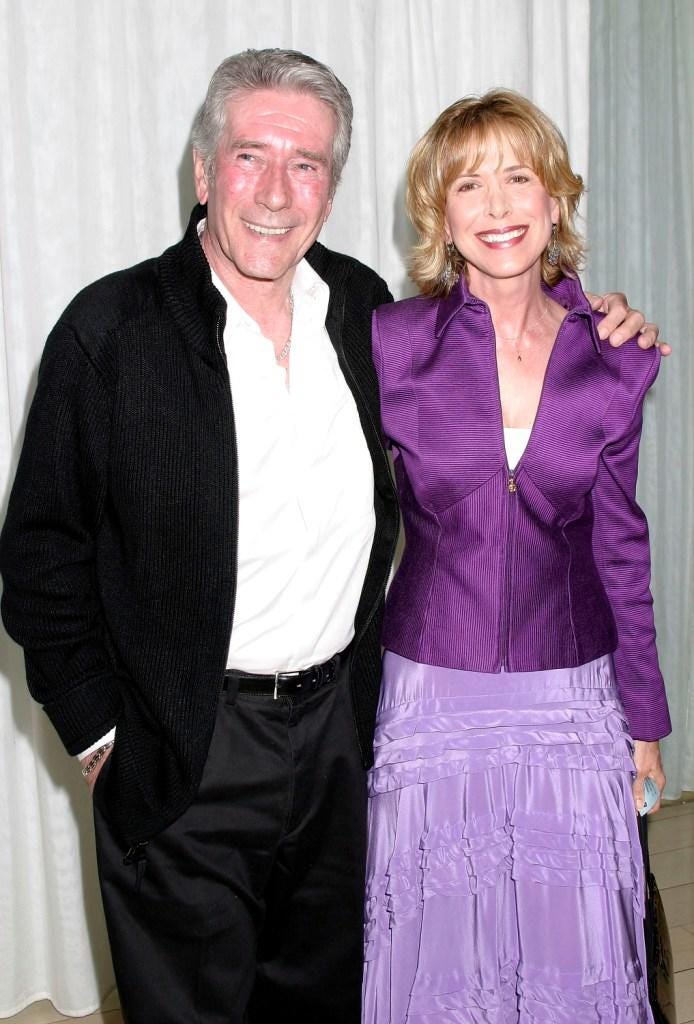
Oh I was still working. I retired from acting in 2004 when my wife and I, actress Jennifer Savidge [of St. Elsewhere and JAG television series fame], moved to Texas and got a ranch.
I probably started doing these festivals in the middle to late 1990s. The very first one that I attended was the Hollywood Collectors Show, and then I started getting invited to some of the big ones that are all over the country.
I participated at five festivals last year. I just happened to get trapped into five [laughs]. Three I really enjoyed doing. Jennifer and I spend time together at our ranch, I grow hay for our horses, I like to do a lot of fishing, so that’s enough traveling and whatever.
Can folks purchase an autographed photo or take a selfie with you?
Oh of course. Absolutely. I’m more than happy to do that for the fans. I always do that. I’ve got a huge Fandom fan club with over 500 people in it. Every one of these festivals I do have people from all over the world who come to it. One female Japanese fan, Atsuko Yamaguchi, comes to each one all the way from Japan.
Who prompted you to attend your debut High Chaparral Reunion in Tucson, Arizona?
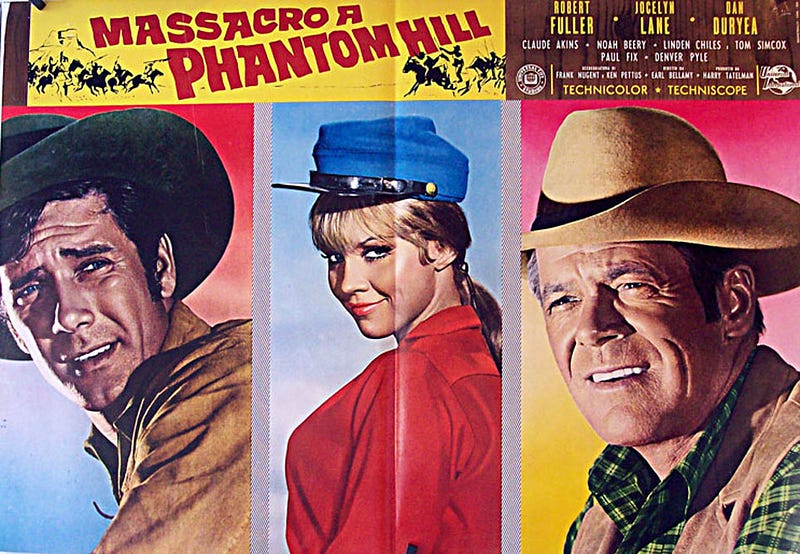
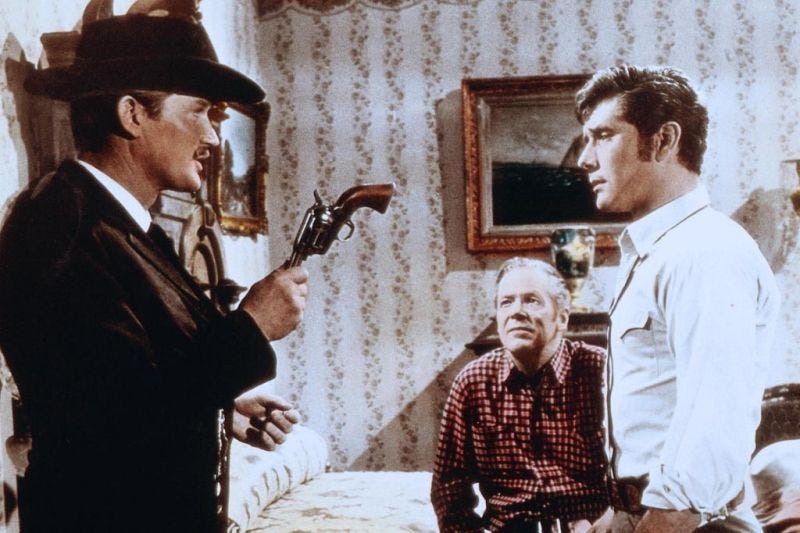
When Don Collier and event organizer Penny McQueen asked me if I would come to the High Chapparal Reunion I was more than happy because Don is an old friend anyway. I’ve worked with him on television [i.e. “The Silver Lady,” the penultimate episode of Wagon Train broadcast on April 25, 1965], and also he did a Western movie with me called Incident at Phantom Hill [1966, costarring Dan Duryea].
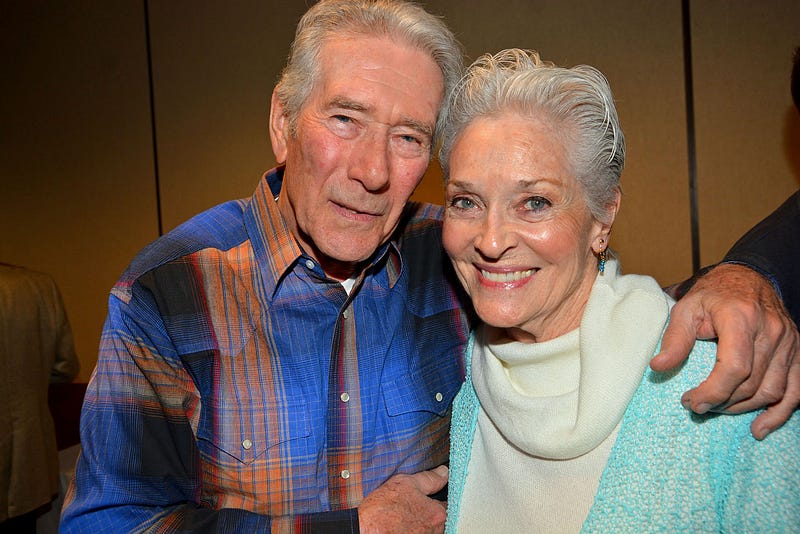
Roberta Shore, who did Laramie [“The Replacement,” broadcast on March 27, 1962] and later co-starred for three seasons on The Virginian, attended the festival, too. I know Rudy Ramos, the half-breed Pawnee boy during The High Chaparral’s abbreviated final season. I was very, very close to Bobby Hoy, who played the mischievous, black-mustachioed ranch hand and was a fine stuntman to boot.
I thought, ‘Sure, I’d love to do it.’ The High Chaparral Reunion, held every March, is a great festival with a fantastic guest lineup — it really is. It’s been around since 2003, and the public likes it. It’s very smart of Don and Penny to pump it up a little bit and bring some more guests in that weren’t necessarily part of The High Chaparral. People wanna come meet the screen cowboys anyway.
The High Chaparral Reunion also has Charlie LeSueur. He’s Arizona’s Official Western Film Historian, and he’s been on several of these festivals that I’ve been on. He runs all of the Q&A’s for all of the actors. He is amazing because he knows more about me than I know about myself — and every other Western actor on the panel. He asks questions and brings things up that we will never, ever remember. The man is incredible. We usually pack anywhere from 50 to 100 people in the audience for these Q&A’s, and they love that. The festivals are always a lot of fun.
I don’t know if you know Boyd Magers, but he is a dear friend who I’ve known for years. Boyd has been involved recently with the High Chaparral Reunion event. I think he was invited because of his Western Clippings magazine. On top of that he’s a fine researcher, author, publisher, and interviewer.
Through 2015 Boyd served as co-organizer of the Memphis Film Festival: A Gathering of Guns — A TV Western Reunion with Ray Nielsen, held annually each June. I have done 11 MFF’s and am looking forward to my 12th appearance [the event has been renamed the MidSouth Nostalgia Festival]. Ray is another swell guy.
During The High Chaparral’s original run [1967–1971], you weren’t involved with a television series and were instead focused on your film career. Were you ever offered a guest role on Chaparral?
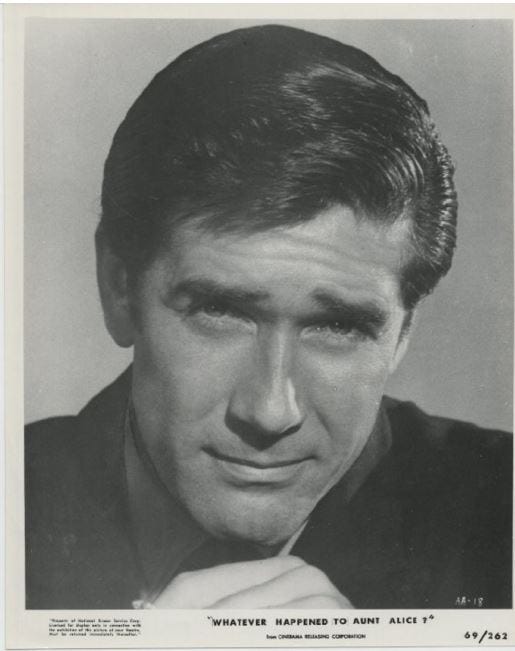
No. In fact I did a movie called What Ever Happened to Aunt Alice? [1969] in Tucson while they were shooting The High Chaparral. I wasn’t that far away from the guys. We’d all get together at the local watering hole and shoot the breeze over drinks.
If I wasn’t working, I’d go over to the set and visit them, or they’d come over where I was working with big time producer-director Robert Aldrich [e.g. The Dirty Dozen], who had his own film production studio.
Was Robert Aldrich dictatorial, or did he seek your input on certain scenes?
If Bob liked the rehearsal, he wouldn’t mess with you at all. If he had some suggestions, he would make suggestions. Good directors are like that.
I don’t like working for directors that the second you’re in a rehearsal they start telling you what to do — “Don’t do this, do that, do that” — without at least giving you a chance to show what you’ve brought to the plate. Then it’s much easier to move that plate around. Bob Aldrich let people go and so did my old Western directors. They were fabulous like that.
At any point in your career did you consider directing or producing?
I would have loved to have been a director. I had an opportunity to direct on Emergency! Jack Webb [best known as the no-nonsense Los Angeles police detective Joe Friday on the classic Dragnet TV series, Webb co-created and co-produced Emergency! from 1972–1977 in addition to six TV movies wrapping up the series broadcast through 1979] gave it to me in my contract to direct if I wanted to.
To tell you the truth, when I did Laramie [1959–1963] and Wagon Train [1963–1965], I worked 11 months out of the year. We did 32 episodes, and it took 11 months to get that all done.
When I started on Emergency!, we were only doing 22 episodes, and we would finish in seven months. I would have five months free, and the second I got that I was off on a fishing trip to my place at Lake Okeechobee, Florida. I loved to fish that lake.
I just never had the urge to say, “Well, I’m gonna stick around and direct one of these episodes.” You were given two weeks for the prep, and then a week devoted to filming the episode. I’m kinda sorry that I didn’t, but at the same time it was just so great to be able to have that time off, go fish, and relax.
When you were busy for 11 months of the year filming Laramie and Wagon Train, how many hours per day were you on the set?
For instance, on Laramie we shot that show in five days. That was an hour show. Today when you shoot an hour show they have 8 to 9 days. We shot Laramie in five days. I had a 7:30 call in the morning and could easily work until 9 or 10 at night. Generally, we got off around 7 or 7:30 at night, so on the average I worked a 12-hour day. But if we got a little behind, it got later.
My wife Jennifer played the blonde judge commander Amy Helfman on the last six seasons of JAG[in a total of 21 episodes aired on CBS between 2000 and 2005]. Of course a woman gets a much earlier call because of hair, makeup, and all of that kind of stuff. She would have to be at the studio at least by 6 if not 5:30 in the morning. I would not see her until 11 or 12:00 that night.
Those were the hours that she worked on that show. It was unbelievable. It was a whole different ballgame. A lot of those JAG actors probably didn’t know their lines good enough or thought they were too big of a star to come out of their dressing room right away. That costs a lot of time. Jennifer worked hard.
Has there been any offer since you retired in 2004 that you’ve seriously considered?
I would not consider anything. I’ve had three Western offers, and none of them could match what I wanna do.
I would only do a commercial if I believed in the product. I was the national spokesman for Teledyne Water Pik for six years, the national spokesman for Budweiser Malt Liquor, and the national spokesman for Little Friskies cat food.
I’ve done good stuff, and I have no reason to work anymore. I’m very well off as far as I’m concerned. Truthfully, the only thing that would get me back to work is if there was an incredible Western script starring Robert Duvall with a great part. I’d walk to Hollywood to do it with him.
Did you have an opportunity to work with Robert Duvall?
No, I never did. I knew Bob. We did Hollywood Squares together a couple of times. I was a semi regular on that game show for years [1974–1980] which always had a lot of great guest stars who would come on that. That’s when I first met Bob. Nice, nice man and a great actor. Boy, can he play a Western. He’s a gentleman, very well respected, and well liked in the business.
*******************DON’T GO ANYWHERE YET!******************
Exclusive Interview: “When I was younger, I had been in a class at George Washington High where I saw a teacher hit a guy on the knuckles with a wooden ruler. He broke the ruler. I was pretty impressed. Later when I was going to the Academy of Perpetual Help, some nun smacked me across the hand with a wooden ruler. I took the ruler and cracked it. I was just some punk kid. From then on I became the hero.” Puerto Rican actor Henry Darrow overcame an early childhood riddled by hard knocks to star as heartthrob Manolito Montoya on the venerable NBC Western series “The High Chaparral,” not to mention building up a résumé littered with guest-starring turns on “Bonanza,” “Gunsmoke,” “Zorro,” and even “Star Trek” over a prolific 50-year career. Check out “Totally Immersed in the World of Henry Darrow” for further illumination.
Further Reading: Head ’em up! Move ’em out! As trail boss Gil Favor on the long-running 1959–1966 Western “Rawhide” — the CBS Western series that incidentally made costar Clint Eastwood a household name — Eric Fleming engendered a three-dimensional portrait of a harsh as nails protagonist capable of genuine empathy for his motley crew of trail drovers. A little over a year after controversially departing “Rawhide,” Fleming was in the remote jungles of Peru filming an ABC TV movie entitled “High Jungle” when he perished at age 41 in a horrific canoe drowning accident. To read a harrowing first-hand account detailing Fleming’s final hours from “High Jungle” costar Nico Minardos, head on over to “Now or Never: Remembering ‘Rawhide’ star Eric Fleming.”
© Jeremy Roberts, 2016. All rights reserved. To touch base, email [email protected] and mention which story led you my way. I appreciate it sincerely.