
John Wayne, ‘Hellfighters,’ and an ‘Adam-12’ sighting of frontier master John Ford
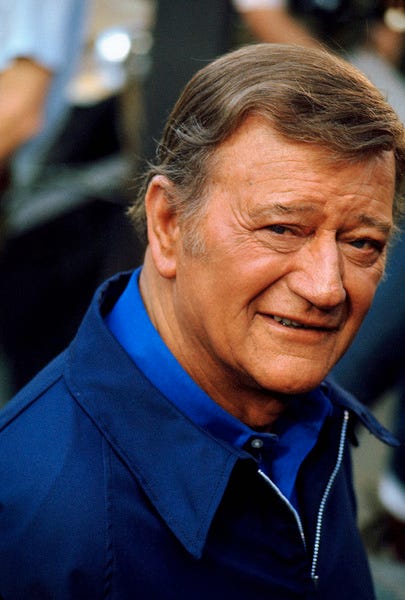
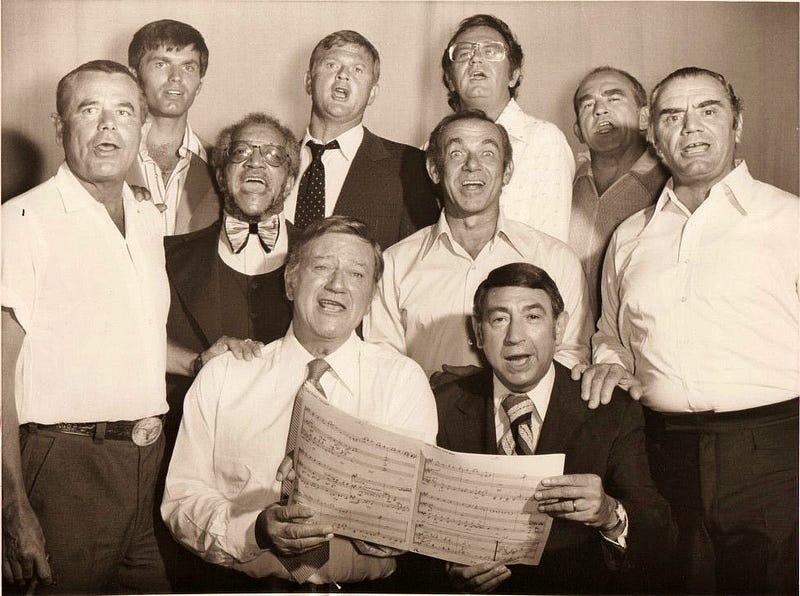
Oscar-winning Quiet Man director John Ford loved Adam-12. The old lion went so far as to spend a day on the set of the influential 1968–1975 NBC crime procedural. From working extra on shows like Combat! to starring with Martin Milner on Adam-12, Kent McCord also bumped into John Wayne on the Universal lot while Hellfighters was underway and joined the Duke in the all-star Hollywood Boys Glee Club alongside Redd Foxx, Glenn Ford, and Howard Cosell. Ford’s 1939 masterpiece Stagecoach, nominated for Best Picture and Best Director at the Academy Awards, catapulted Wayne to stardom after an arduous decade of serving as the white-hatted hero in poverty row B-Westerns. Ford steered Wayne to celluloid immortality as Ethan Edwards, a prejudiced, bloodthirsty Civil War veteran hellbent on avenging his family’s massacre by marauding Comanches in The Searchers. To learn how a legend outmaneuvers autograph seekers and what happens when an intimidating Irish director finds your attention diverted the evening before shooting at West Point, you’d better sit tight as McCord takes center stage.
The Kent McCord Interview, Part Three
What’s the origin story of your association with lionized director John Ford?
When you grew up in the pre-television era — I was born in 1942 — and until we got our first TV around 1949, home entertainment was restricted to music or shows on the radio. To see movies you had to go to a theater. The Tumbleweed Theatre at Five Points in El Monte is where we went as a family. Westerns were huge at the “show.” When we got our TV, weekend morning television was heavily programed with western movies [e.g. The Three Mesquiteers, The Lone Ranger, Hopalong Cassidy, Bob Steele, Hoot Gibson, and Ken Maynard].
Many of those starred John Wayne. One film that stood above the rest was Stagecoach, helmed by one of the greatest directors in movie history — John Ford. Later as a student of film, Mr. Ford’s oeuvre loomed large to me.
Years later when I began working in the movie industry, I did a lot of extra work, which evolved into doing stunts like on the show Combat! [a one-hour ABC World War II drama toplined by Vic Morrow and Rick Jason]. I got killed playing German soldiers too many times to count.
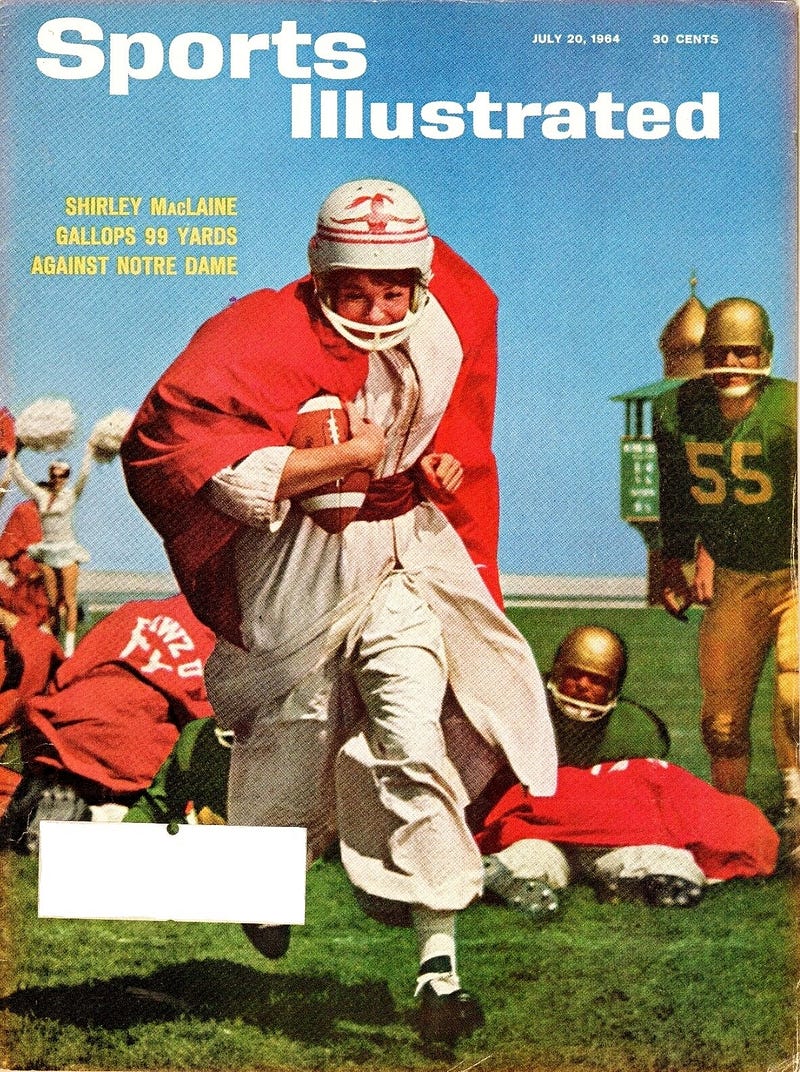
I also did stunts playing a football player on Shirley MacLaine’s Cold War comedy John Goldfarb, Please Come Home! [1965]. In publicity for the movie, I wound up on the cover of Sports Illustrated as a Notre Dame football player with Red West, one of Elvis’ closest friends in the Memphis Mafia who also co-wrote “I’m a Fool” for my buddy Rick Nelson. Off of John Goldfarb my wife Rocky and I got enough to put a down payment on our first house.
Half the guys I grew up with in the business wound up being stuntmen. Craig Chudy and Glenn Wilder were on The Adventures of Ozzie and Harriet with me. Craig became my double when I got one of the two leads on Adam-12. Glenn became one of the best stuntmen and stunt coordinators in the business. I went the acting route.
I also worked background on the 1966 remake of Stagecoach. It had a great cast. Alex Cord took on the role created by the Duke and became my lifelong friend. Ann-Margret, Bing Crosby, Van Heflin, Stefanie Powers, Mike Connors, Robert Cummings, Red Buttons, Keenan Wynn, and Slim Pickens also starred.
I was standing in and doubled Slim [Buck, the stagecoach driver] on the film, especially during the Indian attack on the coach. The closest I got to being on camera was when Ann-Margret [Dallas, the saloon prostitute] brings out the baby that was born to Stephanie Powers’ character. I found it ironic that a handful of years later while doing Adam-12, I met and spent some time with Mr. Ford.
How did that happen?
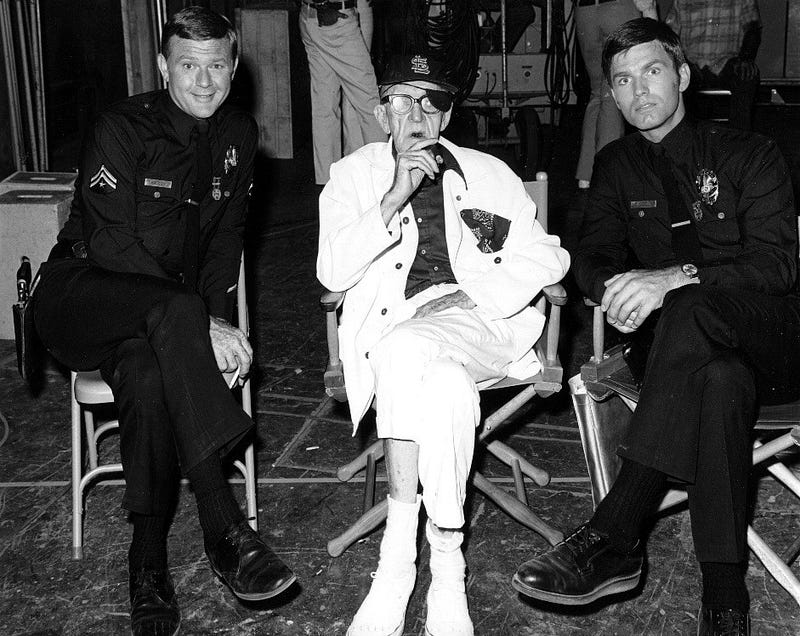
Mr. Ford’s daughter Barbara [once married to Ken Curtis, Marshal Dillon’s sidekick Festus Haggen on Gunsmoke] called Herman “Herm” Saunders, one of our producers who Jack Webb had hired on Adam-12 [midway through the second season in late 1969]. She told Herm, “My dad’s favorite TV show is Adam-12. He would love to come over and visit.”
Marty Milner had done two movies directed by Mr. Ford in the mid-’50s — The Long Gray Line with Tyrone Power and Mister Roberts alongside Henry Fonda and Jack Lemmon. So for Marty, Mr. Ford’s visit was a chance to reconnect with him. It wasn’t long after this visit that Mr. Ford died on Aug. 31, 1973. So this was a very poignant moment for everyone on the set of Adam-12 that day.
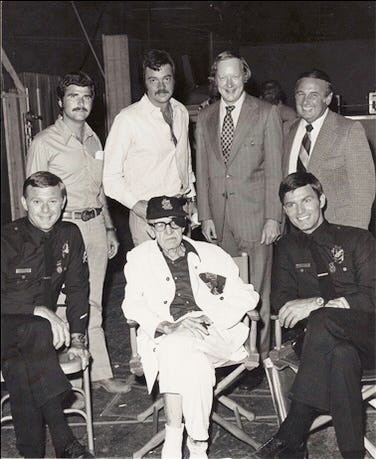
Mr. Ford arrived, dressed up in a white outfit and wearing a St. Louis Cardinals baseball cap. A chair was brought over, and he sat there the whole afternoon chewing a cigar as we filmed. Marty and I sat flanking Mr. Ford. Between takes I got to listen to them reminisce about their history. I remember being nervous as all get out. Mr. Ford was an intimidating presence.
Dennis Donnelly was directing the episode [Donnelly’s debut Adam-12 assignment was “Day Watch” which aired Nov. 24, 1971; he did not return to the series until the season five episode “Airdrop” broadcast on Sept. 27, 1972; Donnelly became a regular Adam-12 contributor from then on]. I went over to Dennis and asked, “Can we let Mr. Ford direct this scene so I can say I worked for John Ford?” I wish they had let him. It was a really cool moment to have been on a set with one of cinema’s greatest directors.
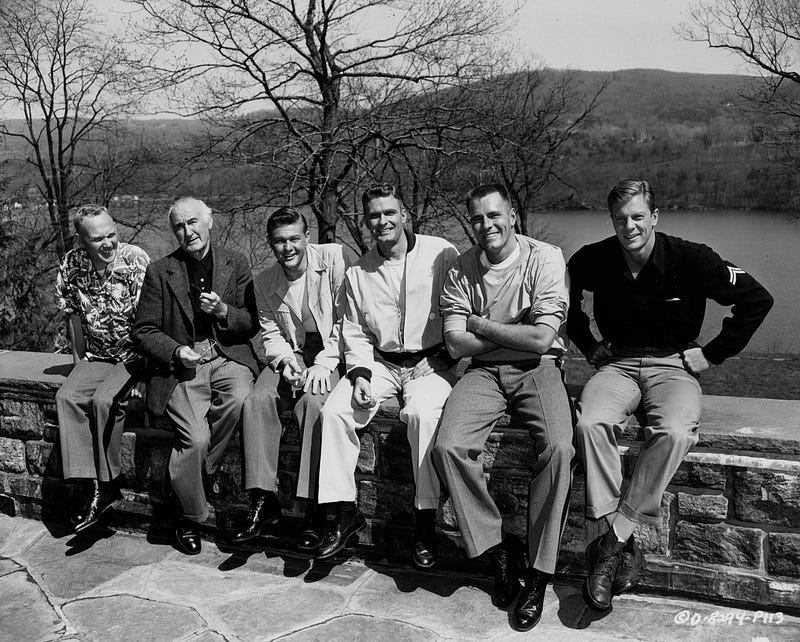
Marty told me a story about being on location at the military academy for The Long Gray Line. The cast and some of the crew were staying at a hotel near the Academy. There was a formal dance held on some weekends, and then it was lights out at 11 o’clock for the Cadets. A bevy of young girls dressed in all their finery would be at the hotel after the dance. On one of those nights Marty was in the hotel lobby surrounded by some of these young women. Here’s Marty, as he told it, “playing” the Hollywood star [laughs].
Mr. Ford walked in, spotted Marty sitting, and barked out, “Milner!” “Yes, sir.” Mr. Ford asked, “You’re working tomorrow, right?” “Yes, sir.” “Do you know all your lines?” “Oh, yes sir.” Well, let me hear some of it.” Marty stumbled through what his lines were supposed to be until Mr. Ford suddenly stopped him. “Milner, don’t you think you better get upstairs and learn tomorrow’s work?” Marty was totally humiliated as all the pretty ladies looked on. He went slinking up the stairs with his tail between his legs and heeded Mr. Ford’s advice [laughs].
When Mr. Ford died [on Aug. 31, 1973, at age 79 from stomach cancer, ironically the same disease that would claim the Duke], a few days later they held his requiem mass at the Church of the Blessed Sacrament in Hollywood. I drove by the church but out of respect I didn’t stop. I hadn’t been invited, and I didn’t know what the protocol was. I probably should have just parked and walked in.
In 1989 Marty and I did a TV film that I produced and co-created with my friend, Hannah Shearer. Marty and I were in New York promoting Nashville Beat and had an afternoon off. It was a beautiful fall day, and we decided to drive up to West Point. Marty hadn’t been there since he had done The Long Gray Line. We had a chance to revisit some of Marty’s history with the great man.
I’m hoping you chanced upon the Duke, too.
I first met Mr. Wayne’s second son Patrick when I was in an acting class at Metro-Goldwyn-Mayer. The on-lot teacher was a man named Vince Chase. I was working on a project and walking between stages one day. Vince approached me and introduced himself. “What are you working on?” I said, “A sitcom called Mickey, starring Mickey Rooney” [1964–1965, ABC]. “Do you want to be an actor?” “Everyone wants to be an actor.” “I’m asking you.” “Yes, I do.” So I wound up in Vince’s class for a short time.
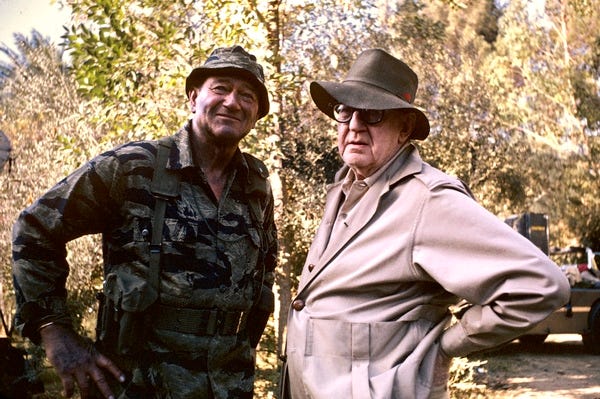
When I went under contract at Universal in 1965 one of the great things that became available was hanging out on sets and being able to observe films being shot. When Mr. Wayne was shooting Hellfighters, based on the real-life exploits of fireman Red Adair, the interiors were filmed at the studio [March-May 1968], so I went over and stood by a backing, just observing the cast and crew at work. Mr. Wayne came walking by the other side of the backing and damn near spit tobacco on my feet. When he saw me he said, “God — n, I’m sorry. It’s a nasty habit. I didn’t get you, did I?” [laughs]. The Duke had undergone surgery to remove a cancerous lung several years earlier but couldn’t kick the nicotine entirely.
At the beginning of his career, Marty had also done a couple of pictures with Mr. Wayne — Sands of Iwo Jima [Wayne’s premiere Academy Award nomination] and Operation Pacific. Marty and I were asked to take part in a variety special on NBC, Rowan and Martin Starring in ‘RCA’s Opening Night’ [emceed by the Laugh-In duo, the 60-minute special was seen on Sept. 13, 1973; video has not surfaced online]. The Duke, Glenn Ford, Ernest Borgnine, Redd Foxx, Ed Asner, Howard Cosell, Charles Nelson Reilly, Jack Carter, Marty, and I were members of the Hollywood Boys Glee Club. We sang the “Row, Row, Row Your Boat” nursery rhyme in green choir robes. Is that a group to draw to? [laughs].
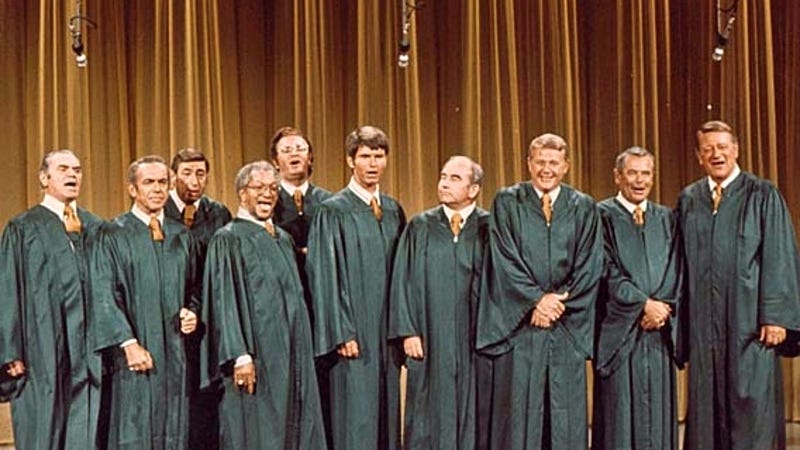
We were all in a well stocked green room waiting for our segment of the show to be shot, and everybody was getting pretty plied. For me that meant I only had a sip of something because it would go straight to my equilibrium. I never drank much. Marty had a strict rule that you never drank during working hours.
After the singing segment and well into the night, we had to shoot a red carpet arrival. In our tuxedos, we were supposed to get in and out of a limo and stage an official entrance. While Mr. Wayne, Marty, and I were standing out front waiting for our limo, a guy came up and asked, “Mr. Wayne, could I have your autograph?” The Duke reached into his inside coat pocket and pulled out a little card. He told the guy, “Here you go. I just signed this.”
As the elated guy walked away Mr. Wayne said to us, “I really didn’t sign it. I carry a bunch of these signed cards with me wherever I go.” Over the years I imagine he had been cornered by various fans and learned the most efficient way to give them a keepsake. If he hadn’t, pretty soon he would have been surrounded by a mob. I replied, “Just the same, Mr. Wayne, if you would, I’d love to have one of those, too.” He gladly handed me a card, and I still have it in my desk somewhere.
The Duke was a neat guy and had a presence about him. We did a Laugh-In together [the season six premiere aired on Sept. 11, 1972]. It’s really delightful to see the Duke towering over everybody in a ridiculous blue bunny suit.
You’re the solitary survivor of the Hollywood Boys Glee Club.
Yeah. I’ll watch reruns of Adam-12 and other shows I’ve worked on and look at Rocky and say, “You realize, I’m the only person alive out of this group.”
But you have all this accessible footage, virtually home movies, with your pals.
This industry allows you something so unique in life that nobody else has. I can watch a rerun or put on a video, and it brings back memories that trigger other things. You go, “Oh God, I remember the fun we had that day!”
DON’T GO ANYWHERE YET! In the fourth chapter of the conversation, World War II Medal of Honor recipient Audie Murphy memorably crossed paths with a teenage Kent McCord at Brackett Field Airport.
© Jeremy Roberts, 2023. All rights reserved. The Kent McCord interview was edited for clarity, brevity, and sequenced cohesively. To touch base, email [email protected] and mention which story led you my way. I appreciate it sincerely.