avatarJeremy Roberts

Free AI web copilot to create summaries, insights and extended knowledge, download it at here

6232

Abstract

ffortless vocalist reached back to one of his primary influences, <a href="https://readmedium.com/gauging-elvis-presleys-shakespearean-destiny-from-an-outsider-s-perspective-25cf0d4947a7">Elvis Presley</a>, for a cover of the oft-neglected ballad, “As Long As I Have You,” taken from the <i>King Creole</i> soundtrack. Marty Robbins’ crossover pop hit “Singing the Blues” and Holly’s “True Love Ways” made the cut as well.</p><p id="74fc">In a surprising move suggested by his guitarist, Nelson covered the <a href="https://readmedium.com/rediscovering-george-harrisons-superb-don-t-let-me-wait-too-long-love-song-b4aa17b11bd3">Beatles</a>’ early rocker, “One After 909.” It was his first acknowledgment on record of the Liverpool lads’ transcendent grasp on pop culture and a prime example that he harbored no ill feelings for the group who knocked his records off the charts in the summer of 1964 at the height of Beatlemania — another major hit would not arrive until “Garden Party” eight years later.</p><p id="41fb">Somehow Nelson located an obscure 1959 demo entitled “Lucky Boy” from the estates of Johnny and Dorsey Burnette, old songwriting pals who wrote the iconic “Believe What You Say”, “It’s Late”, and many other rockabilly tunes. Jerry Fuller, who penned such Nelson classics as “Travelin’ Man” and “It’s Up to You,” supplied a new song, “Ain’t Gonna Do You No Good.”</p><figure id="5f4e"><img src="https://cdn-images-1.readmedium.com/v2/resize:fit:800/1*cL0Vo4zwbSFNTwekRqnZ-Q.jpeg"><figcaption><b>Between May 14 and 27, 1981, 41-year-old Rick Nelson played a sold-out engagement at the Riviera in Las Vegas and met 24-year-old model and future fiancée Helen Blair. The couple remained inseparable until the bitter end with Blair functioning as Nelson’s fan club liason and assistant. This lovely image appears to be taken in 1985. Image Credit: The Shelley A. Mandrusiak Collection / Pinterest</b></figcaption></figure><p id="726d">Contemporary selections consisted of Mickey Jupp’s rockabilly rave-up “You Know What I Mean”, Mizzell’s piano rocker “You Got Me Gone”, and the driving up-tempo “Rock ’N’ Roll Fool.”</p><p id="caa3">The latter had an especially murky back-story until biographer Sheree Homer, author of the superb <a href="http://www.amazon.com/Rick-Nelson-Rock-Roll-Pioneer/dp/0786460601"><i>Rick Nelson: Rock ’N’ Roll Pioneer</i></a><i>,</i> exclusively verified that it was composed by Bill Rowe. The occasional songwriter had aided Nelson financially, so the singer graciously returned the favor in the recording studio.</p><p id="1cb6">A few months after his untimely demise, a version of <a href="http://www.youtube.com/watch?v=poHfSMzWTw0">“You Know What I Mean”</a> — at least three renditions were recorded between 1984 and 1985 — was released as Nelson’s final single on MCA, Curb’s parent label. The remaining nine songs are still hidden apparently in McDonald’s archives. An earlier version of <a href="http://www.youtube.com/watch?v=s7xosIQIphA">“True Love Ways”</a>, recorded in November 1978 in Memphis with producer Larry Rogers, is widely available and often mistaken as Nelson’s final recording.</p><p id="5b2d">“Rock ’N’ Roll Fool”, “Singing the Blues”, and “You Got Me Gone” can be found on generally inferior-sounding bootlegs. Dedicated Nelson fans have also likely heard live versions of <a href="http://www.youtube.com/watch?v=pHbr5xGOXN4">“One After 909”</a> and “<a href="http://www.youtube.com/watch?v=sxAyur5bxfo">You Know What I Mean</a>,” both featured heavily in the rocker’s setlist during the final years of his life.</p><figure id="9da3"><img src="https://cdn-images-1.readmedium.com/v2/resize:fit:800/1*b3wQaBEM2VvXH3UPqFvZ7w.jpeg"><figcaption><b>Rave on for me: Rick Nelson and doghouse bassist Pat Woodward rock ’n’ roll onstage at PJ’s Alley nightclub, owned by former Nelson rhythm guitarist-Spiral Starecase lead singer Pat Upton, in Guntersville, Alabama, on December 28 or 30, 1985, only a day or so before the “There’s Nothing I Can Say” balladeer’s untimely demise. Photography by Buddy Taylor / Courtesy of Sheree Homer</b></figcaption></figure><p id="dc21">The backing tracks are virtually finished. In a <a href="http://www.popcultureclassics.com/albert_lee.html">July 2012 interview with Pop Culture Classics</a>, noted English guitarist Albert Lee, best known for his work with Emmylou Harris and the Everly Brothers, revealed that he added overdubs to certain, unspecified tracks shortly after Nelson’s passing.</p><p id="bcb3">Opinions are divided among Nelson’s family and close friends as to whether the project deserves release. All four of the singer’s children have expressed reservations in the past — daughter Tracy Nelson and youngest son Sam Nelson still vehemently oppose such a release.</p><p id="3e0d">Of course, feelings can evolve over time. The late Jimmie Haskell, Nelson’s official music arranger, has stated in numerous interviews that Nelson never had the opportunity to overdub his final lead vocals and releasing the project might tarnish the singer’s legacy. But perhaps Nelson’s original intention was to go back to the fundamentals of early rock ’n’ roll, recording music with a spontaneous feel — i.e. limited overdubs — in a nod to his idols at Sun Records in Memphis.</p><p id="3e0c">A brief ray of hope emerged in 2000 while Capitol was preparing <i>Legacy</i>, the first box set devoted to the songwriter’s career. Jim Ritz, a Nelson historian who listened to the tapes during the selection process, confirmed to Homer that “True Love Ways” was going to be the final cut. He and producer Bob Hyde decided at the last minute that the song was not mixed properly, so they went with the original 1978 version instead. Let’s cross our fingers that Nelson’s final studio album will finally see the light of day, if for historical purposes only.</p><figure id="f476"><img src="https://cdn-images-1.readmedium.com/v2/resize:fit:800/1*EgXknBU4pwp0iptUlg7v6g.jpeg"><figcaption><b>Rick Nelson gladly poses with opening act Janet McLaughlin inside PJ’s Alley nightclub in Guntersville, Alabama, on December 28 or 30, 1985, only a day or so before the “Gypsy Pilot” rocker’s untimely demise. Image Credit: The Janet McLaughlin Colle

Options

ction / Courtesy of Sheree Homer</b></figcaption></figure><figure id="817e"><img src="https://cdn-images-1.readmedium.com/v2/resize:fit:800/1*lFDBNeQe2kOEYMr1cUFwkg.jpeg"><figcaption><b><i>Looking incredibly virile as he approaches 40, a shy, confident Rick Nelson is the king of the jungle. Photography by Guy Webster</i></b></figcaption></figure> <figure id="dc2d"> <div> <div> <img class="ratio" src="http://placehold.it/16x9"> <iframe class="" src="https://cdn.embedly.com/widgets/media.html?src=https%3A%2F%2Fwww.youtube.com%2Fembed%2FpHbr5xGOXN4&amp;src_secure=1&amp;url=http%3A%2F%2Fwww.youtube.com%2Fwatch%3Fv%3DpHbr5xGOXN4&amp;image=https%3A%2F%2Fi.ytimg.com%2Fvi%2FpHbr5xGOXN4%2Fhqdefault.jpg&amp;key=a19fcc184b9711e1b4764040d3dc5c07&amp;type=text%2Fhtml&amp;schema=youtube" allowfullscreen="" frameborder="0" height="480" width="640"> </div> </div> </figure></iframe></div></div></figure> <figure id="4f6b"> <div> <div> <img class="ratio" src="http://placehold.it/16x9"> <iframe class="" src="https://cdn.embedly.com/widgets/media.html?src=https%3A%2F%2Fwww.youtube.com%2Fembed%2Fg7XDt2oV4Tg%3Ffeature%3Doembed&amp;url=http%3A%2F%2Fwww.youtube.com%2Fwatch%3Fv%3Dg7XDt2oV4Tg&amp;image=https%3A%2F%2Fi.ytimg.com%2Fvi%2Fg7XDt2oV4Tg%2Fhqdefault.jpg&amp;key=d04bfffea46d4aeda930ec88cc64b87c&amp;type=text%2Fhtml&amp;schema=youtube" allowfullscreen="" frameborder="0" height="480" width="854"> </div> </div> </figure></iframe></div></div></figure> <figure id="0e9f"> <div> <div> <img class="ratio" src="http://placehold.it/16x9"> <iframe class="" src="https://cdn.embedly.com/widgets/media.html?src=https%3A%2F%2Fwww.youtube.com%2Fembed%2FpeLWJriiFKs%3Ffeature%3Doembed&amp;url=http%3A%2F%2Fwww.youtube.com%2Fwatch%3Fv%3DpeLWJriiFKs&amp;image=https%3A%2F%2Fi.ytimg.com%2Fvi%2FpeLWJriiFKs%2Fhqdefault.jpg&amp;key=a19fcc184b9711e1b4764040d3dc5c07&amp;type=text%2Fhtml&amp;schema=youtube" allowfullscreen="" frameborder="0" height="480" width="854"> </div> </div> </figure></iframe></div></div></figure><div id="0c5d" class="link-block"> <a href="https://jeremylr.medium.com/a-nostalgic-weekend-warrior-trip-with-rick-nelsons-stone-canyon-band-leader-17db9417ab9f"> <div> <div> <h2>A nostalgic weekend warrior trip with Rick Nelson’s Stone Canyon Band leader</h2> <div><h3>Denny Sarokin, also known by the stage name Dennis Larden, was the Garden Party singer’s right arm in the Stone Canyon…</h3></div> <div><p>jeremylr.medium.com</p></div> </div> <div> <div style="background-image: url(https://miro.readmedium.com/v2/resize:fit:320/1*9uaqimrUL4Vl4-Se0aq1vQ.jpeg)"></div> </div> </div> </a> </div><div id="88d5" class="link-block"> <a href="https://readmedium.com/raising-hackles-with-ricky-nelson-idol-for-a-generation-scribe-joel-selvin-8103b8e1d5d6"> <div> <div> <h2>Raising hackles with ‘Ricky Nelson: Idol for a Generation’ scribe Joel Selvin</h2> <div><h3>The debut author to substantially chronicle Rick Nelson grants his first interview in decades about the California…</h3></div> <div><p>medium.com</p></div> </div> <div> <div style="background-image: url(https://miro.readmedium.com/v2/resize:fit:320/1*9GHvFS_frMAm6pFITk2yrA.jpeg)"></div> </div> </div> </a> </div><div id="e209" class="link-block"> <a href="https://readmedium.com/supermarket-serendipity-with-rick-nelson-98986d793f17"> <div> <div> <h2>Supermarket serendipity with Rick Nelson</h2> <div><h3>The original ’50s teen idol met Bruce Joyner, the frontman for L.A. surf punk bands the Unknowns and the Plantations…</h3></div> <div><p>medium.com</p></div> </div> <div> <div style="background-image: url(https://miro.readmedium.com/v2/resize:fit:320/1*TQ-VfY-viVHlsp8X1whQvw.jpeg)"></div> </div> </div> </a> </div><div id="5b29" class="link-block"> <a href="https://readmedium.com/kent-mccords-tribute-to-best-friend-rick-nelson-521ae29c6548"> <div> <div> <h2>Kent McCord’s tribute to best friend Rick Nelson</h2> <div><h3>“I was asleep when I heard my wife Rocky scream at the news on the TV.” Kent McCord, rookie LAPD officer Jim Reed on…</h3></div> <div><p>medium.com</p></div> </div> <div> <div style="background-image: url(https://miro.readmedium.com/v2/resize:fit:320/1*JRabeU4lbd911HwOQNH6dg.jpeg)"></div> </div> </div> </a> </div><div id="17f8" class="link-block"> <a href="https://readmedium.com/memphis-mafioso-richard-davis-was-struck-by-love-at-elvis-week-1579d6c21bba"> <div> <div> <h2>Memphis Mafioso Richard Davis was struck by love at Elvis Week</h2> <div><h3>Part of Elvis Presley’s tight-knit group starting with It Happened at the World’s Fair in 1962, Davis’ widow Kim Ward…</h3></div> <div><p>medium.com</p></div> </div> <div> <div style="background-image: url(https://miro.readmedium.com/v2/resize:fit:320/1*0tBBw3-K8LQkt8dmAf-6EA.jpeg)"></div> </div> </div> </a> </div><p id="9156"><i>© Jeremy Roberts, 2014, 2017. All rights reserved. To touch base, email <a href="mailto:[email protected]"></a></i><a href="mailto:[email protected]">[email protected]<i></i></a><i> and mention which story led you my way. I appreciate it sincerely.</i></p></article></body>

Rick Nelson’s manager reveals whether final album will ever emerge
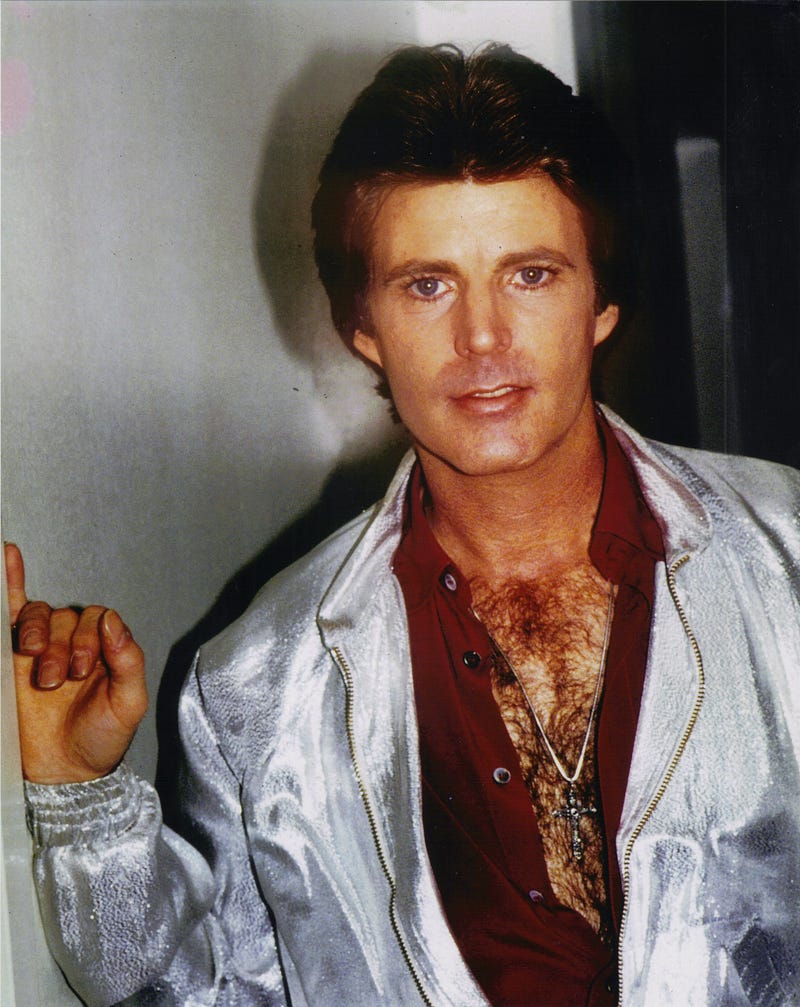
Circa 1983, natural-born entertainer and burgeoning pin-up Rick Nelson poses backstage somewhere on his seemingly neverending tour of intimate clubs, theaters, and town halls dotted across the United States. Image Credit: The Shelley A. Mandrusiak Collection / Pinterest

Rock and Roll Hall of Fame inductee Rick Nelson was hurriedly putting the finishing touches on his 24th studio album of original material on the day after Christmas 1985. The rockabilly-themed songs were designed as a comeback on recently founded Nashville-based Curb Records after four years of barnstorming, well-received road shows laced with minimal recording activity.

Ironically, upon adding a vocal to Buddy Holly’s “True Love Ways” and overseeing lead guitarist Bobby Neal’s acoustic overdub, Nelson departed Los Angeles later that day for a mini under the radar tour of the Southeast. Not really wanting to leave home during the holidays, Nelson was cash-strapped due to protracted divorce proceedings. The album would have to wait until the New Year.

But fate had deliberately cruel plans. Nelson’s antiquated Douglas DC-3 caught fire — a faulty heater switch was the culprit — while the singer was en route to Dallas for a New Year’s Eve show. The plane landed, completely engulfed in flames. Only the two pilots survived. The rockabilly project was inexplicably shelved and forgotten by all but the most dedicated fans. They have clamored for its release for decades.

No one was really sure of its whereabouts until Greg McDonald, a protégé of Colonel Tom Parker and Nelson’s personal manager from 1976 until his death, called in on February 21, 2014, for an impromptu, albeit extensive interview on Memphis Mafioso George Klein’s weekly, four-hour SiriusXM Elvis show.

During the serendipitous conversation, this writer emailed two questions in to the program. The controversial raconteur — beloved by some, despised by others in Nelson’s inner circle — expressed no qualms in shedding light on the mysterious recordings.
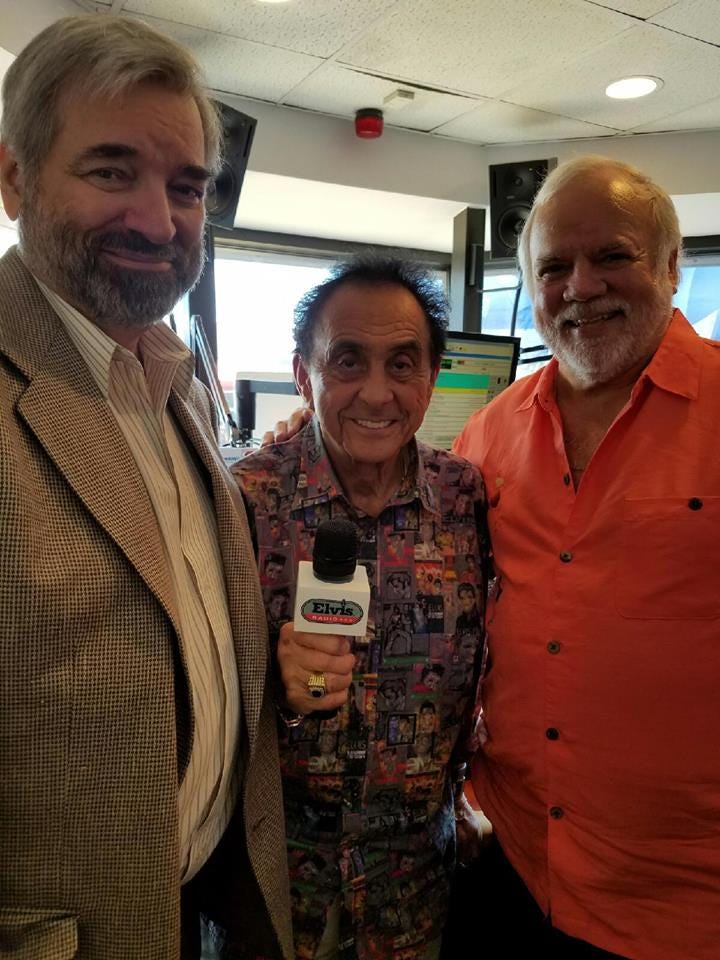
On August 12, 2016, Rick Nelson’s final business manager Greg McDonald and Elvis Presley’s tour producer Charles Stone are interviewed by Presley’s eighth grade classmate and longtime pal George Klein on Klein’s weekly SiriusXM Elvis show broadcast live across the street from Graceland in Memphis, Tennessee. McDonald and Stone were special guests at the annual Elvis Week festivities and were both mentored by “Colonel” Tom Parker. Photography by Greg McDonald, Jr.

Is there a possibility that Nelson’s final studio LP may see the light of day? McDonald stated, “I own that album. Rick and I were working on it just before he passed. I had a deal to sell it to Mike Curb of Curb Records, but it never happened. Rick never got back to sign the contract.

“It needs to be released. We’ve just always held on to it. We thought there would be a Rick Nelson movie — one big enough to release the album as a tie-in.

“I’ve actually been working with Gunnar and Matthew — Rick’s twin sons — to do a release on that record…Gunnar and Matthew want to really work on the project — do some duets with their dad. That was always our plan.”

And did the former manager recall his last conversation with the “Easy to be Free” balladeer? “Yes, I was actually at an auditorium show in Pomona, California,” admitted McDonald. “Rick and I were standing behind a building. He was booked to go back East and do a Florida show — then Alabama and on to Dallas.

“I was booked to go as well but Rick said, ‘Greg, you don’t really need to go. We’re only going out for three shows. I’ll have the plane land in Palm Springs, and I’ll come to your house. We’ll spend New Year’s Day together. I’ll drive my car back to L.A.’

“I had Rick’s car — a red Pantera — in my garage in Palm Springs. We just had it all fixed up and painted for him as a Christmas present. So that was our plan. Of course, he never came back.”

Ten documented tracks were recorded on a vintage three-track tape machine at Baby-O Recorders and Conway Studios in North Hollywood with Nelson behind the production reigns between August and December 1985. The recording process was often interrupted by nostalgia-filled package tours of the United Kingdom and Australia.
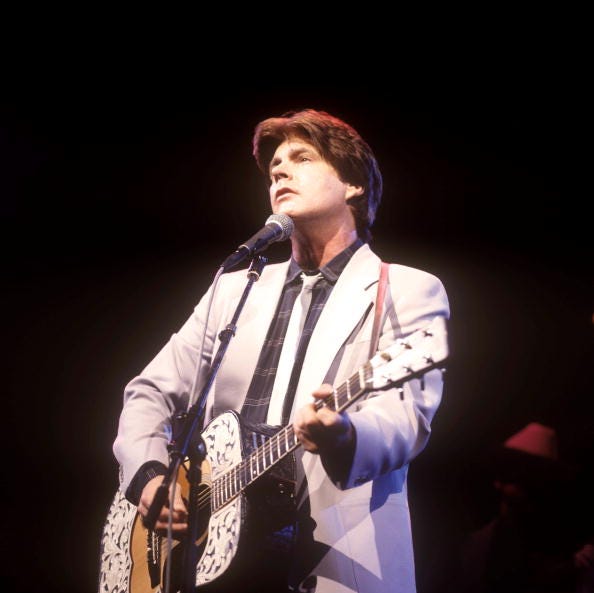
A million miles away: Rick Nelson is captured playing a wistful ballad on his ornate Martin D-35 acoustic guitar with detailed leather work at London’s Royal Albert Hall, November 17, 1985, six weeks before his premature death. Photography by David Redferns / Getty Images

Featuring the singer’s road band, led by Neal, Ricky Intveld on drums, Pat Woodward on bass, and Andy Chapin on piano, the sessions were embellished by the presence of rockabilly pianist Bobby Mizzell and rhythm guitarist Bobby Wood — not to be confused with pianist Bobby Wood of the Memphis Boys — on some tracks.

The song selection ran the musical gamut between rock and roll and sublime ballads. In a bit of a letdown to fans of the Stone Canyon Band songwriter era, none of the cuts were written by Nelson. However, in two May 1984 interviews with The Spokane Chronicle and The Salina Journal to promote the failed NBC television pilot High School USA, Nelson stated that he was writing songs. Whether they were fully fleshed out and recorded is another story.

The effortless vocalist reached back to one of his primary influences, Elvis Presley, for a cover of the oft-neglected ballad, “As Long As I Have You,” taken from the King Creole soundtrack. Marty Robbins’ crossover pop hit “Singing the Blues” and Holly’s “True Love Ways” made the cut as well.

In a surprising move suggested by his guitarist, Nelson covered the Beatles’ early rocker, “One After 909.” It was his first acknowledgment on record of the Liverpool lads’ transcendent grasp on pop culture and a prime example that he harbored no ill feelings for the group who knocked his records off the charts in the summer of 1964 at the height of Beatlemania — another major hit would not arrive until “Garden Party” eight years later.

Somehow Nelson located an obscure 1959 demo entitled “Lucky Boy” from the estates of Johnny and Dorsey Burnette, old songwriting pals who wrote the iconic “Believe What You Say”, “It’s Late”, and many other rockabilly tunes. Jerry Fuller, who penned such Nelson classics as “Travelin’ Man” and “It’s Up to You,” supplied a new song, “Ain’t Gonna Do You No Good.”
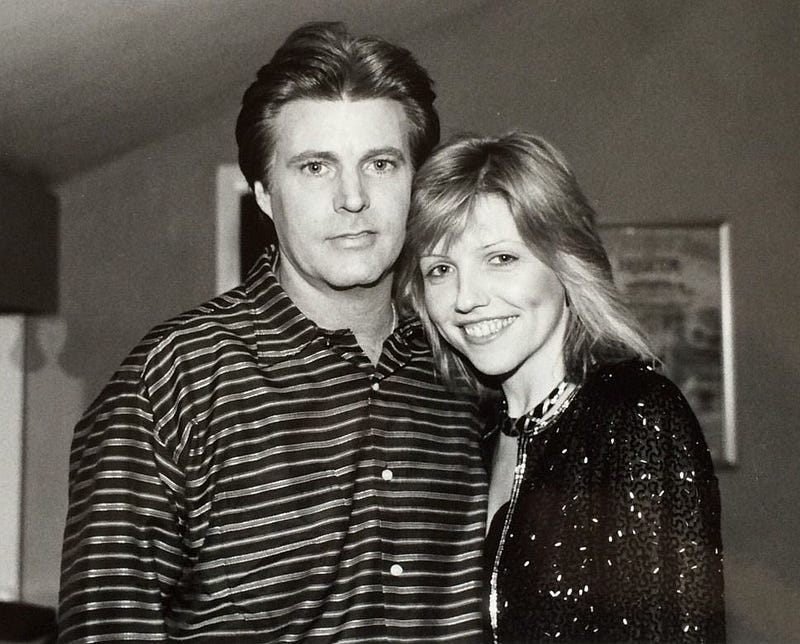
Between May 14 and 27, 1981, 41-year-old Rick Nelson played a sold-out engagement at the Riviera in Las Vegas and met 24-year-old model and future fiancée Helen Blair. The couple remained inseparable until the bitter end with Blair functioning as Nelson’s fan club liason and assistant. This lovely image appears to be taken in 1985. Image Credit: The Shelley A. Mandrusiak Collection / Pinterest

Contemporary selections consisted of Mickey Jupp’s rockabilly rave-up “You Know What I Mean”, Mizzell’s piano rocker “You Got Me Gone”, and the driving up-tempo “Rock ’N’ Roll Fool.”

The latter had an especially murky back-story until biographer Sheree Homer, author of the superb Rick Nelson: Rock ’N’ Roll Pioneer, exclusively verified that it was composed by Bill Rowe. The occasional songwriter had aided Nelson financially, so the singer graciously returned the favor in the recording studio.

A few months after his untimely demise, a version of “You Know What I Mean” — at least three renditions were recorded between 1984 and 1985 — was released as Nelson’s final single on MCA, Curb’s parent label. The remaining nine songs are still hidden apparently in McDonald’s archives. An earlier version of “True Love Ways”, recorded in November 1978 in Memphis with producer Larry Rogers, is widely available and often mistaken as Nelson’s final recording.

“Rock ’N’ Roll Fool”, “Singing the Blues”, and “You Got Me Gone” can be found on generally inferior-sounding bootlegs. Dedicated Nelson fans have also likely heard live versions of “One After 909” and “You Know What I Mean,” both featured heavily in the rocker’s setlist during the final years of his life.
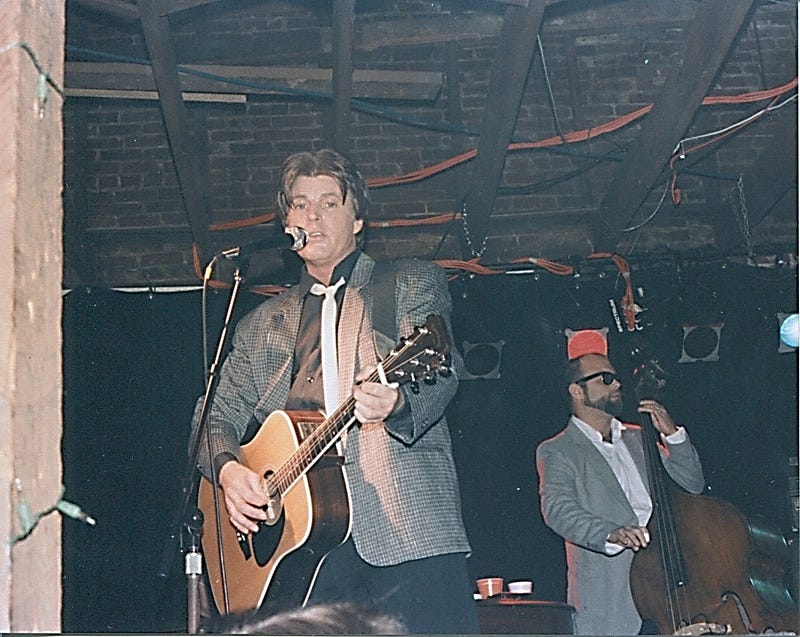
Rave on for me: Rick Nelson and doghouse bassist Pat Woodward rock ’n’ roll onstage at PJ’s Alley nightclub, owned by former Nelson rhythm guitarist-Spiral Starecase lead singer Pat Upton, in Guntersville, Alabama, on December 28 or 30, 1985, only a day or so before the “There’s Nothing I Can Say” balladeer’s untimely demise. Photography by Buddy Taylor / Courtesy of Sheree Homer

The backing tracks are virtually finished. In a July 2012 interview with Pop Culture Classics, noted English guitarist Albert Lee, best known for his work with Emmylou Harris and the Everly Brothers, revealed that he added overdubs to certain, unspecified tracks shortly after Nelson’s passing.

Opinions are divided among Nelson’s family and close friends as to whether the project deserves release. All four of the singer’s children have expressed reservations in the past — daughter Tracy Nelson and youngest son Sam Nelson still vehemently oppose such a release.

Of course, feelings can evolve over time. The late Jimmie Haskell, Nelson’s official music arranger, has stated in numerous interviews that Nelson never had the opportunity to overdub his final lead vocals and releasing the project might tarnish the singer’s legacy. But perhaps Nelson’s original intention was to go back to the fundamentals of early rock ’n’ roll, recording music with a spontaneous feel — i.e. limited overdubs — in a nod to his idols at Sun Records in Memphis.

A brief ray of hope emerged in 2000 while Capitol was preparing Legacy, the first box set devoted to the songwriter’s career. Jim Ritz, a Nelson historian who listened to the tapes during the selection process, confirmed to Homer that “True Love Ways” was going to be the final cut. He and producer Bob Hyde decided at the last minute that the song was not mixed properly, so they went with the original 1978 version instead. Let’s cross our fingers that Nelson’s final studio album will finally see the light of day, if for historical purposes only.
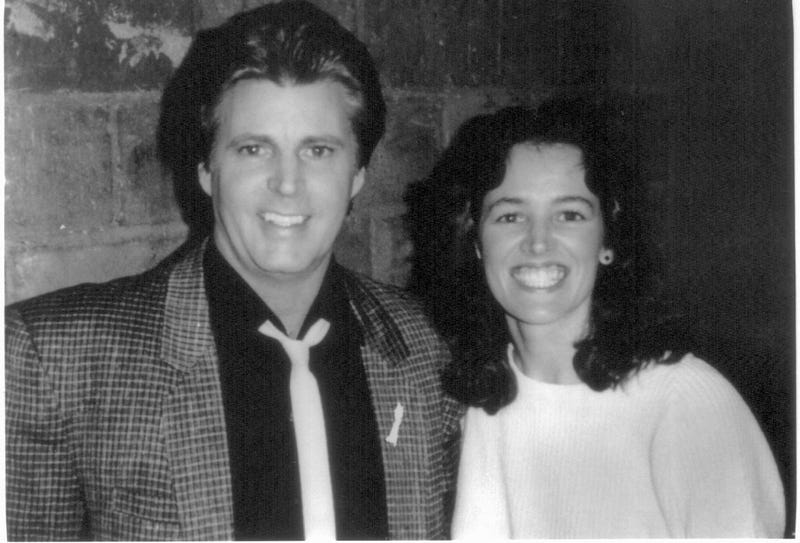
Rick Nelson gladly poses with opening act Janet McLaughlin inside PJ’s Alley nightclub in Guntersville, Alabama, on December 28 or 30, 1985, only a day or so before the “Gypsy Pilot” rocker’s untimely demise. Image Credit: The Janet McLaughlin Collection / Courtesy of Sheree Homer
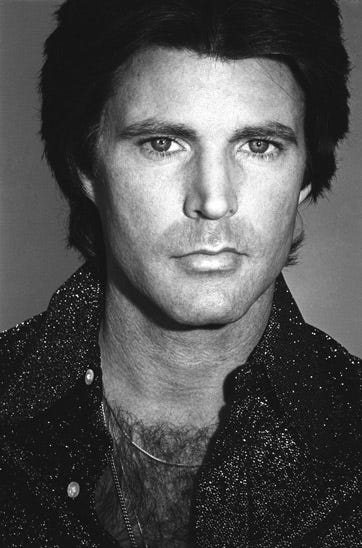
Looking incredibly virile as he approaches 40, a shy, confident Rick Nelson is the king of the jungle. Photography by Guy Webster

© Jeremy Roberts, 2014, 2017. All rights reserved. To touch base, email [email protected] and mention which story led you my way. I appreciate it sincerely.

Music
Rock
Rick Nelson
Entertainment
Life
Recommended from ReadMedium