
Rick Nelson and Glen Campbell studio snapshot emerges after 57 years
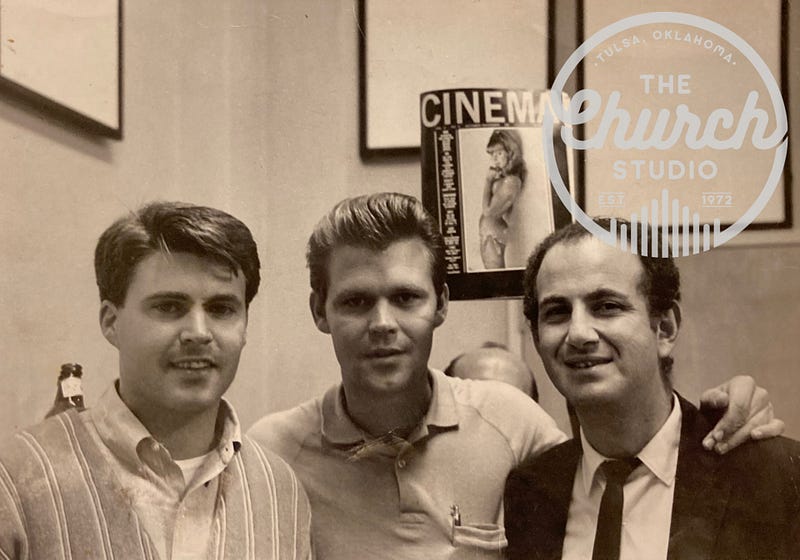
A previously unknown black and white image of posthumous Rock and Roll Hall of Fame inductee Rick Nelson alongside “Galveston” minstrel Glen Campbell and producer-arranger Jimmie Haskell has finally surfaced. Turns out the Church Studio, originally owned by pianist Leon Russell and the home of the Tulsa-based Shelter Records, dropped the photo on social media the day after what would have been Campbell’s 86th birthday. The Rick “Ricky” Nelson Facebook fan page shared it to a wider audience last night, inadvertently leading this dyed-in-the-wool Nelson devotee to attempt to pinpoint the date it was captured.
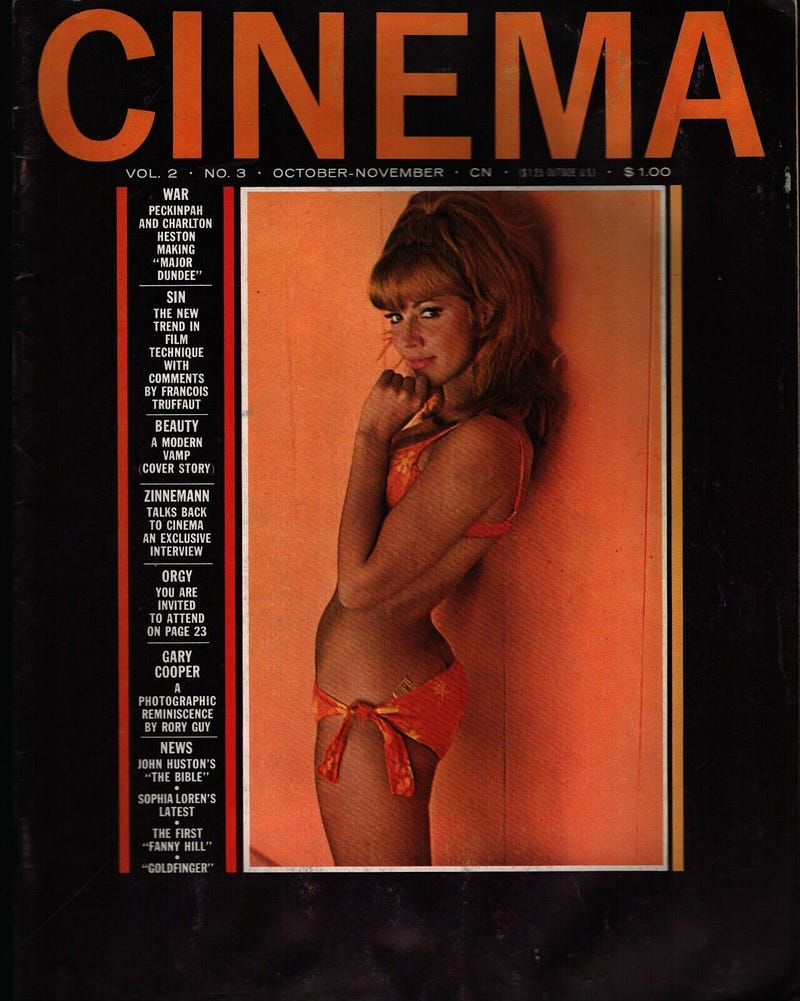
The primary clue was the CINEMA magazine cover held up — a primitive photobomb — by an obscured bald gentleman. Scouring Google gave way to an eBay pursuit, where the defunct magazine’s October-November 1964 issue drawing attention to a drop dead sexy Jocelyn Lane was confirmed. The model-actress romanced Elvis Presley in Tickle Me, a fun dude western comedy distributed the following year.
Praguefrank’s Country Music Discographies online sessionography, which borrows information from the three lavish Bear Family box sets afforded to Nelson’s career, was a godsend. It’s a surefire bet that the trio was photographed between January 15 and February 10, 1965. They were cutting the bulk of the Best Always, Rick Nelson album [10 songs] or starting the excretable Love & Kisses soundtrack [the title song and “Say You Love Me”], either at United Recording on Sunset Boulevard or Radio Recorders on Santa Monica Blvd. [only one session at the latter on February 8 for “I’m Not Ready for You Yet”].
Besides the magazine date, there’s further evidence supporting this early ’65 timeframe. September 17, 1964, was Nelson’s final session for that post-Beatlemania year when the Mop Tops’ “I Want to Hold Your Hand” blew most American competitors off the charts, including Nelson. The “Hello Mary Lou” rock ‘n’ roller, Campbell, Russell, and Haskell were in the studio together in January and February according to session logs.
Haskell, a busy composer and arranger for other artists besides innumerable film scores, left Nelson’s employ upon tracking the “Fire Breathin’ Dragon” A-side in December 1965. A Grammy for arranging Bobbie Gentry’s acoustic masterpiece “Ode to Billie Joe” lay just around the corner. Charles “Bud” Dant, head of West Coast A&R for Decca Records, picked up the production slack in a nominal capacity, as Nelson controlled the sound of his records. Haskell and Nelson did reunite in 1971 for string arrangements on the Stone Canyon Band’s Rudy the Fifth, Rocky Burnette’s “Tired of Toeing the Line” from 1981’s Playing to Win, and Nelson’s infamous rockabilly-fueled final sessions that have been kept under lock and key for almost 40 years by last manager Greg McDonald.
After February 10, Campbell’s subsequent Nelson booking was a full year later on February 24, 1966, during day three of the groundbreaking country rock Bright Lights & Country Music sessions. Campbell was a fledgling solo artist who earned pocket money subbing for a road-weary Brian Wilson in the Beach Boys and as a 12-string guitar picker for the Wrecking Crew. Campbell’s history with Nelson ran pretty deep. When Elvis’ Jordanaires were ensconced in Nashville harmonizing on country sessions and couldn’t fly out to the West Coast for an April 12, 1961, vocal overdub on Nelson’s jaunty rendition of Dorsey Burnette’s “My One Desire” and Gene Pitney’s “Sure Fire Bet,” Campbell, “Tequila” rhythm guitarist Dave Burgess, and “Travelin’ Man” ink slinger Jerry Fuller stepped in.
Soon graduating to solid rhythm axe, Campbell was a mainstay of Nelson’s studio band — even touring the Far East while bassist Joe Osborn stayed home — for six years. Nelson’s second attempt to finish an acceptable master of his autobiographical “Freedom and Liberty” on March 8, 1967, at Western Recorders spelled the end of Campbell’s residency [the mid-tempo country rocker, Nelson’s third confirmed composition, unjustly garnered mothballs for almost 40 years]. “Gentle on My Mind” and “By the Time I Get to Phoenix” would finally catapult Campbell into Grammy-winning status later that year. No more would the Rhinestone Cowboy have to hustle sessions. He actually surpassed Nelson in the public’s consciousness, taking cues from his pal’s earlier trajectory by costarring with John Wayne in the Oscar-winning western True Grit [Nelson was a fast-drawing deputy in the Duke’s Rio Bravo] and toplining his own music variety TV series — The Glen Campbell Goodtime Hour [of course, The Adventures of Ozzie and Harriet cemented Nelson’s entertainment vocation].
Russell only spent a month tickling the ivories for Nelson, with February 17, 1965, concluding his tenure. As the dough for co-writing “Everybody Loves a Clown,” “She’s Just My Style,” and [“You Don’t Have To] Paint Me a Picture” for Gary Lewis & the Playboys came pouring in, Russell, also a Wrecking Crew alum, continued session work and hobnobbed with ex-Beatle George Harrison at The Concert for Bangladesh. Top Twenty pop hits “Tight Rope” and “Lady Blue” signaled Russell’s gravel vocals were a force to be reckoned with.
Might Nelson, Campbell, and Haskell have waxed a hit record in January or February ’65 when they said cheese? The answer is an unequivocal no. “Mean Old World” b/w “When the Chips Are Down” instead qualifies as an artistic pinnacle. The A-side died on the vine, stalling at No. 96 POP. AllMusic critic Richie Unterberger considers the Best Always tune to be “both more forceful and moodier than anything else Nelson cut in 1964–1965. ‘Mean Old World’ drew out and complemented Nelson’s moodiness, with its downbeat bluesy melody and, more particularly, its downbeat, indeed downtrodden lyric…Nelson is a downright down-and-out outcast, hiding his face from passerby and crying.”
“Where you gonna go if all your dreams come tumblin’ down?” The B-side rivals “Mean Old World” as the grittiest track on Best Always with a killer guitar solo [either Campbell or Master of Telecaster James Burton], bassist Jerry Cole’s individual string plucking in the left channel, and Russell’s cinematic piano. “Chips Are Down” was penned by Seals and Croft long before they became soft rock purveyors with “Summer Breeze” and “Diamond Girl” in the early ’70s.
An honorable mention is Eddy Arnold and Cindy Walker’s country standard “You Don’t Know Me,” immortalized by Ray Charles on Modern Sounds in Country and Western Music. Upon first glance it seems like an odd candidate for a supposedly lightweight, 24-year-old teen idol to tackle. But Nelson summons sheer pathos as he convincingly dons the shoes of the clumsy third wheel who longs to hold his baby’s hand but remains powerless to throw off all the shackles binding him down.
© Jeremy Roberts, 2022. All rights reserved. To touch base, email [email protected] and mention which story led you my way. I appreciate it sincerely.