
ADHDers And Autistics Have Heard Enough
People really should know better by now, seriously.

I’ve been pretty lucky. For the most part, I don’t get the kinds of comments I describe in this article. Maybe it’s because I give off a “don’t mess with me” vibe and tend not to interact with strangers at the playground.
There have certainly been ignorant comments and judgemental looks, but I know many others who have experienced this way more often than I have.
This article is dedicated to the ADHDers and Autistics who hear this crap on a regular basis.
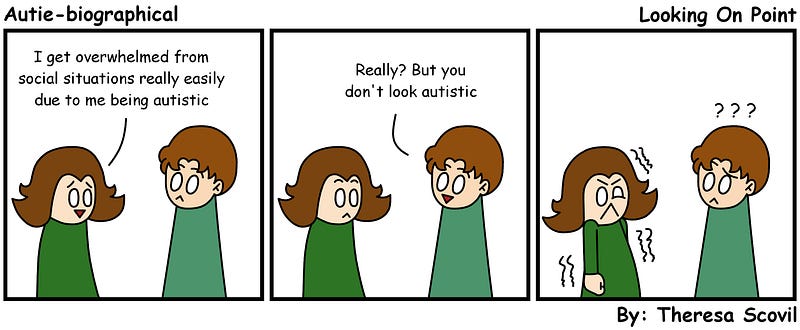
“But you don’t look Autistic!”
Wtf does that even mean? What does “Autistic” look like? Do you mean flapping, rocking, and other stimming behaviours? If an Autistic person is hiding their stims (masking), it’s most likely for your sake, not theirs — And if it’s for their sake, it’s a matter of self-protection and self-preservation.
Masking or suppressing our need to stim is usually something we’re forced into by repeated corrections, or to avoid social stigma and social rejection simply for being different.
Not looking Autistic is not a compliment and masking causes us harm.
Definitely never say this to any Autistic person.
I don’t look Celiac or hard of hearing or asthmatic on the outside either (unless I’m wheezing or using my inhaler)… but I still fucking am.
“Have you tried going gluten-free?”
I have Celiac disease, so I actually do need to be on a gluten-free diet. I’ve been 100% gluten-free for over 12 years, and guess what? Still neurodivergent.
Please do not give unsolicited advice to anyone, especially not neurodivergent people, or parents of neurodivergent children. We get enough as it is. Most of us are extremely knowledgeable about our condition, or our children’s condition, probably a lot more knowledgeable than you are.
While you may be well-intentioned offering a bit of advice you read online, it usually does more harm than good.
In fact, even if you were an expert on the subject, you’re not an expert on that individual. Most experts know this and won’t provide an opinion unless asked, and even then will preface it as general information and not specific advice.
Unless they’ve scheduled an appointment, and are sitting in your office seeking your professional advice, then save it for your billable hours.
Get to know the person first, learn from them, rather than trying to educate them on their own experience.
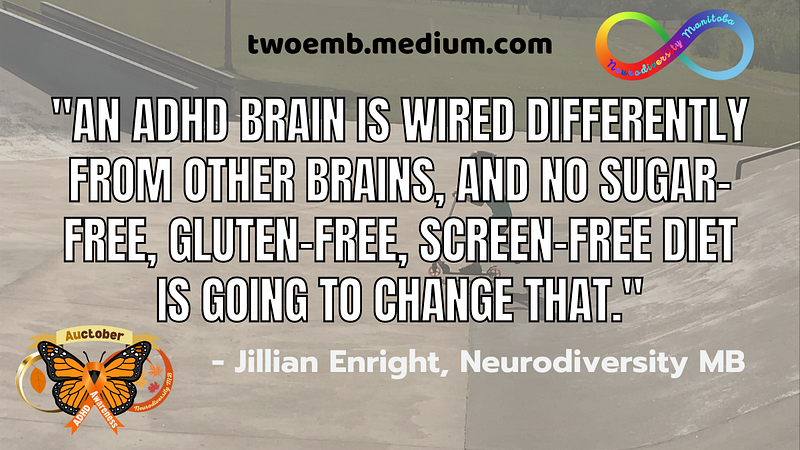
All of the above goes for dye-free, sugar-free, whatever-free diets, supplements, and anything else is being touted as the latest “cure” or miracle treatment for neurodevelopmental disabilities. If the sentence starts with “have you tried…?”, then it’s probably best you don’t say it out loud.
Unless they’ve scheduled an appointment, and are sitting in your office seeking your professional advice, then save it for your billable hours.
“When we were kids…”
Ima stop you right there. I am never going to punish the neurodivergence out of my child. First of all, it wouldn’t be possible, and secondly, I would never want to. My son’s brain is developing differently from others and he’s freakin’ awesome the way he is, so please don’t tell me I need to crack down on him.
I can assure you, many attempts were made to beat the ADHD and Autism out of me and they were unsuccessful. I am not going to make my child feel bad about himself, and I’m sure as hell not going to make him fear me, just because he’s not neurotypical and some random strangers think he should try to be.
Do people not realize how abusive and ableist this is? Would they suggest beating or punishing other disabilities out of children? They most certainly would not. For some reason, many people view being ADHD and Autistic as choices, or something needing to be trained and taught out of us.
Most visible disabilities are taken seriously and accepted as part of who a person is. (Of course, there are others that are not taken seriously, but I can only speak from my own experiences and perspective).
“I’m so sorry…”
What are you sorry for? My kid and I are awesome just the way we are. I’m not sorry at all, I am so glad my son is exactly who he is. I understand our differences create additional challenges, but who can say their life is without difficulty?
Parenting is a hard job no matter what. Don’t pity me or my child, it’s condescending, and assumes something is wrong with him. There’s nothing wrong with him. There is something wrong with a society that views neurodivergence as something to be pitied, rather than embraced and celebrated.
Everyone’s experience is different and some people have experienced a lot more hardship than others because of their differences.
Some may disagree with my personal and philosophical stance on neurodiversity, and that’s okay. The Autistic and ADHD communities are not homogenous, we have varying opinions, experiences, and perspectives.
The important difference is that we speak from personal lived experience, rather than misinformation we read online, or something we heard from Sally’s second-cousin’s ex-fiancé.
“Just send them outside to play!”
Right. Some exercise and fresh air will knock that neurodivergence right out of our brains, why didn’t I think of that?!
Listen. We live in the country. My son attended a forest school when he was younger. We had zero screen time until my son was 3, and seriously limited screen time until he started school.
He goes to summer camps and we spend most of our summer vacations camping. He’s in Cub Scouts. We play soccer, pond hockey, go hiking, cross-country skiing, and walk our dogs.
I assure you, if fresh air and exercise were the solution, we would be sooooo neurotypical.
I didn’t play video games as a child (I still don’t), I rarely watch T.V., and I was 10 years old before we even had the Internet in our household (and of course it was dial-up at that time). I played competitive sports for most of my life, and still play beer league hockey and rec soccer.
I wasn’t even diagnosed with ADHD until age 36 and self-identified as Autistic at age 38. I can assure you neither were caused by too much screen time, not enough outdoor play, nor inadequate exercise.
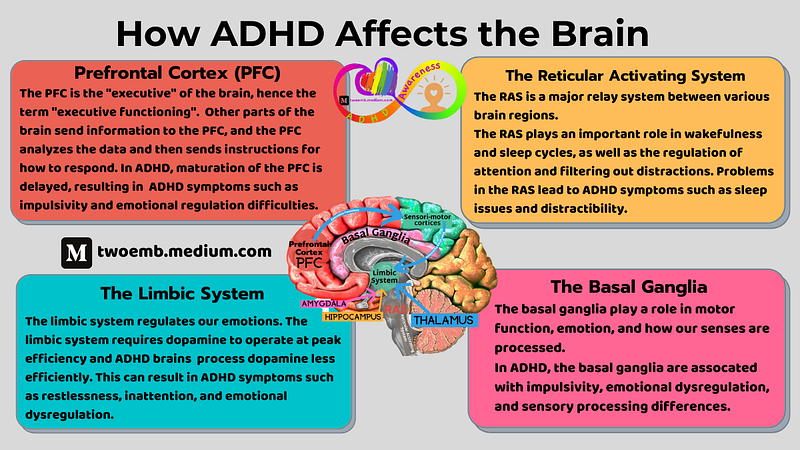
Also, ADHD and Autism are neurodevelopmental disorders, meaning they are differences in how the brain develops, how it is structured, and how it operates. You’re born with it, live with it, and die with it. That’s the reality.
“I would never put my kid on drugs”
Then you’d potentially be medically neglecting your child.
Before you send me angry messages, please understand: I’m not saying anyone has to medicate their child, nor that making an educated decision not to is medical neglect.
What I am saying is that for some people medication significantly improves the quality of their lives, so it would be a mistake to discount the possibility before having a conversation with a medical professional.
Prior to adequate ADHD medication and supports, my son had such low self-concept, he once told me that he’s “a bad kid who does bad things” after getting in trouble at school. He was only 6 years old and my heart broke for him.
Since proper medication and accommodations, my son is a much happier kid. He feels better about himself, in fact, most of the time he actually feels good about himself. That’s what most parents want for their children: to feel happy, cared for, accepted, and loved.
The right medication will not turn your child into a zombie, it will not dull their personality, and it will not make them addicted to drugs. In fact, research has shown that treating ADHD decreases the risk of addictions, and can assist in treating existing addictions in patients with ADHD.
“Everyone’s a little ADHD/Autistic”
No, they’re bloody not.
If they were, my family wouldn’t have gone through hell trying to stop his school from traumatizing and mistreating him. They would have understood.
In fact, this comment annoyed me so much I wrote an entire article about it:
You do you
Everyone has received unsolicited advice at some point, many disabled and neurodivergent people receive them daily. I’d wager that 99.9% of the comments were not appreciated, especially if they came from a stranger, or someone the person didn’t know well.
Parenting truly is one of the most difficult jobs in the world, so please don’t make it harder by judging each other or making unhelpful suggestions when you weren’t asked.
Living as someone who is “different”, whose life experiences diverge from the statistical norm, in a society designed for the majority, is hard enough on its own. Don’t make it more difficult by giving unsolicited, unhelpful advice.
Instead reach out, connect, support each other. That’s what truly helps.
In fact, effective social supports are cited as the most important factor in promoting well-being and quality of life in neurodivergent individuals.
© Jillian Enright, Neurodiversity MB
Related Stories

When you join medium, as a member you’ll have access to unlimited reads for only $5 per month. If you use my referral link, I’ll earn a small commission.
References
Brown, Thomas E. (2013). A New Understanding of ADHD in Children and Adults. Routledge.
Chapman, R. (2020). Neurodiversity, disability, wellbeing. In H. Bertilsdotter Rosqvist, N. Chown, & A. Stenning. (Eds). Neurodiversity Studies: A new critical paradigm. Routledge.
Hartman, C. A., Rommelse, N., van der Klugt, C. L., Wanders, R. B. K., & Timmerman, M. E. (2019). Stress Exposure and the Course of ADHD from Childhood to Young Adulthood: Comorbid Severe Emotion Dysregulation or Mood and Anxiety Problems. Journal of Clinical Medicine, 8(11), 1824. http://dx.doi.org/10.3390/jcm8111824
Kapp, S. K. (2018). Social Support, Well-being, and Quality of Life Among Individuals on the Autism Spectrum. Pediatrics, 141(4), S362-S368. https://doi.org/10.1542/peds.2016-4300N
Perugi, G., Pallucchini, A., Rizzato, S., De Rossi, P., Sani, G., GI Maremmani, A., Pinzone, V., & Maremmani, I. (2019). Pharmacotherapeutic strategies for the treatment of attention-deficit hyperactivity (ADHD) disorder with comorbid substance-use disorder (SUD). Expert Opinion on Pharmacotherapy, 20(3), 343–355. DOI: 10.1080/14656566.2018.1551878


