
GUEST EDITORIAL
The Riff’s Greatest Hits
The Song Remains the Same
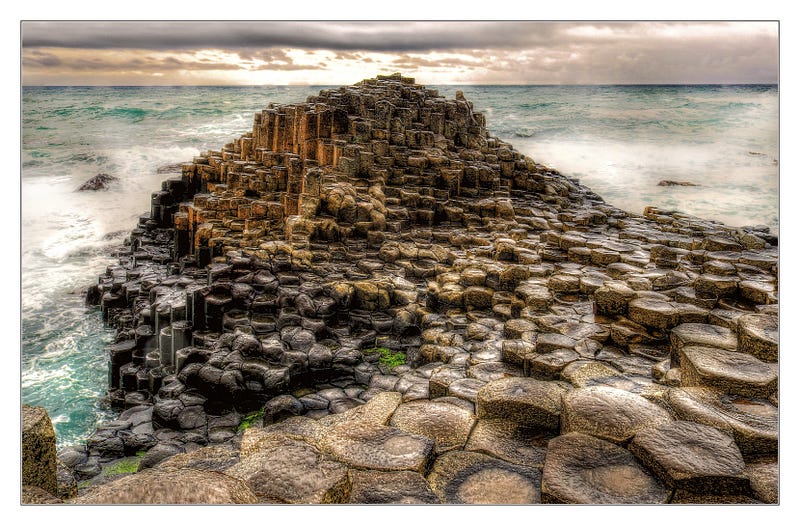
“The Song Remains the Same” seems an appropriate directive for appreciating timeless songs that endure the seasons so lyrically enmeshed in Led Zeppelin’s Houses of the Holy.
Summoning all the plants and creatures of the earth, the opening suite on Houses of the Holy is an ode to summer awakening where I worship and keep vigil every June for the gatekeepers of myth and album-oriented rock.
While I was born several years after Houses of the Holy was released, it became a significant part of my coming of age. Houses of the Holy endured underage drinking, soothed angsty sunsets, and, like Botticelli's “Venus,” I emerged from its shell to womanhood, embodied by its roaring ocean and primal charms. By college, I was spellbound by The Smiths and more varied iterations of rock but I still brought Houses of the Holy into motherhood, sneaking it on the turntable on late nights — dead tired — while the family sleeps.
The songs we carry are the heart of our very chronology. They are the mythic key to our personal histories. They remain the same through our seasons as fixtures in our lives.
That songs have immortality is also a soothing thought in the context of the supposed cancel culture policing our decisions about who to listen to. In the case of Morrissey’s right-leaning foolishness, I have not been able to throw my Smiths records in the fire. To do so would be to perform a psychic surgery.
When I saw Nick Cave in conversation a few months before the pandemic, he spoke thoughtfully and at length about how we appreciate art as distinct from the artist in response to the following Red Hand Files question:
Generally, is it possible to separate the latter-day artist from his earlier art? More specifically, what are your views on Morrissey, both early days and his newer more ugly persona?
Cave argues the proprietorship changes. The listener decides how to incorporate a song into their lives. He rightly points out that it is a great error to conflate the advocacy of free speech with an alignment of the artist’s views.
Cave’s songs like “Stagger Lee” are exorcisms of his imagination, unleashed on adoring fans who simultaneously cringe and delight in the lyrics. Nobody is thinking Cave is embodying Stagger Lee, just as one reading a novel would not conflate the narrator with the author.
And so, should a whiny nutter— a gorgeous, brilliant, whiny nutter like Morrissey — keep us from chanting along to “Shoplifters of the World”? In Conversation Cave explains how he conceded that Morrissey is one of the best lyricists of our time when his son, Earl was playing The Smiths on high rotation. He defended the right for an adult to walk into Spillers and pick out a Smiths album explaining:
Perhaps it is better to simply let Morrissey have his views, challenge them when and wherever possible, but allow his music to live on, bearing in mind we are all conflicted individuals — messy, flawed and prone to lunacies. — Red Hand Files #48
This lasting impact of a song to our personal history survives our complicated relationship with its creator, and with difficult memories that sometimes taint our favourite songs with breakups and traumas— the mess of life. The songs remain.
The stories I was so privileged to select this week all to speak to the enduring connection we have to songs and musical experiences through the seas of our lives and the shifting values of our culture.
When I read you all this week, you said these things about the songs you love:
Here are five songs that are especially meaningful to me. Not for the song, but for the piece of myself the music reclaims, even if only for an instant. — Eric Pierce source
You tend to have a strong connection with the bands you’ve listened to through your teenage years. After all, they were your shield to all the hardships you’ve faced; they were the cure to your self-consciousness and your teen-hormone induced life crises. — Sude Hammal source
Feeling Good assures me, the choice is mine to make. Perfection is an apparition, a wriggling earthworm on the end of a cane pole disappearing into a liquid mirage as soon as it hits water. — Sandy Knight source
In those moments, plugging in some headphones and immersing ourselves in a symphony of scintillating vibrations can be the most healing escape, and it may ultimately sway us back to the peaceful centre. It can be a life raft. — Zsófia Vera source
Here are my favourites this week at the Riff:
MikeSemantics kicks off summer with an opus on The Score and Exodus, deep-diving into the production of two albums that exude a vibrating, conscious, spirituality that surrounds us with the loose energy of summer days while still giving us substance.
Paul Combs gives us an insightful review of a film delightfully askew of John Hughes and worth the attention of devout Smiths fans in forefronting the immortal Smiths as the main character. His review had me watching the film the same night and singling along.
Terry Barr’s memoir-centred reflections on a Police show were barely eked out by his prosaically and musically tight playlist winding down his American Crisis Playlist series. #51 brings us impeccable summer jams and takes us to a record shop “with a vision” only Terry can give as the weaver of music, memoir, and themes on equality.
Reuben Salsa generously thrills us with his colourful diction recounting that time you got too wasted on the way to the show, that time you saw a band heckled that would later become one of the greatest, or that time you saw a headliner but begrudgingly fell for the opening act.
Radiohead Was Shit and We Booed Them Off Stage
They were no match for the Sultans of Ping
medium.com
Pedro B. Gorman wrote an excellent piece on Nick Cave and Warren Ellis’ recent collaboration, Carnage which is on my turntable as I write this, but his discussion on Lou Reed’s lyrical journey to sobriety, the commingling of drugs, booze rock, and the beautiful damage churned out of the Warhol Factory is difficult to orchestrate as well as he did. This is damn fine writing.
Danielle Loewen lavishes us with lasting metaphoric language contextualizing how music can liberate us in pivotal moments in our lives. It is not something we passively become, rather it becomes part of our own self-making.
Honourable Mentions:
I jumped on at The Riff in the first few months last year and am so pleased to now have the problem of choosing favourites from a long list. Thus, I add below my honourable mentions from a growing body of amazing and passionate writers.
Many of these great pieces touch on summer, which is a great way to warm up for The Riff’s second annual summer challenge starting in July. Stay tuned for my post at the end of the month!
Jessica Lee McMillan © 2021
Take a peek at Kevin Alexander’s picks last week:


