
When Lou Reed Got Sober
Three Classic, Yet Lesser-Known Tracks
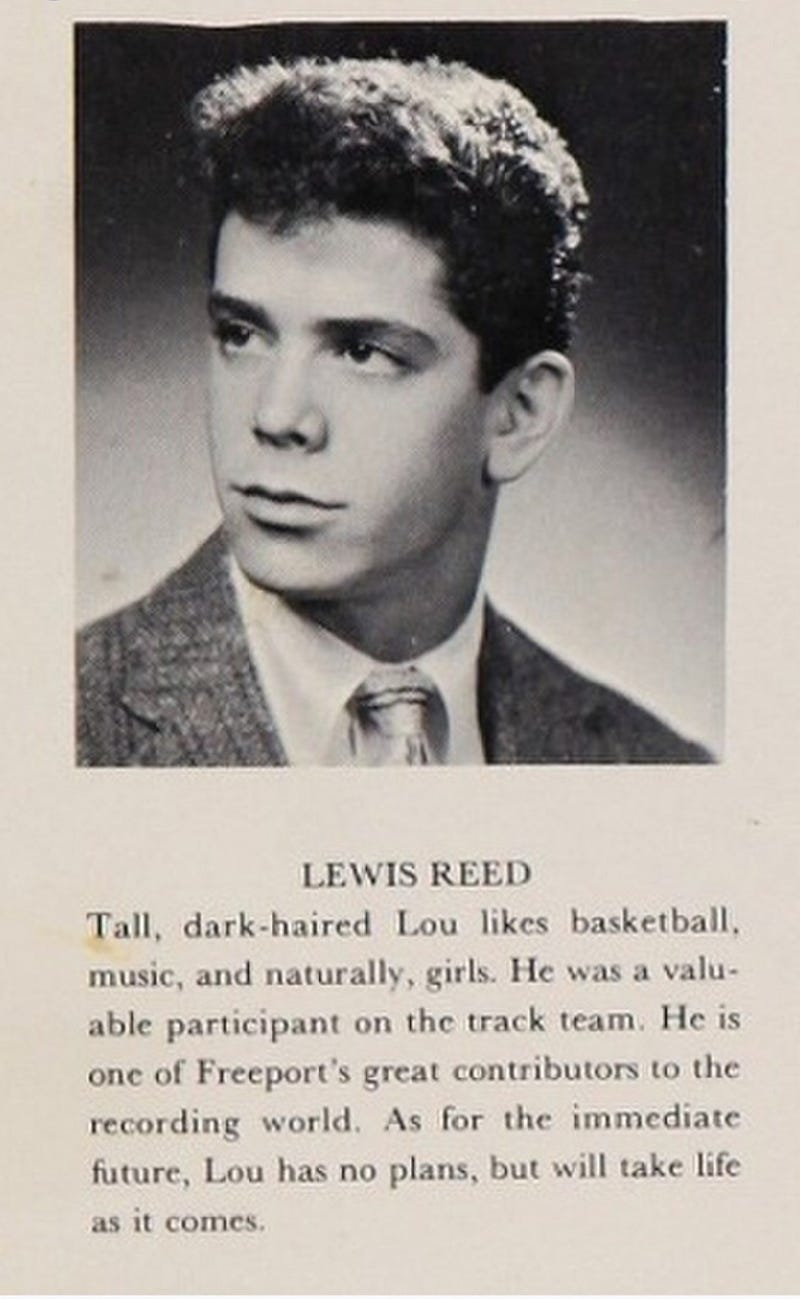
Five months ago today, I made one of the most important decisions of my entire life: I stopped drinking.
Over the last decade, I eliminated all my other addictions one by one (and trust me, they were many, though I was what is called a “functioning addict”). But it wasn’t until I eliminated alcohol that I realized how heavy and debilitating the damn thing is.
It is also way more insidious than, say, heroin, and a hell of a lot harder to quit. That may strike some of you as an outrageous claim, but here’s why it isn’t.
When you go to a coffee shop, or sit in the park in the sun, or even go to a bar, or to dinner with friends, you don’t see anyone using smack publicly. You don’t see advertisements everywhere claiming “Beat Those Winter Blues with the Velvet Softness of Smack!” When you tell your friends you’ve stopped using heroin, they don’t automatically look at you, puzzled, and either ask: “why, are you on a diet?” or better yet, “oh, why, is everything okay, are you sick?” or, if you’re a woman, congratulate you thus: “Oh, sweetie!” they say as they hug you. “When were you gonna tell me! How many months pregnant are you?” But they do all that and much more when you tell them you have quit drinking…they just can’t believe it! Why would you go and do that?
Alcohol is the only drug you have to justify quitting. Sure, the effects of heroin are far more emotionally pleasant and addictive, but when you decide to stop using it, you can delete your dealers’ numbers, avoid the parts of town where you used to score, and start resuming some semblance of a normal life without feeling triggered everywhere you look.
It’s insane, and in trying to figure out a reason for this insanity, I can only conclude it is testament to the manipulative power of subliminal or sometimes outright blatant advertising of a multi-million dollar industry.
I’m sure the effect would be the same if heroin were legal. Except that the booze industry would never allow that to happen because they would be swiftly put out of business on account of their product’s vastly inferior bliss factor; well, until the opiate bliss turns into slavery, that is, which always happens.
The Power of Positive Drinking: Lou Loses Control
But, I digress. That was just context to introduce today’s three songs by the great Lou Reed who, as we all know, was once the high-priest of intoxication.
In and through the Velvet Underground’s countercultural “secret society” pull, Reed would be known to proselytize drink and drugs, namely heroin; he was quoted as saying back in the Warhol Factory heyday, in 1965:
“I take drugs just because in the twentieth century in a technological age, living in the city, there are certain drugs you can take just to keep yourself normal like a caveman. Not just to bring yourself up and down, but to attain equilibrium you need to take certain drugs. They don’t get you high, even, they just get you normal,” as said by Lou Reed, taken from Victor Bockris’ “Transformer: The Complete Lou Reed Story.”
So it was that Cale and Reed found themselves ensconced in the wooly cotton hug of heroin, that kind of dirty little secret club.
What happened in the intervening years between the Velvet’s breakup, and Reed’s growing success as a solo artist— however polarizing to rock critics and fans alike — has been well documented and is not the scope of this essay. Suffice it to say that by 1980, when “Growing Up in Public” was recorded and released, things had gotten more than slightly out of hand for Reed.
Signs that his addictions had reached a point where some people were no longer willing to work with him became evident in an incident between Reed and Bowie, when Lou repeatedly punched David over dinner after a performance at the Hammersmith Odeon in London, 1979. After the gig, they convened at a restaurant called the Chelsea Rendezvous for some food and a chat. As the story goes, Reed asked Bowie if he would produce his ninth studio album, “The Bells,” to which Bowie agreed, only with one caveat: that Reed sober up and quit drinking before the sessions. We all know how that didn’t go down.
Since Bowie had himself cleaned up from a cocaine binge lasting the better part of nine years, the request was understandable and, sources say, delivered in a very affable manner.
Then again, how exactly does a polite and sober Englishman ask a drunk New Yorker to stop drinking?
The fact was, 1980 had rolled around, and it was the beginning of a rather strange and somewhat disoriented decade for rock, and “Growing Up in Public” had sold poorly, a fact which Reed acknowledged as a direct consequence of his heavy drinking, itself an over-compensation (or under, depending on perspective) for the absence of heavier substances; a fact in an addict’s life which I can vouch for, from my own personal experience. And, where some drugs allow for some degree of feeling “leveled,” regular excessive drinking is tantamount to nothing but utter messiness.
Poor album sales aside (the realization of which would become a key turning point in Reed’s life), Growing Up in Public yielded what is, in my opinion, a song that to this day makes my dormant, yet still slightly present evil, boozy twin-self cackle, imaginary drink in hand: “The Power of Positive Drinking.” I mean, come on, listen to it!
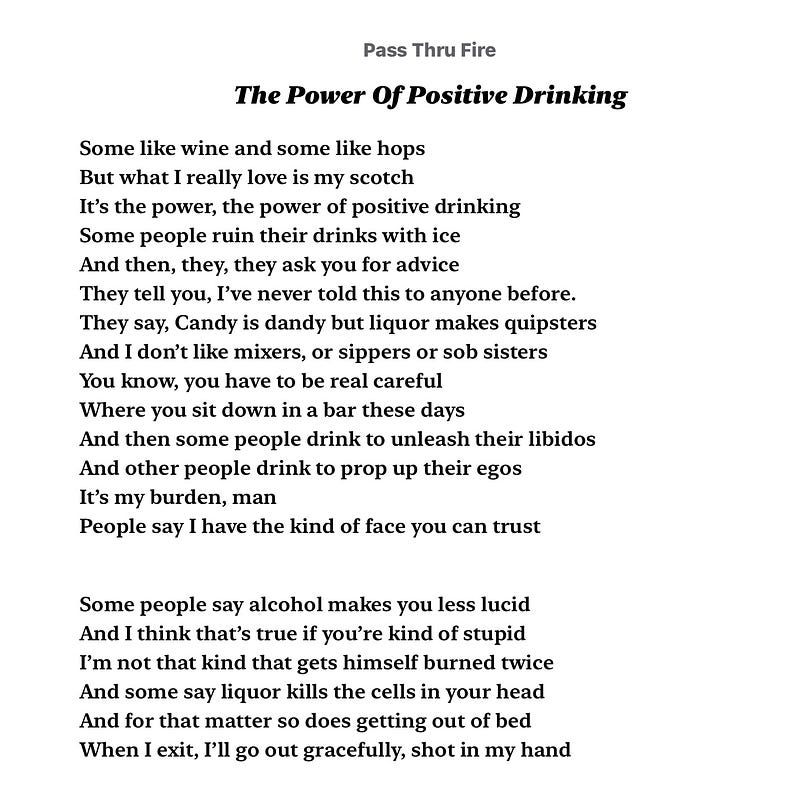
The bouncy, giddy interplay between synth and guitar is boozy, warbly, and utterly danceable. And please read the sharp, witty lyrics. This man was truly the master of the turn of phrase, of the simple-yet-punchy line. And in reading his lyrics as poems, they stand the test supremely (which is why I have included them).
Despite the humor, it had become clear to Reed that he needed to clean up his act if he didn’t want to blow his career.
It’s one thing when you’re in a band— you always have at least two, sometimes four other tight-knit friends who can pick up the slack — but Reed had been a successful solo artist of a somehwat mercurial temper for a decade. And yet, as is often true of many solo artists — need I cite, for example, the lonely case of Amy Winehouse — there seemed to be nobody trustworthy or caring enough around to pick up Lou’s slack, to give him the gentle, loving nudge of “hey, buddy, you’re all over the place, come here.”
Or perhaps there was, and he may not have listened. I had many friends over the years who took me aside for said pep-talk, which I brazenly, blindly dismissed at the time, even accusing them of ganging up on me, or: “why can’t you just accept me for who I am?!”
Underneath the Bottle: “I Have to Have Control”
“It’s very difficult to retain things, to learn things and keep track of everything if it starts to get out of control, which it was. Then it got very out of control. So it was just obvious it had to stop. To really get a grip on my career and be true to the talent and everything, I have to have control.” As said by Lou Reed, taken from Victor Bockris’ “Transformer: The Complete Lou Reed Story.”
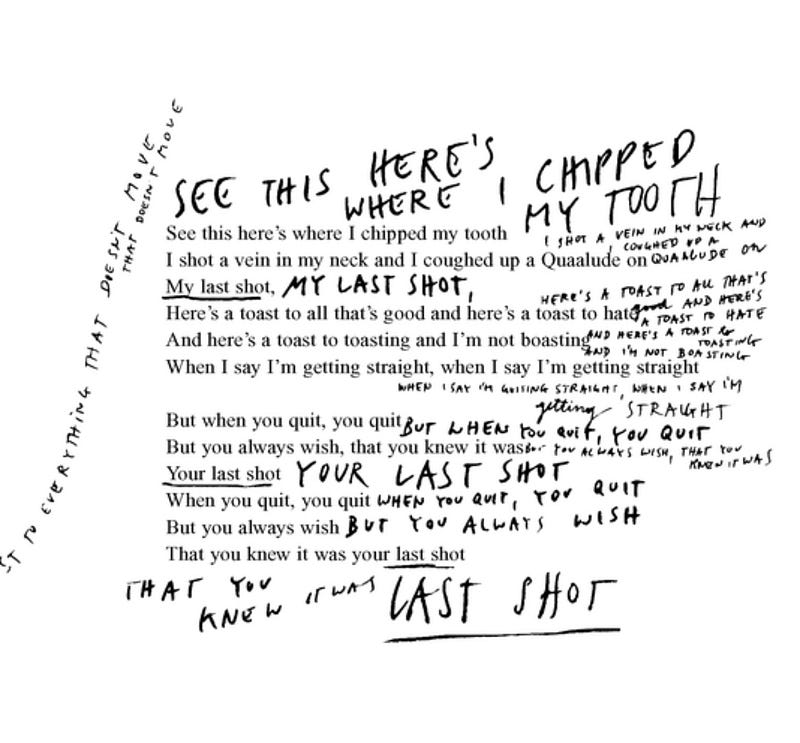
Early in 1981, Reed was to join both Alcoholics Anonymous and Narcotics Anonymous, retreating to his Blairstown estate in New Jersey, during which time he would write “Underneath the Bottle” and “The Last Shot.” Both songs are about the despair of wanting something you can no longer have. It’s a feeling I still identify with to some degree, even though I am largely past the active wanting phase myself.
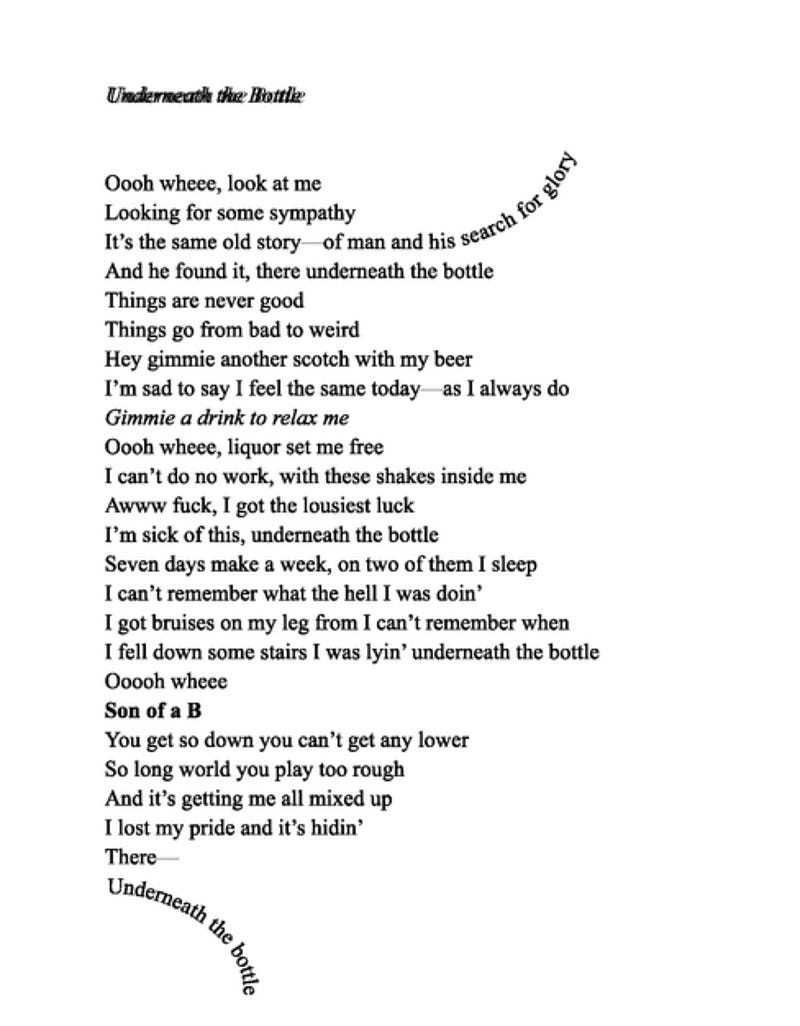
With “Underneath the Bottle” only seeming more maudlin and self-conscious than “The Power of Positive Drinking,” here we get the drama of broken dreams, of the illusion of control so common to alcoholics. And yet, the poetic voice is not so much one of dejection and despair, but of a lesson learned. It is a song written by a man who is looking back on all the havoc wreaked by his addiction, lyrically; while there is a certain longing in the words, there is also the unrestrained use of Reed’s scintillant sense of humor as a path to healing.
It is also his first album with guitarist Robert Quine. With Reed’s guitar on the right stereo channel, and Quine’s on the left, we are gifted with an intertwined, intricate conversation — an eargasm of the highest caliber — between two guitarists who were both, at different points in their career, listed by Rolling Stone as two of the Top 100 guitarists of all time.
Indeed, it seemed sobriety was paying off for Reed, however difficult it might have been to keep. The whole band was at the top of its game, and the New York Times’ Robert Palmer lauded “The Blue Mask” as “the year’s most outstanding rock album,” which I fully agree with. Go listen for yourselves and drop me a comment with your own opinions.
“The Last Shot”: Pride Regained
His second collaboration with Robert Quine was the Legendary Hearts album. Its track, “The Last Shot” is just as crisp as “Underneath the Bottle,” though an irate Quine was furious about the final mix, claiming Reed had practically mixed him off the track.
Having read enough Lou Reed biographies, I know this might be quite probably true. It is said across various sources that Reed fired John Cale from the Velvets. Lou did have a bit of a mean streak, which he never went to great lengths to conceal; (though, how would you not have trust issues, when your own parents checked you into a mental institution as a teen, to recieve shock therapy for your percieved “homosexual tendencies?!”)
However, it was when Quine started getting just as much press attention as Lou for his own guitar playing, that tension grew between the two.
“Before the album was completed, Lou resorted to an old tried-and-true trick. Going back into the studio without informing anyone on the record, he remixed the entire album so that his voice and playing stood out. Some of Quine’s best playing was either mixed down or cut altogether.” Victor Bockris in “Transformer: The Complete Lou Reed Story.”
A fact which critic Robert Palmer attests to, pointing out that whenever Reed got self-conscious, he would start exercising control. Sometimes, the only thing more biting than an inebriated Rock Ego may be its sober and hyper-aware counterpart. Whichever way, it does not affect my love for Lou one bit: conflict has always made for pristine, tight Rock & Roll…and that, my dears, is what these tracks are.
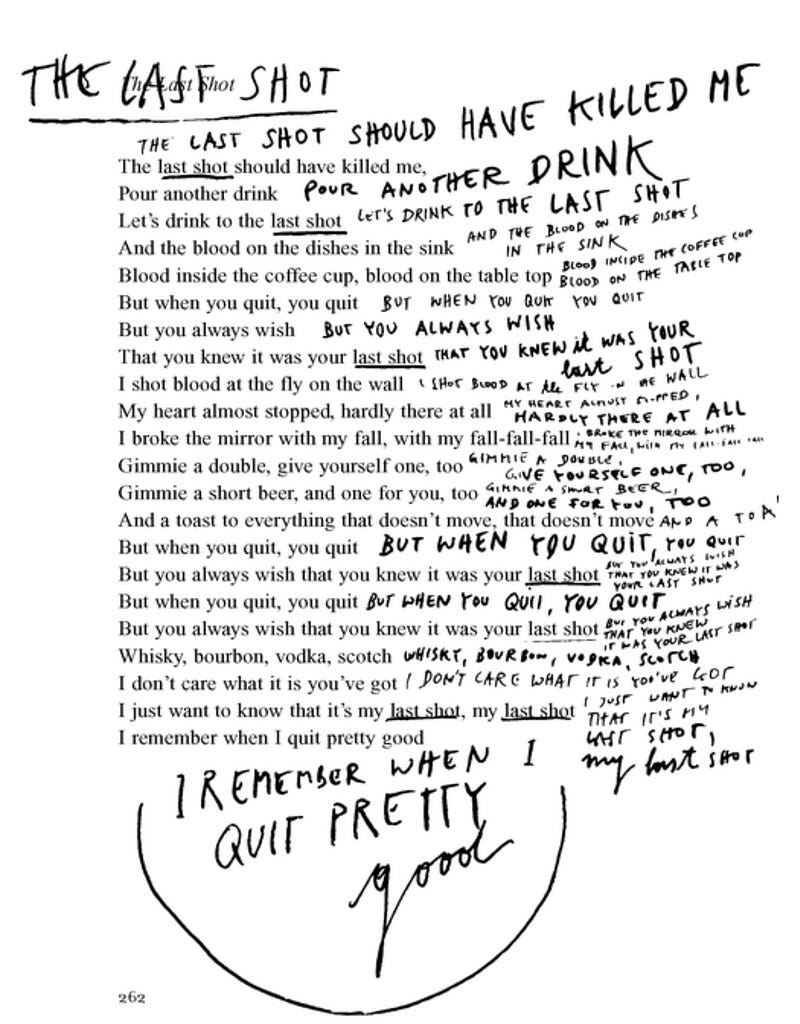
Thanks for reading! Let me know your own opinions on the songs and backstage “drama” in the comments, I’d love to hear them, and will always reply!
© Pedro B. Gorman 19.6.2021


