
Albums Review: Sounds of Yesterday, Society of Tomorrow
Summer and Vibin’ — Exodus vs. The Score
To follow me on social media and listen to my “Anonymous Semantics” EP, click on the link Here.
To mark the beginning of Summer this year, let’s take a look at the freshness and importance of music on summer days and evenings to create pleasant memories in our lives.
These are filled with various “soundtracks” that provided us with unforgettable times of joy, nostalgia, and madness with the company of ourselves, friends or family.
Some of the memories I hold most fondly are the times spent amongst friends. During trips, conversations and chill-out evenings/nights, we would get carried away by the sound of 80’s/90’s/2000’s playlists and records such as The Beach Boys’ Pet Sounds, The Jimi Hendrix Experience’s Are You Experienced, AC/DC’s Back In Black, Red Hot Chili Peppers’ Californication and Arctic Monkeys’ Favourite Worst Nightmare, memories so important to revisit.
I have lots of artists that mean plenty to me during this warm season and listening to them varies wherever I am. Whether it’s at a summer festival catching an anxiously awaited concert (something many of us are again looking forward to and have been deprived of by this lengthy and aching pandemic!), on a beach vibing to reggae or electronica, in a sweaty nightclub/bar to the sound of hard rock/metal and 80’s/90’s bangers, or at home soaking up the sunset to The Beatles’ Abbey Road, Black Sabbath’s Paranoid or Queen’s A Night At The Opera, these are all pleasurable experiences that I preserve and instantly put a smile on my face as I recall them.
That said, the two albums under review mark all the charm that only the blending of artistic creativity and timeless recordings heard in hot summer seasons can bring out.
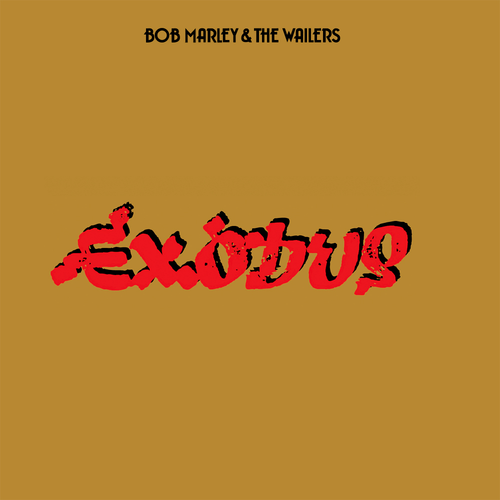
Bob Marley and the Wailers — Exodus
Genre (s): reggae, roots reggae
Tracklist: Here
The first album in review is entitled Exodus by the iconic and influential Jamaican artist Bob Marley and the Wailers, released in 1977 by Island Records (British-Jamaican record label, currently owned by Universal Music Group) and subsequently reissued by Tuff Gong (brand and record company founded by Bob Marley and his family in 1970, now managed by the Bob Marley Estate).
Robert Nesta Marley is one of the most transcendent music artists of the 20th century and one of my favourite to listen to during summertime, those vibing tracks man.
At the helm of the band co-founded in 1963 by himself, Peter Tosh and Bunny Wailer, the Kingston-based The Wailers established him as their leader and key cultural figure in the dissemination and ongoing commercial success of the reggae genre worldwide, cementing him as one of the most recognisable and revered figures in music history.
Through countless acclaimed albums like Catch A Fire (1972), Burnin’ (1973) and Natty Dread (1974), as well as timeless hits such as “Stir It Up”, “Get Up, Stand Up”, “I Shot The Sheriff” and “No Woman, No Cry”, they crafted a notoriously unparalleled following that carried them to stardom as preachers of peace, love, Rastafarianism and Pan-Africanism to generations of listeners.
One legacy that was truly signaled through Exodus, credited by many as their masterpiece and “testament” to their power and socio-political impact.
Despite the successfully transitional period in 1974 by Marley’s revitalisation of The Wailers (with all the original members leaving) and conquest of the American market with Rastaman Vibration in 1976 (their first album to reach the Top 10 of the Billboard 200 chart, peaking at number eight), it saw a culmination of turbulent events decisive for the primordial concept of their next project.
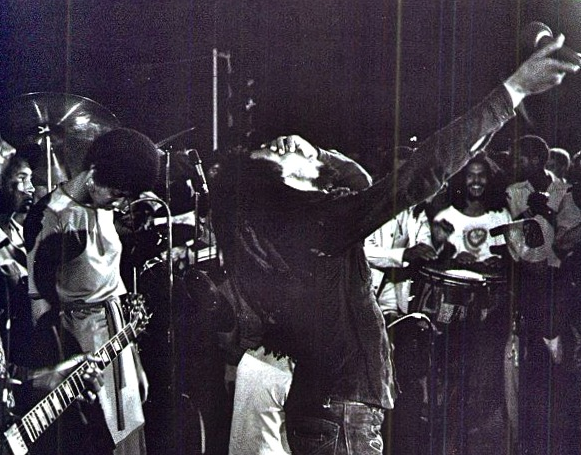
Following his return to Jamaica from the Rastaman Vibration tour and given his growing popularity, social influence, and targeted criticism of the government, Marley, his wife Rita, and manager Don Taylor suffered an assassination attempt* during a break-in at their home at 56 Hope Road, Kingston, two days before performing at the free Smile Jamaica concert (sponsored as “Jamaican Woodstock”, it was organised by and in support of then-Prime Minister Michael Manley, ahead of the coming Jamaican elections on 15 December 1976), leading to their departure from Jamaica and consequential exile for roughly two years in London, England.
*Despite having suffered severe chest wounds (from a bullet that creased his breast below his heart and lodged in his left arm), Marley still performed at the Smile Jamaica concert before heading to London, proving once again his street persona Tuff Gong (hence the name of the label), character and dedication on behalf of his oppressed Jamaican people and nation
“After the shooting, me never want to just think about shooting”; “So me just ease up me mind and go in a different bag. What me stand for me always stand for. Jah [God] is my strength” — Bob Marley to Sounds Journalist Vivien Goldman
That said and after arriving in London, Marley and the Wailers moved fiercely on to the development of their social and idiosyncratic “manifesto” Exodus (it should be noted that its title and motto was already decided before they left Jamaica).
By appropriating the title from the second book of the Old Testament, this concept album* depicts Marley’s religious beliefs and nearly-death experience through a cathartic-biblical imagery, thus characterizing its socio-political content through critique against oppression and abuse of power brought on by authoritarianism, as well as exploration of his intrinsic-spiritual “exodus” in search of peace, love, and social unity.
*Per curiosity, it is worth pointing out that its title and cover is a tribute to Ethiopia and its official language Amharic; with it, Marley pays homage to his god “Jah” Haile Selassie I (former Emperor of Ethiopia), by advocating the “exodus” of the Rastafarians towards the promised land Ethiopia and subsequent intrinsic freedom and plenitude
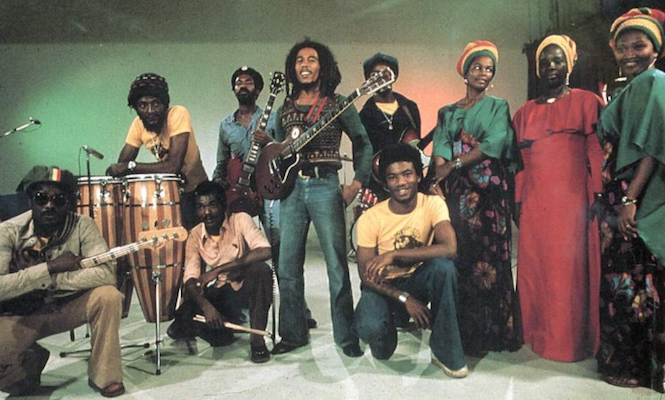
Production and arranging wise (both entirely by Marley himself and The Wailers), the album recording was started in mid-1976 at Harry J. Studio in Kingston, Jamaica, and then resumed and conceptually developed between January and April 1977 at Island Studios in London, England.
Its process had the involvement of instrumentalists such as Bob Marley himself (lead vocals, backing vocals and guitar) and the Wailers (Junior Marvin on electric guitar, Aston Barrett on bass guitar, Tyrone Downie on synthesizer, electric piano, organ & backing vocals, Carlton Barrett on drums and Alvin “Seeco” Patterson on percussions), featuring the I Threes (Marley’s female backing vocal trio consisting of wife Rita Marley, Marcia Griffiths and Judy Mowatt).
Each of these delivered a fresh and multifaceted outcome within the reggae scene, which from numerous influences and characteristic traits, epitomises Marley’s sonic motto around vibrating, immersive and universal soundscapes for all the world to enjoy in unison harmony:
· Intriguing exploration of reggae from its interconnection with varied musical genres such as rock’n’roll, British blues (as on “The Heathen” and “Waiting In Vain”), funk (as on “Guiltiness”, “Jamming” and “Exodus”) and soul (as on “So Much Things To Say” and “One Love/People Get Ready”, which contains an interpolation of The Impressions’ classic song “People Get Ready”);
· Interesting production for the reggae sonic scape via sound manipulation with audio effects like reverb, delay, and side-chain compression (in order to accentuate the notorious bass lines so famous in the genre), as well as recording techniques like multi-tracking, overdubbing, and panning setups;
· Minimalist and “relaxing” arrangement drawing on elements such as Marley’s chanting and spiritual vocal sections, I Threes’ heartfelt backing vocals, bluesy, melodious and laid-back electric guitars, prevailing and penetrating bass lines, spatial and line-shaping organ/synth/keyboards, call-and-response brass sections, as well as reggae-type drums/percussion sections.
While its sonic and production thrust is distinctive from their previous works (aside from this one, I vividly recommend the albums Catch a Fire and my likely favourite Burnin’), there’s no way not to highlight its lyrical compositional bent which, to me, is the pinnacle of the project.
Being written entirely by Marley himself (apart from credits to Curtis Mayfield on “One Love/People Get Ready”), its conscious intent signals the “messianic” nature of the artist as a man of the people and all those oppressed at the hands of their dictatorial, autocratic and intolerant systems. Not only did he have the ability to express them in a direct and defiant way, but also peacefully and calmly transmits them through religious-political pleas for peace, love, sex, inclusion and indulgence, features that cemented him as a true revolutionary and musical leader of the “movement of Jah people”:
· Call for change and social consciousness by religious-political beliefs and approaches (on “Natural Mystic”, the album’s opening song in which by personifying Marley’s “prophetic” and hopeful nature (much affected by his recent nearly-death experience), it presents a biblical-spiritual evocation by an image of the end of humanity that, if not redeemed from its mistakes and atrocities, will approach the day of judgment without return (“This could be the first trumpet, might as well be the last/Many more will have to suffer/Many more will have to die/Don’t ask me why (…) If you listen carefully now you will hear”);
on “So Much Things To Say”, one of my absolute favourites, in which by referring to religious and political figures of great significance, Marley frustratingly rambles on about all those who prefer to stray and “fall” into their own ignorance by not being informed and concerned about fracturing issues in society such as unity, spirituality and racial and social equality (“So don’t you forget (no way) your youth/Who you are and where you stand in the struggle/They say so much today/They got so much things to say, so much things to say”);
on “Guiltiness”, in which he fiercely criticises the elitist society and its authoritarian regimes designed by the materialistic world of Babylon (which for Rastafarians is the “capital” of malice and oppressive capitalism towards the people, especially those of African descent), determined to take advantage of the lower classes and minorities due to their financial disadvantages and clout (“Guiltiness (talking about guiltiness) (…) Woe to the downpressors/They will eat the bread of sorrow/Woe to the downpressors/They will eat the bread of sad tomorrow”);
on “The Heathen”, the album’s most direct track around conscience and religious creed, in which Marley “preaches” to “heathens”, i.e., believers to fight and not give up in pursuit of their human and spiritual liberty so as to stand up to their oppressors by going “up on the wall” (“Rise and take your stance again/It’s he who fight and run away/Live to fight another day/Di heathen back deh ‘pon di wall”);
on “Exodus”, probably the most musically intriguing track from Marley and the Wailers’ repertoire, in which by subliminally referencing the biblical story of Moses leading the exodus of the Israelites out of Egypt, Marley encourages the similar for Rastafarians, in order to find the way to their promised land Ethiopia and consequent liberation (“We know where we’re from/We’re leaving Babylon/We’re going to our Father land/2, 3, 4: Exodus: movement of Jah people! Oh, yeah!/(Movement of Jah people!) Send us another brother Moses!/(Movement of Jah people!”));
· Celebration of life through peace, unity, love, sex, and freedom (on “Jamming”*, the track that points the second part of the album to social unification and peace advocacy themes, Marley invites us to “jamming” (a jamic expression (English Patois vernacular of Jamaica) that means to dance and have fun)) and unite in the name of the celebration that is life (“We’re jammin’/To think that jammin’ was a thing of the past/We’re jammin’/And I hope this jam is gonna last/We all defend the right; Jah — Jah children must unite/Your life is worth much more than gold”);
*Just out of trivia, this was the track that inspired the great Stevie Wonder in the creation of his 1980 classic “Master Blaster (Jammin’)”
on “Waiting In Vain”, one of my absolute favourites, in which Marley humorously touches on his impatient desire to be with his beloved, not wanting to “wait in vain” for her love; it is speculated that this lover is Cindy Breakspeare, one of his many mistresses and mother of his son Damian Marley (“So don’t treat me like a puppet on a string/Cause I know how to do my thing (…) I don’t wanna wait in vain for your love/Cause if summer is here/I’m still waiting there”);
on “Turn Your Lights Down Low”, the most chilling and sexual tune of the album, where Marley expresses his desire to “give some love” to his beloved; as on “Waiting In Vain”, everything indicates that this is also Cindy Breakspeare (“I want to give you some love/I want to give you some good, good loving (Uh, uh, right, uh) (…) Turn your lights down low/Never ever try to resist, oh no”);
on “Three Little Birds”, arguably the best-known track in their catalogue (I don’t know about you, but I’ve heard it so many times I’m fed up with it), Marley appropriates his social activist nature in the form of a message around peace and optimism as a mechanism against the adversities and difficulties posed by daily life; its title is a reference to both his backing vocalists I Threes, as well as a salute to the presence of the Holy Trinity-Father, Son and Spirit (“Three little birds pitch by my doorstep/Singing sweet songs of melodies pure and true (…) Saying, “This is my message to you”/Singing, “Don’t worry about a thing/’Cause every little thing is gonna be alright”);
on “One Love/People Get Ready”, another arguable as the best known song in their repertoire and one of the greatest peace hymns, in which by applying an interpolation of The Impressions’ “People Get Ready”, Marley employs biblical-spiritual phrases and references in order to call for unity and mutual aid of all human beings to combat oppression and embracing of peace, cohesion and equality as one (“One Love! What about the one heart? One Heart!/What about the- Let’s all get together and feel all right/I’m pleadin’ to mankind! (One Love!)/Oh, Lord! (One Heart) Wo-ooh/Give thanks and praise to the Lord and I will feel all right”)).
Recognised by countless critics and fans (ranked at 26th on VH1’s Greatest Albums of All Time, 71st on the 2020 updated list of Rolling Stone’s “The 500 Greatest Albums of All Time”, named by Time magazine as the best album of the 20th century, just to refer a few), Exodus remains Marley’s most successful studio album (aside from his 1984 Legend compilation, which stands as the best-selling reggae album ever, with an estimated 25 million copies sold to date), by being the project that propelled him to international superstardom, as he became the undisputed King of Reggae.
From the moment Bob Marley was introduced to the world by Chris Blackwell and his Island Records in 1970, not only were millions of fans introduced to reggae across the globe, but he also remains one of the most influential cultural figures in music history, both for the development of genres such as pop, hip hop, punk*, ska, dub, rocksteady, and techno, as well as for artists like John Lydon, Madness, Wyclef Jean and Lauryn Hill.
*Some of you may find it odd, however, the musical communities of reggae and punk (particularly British) are eternally connected, both in historical context and for the advocacy of socio-political activism, against the oppression imposed upon working-class society and other minorities; in witnessing the Notting Hill Carnival Riots of ’76 and social chaos in West London, Marley also observed the consequent uprising of the UK punk rock scene, which allowed him to befriend notorious bands like members of The Sex Pistols and The Clash, and associate with them for hang-outs and joint football matches (after The Clash demonstrated their adoration for reggae from their cover of Junior Marvin’s “Police And Thieves” on their first album, Marley decided to return the love with “Punky Reggae Party”)
Therefore, due to the fact that I really like Bob’s music and its interweaving of summer vibes, coolness, theological knowledge and socio-political activism, I recommend the listening of Exodus to all fans of “jamming” summer tunes, reggae, soul, funk, socio-political activism, theology and Rastafarianism (Link here).
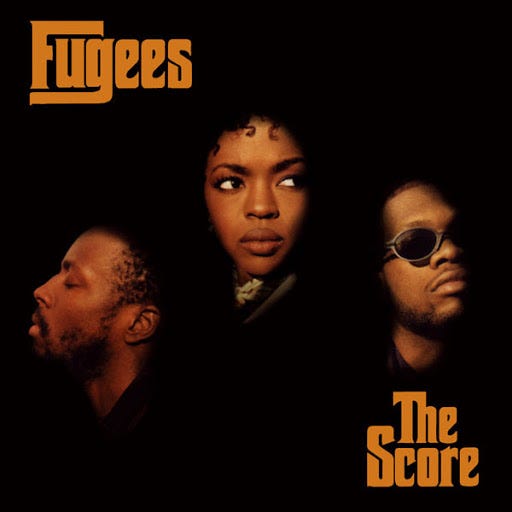
Fugees — The Score
Genre (s): alternative hip hop, east coast hip hop, conscious hip hop, reggae fusion, neo-soul
Tracklist: Here
The second album under review is called The Score by the talented Haitian-American hip hop group Fugees, released in 1996 by the joint venture label Ruffhouse Records (distributed by Columbia Records).
The group* formed in the late 1980s in South Orange, New Jersey by Lauryn Hill and Haitian immigrants Wyclef Jean and Prakazrel “Pras” Michel is one of the most influential of the last 25 years, an impact that was marked and dignified by The Score, the best-selling album in hip hop history and one of my go-to records for long and sweet summer nights.
*The group’s name consists of an abbreviation of the word “refugees” in order to serve as an homage to Jean and Pras’ roots as well as a derogatory reference to Haitian immigrants
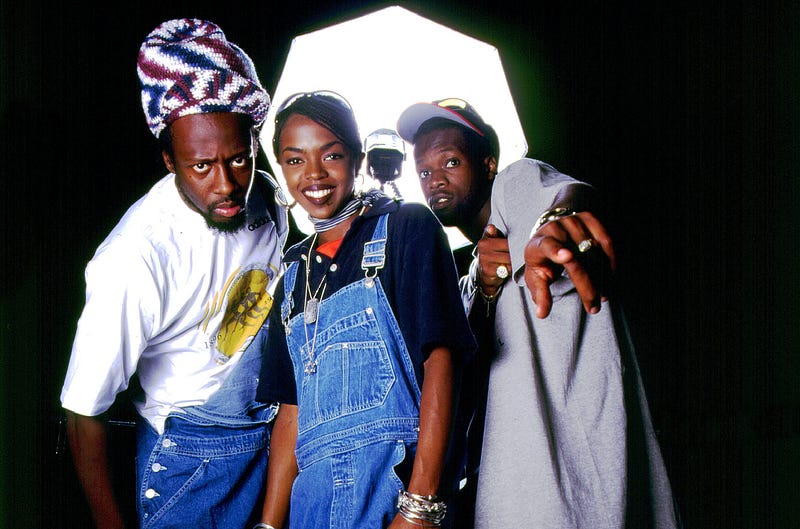
After reluctance due to their commercially unsuccessful debut album Blunted On Reality (1994), Ruffhouse Records CEO Chris Schwartz provided the band with a new opportunity in giving them complete artistic control and a $135,000 advance for their next project, something their catalyst Wyclef Jean was able to capitalise on with immense leverage and dedication.
Given this, Jean took advantage of the financial boost to equip the Booga Basement (a studio set up in his uncle’s house in Bloomfield, New Jersey, also serving as the home base for their Refugee Camp Crew, also consisting of artists such as John Forté and a young Akon), where the entire production, arrangement and conceptual development of the iconic album released in the scorching summer of 1996 took place.
Its proceedings had the contribution of various producers/arrangers/instrumentalists such as the group itself (Lauryn Hill (producer, vocals and arranger), Wyclef Jean (producer, vocals and guitar) & Prakazrel “Pras” Michel (producer and vocals)), Omega (vocals), Pacewon (vocals), Rah Digga (vocals), Diamond D (producer and vocals), John Forté (producer, vocals and drum programming), Robbie Shakespeare (bass guitar), Sly Dunbar (drums and drum programming), Jerry “Wonda” Duplessis (producer), Handel Tucker (producer and keyboards), Warren Riker (recorder and engineer), Eddie Hudson (engineer and mixing), among several others.
“We were doing hip-hop with great melodies, and the content was great. We weren’t talking about bitches, or none of that. Like every album you buy now, kids can’t even listen to it. The Fugees album, anybody can listen to it. It was from a reality we came from, we were refugees” — Producer Jerry “Wonda” Duplessis
Its sonic and production output was perpetuated by the Fugees’ Haitian roots and remaining Refugee Camp Crew in creating an unmistakable and highly accessible sound to all kinds of classes and generations in world society and culture, making it one of the most accomplished sonic works in the hip hop genre on depicting the incomparable talent of Lauryn Hill and acoustic mastery of Wyclef Jean and Pras:
· Musical exploitation and eclecticism from diverse genres/subgenres such as hip hop, alternative hip hop (as in “Zealots” and “The Score”), conscious hip hop (as on “Family Business” and “Manifest/Outro”) east coast hip hop (on “Ready Or Not” and “Cowboys”), spaghetti western-style (on “Cowboys”), pop, R&B/neo soul (as on “Fu-Gee-La” and Roberta Flack’s cover “Killing Me Softly With His Song” de Roberta Flack), reggae (as in their cover of Bob Marley and the Wailers’ “No Woman, No Cry”) and Caribbean music (on “Zealots” and “Fu-Gee-La”);
· Rich and inventive production through sound manipulation via audio effects like side-chain compression (mostly in the mid and low frequencies of instruments such as bass and the kick drum), delay and reverb, as well as recording techniques including overdubbing, crossfading, channel panning, scratching, tape looping and white noise, as well as an excellent and diverse application of interpolation/replayed sampling (such as Bob Marley and the Wailers’ “Buffalo Soldier” & The Delfonics’ “Ready or Not, Here I Come (Can’t Hide from Love)” on “Ready Or Not”, Teena Marie’s “Ooo La La La” on “Fu-Gee-La”, etc.) and sampling (some notorious examples are Enya’s “Boadicea” & The Headhunters’ “God Made Me Funky” on “Ready Or Not”, The Flamingos’ “I Only Have Eyes for You” on “Zealots”, Ramsey Lewis’ “(If Loving You Is Wrong) I Don’t Want to Be Right” on “Fu-Gee-La”, among several others);
· Characteristic 90’s hip hop instrumentation and perfected arrangement marked by sharp and thoughtful rapping bars, Hill’s incredible and melodically perfect vocal sections, tight and vicious bass lines (notoriously on “The Mask”, what an otherworldly line), harmonious guitars, call-and-response and immersive brass sections, signature DJ scratching, as well as groovy and punchy drums/percussion sections.
Beyond its sonic outcome being incredibly effective and executed, we must also note its lyric-compositional substance in managing to be as fiercely conscious, as well as direct and contemplative.
Coupled with its central concept of representing the oppressed (particularly refugees, given Jean and Pras’ own roots) by taking “refuge” and artistic catharsis from music, its lyrical ethos (carried out by the group and the other contributors such as Forté, in addition to the samples credited to the respective artists) epitomises 90’s hip hop as few other projects did.
Whether through takes and critiques around subjects such as bling culture, sexism, social/love violence, the notion of identity, poverty, capitalism, lust/greed, and institutional racism, The Score and its protagonists managed to depict the artistic truth of a decade filled with rawness and socio-political awareness, as well as the sheer harsh reality of the social spectrum around the oppressed, unheard and discredited by their own, thus cementing Hill, Jean, and Pras as musical icons and heralds of their generation and multiple communities:
· Lyrical craft derived from characteristic dissing and provocative approach in the hip hop genre (on “How Many Mics”, in which led by Hill, the group showcase their wordplay and rapping mastery in order to demonstrate their worth to all their doubters and critique the bling culture riddled with falsehood and lack of identity (“How many mics do we rip on the daily? (…) If only they knew that it was you who was irregular/Sold your soul for some secular muzak that’s wack/Plus you use that loop over and over/Claiming that you got a new style, your attempts are futile”);
on “Zealots”, a 60’s doo-wop inspired song that, while demonstrating the cultured and diverse tenor of the group, depicts both their awareness to police oppression around the African American community and personal dissing to all the falseness felt in the bling culture (“Then get buried like the great Mussolini/And for you biting zealots, your rap styles are relics/No matter who you damage, you’re still a false prophet (…) Another MC lose his life tonight, Oh/I beg that you pray to Jesus Christ, why/Oh Lord, father don’t let him bury we, I”);
on “The Score”, a statement/diss song in which the trio cements “the score”, i.e., their position in the hip hop spectrum by showcasing their talent and shutting up all their critics and “phony” rappers who would rather talk about them than expose their supposed skills (“Competition, stimulation for the rap man/Losers, check your tooters as I’m suckin’ on your girl hooters/Don’t play macho ’cause you got the gun, son/’Cause if you gotta reload (Man)/It’s time I settle the score”);
on “Cowboys”, in which by deriving spaghetti western vibes and other various samples, it is another diss and more violent approach track, aimed at all the fake rappers who call themselves fearless of the unexpected, in spite of seeking the “easy road” to stardom by mediums such as acting; interestingly, this one became personal for Tupac Shakur who came to respond with “When We Ride On Our Enemies” (“Rappers want to be actors/So they play the Jesse James call-up card/And get they bones fractured/You ain’t got no guns, you off to the precinct (…) Oh-lay-hee/.45 by my side, do he live? No, the nigga die (Cowboys)”));
· Raw and pure narratives around empowerment, awareness, gender equality and intra and interracial social/relationship violence (on “Killing Me Softly With His Song”, in which by appropriating the Roberta Flack classic and arguably performing one of the most acclaimed covers ever, the trio exposes the stardom and key piece of the record Lauryn Hill, who dwells around subliminal social themes such as female empowerment, self-overcoming as well as relationships and its attached ache (“Strumming my pain with his fingers (One time, one time)/Singing my life with his words (Two times, two times)/Killing me softly with his song (…) Telling my whole life with his words/Killing me softly with his song”);
on “No Woman, No Cry”, in which while doing a twisting cover of Bob Marley and The Wailers’ song, the trio borrows and interpolates some of its phrases and intonations to make their own Haitian-American version (especially the first verse) of survival and perseverance on behalf of all the helpless, oppressed and unfortunate, cementing the Fugees’ role as “orators” for the oppressed, particularly refugees and those who have nowhere to call home (“I remember when we used to rock, oh/In a project yard in Jersey/And little Georgie would make the firelight/As stolen cars passed through the night (…) Everything’s gonna be alright (…) No woman, no cry”));
· Catharsis and artistic-cultural wordplay, consciousness-raising, religious belief and socio-political critique around police brutality, institutional racism, oppression, and economic inequality felt by minorities (on “Red Intro”, the album’s intro track in which Ras Baraka (current mayor of Newark and son of the poet Amiri Baraka) poetically depicts the brutal narratives and harsh themes that will be addressed throughout the listening journey;
on “Ready Or Not”, one of the best known and most representative songs of lyrical prowess in hip hop, in which it features the group’s provocative and storytelling intent in describing their New Jersey hometown filled with subliminal dissing and identity artistry of each other’s roots (“So while you imitating Al Capone/I’ll be Nina Simone and defecating on your microphone/Ready or not, here I come, you can’t hide/Gonna find you and take it slowly”);
on “The Beast”, a powerful track of socio-political consciousness that marks the album’s hostile turning point, in which by taking up popular culture references, we observe the group’s descriptive and critical nature regarding police brutality, social oppression, and economic disparity imposed on the African-American community, by alluding and directly addressing political figures such as Republican Newt Gingrich and others who advocate these same practices (“Warn the town, the beast is loose (Ah-ah)/Word ’em up, y’all (…) My inner conscience says throw your handkerchief and surrender/But to who? The “Star-Spangled Banner”?/Oh, say can’t you see cops more crooked than we”);
on “Fu-Gee-La”, one of my favourites as well as one of the best known, loved and iconic of their repertoire, in which it relies once again on the trio’s creative wordplay satirically wandering about society, spanning from sociopolitical & religious commentary (given their Rastafarian beliefs), controversy and the group’s presence on the hip hop scene (“What’s goin’ on? Armageddon come you know we soon done/Gun by my side just in case I gotta rump/A boy on the side of Babylon/Tryin’ to front like you’re down with Mount Zion/Ooh, la-la-la/It’s the way that we rock when we’re doin’ our thang”);
on “Family Business”, in which from play word and complex rhyming schemes, the trio artfully exposes the suffering endured by the African-American community by alluding to their own upbringings, social violence, police brutality, drug trafficking and Alex Haley’s book Roots: A Saga of an American Family (“Just walkin’ the streets death can take you away/It’s never guaranteed that you’ll see the next day/At night the evil armies of Shaton don’t play/So defend the family, that’s the code to obey”);
on “The Mask”, my absolute favourite of the album, where, driven by an incredible and infectious bassline, it stems inspiration from Paul Laurence Dunbar’s poem “We Wear the Mask” and it's content around the emotional oppression and “mask” put on by African-Americans in order to be accepted by white society (“M to the A to the S to the K/Put the mask ‘pon me face just to make the next day/Brothers be frontin’, then they be runnin’/I walk the streets and camouflage my identity”);
on “Manifest/Outro”, one of my favourites and the song that closes the record in a powerful and thought-provoking way, in which by borrowing from biblical, Rastafarian references and pure raw emotion, the trio ends with a “manifest” in order to enhance the hard and desperate life in the ghettos of a promising African-American youth, constantly ostracised and often met with a bloody and tragic end “at the hands” of the “slug” (a.k.a. bullet), lack of guidance and intra or interracial social/relationship violence, something so relevant today as never before (“When my peoples would protest/I told them mind they business, ’cause my shit was complex/More than just the sex/I was blessed, but couldn’t feel it like when I was caressed/I’d spend nights clutching my breast, overwhelmed by God’s test (…) (Before I manifest the rhyme)/(I’m manifesting)”)).
“Reflecting on its impact 25 years later confirms something that the group knew when they started making music together: The Fugees were always ahead of their time” — Consequence of Sound
By being widely acclaimed and recognised by fans and critics worldwide (ranked at 134th on the 2020 updated list of Rolling Stone’s “The 500 Greatest Albums of All Time”, included on The Source’s 100 Greatest Rap Albums list, Q’s Best Albums of the 90’s list, Robert Dimery’s “1001 Albums You Must Hear Before You Die”, Vibe’s “100 Essential Albums of the 20th Century”, 1997 Grammy Awards’ Best Rap Album awardee and Album of the Year nominee, just to refer a few), The Score is one of the best-selling albums of all time and the biggest in hip hop history (being also the best-selling hip hop album ever in France, being certified diamond with 7 million records sold).
Having sold an estimated 22 million copies worldwide to date and despite their brief existence (1992–1997), the Fugees and their magnum opus were one of the setters for the multicultural music blueprint of the last 25 years, putting Caribbean music on the map and influencing countless artists across the globe from acts like Kanye West, Drake, Akon, Black Eyed Peas, U2 (with Bono dubbing them as “the hip hop Beatles”, it’s an overstatement to me but that’s my opinion), among many others.
The Score is not only a testament to the expertise of these three highly gifted MC’s, but it also brings out the potential of the underprivileged and oppressed in search of new and great prospects, for if there are groups that personify and inspire it better than many, it’s Wyclef Jean, Prakazrel “Pras” Michel and the undisputed Lauryn Hill (by the way, I highly recommend her debut and only album The Miseducation of Lauryn Hill to anyone who’s never heard it, it’s equally a complete masterpiece that I adore).
I love the Fugees (not my hip hop act of choice though; for that, I’d say Outkast, Madvillain, or A Tribe Called Quest) for the fact that they make me reflect and chill through my veins on hot and pleasant summer nights, so therefore, I recommend the listening of this massive album to all fans of flawless production, insightful wordplay, 90’s hip hop, conscious hip hop, neo-soul, politics, social awareness and satire (Link here).
Clash of Times (Exodus vs. The Score)
Of course, every summer marks each person differently and these albums are two of my go-to favourites for this seasonal time of year (if you like, check also the ones I mentioned at the beginning of the article).
They make me sing, dance and chill for long days of cold, hot, nostalgia and sheer delight, so I’m not going to do a decade comparison due to the fact that summer is supposed to be soothing and loose (despite having the meeting point between the Caribbean roots and Rastafarian beliefs shared by both artists/groups and the Fugees’ obsession with Marley).
Cherish fabulous albums that you find that will create unforgettable and important memories to look back on for years and years to come.
Have a good summer and enjoy your holidays if you can manage to do so!
“The best songs come unasked for. You don’t have to think about them … Summer is good for songs. When it’s real warm, if you have a sense of freedom, not a lot on your mind, and a feeling there’s plenty of time, it just seems to be a good climate for music” — Jim Morrison
Thank you to everyone who read the article, be free to share it with everyone and leave a comment below 😊.


