“Shoplifters of the World:” An Imperfect Film With a Perfect Soundtrack
A Fitting Tribute to a Band and a Time
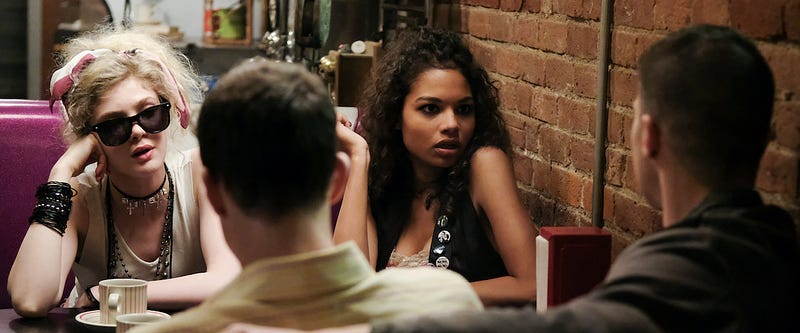
Late last night I finally got around to watching Shoplifters of the World, a fictional tribute to the Smiths that has garnered wildly different reactions from viewers. It elicited some wildly different reactions from me as well, but before getting into that I need to make two points of clarification.
First, I am a Smiths fan. Since I first heard them around 37 years ago the only artist I have listened to more is Springsteen. I realize that’s an odd pairing; life is full of contradictions.
Second, this is not a movie review in the traditional sense. Much like the film itself, this is more about the music.
All that said, here is a little backstory on the film. For over a decade, filmmaker Stephen Kijak had been searching for the right vehicle for a 1980s coming-of-age story he had in his head, an American Graffiti for the Reagan generation. Then he met a producer from Denver with a compelling urban legend. According to the Denver Post, the story went something like this:
“In 1988 a Denver teen plotted for months to (but didn’t actually) take over a Denver-area Top 40 station at gunpoint. His goal was to force the DJ to play nothing but The Smiths cassettes and albums he had in his car. He was arrested in the parking lot before anything happened.”
Kijak is a Smiths fan himself, and this story (true or not) gave him the framework on which to hang his story. Instead of 1988, he set it in Denver in 1987, on the very night the Smiths’ breakup was announced to the world. He even changed the “Based on a True Story” line you see at the start of so many films to “Based on True Intentions.” He gets props for that alone.
The blurb for the film sounds like any teen movie from any era:
In the summer of 1987, four friends, reeling from the sudden break-up of the iconic British band The Smiths, embark on a night out of partying to mourn their musical loss. At the same time, an impassioned Smiths fan takes a local radio DJ hostage at gunpoint and forces him to play nothing but Smiths tracks. With the radio station playing as the soundtrack to their night, the friends go on a wild journey of self-discovery that will transform them forever.
That last line is the important one, because the main character of this film is not any of the four friends or even the radio station hijacker; the main character is the soundtrack. All films have soundtracks, of course, but this one plays essentially non-stop, and for good reason. Kijak spent an astonishing 30% of the film’s $3 million budget to license 20 Smiths songs. The critics would say he should have spent less on music rights and more on a better screenwriter. The critics would be wrong (I have included a playlist of the songs on the soundtrack at the end of this article).

This film is, at its heart, a story about how a band and their music can become the very center of our existence. Even if you are not a Smiths fan, there was some band that reached you in an inexplicable way between the ages of, say, 14 and 19, a band whose music seemed like it was written specifically for you and understood you the way no one else ever could.
The dialogue can be melodramatic. At one point, main character Cleo laments that “I don’t understand how we can live in a world where the Smiths can break up, but Wang Chung and Mr. Mister still exist.” She’s right, of course, but lines like this would pack more punch if they weren’t delivered almost non-stop (Kijak never misses a chance to drop in every 1980s reference he can). Then again, we are talking about the Smiths, so melodrama is a given.
Smiths fans’ reviews are evenly divided on Amazon (the film is available through Amazon Prime), split almost evenly between 5-stars and 1-star. This is no surprise really; Smiths fans, whether 15 or 55, can find fault with anything, just like their heroes did. But if you lived through the era when the Smiths were still a band, I think you should overlook the negative reviews and the film’s obvious flaws and take a trip back in time.
You’ll see the girl you knew in school who dressed like Siouxsie Sioux (of Siouxsie and the Banshees) and the guy who thought he was the Cure’s Robert Smith. You’ll laugh as a girl named Sheila oscillates wildly to the Smiths’ song “Shelia Take a Bow.” And you’ll remember those glorious days before the Dictatorship when there was no internet, no cell phones, everybody still smoked, and the future was still wide open.
Most of all, for 91 minutes you’ll experience two films: the one on the screen and the one of the memories playing in your head, all triggered by the best soundtrack since Pretty in Pink (bad movie, great soundtrack). The ending may be a little more hopeful (and cheesier) than the notoriously morose Morrissey would have liked, but with Moz you can never tell.
Let me close the way I started: I’m a Smiths fan. I had my daughters singing Smiths songs as toddlers, so I am not the most objective voice you will hear about this film. It is definitely an imperfect film, but its perfect soundtrack covers a multitude of sins. And always remember that “there is a light and it never goes out.”