
Japan | Culture
The Essence of Japanese Culture: An Intense Obsession with Form?
Japan’s fixation with doing things the proper way begs a deeper dive
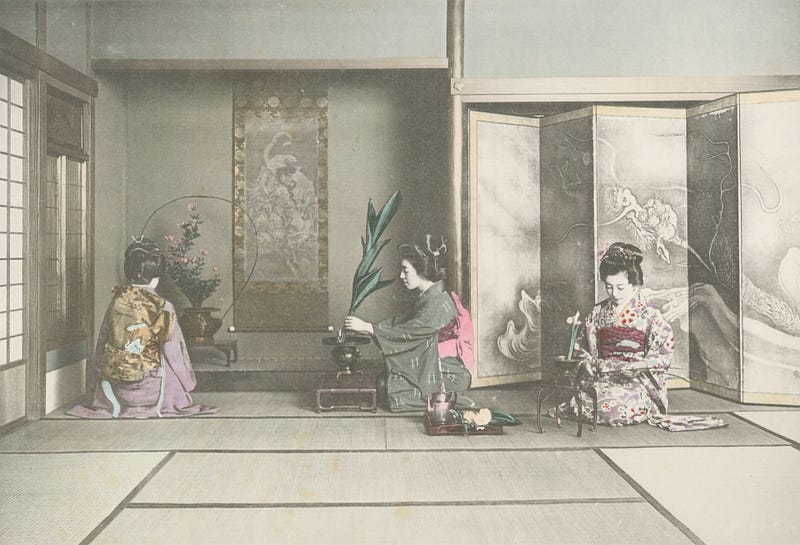
Oscar Wilde wrote in 1889, “In fact the whole of Japan is a pure invention. There is no such country, there are no such people.”
Japanese culture has been Orientalized, romanticized, and exoticized for over a hundred years. The result? Much of the (Western?) world has come to think that there is something inherently profound, unique, and intrinsic about Japanese culture.
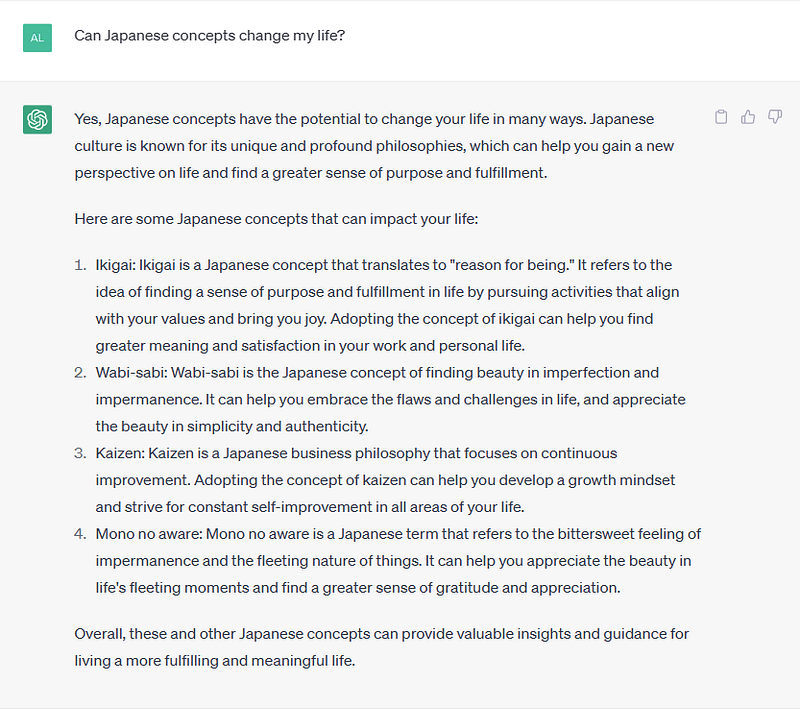
Just look at the output from ChatGPT — which basically spits out existing data that it has been trained on:
Even I have been accused of committing cultural essentialism in the piece “Five Things about Japan I Didn’t Fully Appreciate until I Lived There.”
Cultural essentialism refers to the now-outdated belief that there is something intrinsic, primordial, and unchanging to a culture.
That there is an “essence” to a culture.
But this critique misses the mark. As someone with a background in the study of society and culture, I have never subscribed to this philosophy.
I have never believed there to be a singular essence to culture —much less to Japanese culture. And yes, I recognize that even using the term “Japanese culture” is problematic.
What culture are we referring to when we say, “Japanese culture?”
- Do we mean the bold and sometimes outlandish street fashion of Harajuku Tokyo?
- Or the impenetrable world of the geiko of Gion in Kyoto?
- Or are we referring to the explicit hierarchy that is embedded directly into polite Japanese speech?
Is it even useful to use the term “Japanese culture” in today’s world?
And yet, I believe it is — and not because I am a cultural essentialist, but because I am a pragmatist.
Humans categorize the world by making distinctions.
Good/Bad. Safe/Dangerous. Self/Other. Sacred/Profane. Occasion/Mundane. Rich/Poor.
And so on. These distinctions serve as mental shortcuts to help us make quick decisions. For better or worse — we apply this heuristic to people and even national character. It gives us a mental map for when we communicate with others.
And so, we ask, “What is the general character of Japan as a country?”
The thing that stands out most to me in my many years living in Japan, is the overt tendency towards obsessing over rules and rituals.
This doesn’t mean that all Japanese people always go by the book or that all Japanese organizations lack flexibility. It does mean, however, that there exists a general fixation with getting things right.
I call this an obsession with form.
If there is any essence at all to Japanese culture, then it is defined less by essence but by form.
Forms, rules, and rituals
When I first started studying Japanese, I was surprised at how logical everything was. Everything made sense.
There were very few exceptions or irregularities! Japonica editor-in-chief DC Palter thinks that Japanese is easy to pick up if you think like an engineer. The language is highly structured and organized, containing very few exceptions.
I agree — and I’d go further.
Japan itself is full of forms.
I don’t mean the application forms and bureaucrats and bank clerks force you to fill in.
Apart from the endless paperwork that the Japanese government subjects its residents to, there are also forms in a more abstract sense. I speak of forms as in “kata” (型).
In martial arts like karate, students are taught “kata” or the forms which provide the basis for all movements.
See this repeated in kanji — the characters just beg to be written again and again, in the correct stroke order, until you memorize them.
The idea of kata is so deep-rooted in everyday behavior that “kata” — albeit written with a different kanji (方)— is also a very useful suffix in the Japanese language. Append it to a verb to derive the noun for “the way of doing X”:
- する+方=仕方 (shikata — how to do something)
- 書く+方=書き方 (kakikata — how to write something)
- 食べる+方=食べ方 (tabekata — how to eat something)
- 生きる+方=生き方(ikikata — how to live, now we’re getting into ikigai territory)
You need look no further. The idea of kata is everywhere.
For most things, there is a correct way and a not-so-correct way.
Ritual in business
For fresh graduates who are taking their first steps into the Japanese corporate world, their first initiation into their companies would generally be through the nyūushashiki — a formal company induction ceremony.
These fresh graduates turn up in suits (it’s still a must!). They spend a couple of hours listening to a bunch of company executives and their seniors telling them about what an amazing company they have joined.
Business greetings are also full of ceremony — even in e-mails — that someone less culturally aware might overlook. There is a “correct way” to write business e-mail which AI cannot help to compensate for.
Speaking of business, when dealing with clients — honorific language or keigo is the general expectation. When fresh graduates join a traditional Japanese company, not only are they given job training, but they are often also given general business training on how to execute business rituals correctly. For example,
- How to bow.
- How to exchange name cards politely.
- How to introduce yourself.
- How to use proper honorific language.
- How to send clients off at the elevator (you have to bow until the door closes)
And so on.
I cannot imagine this level of obsession with form happening in my home country, Singapore.
In Japan, there is a correct way and the wrong way to do business greetings.

Rituals in mundane life
Ever visit a convenience store looking visibly foreign and not speaking a word of Japanese? No worries — the store clerk will sometimes be able to speak English to you. Until you prepare to pay, and the clerk reverts to the standard protocol of announcing the price in Japanese.
I’ve witnessed this phenomenon several times and have always wondered why this was the case. Today I have the answer.
The store clerks have rehearsed countless times exactly what to do at the checkout that it requires no additional thinking. I doubt they’re even aware of it.
Pure muscle memory.
Pop into any apparel store and be bombarded by an energetic greeting of “irasshaimase!” If the store is relatively high-end, be prepared to be escorted to the exit — you’ll get a proper send-off.
Move over, omotenashi! — Kitchiri, or doing things the proper way — is the real reason why customer service in Japan is high.
Ritual is also embedded in norms of transport safety. Take, for instance, the practice of “pointing and calling” — or shisa kanko, 指差喚呼 (しさかんこ) — that railway staff carry out as part of their safety protocol.
According to the Japan Private Railway Association, the station staff on the platform point at the tracks before the train arrives and after it departs.
Meanwhile, the train driver points at the signal while shouting “Departing now!” And so, “pointing and calling” is a way of physically confirming something instead of simply relying on a visual and mental check.
The benefit of pointing and calling?
According to the Ministry of Health, Labor, and Welfare website, an experiment conducted in 1994 showed that the error rate was 2.38% when pointing and calling were not performed together, and this improved to 0.38%, when both pointing and calling were carried out.
In other words, pointing and calling reduced the error rate by six times!
Doing things the proper way leads to fewer accidents.
Few transport systems around the world have adopted this method, if at all.
Japan: Form over essence
I have to confess this isn’t my original idea.
A guest speaker and writer at a networking event I attended in Tokyo many years ago — his name eludes my memory — mentioned this: Japanese culture lacks essence.
「日本文化にはエッセンスがない。」
He meant to say that Japan has traditionally adopted things or concepts — “forms” from abroad and used them or modified them if they fit their needs — be they Chinese characters, Western suits, American denim, or English words.
Historically, there has never been strong ideological or religious opposition towards absorbing the foreign.
The exception of course — was during the Sakoku period (1603 to 1868) — when the Tokugawa shogunate banned all contact with the outside world. Foreign ideas — including modern medical knowledge — only reached Japan through the foreign port of Dejima in Nagasaki.
It is this tendency and obsession with form that for me, defines what many find unique about Japan. If this is the case, it’s fairly impossible to think of Japan as a country that has some kind of unchanging primordial essence.
© Alvin T. 2023
A previous version of this article mixed up the characters for martial arts “kata” (型)and “way of doing” (方). Thanks to a reader, this has been fixed.
The author is an editor of Japonica, a Japan-focused publication, but also writes more generally about culture and society. Discover more stories about Japan by the same author in the link below!


