
Travel | Personal Essay
I Traveled Home to Singapore for the First Time Since the Pandemic
Many things have changed, and I feel strangely out of place.
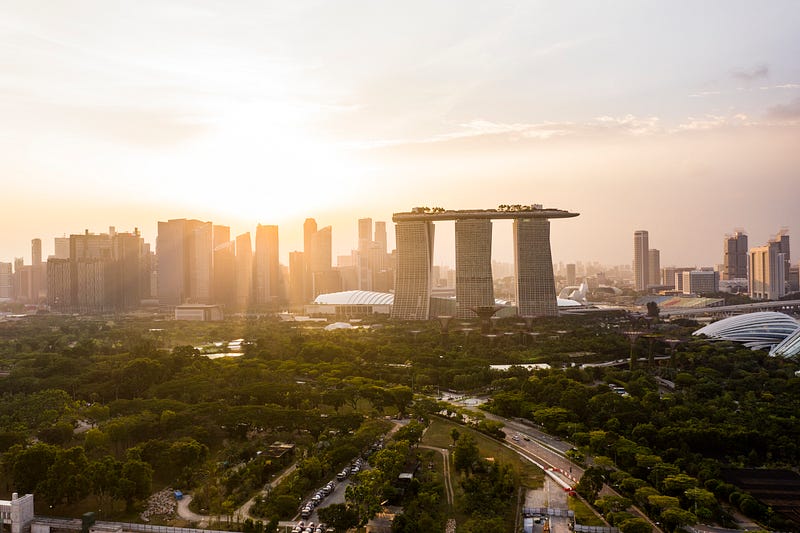
I’ve spent the entire pandemic outside in Japan and outside of the country where I was born — Singapore.
And if you’ve ever moved abroad, some of these things might resonate with you. Or maybe they might not.
This August, I had an opportunity to work from my home in Singapore for two weeks — thanks to my understanding bosses and the forward-looking mindset of my company.
I’ve not left Japan in the last 2.5 years — not necessarily a bad thing since I think I was relatively lucky to have been in Japan during the pandemic. Perhaps that has either distorted my perception, or things have really changed. After all, all things considered, I’ve lived in Japan for six years.
Singapore isn’t the same.
Or perhaps I am not the same person as I was when I left Singapore for Japan six years ago.
New technologies
My card for riding the metro had expired. To my surprise, I learned that you didn’t need a metro card anymore. Apple Pay would work. Or I could simply use my local credit card that has RFID technology embedded into them (you know, the thing that lets you do contactless payment).
But I found out after I had bought a replacement card.
And then, there are all these new and exotic QR-code based payment systems that make me worried that I’ve accidentally become a boomer in my own country.
These are the mundane things nobody even thinks of telling you. And yet, it is in the small things, the understanding of the minutiae that are taken for granted — that mark the difference between a native and a non-native.
Boba tea has now become gentrified
In malls, boba tea (or sometimes called bubble tea, or black pearl tea) — originating from Taiwan — seemed to have caught fire. There were sometimes 3–4 stores all selling bubble tea within a single mall.
Don’t get me wrong. The beverage was always popular in Singapore, but its recent proliferation is just astounding.
Not only are they ubiquitous now, but they have also become gentrified. Back in my high school days, they were a cheap source of empty calories and some chewy pearls made from tapioca flour.
Now? The product seems to have gone upmarket. Every shop appears to try to outdo one another. Fancy packaging. Pearl variants. Pink pearls! Yellow pearls! Tea variants. And so on.
With the recent Chinese military exercises around Taiwan following Nancy Pelosi’s high-profile state visit to the island, China-Taiwan tensions are at an all-time high.
But for the time being, we will continue to drink boba tea.
COVID-19 hasn’t stopped the growth of malls
Shopping malls continue to define the cityscape of Singapore. In a tiny island country of over 5.4 million (based on 2021 data), there isn’t much to do. Shopping appears to be the primary pastime — especially since the heat and humidity aren’t very conducive for anything else.
There’s a new mall about ten minutes train ride from my home. I had dinner with a friend there.
Technically, it’s been there for as long as I remember. I sometimes visited the mall during my military service since it was somewhat close to my camp. I remember it being old, small, and generally not very interesting.
In the time that I was away, it was renovated and expanded. It even got an expanded name — from Northpoint Shopping Centre (we spell the UK way) to Northpoint City.
Not surprisingly, I got lost in the mall.
Inflation? — or simply the dramatic decline of the Japanese Yen?
Did things ever use to cost this much? I don’t remember well anymore. I’ve been away for quite a while, and inflation is pretty much happening everywhere now.
I had a meal for about SGD7.30 at an air-conditioned food court. In 2016, the same meal would probably have cost something like SGD5. Which, by American standards, is probably very cheap.
But to say that things have become expensive would simply be one side of the story. The fact is, the Japanese Yen — in which I earn my salary — has declined so dramatically in 2022. In the Japanese Yen, prices in Singapore seem much more expensive.
Just a few years ago, lunch in Japan would set me back by SGD10–12, and around SGD5~6 in a food court in Singapore. Now Japan seems like a cheap country when you consider that the cost of lunch has almost reached parity.
Japanese lunchboxes — bento — are even cheaper.
The humidity is probably the same, but my perception of it has changed
Japan in the summer is insanely hot. And humid. But there is something about the humidity of Singapore that is on a whole new level. Air conditioning dries things in Japan.
Not so much in Singapore.
I walked about in shopping malls, all air-conditioned. The air was cool, but somehow the tangible wetness in the air was extremely palpable. The sweat on my denim-covered legs would not dry.
In my room, I discovered that the humidity had destroyed many things — mold grew freely and rampant on the clothes that would no longer fit me. I had grown a little pudgy from my time in Japan.
The delightful sweets readily available in convenience stores, the crazy company drinking sessions, excessive overtime work, as well as general aging, had done nothing positive for my waistline.
The country has moved on without me
So now, as I enter my seventh year of life in Japan, I realize that the country has moved on without me. The Singaporean government provides relatively affordable public housing and is the primary material stake that most Singaporean citizens have in the country.
Most Singaporeans build their careers in the country. They get their first jobs, climb up the corporate ladder, aspire to a good and stable income, and buy public housing when they get married (singles can only buy two-room apartments when they hit the age of 35).
To explain to my foreign friends — owning public housing is almost like a given in this country. 80% of Singaporean citizens live in public housing. Out of this, 90% own their property. So, property ownership isn’t even something to be proud of.
In business terms, it’s the minimum to go.
Singaporeans have their life mapped out neatly for them.
I realize — with a tinge of bittersweetness — that none of this applies to me.
I took a big risk by moving to Japan. Not that I regret moving to Japan — but I’d be lying if I told you it’s all fun and games.
I built my career in Japan. I pay all kinds of taxes to the Japanese government. I have no income in Singapore and it’s going to be a challenge for me to buy property in Singapore.
That was the sacrifice I had to pay to master the Japanese language. And even then, I’m no master. I know I’ll never speak Japanese like a native speaker. It’s not something you master in two months, nor even two decades.
Singapore — it is home, but I am also a foreigner now
Singapore is where I grew up.
I went to school in this country. Like all able-bodied Singaporean males, I served in the military. I hold a Singaporean passport. I speak Singlish (when I’m in Singapore). I know the place names. I know how to get around — even if the metro system has become much more complicated in the time I’ve been away. And I love the food.
Singapore will always be my home.
But then, when I talk to my Singaporean friends, I realize that we don’t speak the same language. We don’t value the same things.
I struggle to keep Japanese words from spilling out of my mouth. Even my demeanor is no longer the same.
I visited a hawker center — open-air food centers that are perhaps one of the physical icons of the food culture in Singapore. Plastered on the walls were signages that indicated that I had to return my dishes to the washing areas or risk getting slapped with a fine.
Yes — Singapore is a “fine” city. Littering, bringing durians onto the metro, and smoking in restricted areas, are all fineable offenses.
The fact that the country is still using fines in 2022 struck me as quaint. A practical, if inelegant and somewhat backward solution to get people to behave.
And then the realization hits me —
— Singapore hasn’t changed.
The Singaporean constant struggle for relentless modernity and the government’s paternalistic approach to governance hasn’t changed.
I am the one that has changed.
My time in Japan has transformed me, and I no longer look at things in the same way. I am now neither here nor there.
Singapore is home, but I am also a foreigner now.
The author is an editor of Japonica, a Japan-focused publication, but also writes on a wide variety of topics. His key topics of interest are society, culture, modern work, creator economy, and cryptocurrency, with the occasional fictional story, creative piece, or personal essay. Discover his most-read stories here.