
This is What a Military-Trained Singaporean Thinks of War
In bloody war, there are no true winners.
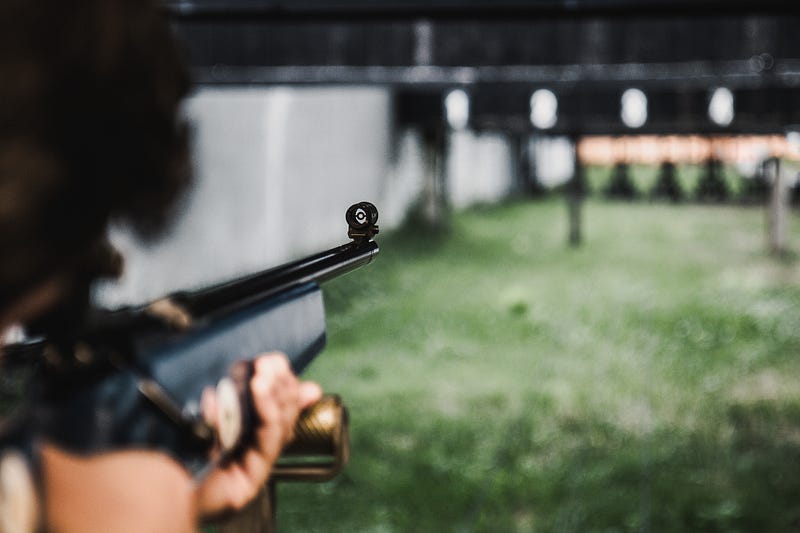
Many friends I meet around the world are surprised when I tell them that I served in the Singaporean military for two years and two months, beginning when I was 18 years old.
I am a Singaporean citizen.
I have to explain to them there is conscription in Singapore. All able-bodied Singaporean men must serve in the armed forces for at least two years from the age of 18. After that, in most cases, we continue to go for re-training, and then become part of the reserve units, to be activated in the unlikely event that war comes.
In special cases, permission is granted to defer enlistment — but this is usually reserved for cases such as the recipients of prestigious scholarships, enrolment in medical school (they will serve as medical officers in the military instead, after graduation), or if you are representing the country in an event like the Olympics.
But, despite my military training, I’d be lying if I told you I want to fight.
The Weapons of Death and Destruction
During my time in the army, I trained with various weapons.
Needless to say, we were all trained in the use of rifles, marksmanship, and basic combat maneuvers.
The semi-automatic rifle is the primary firearm that is issued to all soldiers. In the army, they say that your rifle is your wife. You protect it with all your life, and in return, it will save you. You shoot first and hope you kill the enemy before he kills you.
Automatic rifles. For the sake of simplicity, I’m just going to call them machine guns, even if this isn’t fully correct. By the way, I never trained in standard-purpose machine guns.
Grenades. These are hand-thrown. In the movies, people routinely remove the safety pin by biting on it, but this is nonsense. It is actually very stiff. Plus, you need to twist the pin to remove it.
Grenade launchers. These are attached to a rifle and can fire a variety of grenades.
Rocket launchers. These are anti-tank weapons but calling them rocket launchers sounds much cooler and probably easier to visualize for most people.
Explosives. There is a huge variety of them, so I won’t go into detail.
In case you’re wondering, don’t worry — all of this is publicly available information and I’m not divulging any military secrets.
I was a combat engineer attached to an armor unit. In case you don’t know, armor refers to tanks. But, no, I wasn’t in charge of servicing tanks. That job is for technicians.
Combat engineers are support troops on the battlefield, and our job is to support the advance of troops, delay enemies, and increase troop survivability by constructing trenches and defenses. We have a variety of tools to accomplish that goal.
In theory, gaps and rivers can be bridged.
Barricades can be blown up with well-placed explosives.
Trees can be felled to block a road.
Wires and barriers can be set up to block enemy advancement.
And yes — minefields — combat engineers are trained to overcome them. But if you ask me, it’s pretty insane to step into a minefield with a mine prodder or metal detector. What’s a mine prodder you ask? It’s basically a long metal stick. We were trained to stick them into the ground at an angle to probe for potential mines, while not setting them off. Does that sound low-tech to you?
Research shows that this is a highly unreliable method for detecting mines.
But in times of war, what alternative would you have? Would you even know if the ground you walk is filled with land mines?
If atomic bombs are the worst type of weapon ever invented, land mines are a close second.
The Normalization of War
The social media coverage of the bloody fighting and senseless devastation in Ukraine seems to have normalized war. Around the world, people seem to have responded enthusiastically to Ukrainian president Volodymyr Zelenskyy’s call for volunteer soldiers to fight for Ukraine.
Please don’t misunderstand me. I’m not saying that fighting for survival is wrong in any way.
All I’m saying is that war has become normalized.
Even men in Singapore have expressed their interest to join Ukraine’s international volunteer defense force — the International Legion for the Territorial Defense of Ukraine.
The Singaporean government has clarified that it is an offence for any person in Singapore, “to wage, attempt to wage, or abet the waging of war, against the government of any power with which Singapore is not at war.”
Growing up knowing only peace, I did not expect another world war to break out in my lifetime. At the rate that the situation is escalating, I cannot be sure anymore. I now know I was a fool to have taken peace for granted.
Russia’s move on Ukraine will have major repercussions.
Ever since the end of the Cold War, the entire world has generally become quite peaceful.
That doesn’t mean that there aren’t armed conflicts. Terrorism exists. The US invaded Afghanistan and Iraq. Yes, there was the Syrian crisis as well. And a whole bunch of military conflicts.
There are voices now claiming that the attention the whole world has given to Ukraine is a case of double standards. The country being invaded is European, and therefore worthy of being defended.
Or, it’s fine if the United States does the invasion, and it’s not fine if Russia does the invading.
That’s not what I’m saying at all, and don’t you resort to “what-aboutism” to claim that I am a hypocrite.
What’s really at stake is the global normalization of war.
As Yuval Noah Hahari writes in the Economist, what’s at stake is the potential return of the normativity of waging war. It would be a major setback for humanity if, instead of diplomacy, more and more states resort to military options to resolve problems.
The Price of Peace
After my military stint, I resumed my civilian life. Still, every year, I would return to military re-training to keep my skills refreshed. Every time, I would curse the disruption that it had on my “normal life” but ever since I moved to Japan, that has been put on hold.
I would also lament the two years or so that I will never get back. That was because I used to believe that war would never break out, and that all that military training was a waste of time and resources.
After all, putting all able-bodied men at the age of 18 into military service seems like a drag on resources when they could be working in the economy, building products and services of value.
Nowadays, I am not so sure. Perhaps peace has made us all weak and foolish.
In Japan, there is an expression to describe this — heiwa-boke. Heiwa means peace. Bokeru means “absent-minded” or “foggy-brained.” Heiwa-boke, then, means to become absent-minded or foolish from peace.
If the geopolitical situation around the world worsens, I worry for the peace and stability that my family, friends, and I have been able to enjoy for the past decades.
Singapore has known war.
The Japanese army invaded Malaya in December 1941 as part of their Pacific campaign. They arrived in Singapore in February 1942. Within a week, Singapore fell to the Japanese, and I have heard dark stories of the suffering that my grandparents endured during the three-and-a-half years of Japanese occupation.
Today, Japan is a peaceful nation. I’ve lived in the country for almost six years now, and I have never felt any ill feelings from the Japanese.
Should war come to Singapore again, I am obliged to bear arms to defend my country and my family.
But really, I pray it doesn’t come. War is senseless; you either shoot first or get shot. And the training will never prepare you for the real thing.
The tales of soldiers who survive only to be tormented by PTSD are all too common.
In bloody war, there are no true winners.
©Alvin T. 2022
The author writes on a variety of topics. His key topics are society, culture, modern work, and cryptocurrency, with the occasional fictional story, creative piece, or reflective essay. Discover his most-read stories here.
If these topics interest you, consider subscribing to receive new stories from the author via e-mail.


