
Do You Want to “Master the Japanese Language in Just Two Months?”
I’m sorry, but it’s not even remotely possible — here’s why.
I was targeted by a Facebook ad with the following headline:
Master the Japanese Language In Just Two Months
Does this headline make you want to laugh or cry? I don’t know what you make of it, but this ad made me angry.
After spending an entire decade to get good at Japanese, you’re telling me that I could have mastered the language in a mere two months?
Of course, we all know that any ad phrased like that is clickbait. We all know that there’s no shortcut. There’s simply no way to master the Japanese language (or any other language) in two months. Not even children can do it. If you see any ad that promises that you can master Japanese in two months — please don’t pay for any language courses. They are either making false claims or taking creative liberties to change the meaning of “master.”
So what should you do if you’re interested in studying Japanese and want to get good at it? Before answering the question, we first need to know what kind of a beast we are dealing with.
Why is Japanese so hard to learn for English native speakers?
According to the US Department of State Foreign Service Institute, it takes an average of 2200 hours (88 weeks) of intensive study in Japanese to get good. Japanese, along with Chinese, Korean, and Arabic, are classified as Class IV languages. Super-hard languages, they call it. These are some of the hardest languages to learn for English native speakers.
The Foreign Service Institute has been training US government officials for over 70 years. If there was a way to master Japanese in two months, you’d think that they would have figured out how to do that by now.
Why is Japanese so hard to learn, let alone master, for English native speakers?
The writing system is complicated
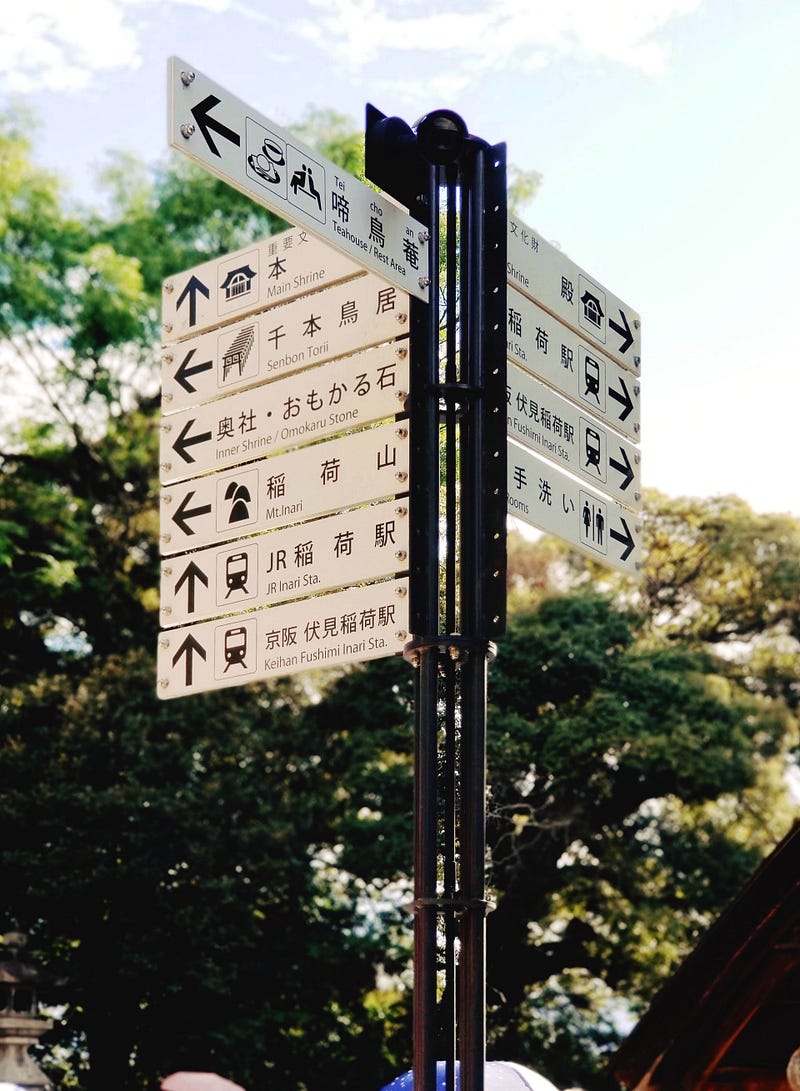
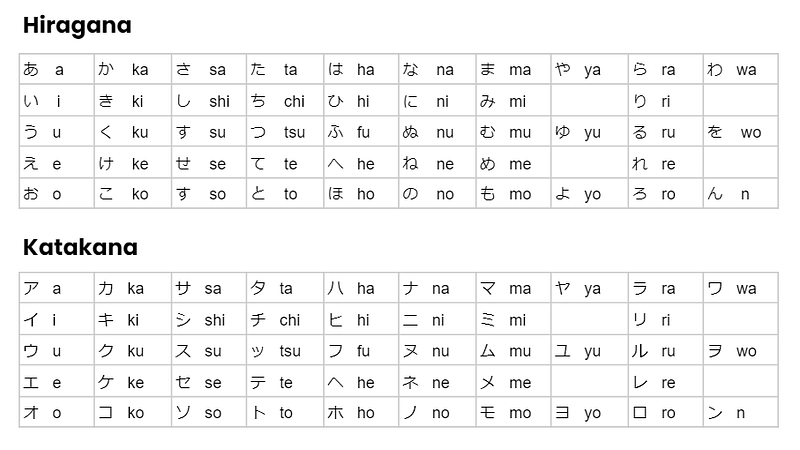
Most obviously, the writing system is completely alien to a native English speaker. Or for any speaker of a language that uses the Roman alphabet. There’s are three new sets of scripts to learn — 46 symbols for hiragana, another 46 symbols for katakana, and thousands of unique kanji (Chinese characters).
Hiragana and katakana are 92 symbols that map onto individual sounds. While hiragana and katakana will both take weeks to memorize, new learners will need months to develop the automatic response to “map” them correctly to the sounds they refer to when reading them.
The Japanese Ministry of Education lists 2,136 Chinese characters (Jōyō Kanji) that are essential for a minimal comprehension of day-to-day text. Expect to be familiar with more if you want to consider yourself educated.
To write in Japanese, you need to use a combination of these three different scripts — hiragana, katakana, and kanji. At the risk of oversimplification, hiragana is used for writing grammatical parts of words, katakana for foreign loanwords, and kanji for most nouns.
You’ll need kanji because there are lots of homonyms (words with the same pronunciation) which is impossible to disambiguate without referring to the kanji. You can’t read or write effectively without learning all three scripts.
The grammar is unfamiliar
I’m not going to bore you with grammar — I’m not a linguist. To keep it short, Japanese is a Subject-Object-Verb (SOV) language. English, like many other European languages — including French, German, or Spanish, is a Subject-Verb-Object (SVO)language.
So saying something like, “I ate cake” would need to be said in the order of “I cake ate.” That makes Japanese unfamiliar for native English speakers from a word order standpoint. If you’re a geek and want to read more about word order in languages, Wikipedia is a great website to get knowledgeable.
There’s very little shared vocabulary with English
English shares a lot of vocabulary with many European languages due to a shared Greco-Roman heritage. In fact, this data scientist’s casual study showed that out of the core 5000 most-used English words, a startling 56% have French or Latin roots!
Compare that to Japanese: 50% of core Japanese vocabulary is native to Japan, while another 40% is of Chinese origin. The remaining 10% are foreign loanwords.
Given that the source of my data was from 1999, the percentage of foreign loanwords (especially from English) might be higher today. More and more, English loanwords are used for technology and media-related concepts. Still, good luck trying to substitute every word in Japanese with English.
There are honorifics
To top it off, there are honorifics in Japanese. This means changing the words and even the grammatical forms you use depending on the social situation and the social status of the person you are talking to, and the party or person you are talking about.
Even simple pronouns like “I,” verbs like “do,” and even nouns can shift depending on the context and situation. A master of Japanese must learn to calibrate his or her language, based on a contextual assessment of social rank. And if one is speaking, this needs to be done in real-time.
So how do you get good at Japanese?
With all of that said, you now know why any ad that promises that you can master in Japanese in two months is either making a false claim — or it is taking extreme creative license with the meaning of language mastery.
I’m going to share with you what really works.
Disclaimer: This is for serious learners who want to be fluent in reading, writing, listening, and speaking. This doesn’t mean you need to be able to write the next great piece of Japanese literature, but it does mean professional fluency.
If you just need “casual Japanese” to figure out how to order a beer at that hole-in-the-wall ramen shop you wanted to visit on your last canceled trip to Tokyo, this won’t apply to you and you can stop reading here. Otherwise, read on.
Go to language school and build a strong foundation
My opinion is probably a bit unpopular nowadays, especially since there are tons of Youtube videos and online courses where you can get a lot of free information today.
But taking Japanese classes with a Japanese teacher and classmates face-to-face is the best way to get a firm foundation in your Japanese skills. Language is best learned through talking and interacting with people. (Unfortunately, the pandemic has made this somewhat difficult in many countries.)
A strong foundation in writing, grammar, and pronunciation will help you avoid problems that will be harder to fix once you are at higher levels. For context, I attended Japanese classes in university for 4 years. This included 7 hours of classwork and probably another 5–6 hours of homework every week.
There is only one way to build muscle memory. A lot of memorization, language drills, role-playing. Presentations and repetitions. That is how you build language skills.
Some online courses and so-called Japanese gurus will skip teaching the Japanese scripts and Chinese characters. In my opinion, this is all fine for casual Japanese learning, but if you’re a serious learner and committed to full Japanese proficiency, you need to go all the way.
When I started to study Japanese, the teacher made us memorize hiragana and katakana in the first 2 weeks of my Japanese class (that’s 92 alien-looking characters!). Are you ready for that kind of self-inflicted mental flagellation?
If finding a Japanese teacher online is the best thing you can do, don’t worry. Make sure you aren’t learning from influencers pretending to be teachers. There’s a world of difference between Japanese influencers and teachers who are properly trained in Japanese language pedagogy. If you’re serious, go for the latter.
Find every single way to speak the language in your daily life
The fastest way to learn Japanese is through cultural immersion. Discover all the words you will never learn in a textbook. Casual Japanese, “trendy words, dialects, slang. These never find their way into formal lessons. This is why you need to look for every opportunity to speak and use the language in real life situations.
Local activities. Meetups. Language exchange sessions. Part-time jobs requiring Japanese. Search them out. Passing the Japanese Language Proficiency Test (JLPT)’s highest level (N1) does not make you a fluent Japanese speaker. I’ve met people who achieved that on paper, but could hardly speak a proper sentence!
Study in Japan as an exchange student if you can
There is no replacement for studying Japanese in its native context. Japanese is a highly contextual language, and there are many things you wouldn’t be able to know without living in Japan.
If you can, staying with a Japanese family will give you insight into the daily lives of ordinary Japanese people. You’ll learn to live like the Japanese and learn a lot of words and expressions to do with day-to-day living. This cultural knowledge will be very helpful for deepening your language learning.
Work in a Japanese company in your own country
This might be controversial, but in my experience, many Japanese companies today continue to send Japanese expatriates to manage the businesses situated outside of Japan. Unfortunately, many of these expatriates still do not have passable English skills. Why this is the case remains a mystery to me.
This means that joining a Japanese company in your own country is a great way to learn Japanese if you’re willing to sacrifice potentially better-paying jobs. Avoid the bigger and more well-known global companies. The more “domestic” the better, because their expatriate Japanese boss will most likely not be able to speak English. This means you get an unfair advantage — you’re being paid to study business Japanese!
Live and work in Japan
Ultimately, nothing beats living and working in Japan. Doing this alone will propel your Japanese skills to the highest attainable level. But this assumes that you have a substantial language foundation to build atop on.
But it will also ask the most from you.
If you’re willing to go all the way, choose the most Japanese company you can find. Where all the communication — including e-mails, presentations, and conversations — in the company is done in Japanese.
That’s what I did and it did wonders for my Japanese skill. That said, if you’re willing to do this, however, be warned that you’ll also be working for a very traditional company with legacy systems and potentially old-school ideas about work and gender roles. Plus, life in Japan isn’t always as fun as it appears to be to the casual traveler.
Time required?
With language learning, the number of hours spent doesn’t necessarily translate to actual results. Even so, from my personal experience, with daily and consistent practice, you may be able to have daily conversations after 1.5 to 2 years, and fluency may come after about 4–5 years.
If you’re able to live and work in Japan, and fully immerse yourself culturally, that could potentially be shortened. (Also helps if you’re young!).
Still, if you’re a genius, you might be able to do that in a shorter amount of time. But, if you’re happy simply being able to make orders at the izakaya when you next visit Japan, knowing how to say “yoroshiku onegaishimasu” might just be all the Japanese you ever need to learn. What’s that? Diane Neill Tincher tells us; it’s a Japanese word that English needs.
The real question you should be asking is not how to master Japanese. You should instead be asking yourself why you want to do that. There are probably a dozen reasons I could tell you why you shouldn’t study Japanese (this needs to be a separate story).
So why do you want to learn Japanese, and for what purpose?
What are you willing to give up (or not give up?) to master a language?
Language learning is a lifetime’s work that never ends.
For more articles on the Japanese language, please check the following list:
The author is an editor of Japonica, a Japan-focused publication, but also writes on a wide variety of topics. His key topics of interest are society, culture, modern work, creator economy, and cryptocurrency, with the occasional fictional story, creative piece, or personal essay. Discover his most-read stories here.
If these topics interest you, why not consider subscribing to receive a monthly digest of new stories via e-mail?


