
Living in Japan
Living in Japan during the COVID-19 Pandemic is a Blessing in Disguise
Five reasons why Japan has managed the pandemic better than most other countries, and the one thing that Japan failed to handle well.
The apocalyptic news surrounding the COVID-19 pandemic never seems to stop. If I believe what I’ve been reading about what’s happening in the United States, it seems like I am very lucky to be living in Japan during these trying times.
I thought differently earlier on in the pandemic.
Japan appeared to be doing everything wrong.
There was the Princess Diamond incident in Yokohama. The incident catapulted Japan early into the center of the global COVID-19 pandemic news as a negative example of what not to do during a pandemic.
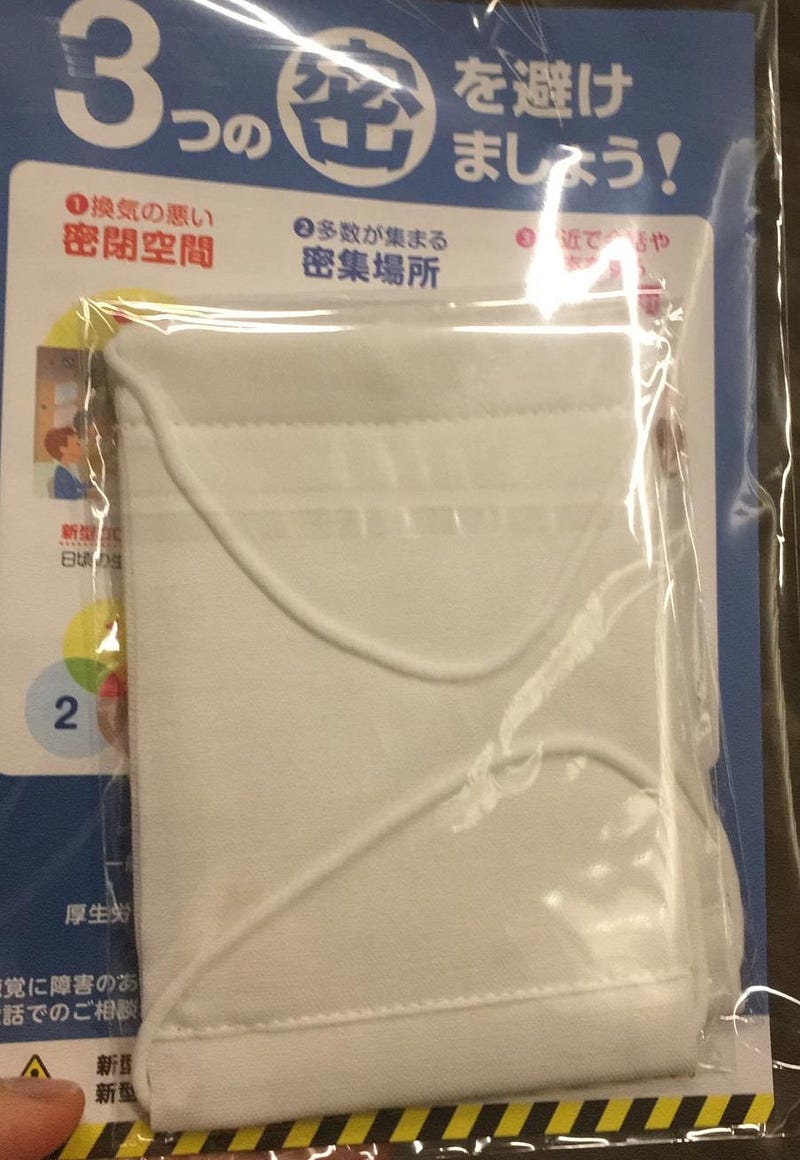
After that, then-Prime Minister Abe got derided for rolling out his so-called “Abenomask” (a wordplay on Abe’s economic policy of Abenomics). It was a cotton mask that was too small and uncomfortable to wear. The Japanese public ridiculed Abe’s government for spending too much money on it. In the end, 11.51 billion yen worth of masks (around 100 million USD) were left undistributed.
The 2020 Tokyo Olympic Games were postponed for a year, leaving both Japanese citizens and the global public guessing if it would really take place.
When it seemed like it couldn’t get any worse, PM Abe suddenly resigned. The physical toll of managing the pandemic had defeated his body and his health.
Despite all the negative portrayals of Japan’s approach to the pandemic in the global media, after two years of living with COVID-19 in Tokyo— I think I dodged a bullet. It could have been much worse had I been elsewhere.
Here’s why.
Why I’m Lucky to be in Japan during the Pandemic
#1 Japanese People are Generally Civic-Minded
I read horror stories of people getting politically divided over the treatment of the pandemic.
Or around vaccination mandates. Many countries have become split over that, even taking to the streets to demonstrate. Or is the media playing it up? I cannot tell for sure.
In Japan, people are generally civic-minded and gracious. This is the country where I lost my bag twice on the train and got them back both times.
There have been some anti-mask protestors, and early on during the pandemic, necessities got snapped up, but luckily, I never saw people fighting over toilet paper.
Just look at how orderly people are queuing up to buy face masks in Tokyo in late February 2020, just when the pandemic was getting serious!
#2 Social Distancing is Already Part of the Culture… (Mostly)
Social distancing was already a thing in Japan even before the expression for it was coined.
In Japan, people emphatically do not shake hands in business situations. Of course, there is still some physical contact when people exchange name cards.
That’s why during the height of the pandemic, as most meetings went offline, even the honored business tradition of exchanging name cards went out the door. The physical exchange of name cards became discouraged in face-to-face business situations as well.
And oh, in Japan, people also do not kiss each other on the cheeks like in many European cultures.
One problem? The crowded trains in metropolitan areas like Tokyo. Yes, the trains pack you like sardines in a can, but if you can work from home, or at least stagger the time you go to the office, you might be able to avoid the horrific scene below.
I cannot speak for all Japanese companies. At mine, the company rolled out work-from-home as early as Feb 2020. Since then, I have been working on a hybrid model — going to the office once to twice a week.
#3 Japan Already had a Mask Wearing Culture Even Before the Pandemic
The media tells me stories about how some people across the world are refusing to wear masks; it’s as if wearing a mask means giving up your freedom.
What a baffling idea!
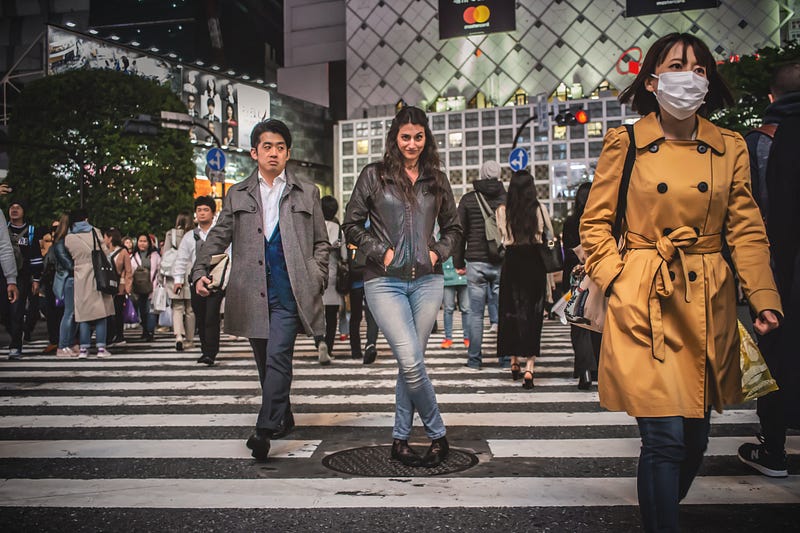
In Japan, people have been wearing face masks for almost a hundred years. I used to think it was a weird practice when I first moved to Japan. But having lived here for more than five years, wearing masks has become second nature to me.
Before the pandemic, I wore masks whenever I caught a cold. Masks are also a great way to keep your nose and mouth moist during the dry winter season. They’re also great for when you don’t want people to see you yawn during meetings.
A Japanese friend of mine didn’t want to wear them. But he did it anyway because masks had become a kind of social courtesy. Like not using mobile phones on the train. In Japan, people take courtesy very seriously.
You don’t need the government to enforce mask mandates, because the citizens will socially police one another.
#4 The Government Got up to Speed with Vaccination without Any Mandates
In the United States and other countries, talks of vaccine mandates and COVID-19 restrictions have polarized politics. Just go to Youtube and type “anti-vaccine protest.”
Here’s one video I found. Not surprisingly, not only are the people protesting against vaccines; they are also not wearing masks.
In Japan — ironically, for a country that supposedly values social conformity — the rights of individuals are protected. The government has never issued any sort of mandate.
In the workplace, it is also considered not appropriate to shame people who refuse to take the vaccine. Companies need to tread a fine line between recommending the vaccine while not shaming those that refuse it.
As my company, HR even sent out an e-mail to remind everyone that “vaccination harassment” is wrong!
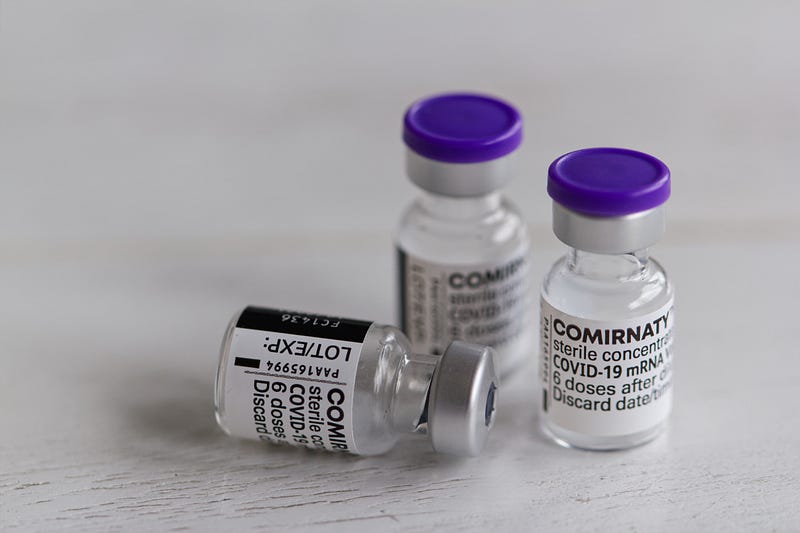
Although Japan started the vaccination exercise later than most other countries, the authorities quickly stepped up the pace in September 2021.
Even without enforcing vaccine mandates, at the time of writing, Japan has achieved the highest full vaccination rate of 79% — on par with Canada — within the G7 countries. (Although the emergence of the Omicron variant has me questioning whether the idea of “full vaccination” still makes sense).
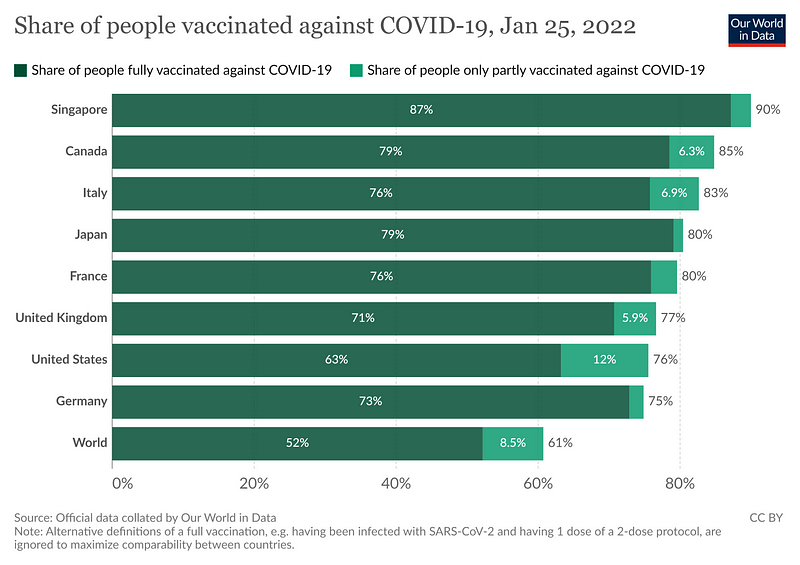
All of this says a lot about the Japanese’s public civic-ness and cooperativeness (see point #1).
Singapore, where I am from, has an even higher rate of 87%, but Singapore is a tiny island state, and it is much easier to vaccinate everyone.
#5 There Has Never Been a Full Lockdown
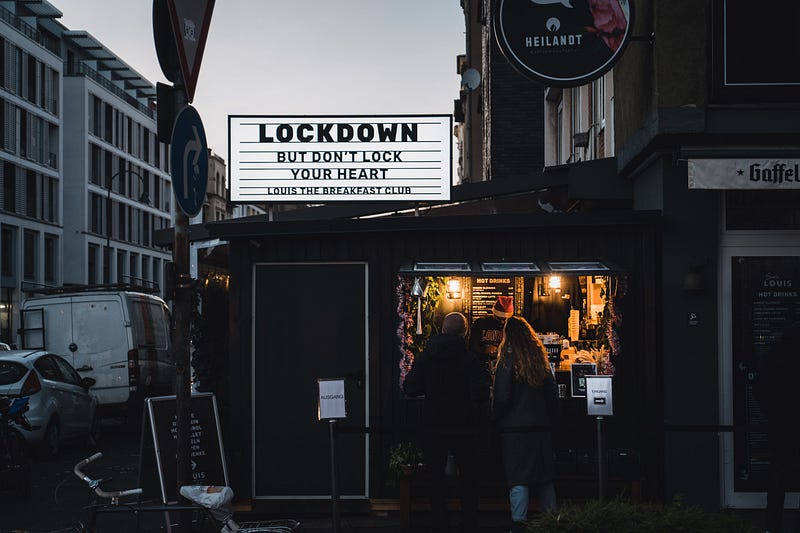
In contrast to the lockdowns that were announced in various cities of countries like China, Spain, Italy, and even the UK, no region in Japan has ever had to endure a full lockdown.
Sure, there have been sporadic declarations of states of emergencies: Restaurants need to close early and cannot serve alcohol after a certain time. The restaurants that comply get compensated with money. In fact, Tokyo was stuck in a state of emergency for
Not all restaurants obey state of emergency guidelines, as I found out during the pandemic. I found some izakayas operating past the recommended closing hour, secretly serving alcoholic beverages.
But the government in Japan has never implemented a “full lockdown.” It doesn’t have the legal powers to do so.
I hope it stays that way.
Of course, this is not to say that people have not been unhappy with various pandemic measures. The soft lockdowns that have gone on and off have devastated businesses. Especially restaurants, bars, izakayas, and other food and alcohol-serving businesses.
In 2020, a recorded 842 restaurants recorded bankruptcies in Japan. In 2021, 1770 bankruptcies were filed. Unsurprisingly, most of them were restaurant businesses.
What is remarkable is that even without full legal powers to enforce lockdowns, the public has been generally compliant with government-issued guidelines.
Still, patience is wearing thin with the prolonged repetition of on-and-off pandemic measures. To combat Omicron, the government has put Tokyo and several areas of Japan under a quasi-state of emergency again. This means that restaurants and eateries need to close earlier than normal.
I am not in a position to complain. I haven’t lost my job. I don’t work on the front lines. I’m not an unappreciated “essential worker.”
I’m lucky to be alive. Even so, I sincerely hope that the light at the end of the tunnel is near.
The One Thing That Makes me Sad and Uncertain
Japan’s Closed Border Policy
The one thing that makes me sad is the uncertainty surrounding Japan’s closed border policy. Apart from brief windows during which travel restrictions were slightly relaxed, the country has been closed to foreigners for the better part of the pandemic.
Things began to improve in early November 2021, as COVID-19 numbers dipped dramatically and the government started to ease border restrictions.
Then, Omicron happened and the new government fully closed the borders again.
The border closure has separated families.
Foreigners due to move to Japan have not been able to enter the country.
Farms and healthcare providers that need foreign labor are facing a labor shortage.
Students who spent years preparing for their dream of studying in Japan have had their dreams dashed. The 2–3 years that they have wasted waiting in vain will not come back. As someone who was given the opportunity to study in Japan on an exchange program, this makes me extremely sad.
As a non-permanent resident of Japan, I have decided to put off returning home to Singapore even for a short trip. The uncertainty surrounding the border restrictions is anxiety-inducing.
There are too many rules to follow. I also fear that if I were to return home, the situation might change for the worst and lock me out of Japan.
I am worried because something like that has happened before.
During the beginning of the pandemic in 2020, foreign residents who had left Japan for a trip home were barred from re-entering Japan! This restriction was only relaxed in September 2020.
I really hope this situation changes soon, but until then, all I can do is to stay in touch with my friends and family via social media and modern technology.
Ultimately, I am extremely grateful to be in a developed country during this global pandemic. I am very, very lucky to be able to take for granted access to healthcare services and vaccines that may not be so readily available in other countries.
The Takeaway
COVID-19 has upset everything we take for granted.
Lives have been lost. Clouds of economic uncertainty hang like a miasma in the air. Isolation and disruption of normalcy have created severe mental health challenges for everyone. In spite of all of that, if you are reading this right now, you are lucky to be alive.
Without a visible end to this pandemic, we all need to keep our heads up, stay positive, and see the good side of the situations we are in. It could be much, much worse.
If you managed to read all the way to the end, I want to say a big thank you. I wish you, your friends, and your family good health.
Stay safe, and take care.
This article was inspired by Yuko Tamura’s story “COVID-19 Revealed Japanese People’s Ultimate Courtesy.” A co-editor of Japonica Publication, she writes about gender, parenting, and other cultural issues in Japan, in both English and her native Japanese language.
The author writes on a variety of topics. His key topics are Japan, society, culture, modern work, and cryptocurrency, with the occasional fictional story, creative piece, or reflective essay. Discover his most-read stories here.
If these topics interest you, consider subscribing to receive new stories from the author via e-mail.


