
COVID-19 Revealed Japanese People’s Ultimate Courtesy
The reasons we keep wearing masks with 77% of the vaccination rate
On November 28, Tokyo confirmed only nine new coronavirus cases without strict lockdowns or compulsory vaccine and mask rules at that time.
As of November 29, approximately 77% of Japanese people have been fully vaccinated. According to data, this is the highest proportion among G7 nations.
The number of new cases in Japan has been declining given this high vaccination rate. Yet, despite these positive signs, almost no one on the streets takes off masks in this country with a new threat of the Omicron variant.
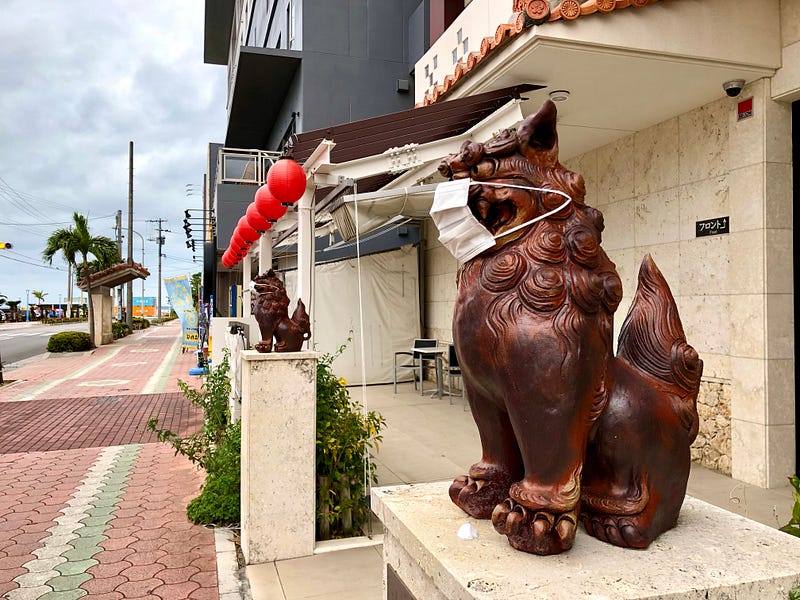
I witnessed this on a recent trip to Okinawa a few weeks ago. People were wearing masks even at the beach. At a hotel, guests were greeted by Okinawan lion statues wearing masks as a gentle reminder. Hitting the shutter button on my iPhone to take a photo of the lion named Shisa, I wondered why everyone was able to remain so vigilant.
Japanese people protect each other
Although the government’s vaccine rollout was much slower than other developed nations, today Japan is one of the successful models in the containment of the virus so far. It’s surprising because the rate of fully vaccinated people was only 3.5% in July, just seven weeks ahead of the Tokyo Olympic Games.
The slow vaccine campaign frustrated me since I had no clue when I could get the shot. It wasn’t until September and two hundred phone calls later, I was able to get my shot. Once the vaccinations were ready at hospitals, people were willing to take advantage of them.
News articles have suggested three reasons why Japan has been handling the pandemic well; more viewed vaccines positively than other nations, access to high-quality medical treatment such as ECMO, and high compliance for mask-wearing.
This rings true with my experience. In my opinion, the profound mentality of Japanese people seems to drive us to pursue incredible teamwork when facing challenging situations.
I’m in my 30s, and I’ve experienced numerous earthquakes; including the unforgettable Great East Japan earthquake in 2011. Also in every August, the anniversary of the end of World War II reminds me of the loss of millions of people’s lives. Every time we were hit hard, we rebuilt the nation taking each others’ hands.
Those historical events make me well aware of the vulnerability of human lives. Thus, I’m willing to do whatever I can for my health, my family, and the people around me. This may seem like an extraordinary outlook, but I suspect this is the average Japanese mentality.
Strong social pressure to live with a sense of community has often intimidated me living on this island because I had been supposed to behave just like everyone else.
If you explore Tokyo, you’ll see everyone wearing masks: People on bicycles or small children with their parents. Slightly lowering the mask while riding my bike, sometimes I feel uncomfortable feeling people exchanging glances with each other. Nevertheless, now I’m thankful than ever for the shared value of this community.
Country of Courtesy
My four-year-old daughter wears her small mask when she goes to kindergarten, which right now is the official recommendation. Sometimes I feel guilty for her missing out on the experience of running around and mingling with other kids without masks.
Hopefully one day soon she will be able to do this, but I’m not sure when we can stop masking. As long as the battle with COVID continues, Japan won’t take off its mask. It may sound ridiculous, but at least I have a ridiculous community around me. That’s the courtesy and politeness of this country.
Follow me for more stories about parenting, education, and cross-cultural topics.


