
Language and Japan
Five English Words with Surprisingly Different Meanings in Japan
Avoid getting lost in translation.

In a previous essay, I explored the question of Why Japan Fails at English.
I’m not here to criticize the poor English skills of Japanese people, but to highlight one potential area for “lost in translation” to play out.
The poor English skills of most Japanese people are enough to make cross-cultural communication difficult. It gets even more complicated when one considers the many Japanese English words with completely different meanings which are used in Japan. The Japanese have a tendency to borrow words and give them a completely new meaning.
In this article, I introduce five of these words to spark your interest and curiosity and explain why it matters — if you want to avoid getting lost in translation.
#1 — Service
In English, “service” typically refers to being of help to someone, as in the service industry. We say “good service” if a restaurant or its staff are attentive to the needs of its customers. Or, sometimes, we say that leadership is about service and raising people up.
In Japan, when you hear someone talking about “service,” chances are, they use it to mean “free” or “unpaid.”
ビールをサービスします。 Bīru wo sābisu shimasu.
→ Literally, “We will service you with beer.”
This means that the beer is on the house.
Another usage of this term is in the term “service overtime work.”
日本企業ではよくあるサービス残業は、日本の社会問題です。 Nihon kigyo dewa yoku aru sābisu zangyō wa, Nihon no shaikai mondai desu.
→ Literally, “Service overtime work, which is common within Japanese companies, is a social problem in Japan.”
As you might have guessed, “service overtime work” refers to unpaid overtime work, a persistent problem with corporate culture in Japan.
#2 — Tension
In English, when you use the term tension, usually it refers to some kind of stress or anxiety. If the doctor tells you that you have hypertension, you will need to take it easy and possibly change your lifestyle.
However, in Japan, tension refers more to like a general feeling.
テンション高いね! Tenshon takai ne!
→ Literally, “You have high tension!”
If a co-worker says that to you, don’t worry, it’s not a medical diagnosis of hypertension. Rather, he or she means that you seem to be excited.
Another usage is in referring to a general mood or tone.
彼はどういうテンションでそれを言った? “Kare wa do iu tenshon de sore wo itta?”
→ Literally, “What kind of tension did he say that in?”
This is better understood as “what was his tone when he was discussing that?”
#3/4 — Mansion / Apart(ment)
No, a mansion or マンション(manshon) isn’t a fancy house in Japanese.
And apartment, アパート(apāto), isn’t an apartment.
Huh?
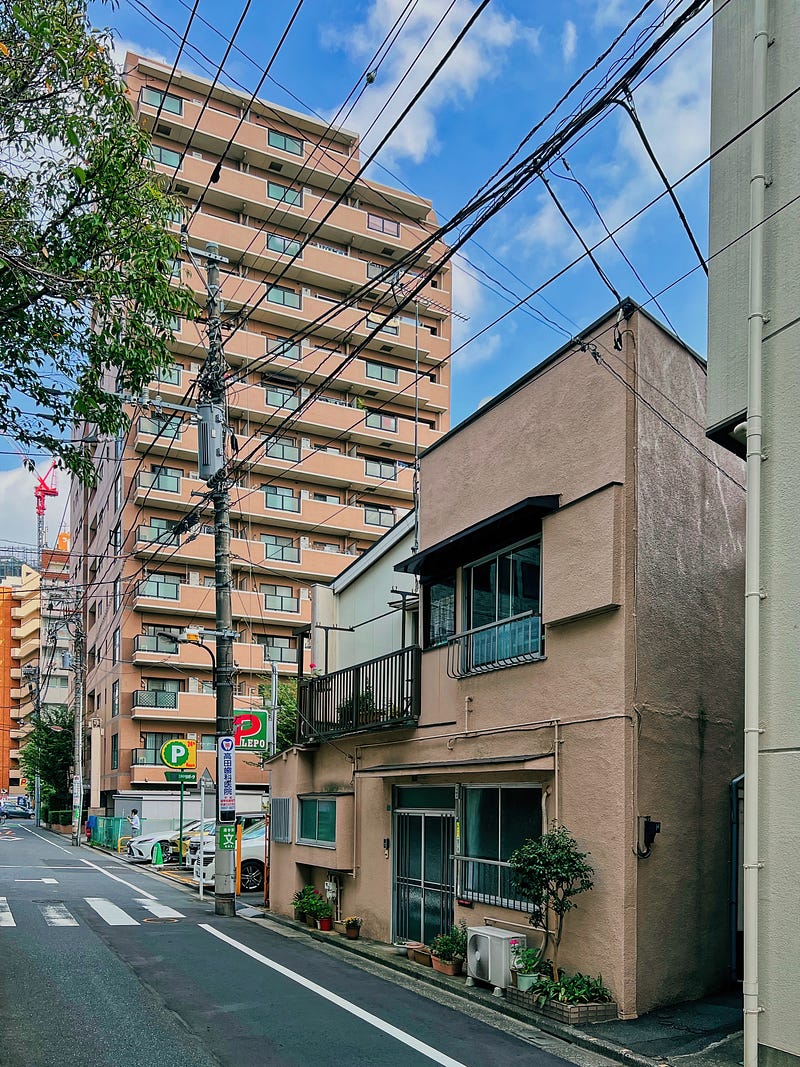
A manshon is a condominium apartment constructed out of reinforced concrete. They can go relatively high, although most “mansions” in Tokyo are usually about four to six stories or so based on my personal experience.
Of course, very high-rise “mansions” exist. These are the tawaman (タワマン), a shortened form of “tower mansion,” which contains two levels of complexity for English speakers to handle. These are best understood as high-rise apartments.
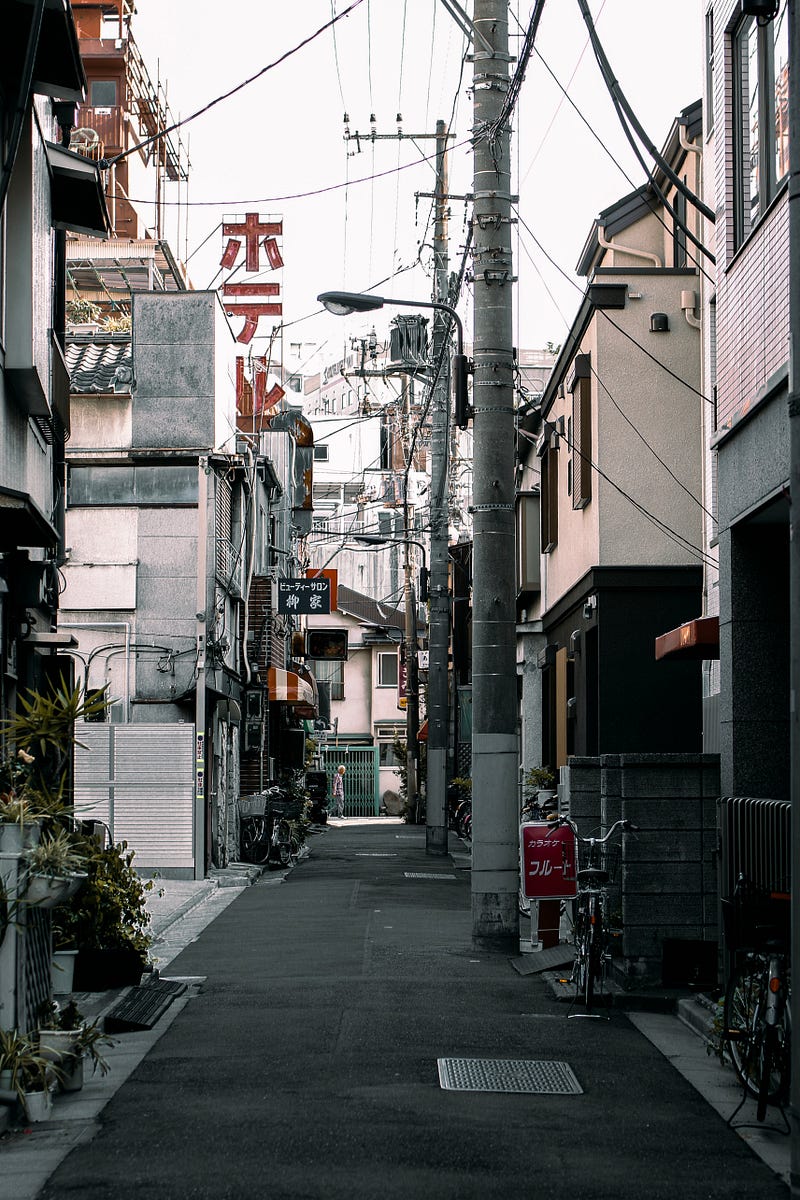
In contrast to that, apāto (アパート), a shortened form for the English word “apartment” are housing units usually two to three stories high, and generally constructed out of wood. It is often said that they are not very soundproof due to the nature of their construction. They are not also to be confused with single houses — ikkenya (一軒家) — as they are split into multiple units.
As a rule, apāto tend to be cheaper than manshon.
I have no idea why manshon and apāto came to be called such, but perhaps this article can shed light. In any case, it’s important to keep this distinction in mind when searching for a place to live in Japan.



#5 Style
In English, we often use the word style to refer to a person’s taste, especially in fashion, or to describe a person’s particular manner of doing things. In Japanese, this should be understood as “body figure,” and for better or worse, is usually used to describe women’s bodies — I tried to search online to see if it was also used to describe men’s bodies, but the search returned very few results.
For example,
「スタイルがいいね」 “Sutairu ga ii ne”
→ Literally, “Good style!”
This should be understood as “(you) have a good (body) figure.” In Japanese, the subject of the sentence is often dropped if both speakers know who is being referred to. This is one of the numerous reasons why Japanese is said to be a high-context language.
The misuse of this word could be a serious one. If a man uses this word to compliment a woman out of a genuine lack of cultural understanding, it could still be misconstrued as sexual harassment.
That’s why it’s important to understand the differences between English English and Japanese English, since they can be so stark.
Japanese English Is Best Understood as Japanese Loan Words from English
When native English speakers insist on seeing these words as examples of wrong English usage, they fall into the trap of cultural misunderstanding.
This view assumes that there is only one “true” correct usage and meaning of a word, and downplays the effect of globalization and cultural appropriation (nowadays a bad word) as legitimate ways in which new cultural meanings are created.
For me, I prefer to see these words as loanwords from English that have taken on an entirely new meaning in Japanese.
If you’re learning the Japanese language, I encourage you to think of these English words as simply being Japanese words. Please try not to think that the Japanese are using these English words wrongly. This view will hinder your cultural learning.
Learn to embrace all the “wrong” English words that are used or misused in Japanese, and you will be able to understand the Japanese propensity for cultural borrowing and reinvention.
You might even be able to improve your Japanese language skill as well.
If you enjoyed this story, you might enjoy the following article, where I share well-known Japanese words (that almost everyone is familiar with) that actually have non-Japanese origins.
©Alvin T. 2022
The author writes on a variety of topics. His key topics are society, culture, modern work, and cryptocurrency, with the occasional fictional story, creative piece, or reflective essay. Discover his most-read stories here.
If these topics interest you, consider subscribing to receive new stories from the author via e-mail.


