5 Japanese Words You Already Know That Surprisingly Have Non-Japanese Origins
Can you guess what these words are?
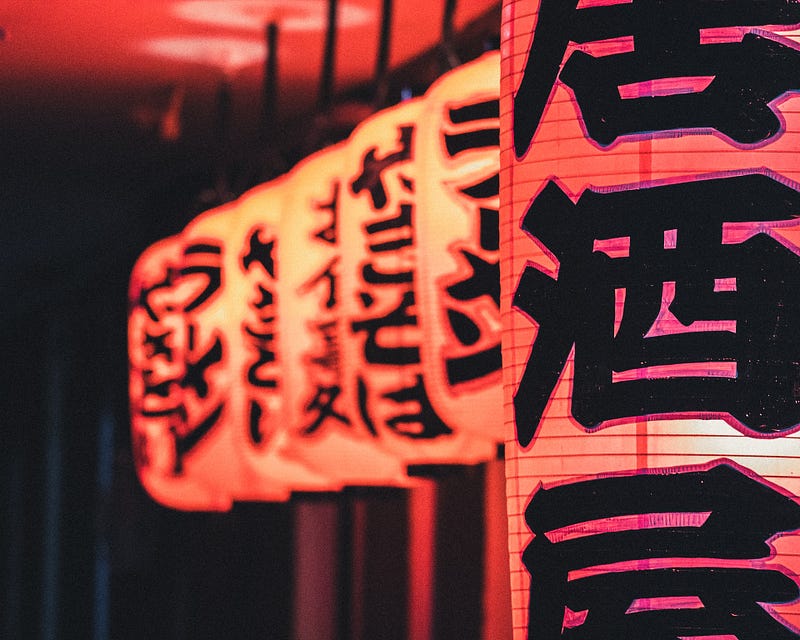
Do you know any Japanese words?
Many people who cannot string together a sentence in Japanese certainly know a couple of them!
For example, you might know how to say arigatō (thank you). Maybe you love the beauty of the sakura (cherry blossom) in spring. You might be into the kawaii (cute) culture. And if you love Japanese food, you might also be fond of eating sushi (well sushi is just… sushi).
There’s arigatō. And then there are Japanese words that have become so well-known throughout the world that it would not be a stretch to say that almost everyone knows them.
In this piece, I want to highlight five of these globally well-known Japanese words. The twist? These Japanese words actually have non-Japanese origins!
#1. “Karaoke”

Everyone loves karaoke (pronounced kara-okay in Japan), right? Who can resist mindlessly shouting — I mean singing — at the top of their lungs to Aerosmith’s I Don’t Want to Miss a Thing?
The word “karaoke” is a portmanteau of two words, kara (meaning “empty” in Japanese), and “oke”, which is a shortened version of the English word orchestra (Japanized: ōkesutora).
So karaoke literally means empty orchestra. And it combines a Japanese word with a Japanized version of an English word. Isn’t that cool?
History credits the invention of the karaoke machine in 1971 to Japanese drummer Daisuke Inoue, who wanted to provide a way for his clients to sing along to his music when he wasn’t performing. Interestingly, the patent for a type of karaoke sing-along machine belongs to another — Filipino businessman Roberto del Rosario, who patented it in 1975 (source).
Additional trivia: The word "orchestra" itself comes from Greek via Latin. (Source: Google Search)#2. “Anime”
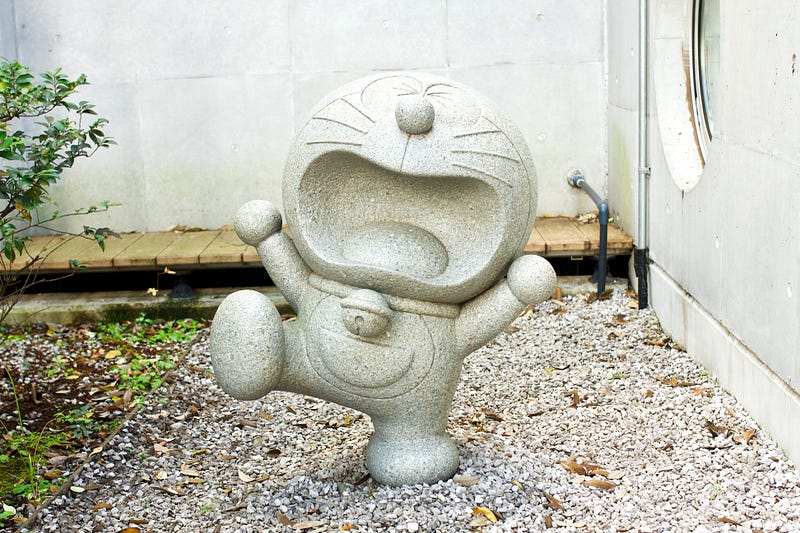
Who hasn’t heard of anime? If you’re reading this now, surely you have heard of titles like Doraemon, Dragon Ball, Sailor Moon, Fullmetal Alchemist, or Death Note? Surely movies like Princess Mononoke, Howl’s Moving Castle, Spirited Away ring a bell even if you are not into Japanese anime?
If you didn’t already guess, the word “anime” is a shortened version of the Japanese pronunciation of the English word “animation.”
Anime has gone global and is big business today. With the rise of video streaming and other media channels, the global anime industry was estimated at a market size of 22.6 billion USD in 2020. This number is projected to double to over 48 billion by 2030. Interestingly, data suggests that the USA is the top country outside of Japan with the highest demand for anime, with the Philippines coming in a close second.
Additional trivia: The word "animation" also has a Latin etymology. (Source: Google Search)#3. “Pokémon”
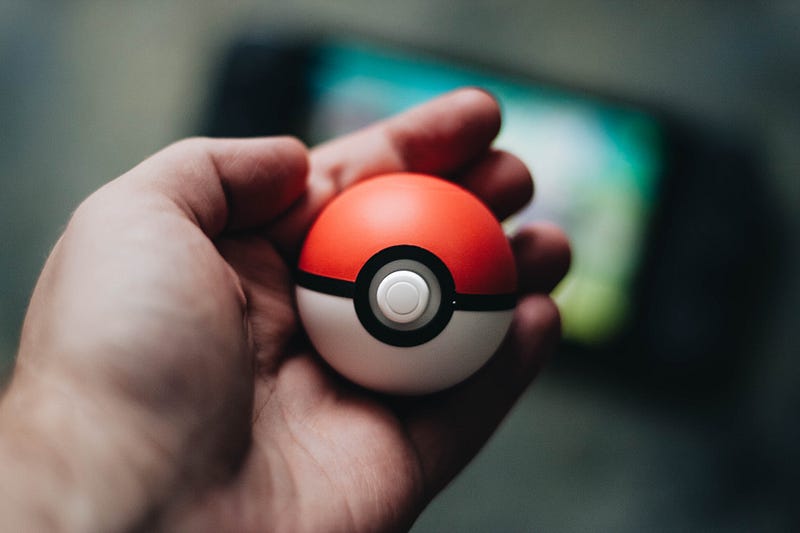
After “anime” appeared, you knew “Pokémon” was going to appear somewhere, didn’t you?
Pokémon is a massive and sprawling media franchise that started in 1996 and celebrated its 25th anniversary in 2021. Running the gamut from trading cards and games to anime, manga, merchandise and so on, it’s clear that Pokémon is big business. In 2020, the entire franchise grossed 95 billion USD — beating other well-known media franchises like Star Wars, the Marvel Cinematic Universe, and Mario (Source).
And who can forget the Pokémon Go craze in 2016 that set the whole world gaga with many people using their smartphones to search for Pokémon that only existed virtually via augmented reality? (Yes, the metaverse was already here even before the word became the latest buzzword.)
I know what you’re probably thinking right now. Is Pokémon even a Japanese word? And if it is, does it even mean anything?
As it turns out, the word “Pokémon” is a contraction of the Japanized English — Poketto Monstā (meaning “pocket monster”).
I suppose the name makes sense for a fictional universe in which “trainers” catch and collect monsters using pocket-sized balls.
Did you guess that correctly?
Additional trivia: There are 898 Pokémon in existence (as of 2021).#4. “Ramen”
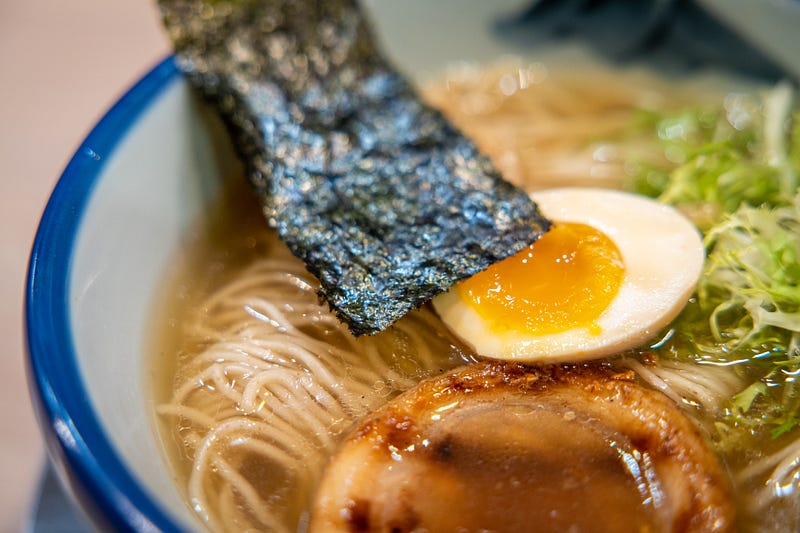
Did this surprise you? Ironic, because most people around the world probably consider ramen the quintessential Japanese food, after sushi.
Surely ramen needs no introduction.
Maybe you already guessed this, but did you know that ramen originated in China? The word “ramen” comes from the Chinese word la mian, meaning “pulled noodles.” Another hint of the word’s non-Japanese origin is the fact that the word ramen is usually written in katakana script — usually used for writing foreign loanwords.
When exactly ramen arrived in Japan is shrouded in mystery and myth. There are competing theories, but Japanese historian and food scholar George Solt writes that Chinese tradesmen probably brought an early predecessor of the modern ramen we know today to Japan sometime in the late 19th century (Source).
Today, not only do we think of ramen as Japanese; it has become a global product eaten all over the world. And, in various forms! — artisanal, instant, and cup. How ramen became Japanese and global are both fascinating stories that show us that the evolution of food is intimately tied to cultural change.
Additional trivia: Momofuku Ando, the inventor of both instant noodles and cup ramen, was ethnically Chinese. He was born in then Japan-occupied Taiwan.#5. “Tempura”
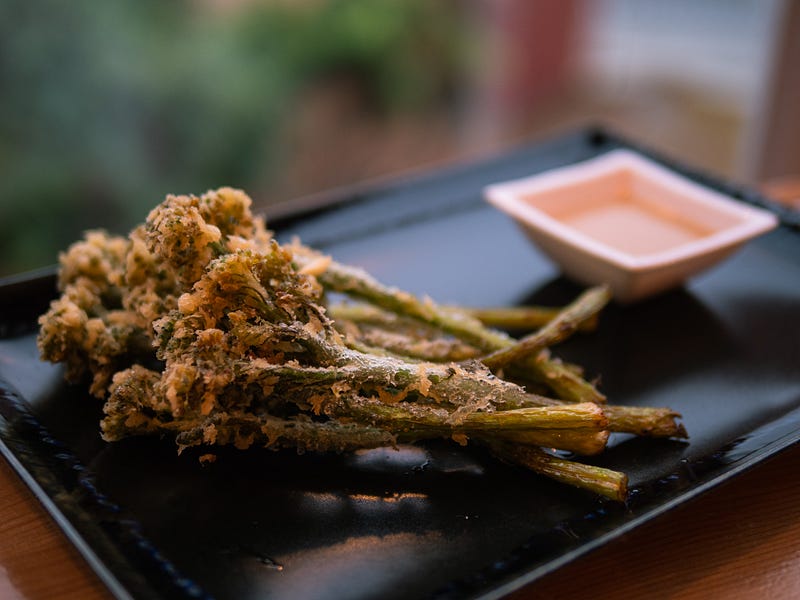
I’m sure most people who have eaten Japanese food are familiar with the crisp, deep-fried-to-perfection batter of vegetables, seafood, and meat. It’s a mystery how the Japanese manage to elevate deep-fried battered food into the realm of fine dining. While usually not expensive, you can pay hundreds of dollars for the finest tempura featuring rare and expensive ingredients.
Are you ready for the twist?
The word “tempura” is Latin (or Portuguese?) in origin!
The predecessor of what we know as tempura today is a Portuguese dish called peixinhos da horta. A battered and fried green bean dish, the recipe was introduced to the Japanese when the Portuguese first arrived in Japan in the 16th century. In Portugal, this was originally a vegetarian dish, often eaten during Ember Days, four sets of three days during which the Catholics had to fast and abstain from meat.
So where’s the connection with Latin? As it turns out, Ember Days were called Quatuor Anni Tempora (literally “four periods of the year”). Tempora became “tempura.”
The other theory is that “tempura” originated from the Portuguese word “tempero,” the word for “seasoning” (source). Although the connection to food is closer, it’s a less satisfying theory for me. The pronunciation does not fit as well.
Whatever the etymology of “tempura,” what we know is that the Japanese gave the peixinhos da horta the Japanese treatment. They made it lighter. And today, just about anything can be turned into tempura: shrimp, chicken, pumpkin, shiitake mushrooms, sweet potatoes, green beans, eggplant, leafy vegetables, onions…the list is endless.
Additional trivia: Peixinhos da horta means "little fish of the garden," an apt name indeed for a dish eaten as a replacement for meat. Which is another reason why I prefer the tempora theory of tempura. (Source: Links above + Google Search)By the way, if your knowledge of Japanese food is limited to sushi, ramen, and tempura, get ready to be surprised, fascinated, and maybe even shocked by S.A. Ozbourne’s story on “17 Strange Japanese Foods — That Are Actually Pretty Good.”
Ok, very interesting, but so what?
Another day might have passed you by without realizing that some of the most well-known Japanese words have non-Japanese roots. But, why am I highlighting this? So what?
Culture is fluid
My first point is this — It is an illusion to think of culture as somehow having borders. The fact is, it doesn’t exist. Culture is fluid; it intersects, mixes, and transforms. And when they collide, new hybridized cultures are born.
Today, cultural appropriation is a bad word. But as this story published in The Atlantic points out, cultural borrowing (and mixing) isn’t just inevitable, it’s actually a net gain for the world — the world is made richer because of it.
Some cultures — like the Japanese — have become so skillful at it, we hardly notice that their cultural products contain non-Japanese cultural DNA “appropriated” from very different foreign contexts.
Globalization creates new cultural products… which become the means by which we experience globalization
My second point— not only are these cultural products the result of globalization; we come to experience globalization through the consumption of these products. Cultural products are both the result of and the vehicle for globalization.
Many voices people around the world today call for more borders, less immigration, and less globalization. Yet, it is undeniable that without the free exchange of people and ideas, the world would not have things like ramen, tempura, karaoke, anime, or Pokémon.
Would the world have been worse off?
I cannot judge. What I can say is, it would likely be a less interesting world.
Note: An earlier version of this story stated that the Pokémon franchise grossed 95 million USD in 2020. This has since been corrected to 95 billion USD. (Source).Discover my other stories about Japan:
The author writes on a wide variety of topics. His key topics are Japan, society, culture, modern work, and cryptocurrency. Discover his most-read stories here.
If these topics interest you, consider subscribing to receive new stories from the author via e-mail.