avatarEva Rtology

Free AI web copilot to create summaries, insights and extended knowledge, download it at here

3125

Abstract

esize:fit:320/1*QSiO45l1KZPDsftEMM-3lw.jpeg)"></div> </div> </div> </a> </div><p id="8265">Some people believe that BCIs are just another way for humans to <a href="https://readmedium.com/creating-machine-learning-art-5752715dff9b">communicate with computers or robots</a>. Still, they work differently from other forms of communication, such as speech or using a keyboard or mouse. These networks communicate directly with the brain, different from human input devices.</p><p id="ef15">A BCI is an electronic device that extracts various signals from the <a href="https://readmedium.com/cocaine-for-the-eyes-and-brain-2f55312b8e77">brain</a>, including signs related to movement and touches, and then interprets them into commands.</p><h2 id="3d66">Inverse Reinforcement Learning</h2><p id="bfbf">Robots are equipped with sensors that detect where they are and are doing. This enables them to be able to identify and learn about their environment. The IRL technique was used by a team of researchers to develop a robot that would know how humans react when faced with different routine activities. The team was able to figure out people’s preferences in as little as five presentations.</p><figure id="154d"><img src="https://cdn-images-1.readmedium.com/v2/resize:fit:800/1*G3WfOH7Yktrst8uWqCIxUg.png"><figcaption><a href="https://www.nature.com/articles/s42003-021-02891-8.pdf">https://www.nature.com/articles/s42003-021-02891-8.pdf</a></figcaption></figure><p id="43a2">The IRL was used to adjust the routine’s parameters based on EEG and EOG signals. This allowed the robot to learn how close it could get to a fragile object without making the user uncomfortable. Unlike traditional RL algorithms, with IRL, the reward function is created with the robot’s ability to ideal move. This was demonstrated when users used a robot manipulator to move right or left in a workspace with fragile barriers. The robot would attempt to avoid the obstacle in demonstrations as its manipulator approached it. If the user expected it wouldn’t be avoided, they can change the reward function and move parameters with their BCI through ErrP signals.</p><div id="efb7" class="link-block"> <a href="https://readmedium.com/how-can-we-tell-stories-with-code-e5be9b05c1ee"> <div> <div> <h2>How can we tell stories with code?</h2> <div><h3>Learn to use AI, data and machine learning for your art</h3></div> <div><p>medium.com</p></div> </div> <div> <div style="background-image: url(https://miro.readmedium.com/v2/resize:fit:320/1*KLZcTdk7WmqJFa_QYqAaNg.gif)"></div> </div> </div> </a> </div><p id="0ab9">The scientists found that their system could detect a user’s reward function in as little as three demos and has shown that the ErrP decoder is essentially resistant to uncertainty and sub-optimal performance. This is a beneficial trait, given that EEG sensing can be clangorous.</p><div id="f2ad" class="link-block">

Options

  <a href="https://readmedium.com/how-do-we-control-robots-6d0fb4de3962">
        <div>
          <div>
            <h2>How do we control robots?</h2>
            <div><h3>Deep Reinforcement Learning</h3></div>
            <div><p>medium.com</p></div>
          </div>
          <div>
            <div style="background-image: url(https://miro.readmedium.com/v2/resize:fit:320/1*DvlTVzuItpQE_lmAudHrdg.gif)"></div>
          </div>
        </div>
      </a>
    </div><blockquote id="8173"><p>Customizing skills for assistive robotic manipulators, an inverse reinforcement learning approach with error-related potentials Iason Batzianoulis Fumiaki Iwane Shupeng Wei Carolina Gaspar Pinto Ramos Correia, Ricardo Chavarriaga, José del R. Millán &amp; Aude Billard</p></blockquote><blockquote id="63b3"><p><a href="https://www.nature.com/articles/s42003-021-02891-8">https://www.nature.com/articles/s42003-021-02891-8</a></p></blockquote><p id="9682">For more interesting AI articles and tutorials, <a href="https://medium.com/mlearning-ai/newsletters/machine-learning-art"><b>click HERE</b></a>

<a href="https://readmedium.com/creative-industry-and-machine-learning-818c8c01ec0f">Machine Learning</a> is making art more accessible</p><p id="db98">Art is everywhere 🟣 But the question is, <a href="https://evartology.medium.com/membership"><b>how much do you love it</b></a>?</p><div id="6cc6" class="link-block"> <a href="https://evartology.medium.com/membership"> <div> <div> <h2>Join Medium with my referral link - Eva Rtology</h2> <div><h3>As a Medium member, a portion of your membership fee goes to writers you read, and you get full access to every story…</h3></div> <div><p>evartology.medium.com</p></div> </div> <div> <div style="background-image: url(https://miro.readmedium.com/v2/resize:fit:320/0*eHGx7Rtsb5jp7a6i)"></div> </div> </div> </a> </div><p id="d73d">I am <a href="https://readmedium.com/how-to-become-a-curator-3c0c75f74637">an Art Curator,</a> founder at <a href="https://evartology.com/">EvArtology</a>, and <a href="https://www.linkedin.com/company/mlearning-ai/">ML consultant at MLearning.ai</a>. I advise companies and institutions in the <a href="https://readmedium.com/machine-learning-will-free-creatives-79f005145e4">creative industries</a> on using AI tools in their daily work. Human collaboration with ML models can be very creative and bring huge benefits. <a href="https://readmedium.com/is-ai-art-really-art-a363073d62d0">The new era begins now.</a></p><ul><li><a href="https://twitter.com/evARTology"><b>Twitter</b></a><b> * <a href="https://www.instagram.com/evartology/">Instagram</a> * <a href="https://evartology.com/">Tumblr</a> * <a href="https://www.linkedin.com/company/evartologycom">Linkedin</a> * <a href="https://www.facebook.com/evARTologycom">Facebook</a> * <a href="https://www.buymeacoffee.com/evartology">AIcafe</a></b></li></ul></article></body>

Machine Learning Art

The Brain-Computer Interfaces is Here

Inverse Reinforcement Learning

To become a member, use this link 🟣 Get Full Medium Access The present can seem a little scary sometimes. But the future is also the place where amazing things happen.

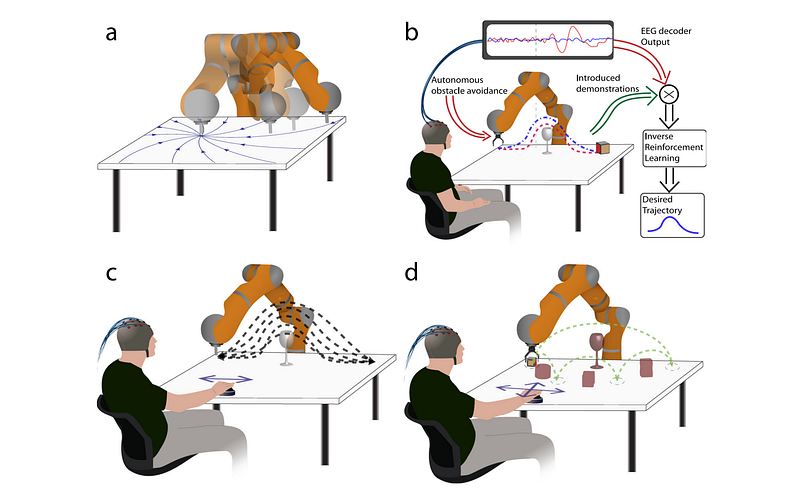
I am going to tell you about an incredible study. A team of researchers is creating a brain-computer interface that allows people to control robots with just their thoughts. What’s also really cool about this study is it uses inverse reinforcement learning.
https://www.nature.com/articles/s42003-021-02891-8.pdf

In this study, researchers built a robotic arm controlled by a brain-computer interface. New research from the University of Texas at Austin and École Polytechnique Fédérale de Lausanne introduces a brain-computer interface that allows users to change the motion trajectories of a robot manipulator.
https://www.nature.com/articles/s42003-021-02891-8.pdf

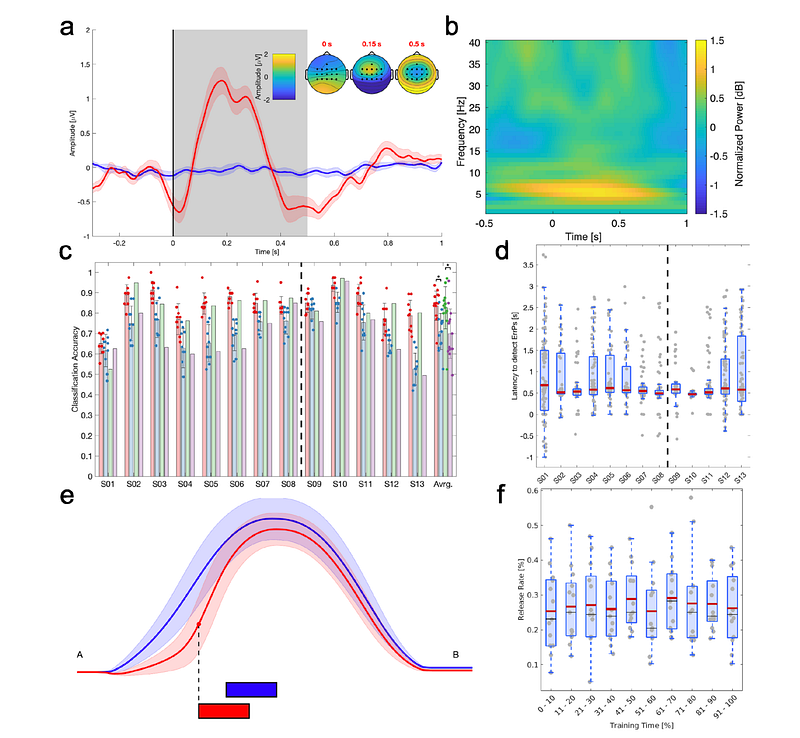
The Brain-computer interface is also known as a BCI, an electronic device that captures, processes, and interprets brain activity into commands. Our brain has electrical signals sent to the muscles used in human movement. These electrical signals are translated into movements and gestures only with the help of the motor cortex. For instance, if you want to type something on your smartphone without using your hands, you imagine typing it with your fingers. So your brain sends impulses to the motor cortex in your brain while performing specific actions such as tapping on a keyboard or using an app on a screen.

Some people believe that BCIs are just another way for humans to communicate with computers or robots. Still, they work differently from other forms of communication, such as speech or using a keyboard or mouse. These networks communicate directly with the brain, different from human input devices.

A BCI is an electronic device that extracts various signals from the brain, including signs related to movement and touches, and then interprets them into commands.

Inverse Reinforcement Learning

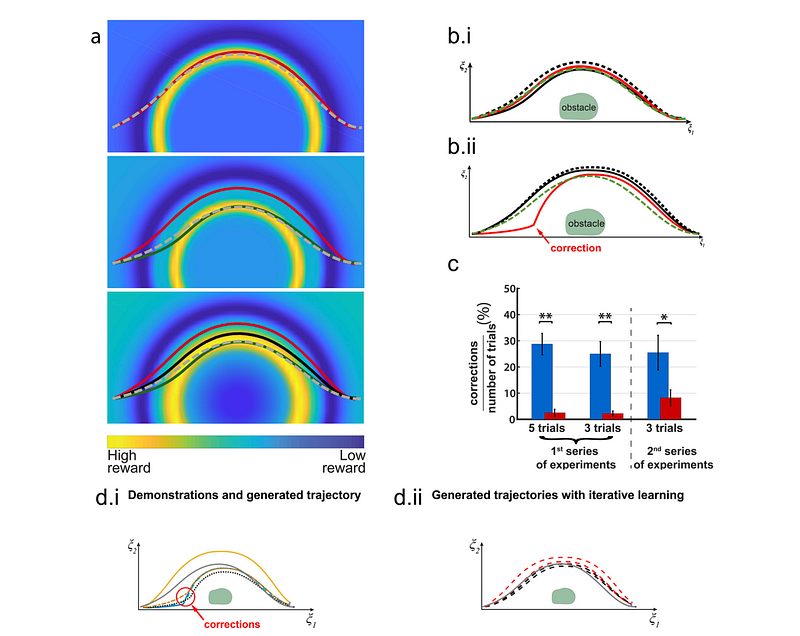
Robots are equipped with sensors that detect where they are and are doing. This enables them to be able to identify and learn about their environment. The IRL technique was used by a team of researchers to develop a robot that would know how humans react when faced with different routine activities. The team was able to figure out people’s preferences in as little as five presentations.
https://www.nature.com/articles/s42003-021-02891-8.pdf

The IRL was used to adjust the routine’s parameters based on EEG and EOG signals. This allowed the robot to learn how close it could get to a fragile object without making the user uncomfortable. Unlike traditional RL algorithms, with IRL, the reward function is created with the robot’s ability to ideal move. This was demonstrated when users used a robot manipulator to move right or left in a workspace with fragile barriers. The robot would attempt to avoid the obstacle in demonstrations as its manipulator approached it. If the user expected it wouldn’t be avoided, they can change the reward function and move parameters with their BCI through ErrP signals.

The scientists found that their system could detect a user’s reward function in as little as three demos and has shown that the ErrP decoder is essentially resistant to uncertainty and sub-optimal performance. This is a beneficial trait, given that EEG sensing can be clangorous.

Customizing skills for assistive robotic manipulators, an inverse reinforcement learning approach with error-related potentials Iason Batzianoulis Fumiaki Iwane Shupeng Wei Carolina Gaspar Pinto Ramos Correia, Ricardo Chavarriaga, José del R. Millán & Aude Billard

https://www.nature.com/articles/s42003-021-02891-8

For more interesting AI articles and tutorials, click HERE Machine Learning is making art more accessible

Art is everywhere 🟣 But the question is, how much do you love it?

I am an Art Curator, founder at EvArtology, and ML consultant at MLearning.ai. I advise companies and institutions in the creative industries on using AI tools in their daily work. Human collaboration with ML models can be very creative and bring huge benefits. The new era begins now.

Reinforcement Learning
Machine Learning
Artificial Intelligence
Ml So Good
Robotics
Recommended from ReadMedium