
AI art
Creating Machine Learning Art
Today’s creative industries
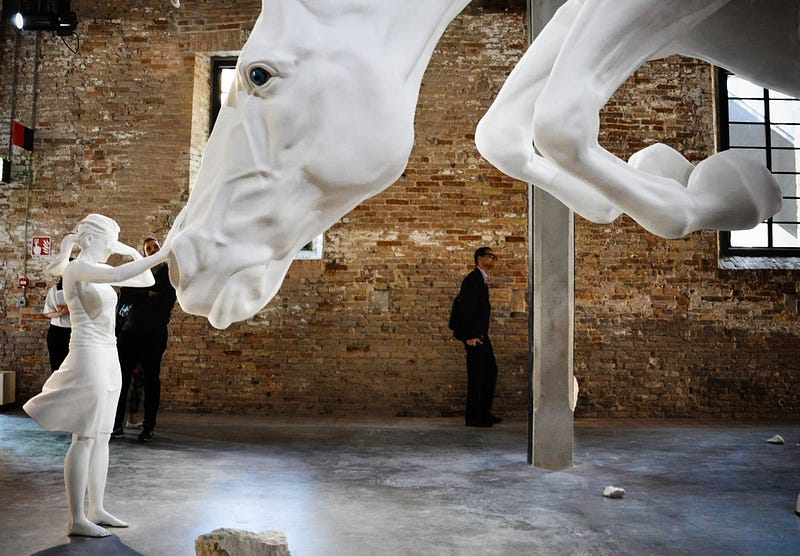
Machine learning has become a significant force in the arts. Whether it’s an AI sculpture built by an artist, machine learning algorithms working with museums to create dynamic exhibitions, or sprawling art installations that connect the physical and digital worlds, machine learning has proven to be an invaluable resource in today’s creative industries.
- April 2022 — AI art tools update can be found ➡️ HERE ⬅️
We live in a time where people fret over the impact of AI on our lives, but it is too important not to embrace it. Machine Learning can help us understand who we are better than ever before, allowing us to peek into our collective future through AI art. It can even compare eerily accurate depictions of people’s personal traits in images — making for some excellent art pieces!
In January 2021, two friends decided to create a publication for artists who want their work impacted by machine learning to bridge the gap between machine learning and art. They started focusing on peer-to-peer interactions and collaborations, creating a platform that allows artists to share their work with people in the data and AI technology sectors.
MLearning.ai functions as a social Art network. MLearning writers can post articles, follow other contributors they admire, read articles from around the world or even chat with readers right from your home feed. In only one year since being founded, MLearning publication has created two teams — ML consultants and ML TOP writers — working together to create more content.
Content-wise, we focus on writing about how AI is applied in our everyday lives. For example, our articles are about future scenarios for AI or tips for a creative industry that uses AI. We also write about data science topics.
The data scientist must think like an Artist. Likewise, artists must think like data scientists to realize the potential of AI. In addition to recognizing that data visualization can be used in meaningful ways for humans, artists must also acknowledge the role of python — a language in which most data science is done today — in finding solutions to problems.
I invite you to discuss aesthetics in machine learning; this is the first article of this type; you will find more information below. Exclusive Content
With art, we gain empathy and insight into human culture, and we are more likely to make better decisions.
We could also say that we become more prone to unethical actions when disregarding aesthetics. Human bias seeps into machine learning as engineers fit models to past data. People make decisions based on visual and emotional cues and are often unaware that they do so. Data scientists usually get carried away with numbers and subsequently ignore human emotion.
I have been dealing with Data Sculpting for over 25 years. I have worked with artists and architects on art exhibitions in museums and parks, using machine learning as a tool. These experiences inspired me to work with data analysts and ML engineers. My friend with whom I founded this publication, Eva Rtology, AI art curator and Evangelist, inspired me with my research in the field of Data-Driven Fiction. It is also an excellent publication that I recommend to anyone looking for inspiration in data.
I invite you to submit your story to MLearning.ai.
AI art | Datasculpting | Machine Learning | AI Architecture | Lists
- Check out my instagram with new material every week
- If you enjoyed this, follow me on Medium for more
- Want to collaborate? Let’s connect on LinkedIn
- https://linktr.ee/datasculptor
- 3D Machine Learning generated model on sketchfab
- Substack