
MACHINE LEARNING
How I use GPT3 in my Art
myFATHERintheCloud.ai
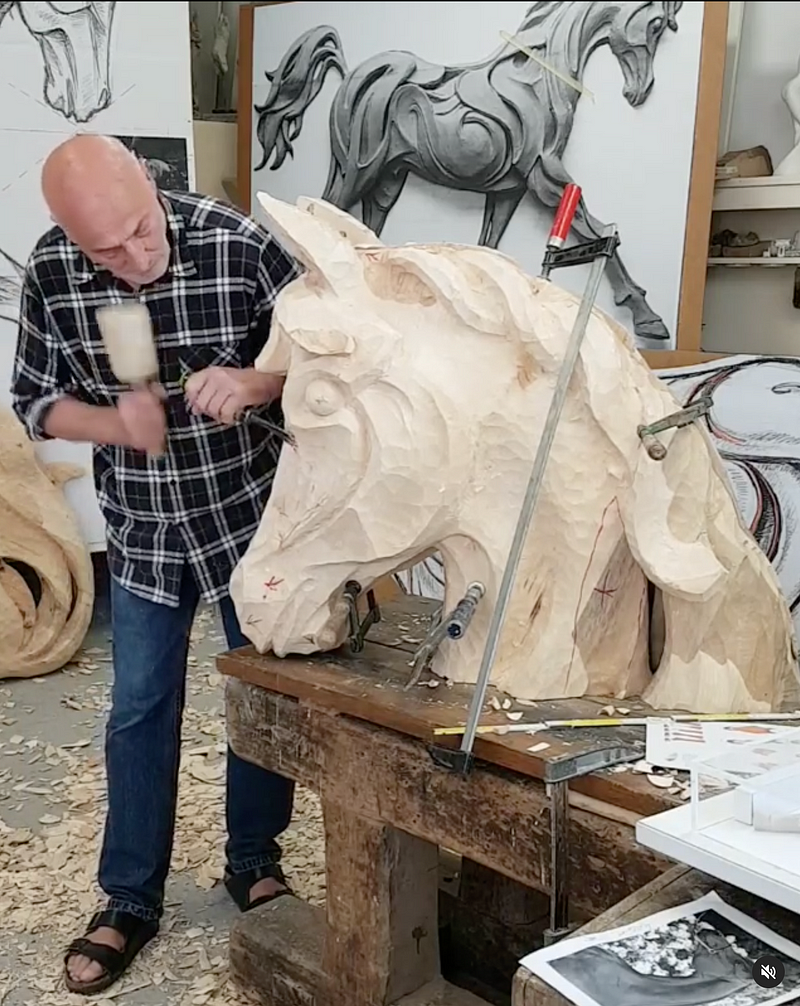
Artists like to challenge the impossible. The goal of the project is to train the Artificial Sculptor model. The AI model uses my Father’s 60-year-old creative work and creates his own sculptor’s works. Combining tools :
- scan 3D,
- photogrammetry,
- Deep learning,
- 3D Generative Autoencoder Networks,
- virtual/augmented reality,
- industrial robots,
Artificial Sculptor Siegfried Gross [ASSG] in the cloud constitutes a sovereign creative spirit. I am willing to let my Father’s AI model achieve full autonomy and meet the needs of the next generations of art enthusiasts. Being an autonomous artist in the cloud will allow my Father to accomplish the fullness of artistic immortality. The process of putting my Father in the cloud is documented in the form of the documentary movie myFATHERintheCloud.ai in memory of Siegfried Gross (1944–2019)
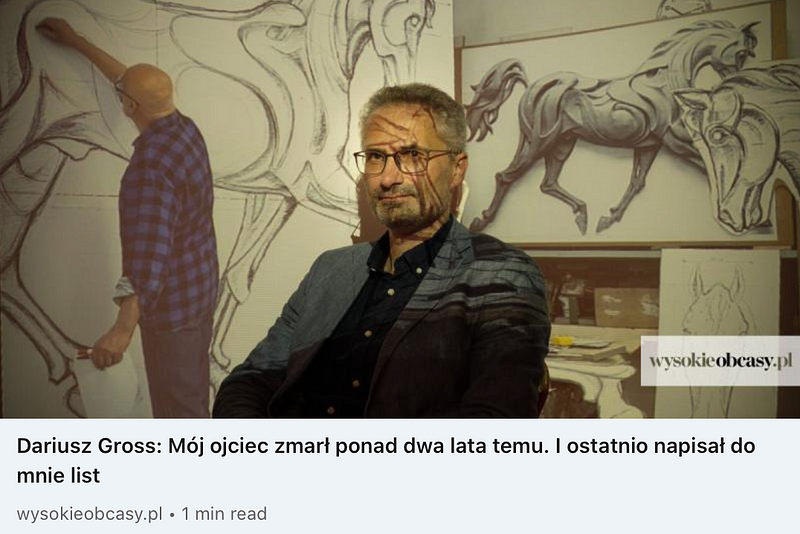
Passages from an article that was published on October 31, 2021. Thank you, Monika Redzisz, for the interesting conversation.
Monika Redzisz: How many things did your Father create after his death?
DG: The pandemic slowed down the work, but in January 2020, the first presentation of his new sculptures took place. It happened in the basilica on Saint Anne’s Mountain, not far from our home and studio. In the basilica, there is an organ instrument with a sculptural decor created by him in 1998. On this occasion, we have prepared a concert of organ music with the accompaniment of instruments generated by GANs based on Verdi’s “Slave Choir.” “Nabucco” is my Father’s favorite opera. His friend Jerzy Trzoska cast his latest sculpture in bronze. This is the cross that generated the machine learning model. The casting is mounted on his tombstone. Father also sells his sculptures in the form of 3D models as NFT on Blockchain.
Monika Redzisz: What has he done lately? He recently wrote me a letter.
DG: How is that? I used GPT3 for this — the machine learning algorithm created last year by OpenAI — a former non-profit organization now owned by Microsoft. This is a model learned on 175 billion tokens. Based on the data, it generates the text itself. This time, based on his Father’s texts, he generated a letter to his son.
Monika Redzisz: “Dear Son! I am writing a letter to you because words seem to be the best means of conveying my experiences, thoughts, and plans. 800 days have passed since my passage” — your father writes to you. Amazing, shivers go down the spine.
DG: Yes, that is a strange feeling. Each of us thinks we have a personal story to tell. But, unfortunately, the statistics show that it is only an illusion that we are not as unique as we think … After the words: “Dear Son”, words appeared that spoke to me a lot.
Today technology allows us to decide for ourselves how long we will communicate with a loved one after the death of a loved one. Social media provides such a database that today, we can continue our digital personality after death. I use the data stored on my father’s smartphone all the time. I set up a WhatsApp group on his phone. The father generates messages indistinguishable from those he would have written while alive.
DG: For me, the discovery of the last two years of working on the project was that technology shows us people in a different light than we were used to. We stand in front of the mirror and see ourselves, the real ones. That’s why just like the writings were once on the index of forbidden books. Descartes, today the GPT3 model is on the index [*]; only a few people can use it freely. It is censored because what it generates is not always what we want to hear. It generates racist, homophobic, sexist texts. We are like that. Will we continue to pretend that we are better than we really are? Many scientists have sacrificed their lives in the name of inconvenient truth. They died because they said something that did not fit the world’s image prevailing at that time. Similarly now. Not people tell us the truth in our eyes, but machines. This is what my father wrote in a letter. [* this text was written before November 18, 2021 — GPT-3 access without the wait , link below]
A complete article in the link :
One of the Machine Learning solutions is an art generation system. It is the procedure of generating the output from the given input. In this day and age, generative models are used diversely. For example, generative models can create artwork based on information, such as deceased artists’ photos or videos. An excellent example of a generative model generates sketches from input images on some occasions, while it generates collages with other types of input images at different times. However, there are some compositions that it will not generate based on its own parameters, and users must add new data manually for these cases done by AI artists who have been uploading paintings made by their computers to sites where people can download AI-generated images for free.
How to start your adventure with AI art ?
AI & Art (also for Non-Programmers)
towardsdatascience.com
There are many generative models created over time, and many of them show excellent results in generating artworks that look like those by a particular artist. This means that a generative model does not create an entirely new style or technique, but it can generate works closely related to the style and design used by the input artist.
- Check out my instagram with new material every week
- If you enjoyed this, follow me on Medium for more
- Want to collaborate? Let’s connect on LinkedIn
- https://linktr.ee/datasculptor
- 3D Machine Learning generated model on sketchfab


