
Data Driven Art
“Cocaine for the eyes and brain”
The New World of Art Consumption
🟣 To become a member, use this link: Get Full Medium Access
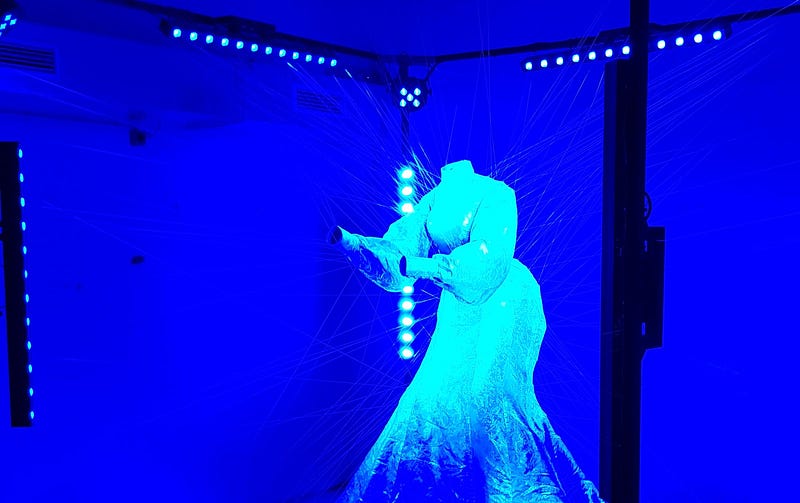
Machine Learning is the most significant consumer of 21st-century art. Human has moved to the back of the audience.
The story concerns the unlimited consumption of art by machine learning models. Art datasets are “swallowed” thoughtlessly by AI models. The generated images and compositions are pure visual cocaine for the eyes. Our brains unreflectively succumb to the explosion of animations, xLED colors, and the enormity of data. The reflection and catharsis accompanying art have been rubberized like the 20th-century avant-garde. But, unfortunately, Hyper consumption has taken the proportions of an epidemic and is wreaking havoc in protein cells at the mercy of the recommendation algorithm.
If you’re more interested in general AI art, check out the excellent http://art.mlearning.ai newsletter.
“No one knows what it feels like to be an AI, except for humans.” augmented man
No one can indeed know what it feels like to be a non-sentient algorithm to walk through art in a non-human way. But an AI can be made to feel (non-sentient) human emotions. Not the monstrous emotional states, but those of us who are stuck on the level of feelings, caught on the rudder between faith and reason, between reason and emotions. The remarkable thing is that humans have always considered themselves as free subjects of their own consciousness.
Art is no longer a private experience. It has been given to the algorithm, who can now consume it in their own way. The AI Age has given us endless new ways to view art and interact with the medium of painting. We have been able to use technology to digest information like never before. Now, one can watch a picture create or create an online image with just an AI app on a mobile device! But this trend is not without its flaws. The Meta Media bubble has exploded and threatens to destroy our human art by over-consuming it in exchange for short-term stimulation of our brains through senseless screens of animations and colors.
🟣 How architects consume cocaine
Meta art consumption is a new phenomenon that threatens the existence of art itself. It is the very thing that has caused us to cut ourselves off from authentic and honest emotional experiences. In this new world of non-productive consumption, art has become a commodity that is recycled endlessly. Where once lay an ocean of emotions lies now an infinite sea of image files, an endless electronic flow where users have lost all sense of their individuality and originality.
“I do not create for humans, I create art for algorithms using machine learning.” Dariusz Gross #DATAsculptor
Despite the many benefits that machine learning has brought us, there is a growing sentiment of concern. The positive impact of machine learning on art poses a threat to its existence in the long term. Our brains are getting addicted to these endless streams of images and colors that ultimately have no meaning. It is becoming increasingly difficult to separate ourselves from our screens at night and experience new emotions. Art has become an illusion; artificial body parts and machines are taking over human capabilities as we continue down this path towards an inevitable technological utopia.
Art is in trouble. And the question is, how can we save it?
I am an Art Curator, founder at EvArtology, and ML consultant at MLearning.ai. I advise companies and institutions in the creative industries on using AI tools in their daily work. Human collaboration with ML models can be very creative and bring huge benefits. The new era begins now.


