
Turing’s nose
the temperature of art
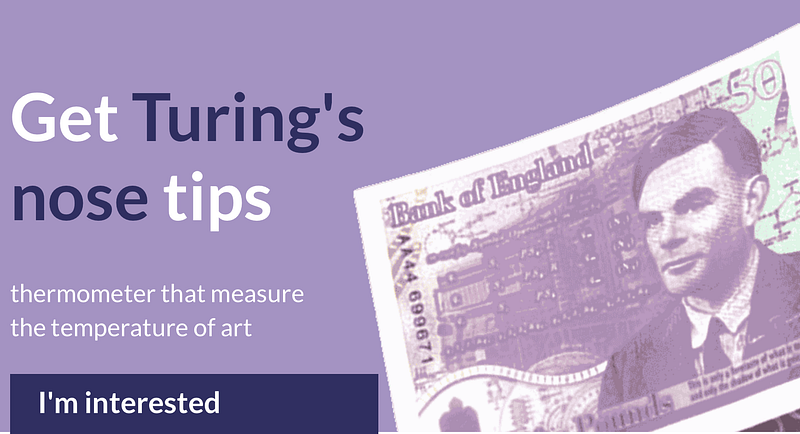
Alan Turing was a famous mathematician who helped to make the computer. He was born on June 23, 1912.
23 June 2021. the Bank of England has begun circulation of its new £50 banknotes, which feature Alan Turing. This would have been the 109th anniversary of the birth of a brilliant mathematician. Turing is considered one of the most influential figures in the history of modern computing and AI. His code-breaking machine bomb played an important role in cracking the Enigma code Nazi Germany . Several variants of the machine were hand-built to aid the British war effort. His contributions were considered so important that he was dubbed the “father of computing” by Winston Churchill in 1950. Some scholars believe that these developments laid the foundation for the rise of modern computing in recent decades. His work also played a central role in the creation of the Internet. Also, his work as a computer scientist is believed to have inspired the development of Apple’s Siri.
Machine Learning in Digital Art: What Is It?
The study and implementation of machine learning / AI has really taken off in the digital art world, especially in the last few decades. Now artists all over the world are using various algorithms to create sketches, paintings, and drawings that are open to discussion and interpretation by the public. With these advancements in computational thinking, people are able to tap into their creativity with more sanguine awareness than ever before with artistic tools.
Artists have always used their own unique techniques to create art, but with the rise of software enabling computers to learn like humans, these tools are making it much easier to apply certain signals and algorithms into their work. This technology has been used in all different types of artistic mediums, particularly digital, but also traditional ones. A series of programs have been designed to allow people to create art by emulating the way that humans think and learn. These programs are known as machine learning algorithms or ML algorithms.
How to start your adventure with AI art ?
AI & Art (also for Non-Programmers)
towardsdatascience.com
Do you have the intuition to recognize what the artist’s hands are doing and what is the result of the algorithm? A new tool is created to celebrate Alan’s achievements for digital art.
Alan Turing’s nose is a thermometer
It can measure the temperature of a work of art. It is a software/art that combines both machine learning and digital art. The thermometer provides a measure of the algorithmic content of a digital image. Using this measure, we can use the thermometer to determine how much of an image was machine-generated and how much was created by the artist.
If you’re interested in the subject, I’d recommend it.
Here are some examples of how the thermometer works using the Alan Turing’s portrait as an example
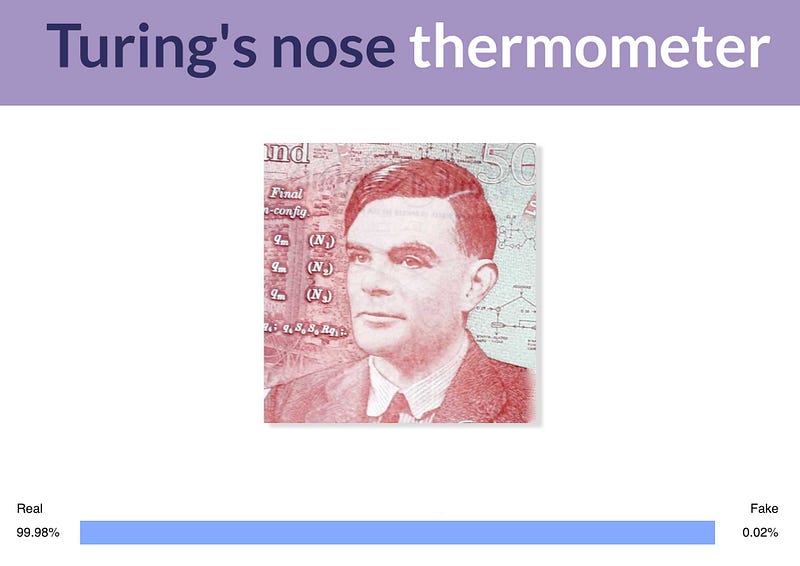
When such works are produced by the machine, they look like a machine made art. When produced by human hands, they look more like a work of art. This shows that Turing’s nose measures how much the algorithm is based on the artwork. The closer it is to 0% the more algorithmic it is. The closer it is to 100% the less algorithm it has.
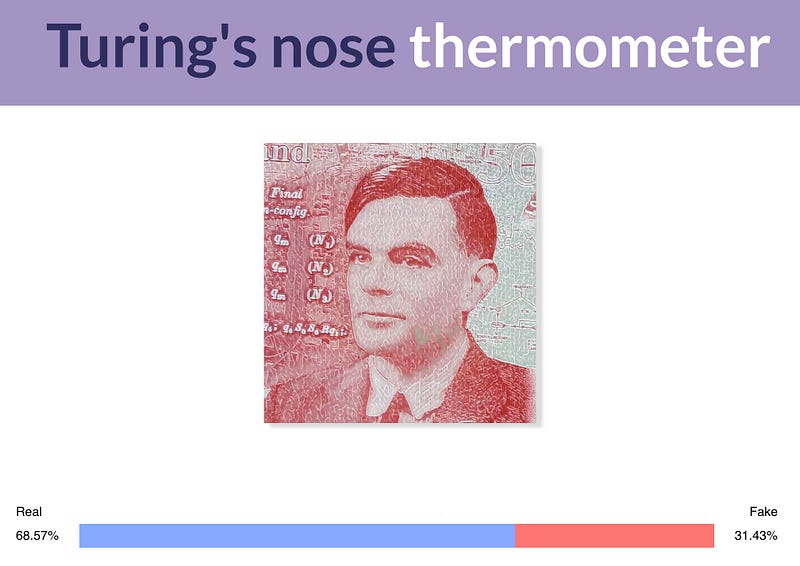
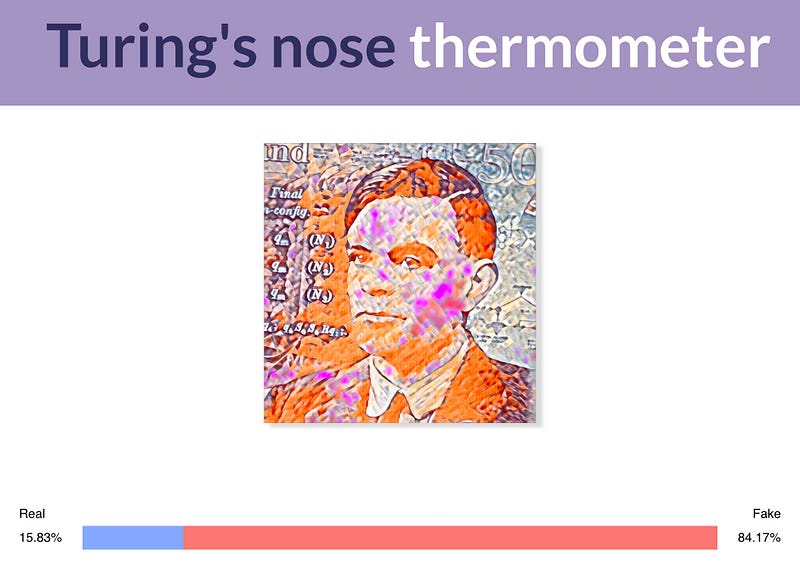
The role of the algorithm in the final development says nothing about its value, quite the contrary; in fact, it may even indicate that the artwork is of very good artistic quality. In the end, you need to be sure of how you interpret and utilize the information measured by Turing’s nose.
There are many artists who do not think much about algorithmic content in their work. To them, it is a simple way of doing a drawing or experiment without thinking too much about how it would be perceived. Being able to create amazing things has always been an important element for their creative process. But for some others, the concept of algorithm is a mystery, which may be both intriguing and perplexing.
The output of the algorithmic content is amazing. Algorithms have become our best friends, and people are depending on them in every aspect of their lives. However, the problem is that when you rely too much on algorithms and machines to do things for you without considering your own opinion, then your creativity will be reduced.
Today we see a world filled with machines producing works that were once thought to be done by humans alone. These works are no longer seen as purely human-made, they are seen as products of a machine-generated algorithm, which makes it possible for the public to see their own creative potentials.
Even though there is no general answer to whether or not the code can make art and how it can be done, there is no doubt that machines can make art in their own way. But if people believe that machines do not know what beauty is or cannot have feelings, then they are making a big mistake and limiting the human experience.
I appreciate you coming to read my article. I hope you found it insightful and worthwhile. Please let me know what you think in the comments!


