
Please Prove Me Wrong About Advisory Councils
Solid recommendations and good policies are pointless without the will and resources to enact them
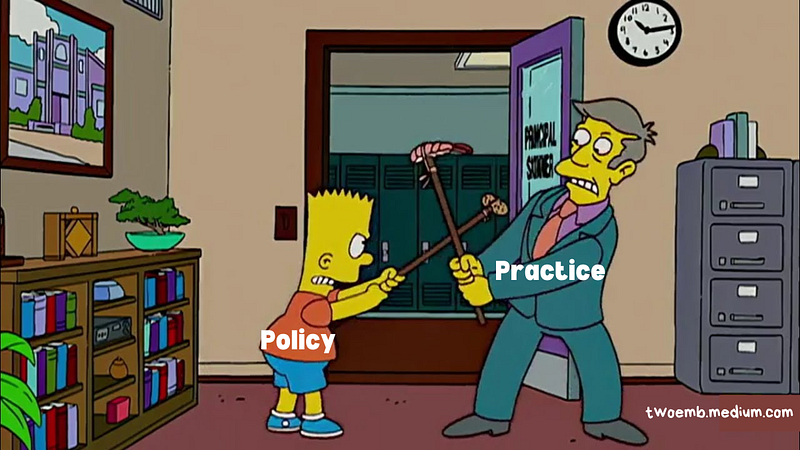
First and foremost, I wish to express my gratitude for the hard work of this advisory council in putting together their comprehensive report and providing their recommendations to our minister of education.
I’ve previously stated that advisory councils are essentially useless without actual authority to ensure their recommendations are followed after they put together their report.
I hope to be proven wrong, but I won’t hold my breath.
Our minister of education has already had the council’s report for four months (since November 2022), yet our provincial government has done nothing to make families aware of the contents of the report.
They certainly have not shared their plan of action for implementing the council’s recommendations, even though it was one year ago I asked the minister what resources had been allocated towards following the council’s advice (to which I received no response).
I’m shocked, I tell you.

Luckily, I recently had the privilege of reviewing the report. It is 44 pages long, so I will not do it justice with a few summary points. I do encourage everyone to read it in its entirety, however I recognize how difficult it can be to find the time (and inclination) to read through a 44-page policy document.
I have summarized some key points and recommendations made by the advisory council, and added some of my thoughts (you can always count on me to have opinions). Overall, the document is quite good. I have a few points to add, but was generally quite pleased with it.
None of that will matter anyway if our government doesn’t act.
Self-direction and identity-first language
I have to say I was a little worried when, early on, this document advised the use of person-first language in all forms of communication, while being mindful of situations where identity-first language is preferred.
I was relieved they added the caveat, but my experience in the neurodivergent and disabled communities is that a large majority actually prefer identity-first language. So while it is absolutely necessary to respect each individual’s preference, it is not good policy to assume person-first until told otherwise.
This was a minor point in the document, but one I feel important to touch upon because language preferences are often dictated by non-disabled and neurotypical professionals, parents, and caregivers of disabled and neurodivergent children.
The language standards should follow the lead of the community, rather than the assumptions made by others about our preferences.
Appropriate Education Programming
I was further relieved when I read the council highlighting the urgent need for consistent, effective, and widespread realization of the 2022 standards for AEP.
Our provincial Appropriate Education Programming (AEP) Act was updated in 2022. The advisory council noted disparity and inconsistency across the province with regards to understanding, following, and applying these regulations.
Recommendations for Action
- Ensure inclusive practices are at the core of curriculum development.(rather than added as an afterthought).
- Engage people with lived experience — particularly students and their families — to tell their stories of inclusion (and our stories of exclusion).
“We need to build schools that plan for the inclusion of all students from the outset; rather than planning for ‘average’ students, only to be faced with the feed to retrofit policies, teaching, and assessment methods and other provisions after the fact.” — (Bartlett et al., 2019)
Pre-service
(aka Teacher’s College/B.Ed)
- Addressing professional learning gaps in inclusive educational practices will require substantial and sustained efforts, as new educators are not adequately prepared for how to plan for diverse classrooms.
- The Bachelor of Education degree requirement includes just one three-credit-hour course about disabilities and minimal opportunity for practicum experience.
Note: *A 3 credit hour course is one term (14 weeks), 3 hours per week, for a total of approximately 42 hours of lecture/class time. One class. That’s it.
Recommendations for Training
It is imperative that all undergraduate Bachelor of Education students receive inclusive education and AEP training. The Bachelor of Education requirements should include developing knowledge and skills in areas such as, but not limited to, the following:
- Student-specific planning and implementation (SSPs)
- Timely and effective communication
- Trauma-informed practices
Recommendations for Action
Supporting school teams in appropriate planning to respond to student distress, education in trauma-informed practices, communication, and child development.
Student-Specific Plans (SSPs)
Work is needed to ensure student-specific planning and supports are implemented consistently (or correctly, if at all).
Recommendations for Action
- Staff training is needed in supporting and planning for students who communicate distress through behaviour.
- Ensuring specific training regarding the collaborative process.
Assessments
Assessments that are student-centred and strengths-based yield valuable data that shift teacher instructional strategies and inclusive practices.
Current Situation
- The advisory council notes that access to clinical services is inconsistent across the province.
- There are long wait times for services that include assessments and support.
- School clinicians are stretched.
- Long waitlists are leading to unacceptable delays, not only in specialized assessments, but also in appropriate interventions to support students.

My comments (with a little anecdote)
Something missing from this section of the report was reference to mismanagement or misallocation of funds by school divisions.
For example: A few years ago, our division had two school psychologists. When one moved away, instead of replacing that position, they diverted those funds to instead hire a behaviour analyst (and I think most of you are familiar with my strong feelings on behaviourism).
A behaviour “analyst” is not qualified to conduct assessments. Their education is significantly different from that of a school psychologist (plus ABA is harmful and abusive, but they obviously didn’t ask for my opinion before creating their new position…).
So now, despite the fact that our student population has increased, we only have one school psychologist to provide clinical advice and assessments to the entire division.
Because of this imprudent decision on the part of our division’s senior administration, our school psychologist’s workload has doubled, and students are subjected to further harmful and out-dated behaviourism-based practices.
Family and Community Engagement and Support
- The need for purposeful engagement and support has become abundantly clear
- Parents have the most insight and knowledge about their own child.
- Communication is key to developing and nurturing trust between families and schools.

Next steps
To ensure the council’s efforts were not in vain, and to ensure these recommendations are followed, we must now put pressure on MLA Wayne Ewasko and the Manitoba government to act.
They need to follow through on the recommendations made by their council, otherwise the significant work done by the members will be wasted.
© Jillian Enright, Neurodiversity MB
Related Articles
When you join medium, as a member you’ll have access to unlimited reads for only $5 per month. If you use my referral link, I’ll earn a small commission, and you’ll earn my undying gratitude.
If you’d prefer give a one-time tip, you can support my writing on Ko-Fi — also, it’s free to follow me on Facebook and LinkedIn!
Learn more
References
Advisory Council on Inclusive Education. (2022). On the Path to Inclusion in Manitoba’s Education System: Supporting Our Diverse Learners in Achieving Their Full Potential. Report to the Minister of Education and Early Childhood Learning. https://edu.gov.mb.ca/k12/action_plan/docs/minister_advisory_report.pdf
Bartlett, N., Wells-Dyck, A., Freeze, R. (2019). On behalf of the Manitoba Inclusive Education Professors’ Roundtable. A Submission to the Manitoba Commission on Kindergarten to Grade 12 Education. Manitoba Inclusive Education Professors’ Roundtable. https://umanitoba.ca/education/sites/education/ files/2020–05/2019–05–27_Inclusive-Education-Submission_0.docx