
JIGSAW GENS
Generation AA — Their Burgeoning Legacy
Members of Gen AA (“Alphas” or “Coronials”) are carving out an identity that will borrow from, and improve upon, all of ours
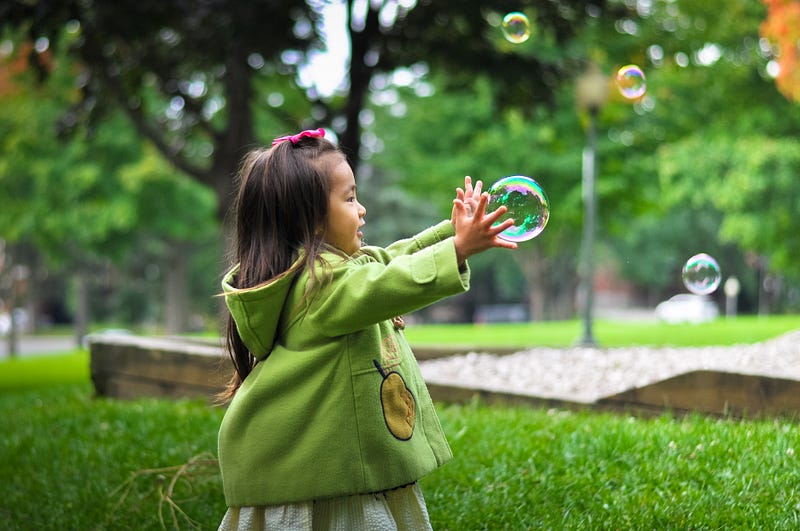
As I close out this first leg of my “Jigsaw Gens” journey, I hope readers will take in my observations from nearly 150 years of American history. Every new generation builds on the successes and failures of its ancestors. The direction in which they’re headed is dependent on how well they understand the triumphs and transgressions of Americans before them.
In the coming months, I intend to profile some of the less noted generational cohorts from the Nineteenth Century and previous centuries. But, for now, let’s turn our attention to our youngest-living generation here in the Twenty-First Century.
My first seven installments profiled:
Hemingrebels (aka “the Lost Generation”)
GI-Gens (aka “the Greatest Generation”)
Traditionalists (aka “the Silent Generation”)
Baby Boomers (aka “Leapers” or “Generation Jones”)
Generation X (aka “Xers” or “Catalanos”)
Generation Y (aka “Millennials” or “EchoGens”)
Generation Z (aka “Zoomers” or “Centennials”)
Next up: Generation AA (aka “Alphas” or “Coronials”).
Who They Are
Alphas were born approximately between 2016 up through the present — give or take a few years on either end. Australian futurist and social researcher Mark McCrindle originally coined the term “Generation Alpha” in 2008; since 2015, he and collaborator Ashley Fell have been chronicling trends amongst the world’s youngest generation. They refer to Gen AA as “Gen Alpha” because it will be the first generation to have been born entirely within the Twenty-First Century. McCrindle chose the first letter of the Greek alphabet to designate this cohort as representative of a new beginning for the world. They will have more technological prowess — and more overall access to knowledge — than any of the generations that have preceded them.
McCrindle says that he expects the youngest members of Gen Alpha to be born up through the end of the year 2025. However, because Gen AA is currently so young, I believe we should give them some leeway of at least one or two years past that — in light of the fact that this youngest generation’s attributes haven’t yet been solidly defined.
Other nicknames for Alphas could include: Coronials, in order to recognize how they were the youngest humans born into (and raised during) the COVID-19 global pandemic; Glass Babies, since some psychologists have dubbed them “the Glass Generation” based on their affinity for screens as well as their transparent resilience amidst an increasingly fragile planet; Battery Babes, because the shorthand for their generation (“AA”) is the same as a popular battery, and, fittingly, they’ll be on the forefront of sustainable power/fuel sources to gradually replace fossil fuels; Digital Masters, seeing how they’ll have surpassed the original “Digital Natives” (Millennials) as well as surpassing the escalated “Digital Accelerators” (Zoomers) in terms of technological proficiency; or Honey Badgers, in reference to how GenXers, Millennials, and Zoomers have observed these Alphas to be fearless in taking risks and demanding empathy from their elders.
As of the date of this writing (September 2023), there are between 27–45 million (and counting!) Alphas in the United States (depending on where you draw the boundaries of their generation’s birthyears).
By the beginning of the year 2027, there are projected to be between 39–55 million of them in America.
What They’re Going Through
McCrindle has mainly studied what we know about Alphas so far — given how their oldest members are only in the middle of adolescence. In his 2020 dossier, McCrindle talks about how Alphas will have never known a world without tablets, smartphones, or self-driving vehicles. They’re poised to be far more culturally diverse than previous generations. By the time they reach adulthood, items such as wallets, alarm clocks, handheld cameras, standalone radios, and single-use plastics might be all but obsolete.
Another dynamic that makes Gen AA poised to outperform their contemporaries of past eras is how so many Alpha tweens are honing their skills on platforms such as YouTube and TikTok. Those who learn to monetize this early in their lives have become known as “kidfluencers.” McCrindle cautions parents about the consequences that overdependence on screens may have: “short attention spans,” “gamification of education,” “increased digital literacy,” and “impaired social formation” could give rise to a new crop of “screenagers.”
Demographically, Gen AA is projected to be the most culturally diverse in history. Part of this can be attributed to increased immigration to the Western Hemisphere from Asian countries. Children of their generation are hitting puberty earlier but being given adult responsibilities much later in life than their parents, grandparents, and previous ancestors. McCrindle quotes his fellow Australians in dubbing Alphas as “kippers” — Kids In Parents’ Pockets Eroding Retirement Savings.
How They’re Misunderstood
Unlike their Gen Y parents and Gen Z older siblings, Gen AA kids will thrive predominantly through visual learning and digital images — as opposed to listening and reading. According to the Lingokids website, this will enable Alphas to possibly be global pioneers in memory retention.
McCrindle and Fell seem to agree — recommending educational toys that are multimodal and lend themselves to hands-on learning. Young Coronials can enhance their grasp of STEM, business, and financial literary curriculums. In preparation for the possibility of multiple careers across different industries, Gen Alpha will be equipped to occupy future jobs that don’t presently exist. Coding, robotics, nanotech, autonomous transport, cryptocurrency, data analysis, cyber security, virtual reality, and social media marketing are just some of the components that may become integral to these careers of tomorrow.
GWI’s Lu Hussain tracks the habits of Gen AA children. They seem to be more eager to embrace offline activities compared to the two previous generations, while also engaging in more collaborative decision-making alongside of their parents. Prospectively employing Gen Y’s desire for egalitarian equality but maintaining Gen Z’s proactive devotion to activism, Hussain believes the Coronials are likely to favor solutions over doom (especially in terms of confronting climate change).
As we function in the roles of their authority figures and mentors, it’s up to the rest of us to balance Gen AA’s screen usage and eagerness with the knee-jerk tendency some of us might have to cast them as humanity’s preeminent saviors.
Why They Matter
How to nurture and educate Gen Alpha is sure to be a large source of conflict amongst all of the generations who were born in the decades before them. McCrindle’s research indicates how Gen Y parents tend to believe — moreso than Gen X parents did — that Gen AA kids need more in-school focus on individualized well-being. These precedents will be important ones to set, as Gen Z parents will largely be the ones rearing the next two generations that succeed Gen AA.
McCrindle also predicts that Gen AA will have children earlier in their lives than Gen Y and Gen Z have. On the other hand, Alphas will likely follow the leads of Millennials and Zoomers when valuing social consciousness.
There’s one really big unknown factor that could move in any number of directions: How will Alphas, as they mature, react to the “hyperwoke” narratives spun by some segments of society? Will they be confused by the conflicting narratives out there?
My own prediction is that Alphas could end up being at the forefront of a more balanced attempt at “corrective evolution” that strives to end gratuitous or narcissistic excesses from both the Left and the Right.
It will be invigorating to see which two “microgenerations” ultimately end up sandwiching the Coronial/Alpha generation.
“Coronazooms” (born approximately between 2011 to 2015) create a transitional zone between Gen Z and Gen AA. They will conceivably absorb the strong sense of social justice taught to them by the Zoomers who came before them…but with a sense of independence (reminiscent of GenXers and Millennials) germane to the specific public debates with which they must grapple.
Coronazooms, or “Alphacentennials,” include up-and-coming young public figures such as Ryan Kaji, Bobbi Wilson, Sienna Casas, Zhuri James, and Rudolph “Blaze” Ingram.
The generation that comes after Generation Alpha obviously hasn’t been born yet. Therefore, the “microgeneration” in-between Gen AA and its successor (kids born in the late-2020s or very-early-2030s) is a big question-mark, as of right now.
However, I would caution demographers against prematurely naming them “Generation Beta” — seeing how the word “beta” tends to have an inherently negative connotation.
Although most of them have yet to enter middle school, some examples of modern-day children in the public eye who represent Generation AA include Brice Gonzalez, Lola June, Kyrie Prince, Brigitte Xie, and Miles Bonham.
As the parent to an Alpha/Coronial son, Medium’s Stephen Barr has written up a quick lexicon to translate the lingo of Gen Alpha youngsters.
Without a doubt, most Alphas haven’t yet received the opportunity to fully demonstrate skills and talents in which they’ll excel during their lives. But the visible prodigies amongst their ranks give us a hint that this generation could become revolutionaries in the role that “kidfluencing” plays within American society (and globally).
A list of the small handful of public figures who, as children (at present), may represent the future of Generation AA:
Click here to subscribe to my stories.


